Jonah is a short prophetic book, but it is rich in doctrine. It shows the holiness, sovereignty, mercy, longsuffering, and missionary heart of God. It also exposes the danger of disobedience, bitterness, prejudice, and self-will in a servant of the Lord.
Jonah was a real prophet, not a myth or parable. The Lord Jesus Christ treated Jonah as historical when He said, “For as Jonas was three days and three nights in the whale’s belly; so shall the Son of man be three days and three nights in the heart of the earth” (Matthew 12:40). Therefore, Jonah is both historical truth and a divinely given sign pointing forward to Christ’s death, burial, and resurrection.
Chapter Summaries
Jonah 1 — Jonah Flees from the Presence of the LORD
 The book begins plainly: “Now the word of the LORD came unto Jonah the son of Amittai” (Jonah 1:1). Jonah’s commission was clear: “Arise, go to Nineveh, that great city, and cry against it; for their wickedness is come up before me” (1:2).
Nineveh was a Gentile city, the capital of Assyria, a cruel and violent people. God’s command showed that He was not merely the God of Israel in a national sense, but the righteous Judge of all nations. Their wickedness had “come up” before Him; sin is never hidden from God.
Jonah disobeyed. “But Jonah rose up to flee unto Tarshish from the presence of the LORD” (1:3). This does not mean Jonah thought he could literally escape God’s omnipresence. Rather, he was fleeing from the place of obedience and prophetic service. He went “down to Joppa,” found a ship, paid the fare, and went “down into it.” The downward movement is spiritually fitting: disobedience always leads downward.
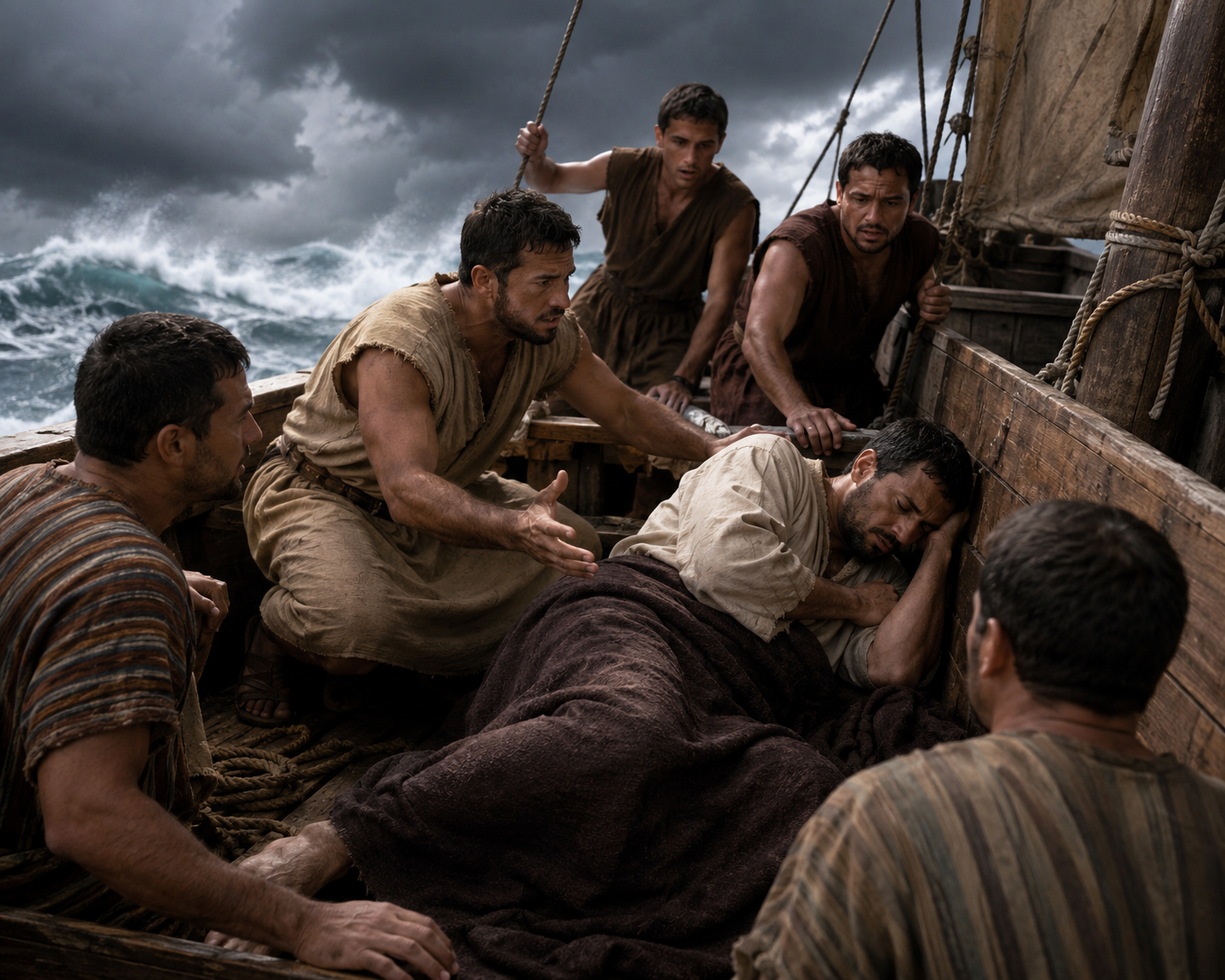
The LORD sent “a great wind into the sea” (1:4). Jonah’s sin affected others. The mariners were afraid, cried every man unto his god, and cast forth the wares. Meanwhile, Jonah was “gone down into the sides of the ship; and he lay, and was fast asleep” (1:5). A backslidden servant may sleep while judgment gathers.
The shipmaster rebuked him: “What meanest thou, O sleeper? arise, call upon thy God” (1:6). It is a sad thing when a pagan sailor must urge a prophet to pray.
The lot fell upon Jonah, and he confessed, “I am an Hebrew; and I fear the LORD, the God of heaven, which hath made the sea and the dry land” (1:9). His doctrine was sound, but his walk was disobedient. He knew God as Creator, yet was rebelling against Him in His own creation.
Jonah told the men, “Take me up, and cast me forth into the sea; so shall the sea be calm unto you” (1:12). The men tried to row to land, but could not. Finally, after crying unto the LORD, they cast Jonah into the sea, “and the sea ceased from her raging” (1:15). The men “feared the LORD exceedingly, and offered a sacrifice unto the LORD, and made vows” (1:16). Even Jonah’s chastening became a witness to Gentiles.
The chapter ends with divine preparation: “Now the LORD had prepared a great fish to swallow up Jonah” (1:17). This was not chance, legend, or natural coincidence. God prepared the fish. Jonah was in the belly of the fish “three days and three nights.”
Jonah 2 — Jonah Prays from the Fish’s Belly
Jonah 2 records Jonah’s prayer from inside the great fish. “Then Jonah prayed unto the LORD his God out of the fish’s belly” (2:1). The place was dreadful, but it became a place of prayer.
He said, “I cried by reason of mine affliction unto the LORD, and he heard me” (2:2). Chastening had brought him to prayer. Jonah describes his condition as being in “the belly of hell,” meaning the place of death, distress, and deep anguish. He was not in the lake of fire; he was describing the extremity of his suffering.
Jonah recognized God’s hand in the chastening: “For thou hadst cast me into the deep” (2:3). Humanly, the sailors cast him overboard; spiritually, God was dealing with His prophet.
He remembered the temple: “Yet I will look again toward thy holy temple” (2:4). This reflects the Old Testament Jewish context. Jonah was a Hebrew prophet under the covenant dealings of God with Israel.
He confessed, “They that observe lying vanities forsake their own mercy” (2:8). Idols and false refuges rob men of mercy. Jonah then declared, “Salvation is of the LORD” (2:9). That is one of the great doctrinal statements of the book. Salvation is not of man, merit, religion, ritual, nationality, or works. Salvation is of the LORD.
The chapter ends: “And the LORD spake unto the fish, and it vomited out Jonah upon the dry land” (2:10). God commanded the fish as easily as He commanded the storm. Creation obeyed God better than Jonah had.
Jonah 3 — Jonah Preaches, and Nineveh Repents
Jonah 3 begins with mercy toward the disobedient prophet: “And the word of the LORD came unto Jonah the second time” (3:1). God did not change the message to accommodate Jonah. He repeated the command: “Arise, go unto Nineveh, that great city, and preach unto it the preaching that I bid thee” (3:2).
This time “Jonah arose, and went unto Nineveh, according to the word of the LORD” (3:3). The servant of God is not free to invent his message. He must preach what God bids him.
Jonah’s message was direct and severe: “Yet forty days, and Nineveh shall be overthrown” (3:4). There was no entertainment, no softening of sin, no flattering of the hearers. It was a warning of judgment.
The response was remarkable: “So the people of Nineveh believed God” (3:5). They proclaimed a fast and put on sackcloth, “from the greatest of them even to the least of them.” True revival begins when people believe God.
The king of Nineveh arose from his throne, laid his robe from him, covered himself with sackcloth, and sat in ashes (3:6). He commanded man and beast to be covered with sackcloth and said, “Let them turn every one from his evil way, and from the violence that is in their hands” (3:8).
This repentance did not earn salvation by works. Rather, their outward actions demonstrated inward conviction. They believed God, humbled themselves, and turned from wickedness.
The chapter closes: “And God saw their works, that they turned from their evil way; and God repented of the evil, that he had said that he would do unto them; and he did it not” (3:10). In KJV usage, “repented” here does not mean God sinned or changed His holy nature. It means God turned from the threatened judgment when Nineveh turned from its wickedness. God’s character remained unchanged: He is holy against sin, yet merciful to the repentant.
Jonah 4 — Jonah’s Anger and God’s Compassion
Jonah 4 reveals the prophet’s heart. “But it displeased Jonah exceedingly, and he was very angry” (4:1). Jonah was not angry because the message failed, but because it succeeded. He did not want mercy shown to Nineveh.
He prayed, “I knew that thou art a gracious God, and merciful, slow to anger, and of great kindness” (4:2). Jonah had sound theology concerning God’s mercy, but he resented its application to his enemies. He knew God’s character, yet his own heart was not aligned with God’s compassion.
Jonah asked to die: “Therefore now, O LORD, take, I beseech thee, my life from me” (4:3). His bitterness had made him irrational. God asked, “Doest thou well to be angry?” (4:4). That question exposes the heart.
Jonah went out of the city and made himself a booth to see what would become of Nineveh (4:5). He still seemed to hope judgment might fall.
The LORD prepared a gourd to give Jonah shade, “to deliver him from his grief” (4:6). Jonah was “exceeding glad of the gourd.” Then God prepared a worm, and the gourd withered (4:7). Then God prepared a vehement east wind, and the sun beat upon Jonah’s head (4:8). Jonah again wished to die.
God asked, “Doest thou well to be angry for the gourd?” Jonah answered, “I do well to be angry, even unto death” (4:9). Jonah cared more for a plant than for a city full of souls.
The book ends with God’s rebuke: “And should not I spare Nineveh, that great city, wherein are more than sixscore thousand persons that cannot discern between their right hand and their left hand; and also much cattle?” (4:11). The ending is intentionally searching. God leaves Jonah, and the reader, with the issue of divine compassion.
Key People and Places
Jonah
Jonah was “the son of Amittai” (1:1), a Hebrew prophet. He was a real man, later confirmed by Christ’s own words in Matthew 12:40. He knew true doctrine but struggled with obedience, compassion, and submission to God’s will.
The LORD
The central Person in Jonah is not Jonah, but the LORD. He commands, sends the storm, prepares the fish, hears prayer, gives a second commission, spares Nineveh, prepares the gourd, prepares the worm, and prepares the east wind. The book is a strong testimony to God’s sovereignty over nature, nations, and His servants.
Nineveh
Nineveh was “that great city” (1:2; 3:2; 4:11), a Gentile city known for wickedness and violence. Its repentance shows that God’s mercy extends beyond Israel, while still maintaining the distinction between Israel and the Gentile nations.
Tarshish
Tarshish was the destination Jonah chose in disobedience. It represents Jonah’s attempt to run from the place of duty. Any “Tarshish” chosen against God’s command becomes a place of rebellion.
Joppa
Joppa was the seaport where Jonah found a ship. It became the place where he took practical steps to disobey God.
The Mariners
The sailors were Gentiles who began by crying “every man unto his god” (1:5), but after seeing God’s power, they “feared the LORD exceedingly” (1:16). Their response contrasts sharply with Jonah’s disobedience.
The King of Nineveh
The king humbled himself, laid aside his robe, covered himself with sackcloth, and called the city to turn from evil and violence. His response demonstrates the seriousness of repentance under conviction.
The Great Fish
The fish was “prepared” by the LORD (1:17). It was an instrument of chastening, preservation, and prophetic typology. It points forward to Christ’s burial and resurrection, as stated by the Lord Jesus.
The Gourd, Worm, and East Wind
Each was prepared by God in chapter 4. God used them as object lessons to expose Jonah’s selfish pity for a plant and lack of pity for perishing people.
Main Doctrinal or Spiritual Themes
1. The Authority of the Word of the LORD
The book begins with “the word of the LORD came unto Jonah” (1:1). Jonah’s duty was not to evaluate, negotiate, or modify God’s command. He was to obey. God’s Word is authoritative whether the servant likes the assignment or not.
2. God’s Sovereignty
God rules over the wind, sea, fish, plant, worm, sun, and nations. Nothing in Jonah is outside God’s hand. The storm was not random. The fish was not accidental. The gourd was not incidental. God governed all things to correct His prophet and show mercy to sinners.
3. The Sinfulness of Disobedience
Jonah’s flight shows that disobedience is not a small matter. He endangered others, damaged his testimony, and brought chastening upon himself. A saved man may disobey God, but he cannot do so without consequences.
4. Chastening and Mercy
God chastened Jonah, but did not destroy him. The fish was both judgment and mercy. Hebrews 12 teaches that God chastens His children; Jonah illustrates this truth before the New Testament doctrine is fully stated.
5. Salvation Is of the LORD
Jonah 2:9 says, “Salvation is of the LORD.” This is central. Salvation is by God’s mercy, not human merit. Nineveh did not deserve mercy. Jonah did not deserve a second chance. Both received mercy because God is gracious.
6. Repentance and Faith
Nineveh “believed God” (3:5), and that belief produced visible repentance. Biblical repentance is not mere sorrow or religious display; it is a turning from sin toward God. Their fasting and sackcloth were outward signs of inward conviction.
7. God’s Compassion for Souls
Jonah cared more about his own comfort than about Nineveh’s souls. God cared for the city. This teaches the heart of missions: sinners are guilty, judgment is real, and God sends His Word that men might repent.
8. The Sign of Christ’s Death, Burial, and Resurrection
Jonah’s three days and three nights in the fish point forward to Christ. Jonah was a flawed prophet delivered from death-like confinement; Christ is the sinless Saviour who truly died, was buried, and rose again. The type is real, but Christ is greater than Jonah.
9. God’s Dealings with Gentile Nations
Jonah shows God’s concern for Gentiles without erasing Israel’s distinct place in Scripture. Jonah was a Hebrew prophet sent to a Gentile city. This fits the broader biblical truth that God is the God of all the earth, while still maintaining His covenant dealings with Israel.
10. The Danger of Bitterness in God’s Servants
Jonah preached truth but lacked compassion. A preacher may have correct doctrine and still have a wrong spirit. God’s servant must not only speak God’s message; he must also submit to God’s heart.
Practical Applications or Lessons
1. Do not run from clear duty.
Jonah knew exactly what God had commanded. His problem was not confusion but rebellion. When God’s Word is plain, the believer’s duty is obedience.
2. Disobedience always costs more than obedience.
Jonah “paid the fare” to Tarshish (1:3), but the spiritual cost was far greater. Sin always has a fare, and the final price is more than advertised.
3. Private sin can bring public trouble.
Jonah’s disobedience endangered the whole ship. No believer sins in isolation. A backslidden Christian can affect family, church, ministry, and testimony.
4. Sound doctrine must be matched by a surrendered heart.
Jonah said, “I fear the LORD, the God of heaven” (1:9), but he was fleeing from Him. True fear of God should produce obedience, not merely correct words.
5. God can use chastening to restore His servant.
The fish was uncomfortable, but it was merciful. God may put His child in a place of distress to bring him back to prayer and obedience.
6. The message must be God’s message.
God told Jonah to “preach unto it the preaching that I bid thee” (3:2). The preacher has no authority to soften sin, hide judgment, or replace God’s Word with human opinion.
7. Revival begins when people believe God.
Nineveh’s change began with this statement: “So the people of Nineveh believed God” (3:5). Not believed in themselves, not believed in reform, not believed in religion — they believed God.
8. God is merciful, but His mercy does not excuse sin.
Nineveh’s wickedness was real. God’s warning was real. Mercy came when they turned from their evil way. Grace is never a license for sin.
9. Beware of caring more for comfort than souls.
Jonah rejoiced over the gourd but grieved over Nineveh’s mercy. Believers must guard against selfish religion that cares more about personal ease than lost people.
10. God’s questions search the heart.
“Doest thou well to be angry?” (4:4, 4:9). God’s question to Jonah is still needed. Anger, bitterness, prejudice, and resentment must be judged under the light of Scripture.
11. God’s compassion should shape our witness.
Nineveh deserved judgment, but God sent a preacher. The lost world deserves judgment, yet God has committed to believers the duty of preaching the gospel. The lesson is not that sin is light, but that mercy is great.
12. Christ is greater than Jonah.
Jonah was reluctant; Christ came willingly. Jonah slept in disobedience; Christ slept in perfect trust. Jonah was cast into the sea for his own sin; Christ went to the cross for our sins. Jonah came out of the fish; Christ rose bodily from the grave. Jonah preached judgment to one city; Christ commanded the gospel to be preached “to every creature” (Mark 16:15).
Concluding Summary
Jonah 1–4 teaches that God’s Word must be obeyed, God’s holiness must be feared, God’s mercy must be proclaimed, and God’s compassion must correct the selfishness of His servants. Jonah is not merely about a great fish; it is about a great God dealing with a rebellious prophet and a wicked city.
The conservative Baptist conclusion is plain: Jonah is literal history, prophetical truth, doctrinal instruction, and practical warning. God judged sin, restored His servant, spared repentant Nineveh, and gave a sign that points directly to the death, burial, and resurrection of the Lord Jesus Christ.
Comments are closed