
Obadiah is the shortest book in the Old Testament, yet it contains a solemn and powerful message: God judges pride, cruelty, betrayal, and hatred against His covenant people Israel. The book is especially directed against Edom, the descendants of Esau, for their violence and rejoicing over Judah’s calamity.
The key verse is Obadiah 15:
“For the day of the LORD is near upon all the heathen: as thou hast done, it shall be done unto thee: thy reward shall return upon thine own head.”
Obadiah teaches that no nation, however secure it appears, can escape the judgment of God. It also looks forward to Israel’s final restoration and the coming kingdom of the LORD.
Chapter Summaries
Obadiah 1:1–9 — God’s Judgment Announced Against Proud Edom
 The book begins:
“The vision of Obadiah. Thus saith the Lord GOD concerning Edom…”
Obadiah’s message is not human opinion; it is a divine vision from “the Lord GOD.” Edom is the chief object of the prophecy. Edom descended from Esau, Jacob’s brother, and there had been long conflict between the two lines. Though Esau and Jacob were brothers, Edom often acted as Israel’s enemy.
The LORD declares:
“Behold, I have made thee small among the heathen: thou art greatly despised.”
Edom was lifted up in pride because of her mountain strongholds. The Edomites dwelt in the region of Mount Seir, south of the Dead Sea, with rocky heights and natural defenses. They thought themselves secure.
Obadiah 3 says:
“The pride of thine heart hath deceived thee…”
This is one of the great warnings of the book. Pride deceives. Edom thought its geography, alliances, wisdom, and strength could protect it. But God says:
“Though thou exalt thyself as the eagle, and though thou set thy nest among the stars, thence will I bring thee down, saith the LORD.”
The judgment would be complete. Thieves would normally leave something behind; grape gatherers would leave gleanings. But Edom’s destruction would be thorough:
“How are the things of Esau searched out! how are his hidden things sought up!”
Even Edom’s allies would betray her:
“All the men of thy confederacy have brought thee even to the border…”
God would also destroy Edom’s famous wisdom:
“Shall I not in that day, saith the LORD, even destroy the wise men out of Edom…”
Edom trusted in pride, position, alliances, wisdom, and warriors. None of these could stand against the judgment of God.
Obadiah 1:10–14 — Edom’s Sin Against Judah
The specific sin is stated plainly:
“For thy violence against thy brother Jacob shame shall cover thee, and thou shalt be cut off for ever.”
Edom sinned against “thy brother Jacob.” This was not merely political hostility; it was family treachery. Edom had a brotherly obligation, but instead acted with cruelty.
Obadiah describes Edom’s behavior during Judah’s trouble.
First, Edom stood by:
“In the day that thou stoodest on the other side…”
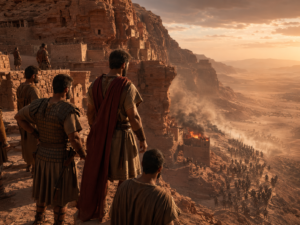
They watched while strangers carried away Judah’s forces and foreigners entered Jerusalem. They did not help.
Second, Edom rejoiced:
“But thou shouldest not have looked on the day of thy brother in the day that he became a stranger…”
They took pleasure in Judah’s calamity.
Third, Edom spoke proudly:
“Neither shouldest thou have spoken proudly in the day of distress.”
Fourth, Edom participated in the spoil:
“Thou shouldest not have entered into the gate of my people in the day of their calamity…”
Fifth, Edom blocked escape and delivered up fugitives:
“Neither shouldest thou have stood in the crossway, to cut off those of his that did escape…”
This shows that Edom was not merely passive. They were guilty of betrayal, cruelty, and opportunism. They rejoiced when Judah fell and helped make Judah’s sorrow worse.
From a conservative Baptist view, this passage shows that God does not overlook hatred, betrayal, or cruelty toward His people. It also affirms that God’s promises to Israel are still meaningful. Edom’s treatment of Jacob mattered because God had made covenant promises concerning Israel.
Obadiah 1:15–16 — The Day of the LORD and God’s Moral Government
Obadiah then broadens the prophecy:
“For the day of the LORD is near upon all the heathen…”
The judgment of Edom becomes a preview of God’s judgment upon all nations. The phrase “the day of the LORD” often points to God’s direct intervention in judgment, and in prophetic Scripture it reaches forward to end-time judgment before the kingdom.
The principle is clear:
“As thou hast done, it shall be done unto thee: thy reward shall return upon thine own head.”
This is not karma; it is the righteous moral government of the holy God. Men and nations reap what they sow under divine judgment.
Edom had helped make Judah drink the cup of suffering. Therefore Edom and the heathen nations would drink the cup of God’s judgment:
“For as ye have drunk upon my holy mountain, so shall all the heathen drink continually…”
God’s justice is exact, holy, and unavoidable.
Obadiah 1:17–21 — Israel’s Deliverance and the Kingdom of the LORD
The book ends with hope for Israel:
“But upon mount Zion shall be deliverance, and there shall be holiness; and the house of Jacob shall possess their possessions.”
This is a future restoration promise. Edom will be judged, but Zion will be delivered. Israel will not be permanently cast away. God will fulfill His promises.
The text says:
“And the house of Jacob shall be a fire, and the house of Joseph a flame, and the house of Esau for stubble…”
This speaks of Israel’s triumph over Edom under God’s hand. The house of Esau will not prevail forever.
The closing verse says:
“And saviours shall come up on mount Zion to judge the mount of Esau; and the kingdom shall be the LORD’S.”
This is the great conclusion of Obadiah. Human kingdoms rise and fall, but the final kingdom belongs to the LORD.
From a premillennial dispensational Baptist perspective, this fits with the future restoration of Israel and the earthly kingdom of Christ. The Church does not replace Israel. God will keep His promises to Jacob. The book ends not with Edom’s pride, but with Jehovah’s kingdom.
Key People and Places
Obadiah
Obadiah means “servant of the LORD” or “worshipper of the LORD.” Nothing personal is given about him in the book. His importance is not in his biography but in the message God gave him. He faithfully declared judgment against Edom and hope for Zion.
Edom
Edom refers to the descendants of Esau. Esau was Jacob’s brother, but Edom became a bitter enemy of Israel. Edom’s sin in Obadiah is pride, violence, betrayal, and rejoicing over Judah’s calamity.
Esau
Esau was the ancestor of Edom. The phrase “the house of Esau” is used in Obadiah to describe the Edomite people. Their judgment is tied to their hostility against “thy brother Jacob.”
Jacob
Jacob represents Israel, especially Judah in the immediate historical setting. Edom’s violence against Jacob was especially wicked because of the brother relationship.
Judah / Jerusalem
Jerusalem is not named as often as Edom, but the events center around Judah’s calamity and the invasion of Jerusalem. Obadiah refers to strangers entering Judah’s gates and casting lots upon Jerusalem.
Mount Zion
Mount Zion represents Jerusalem and God’s covenant purposes for Israel. Obadiah says:
“But upon mount Zion shall be deliverance…”
Zion becomes the place of restoration, holiness, judgment, and kingdom hope.
Mount Esau
Mount Esau refers to the territory and power of Edom. It stands in contrast to Mount Zion. Mount Esau is judged; Mount Zion is delivered.
Main Doctrinal or Spiritual Themes
1. The Pride of Man Is Hated by God
Obadiah 3 says:
“The pride of thine heart hath deceived thee…”
Pride blinds men and nations. Edom thought it was safe because of its high dwelling places. But no height is beyond God’s reach.
A conservative Baptist application is plain: pride is not a small weakness. It is rebellion against God. It makes a man trust himself instead of the LORD.
2. God Judges Nations
Obadiah is not only about individuals. It is about Edom as a nation. God holds nations accountable for their conduct, especially in relation to His revealed truth and His covenant people.
Edom’s military strength, geography, and alliances could not shield it from divine judgment.
3. Sin Against Israel Matters to God
Edom’s crime was:
“thy violence against thy brother Jacob.”
God had chosen Israel and made covenant promises to Abraham, Isaac, and Jacob. Edom’s hatred of Jacob was not treated lightly.
This supports the biblical distinction between Israel and the Church. Obadiah’s promises to Zion and Jacob should not be allegorized away. God will restore Israel and establish His kingdom.
4. God’s Judgment Is Righteous and Measured
Obadiah 15 says:
“As thou hast done, it shall be done unto thee…”
God’s judgment is never unjust. Edom received according to its own deeds. The LORD judges with perfect righteousness.
5. Rejoicing Over Another’s Calamity Is Wicked
Edom did not merely attack; Edom rejoiced when Judah suffered. The LORD condemned them for looking on, rejoicing, speaking proudly, entering the gate, taking spoil, and cutting off escapees.
God sees the heart attitude behind outward actions.
6. Human Security Cannot Overrule Divine Judgment
Edom trusted in mountains, allies, wisdom, and mighty men. All failed.
Obadiah teaches that every false refuge will collapse when God rises to judge.
7. The Day of the LORD Is Certain
Obadiah points beyond Edom to:
“the day of the LORD… upon all the heathen.”
This connects the book to the broader prophetic program of Scripture. God will judge the nations and establish His righteous kingdom.
8. The Kingdom Belongs to the LORD
The final words are:
“and the kingdom shall be the LORD’S.”
This is the theological climax of the book. The end of history is not man’s pride, Satan’s rule, or Gentile rebellion. The end is the LORD reigning in righteousness.
Practical Applications or Lessons
1. Beware of Pride
Edom’s first named sin was pride. Pride deceives a man into thinking he is safe, wise, strong, and independent. But God can bring down the highest nest.
A believer should walk humbly before God, remembering James 4:6:
“God resisteth the proud, but giveth grace unto the humble.”
2. Do Not Rejoice When Others Fall
Edom rejoiced over Judah’s calamity. That spirit is wicked. A Christian should never delight in another person’s suffering, even when that person has done wrong.
Proverbs 24:17 says:
“Rejoice not when thine enemy falleth, and let not thine heart be glad when he stumbleth.”
3. Silence in the Face of Wrong Can Be Sinful
Edom “stoodest on the other side.” They watched when they should have acted righteously. There are times when neutrality is not righteousness but cowardice.
Believers should not participate in cruelty, but neither should they approve it by silence when duty requires faithfulness.
4. Family Betrayal Is Especially Grievous
Edom’s violence was against “thy brother Jacob.” Sin is always wrong, but betrayal against those to whom we owe duty is especially shameful.
This applies to homes, churches, and Christian relationships. Loyalty, truth, and charity matter.
5. God Sees What Nations Do
Modern nations may ignore God, but God does not ignore nations. He sees injustice, pride, bloodshed, betrayal, and hatred toward His people.
No nation is above divine accountability.
6. Trust God’s Justice
Judah suffered, and Edom appeared to prosper for a time. But Obadiah shows that God’s justice may seem delayed, yet it is never absent.
Romans 12:19 says:
“Vengeance is mine; I will repay, saith the Lord.”
The believer can leave judgment in God’s hands.
7. God Keeps His Promises to Israel
Obadiah ends with deliverance on Mount Zion. This should strengthen confidence in the literal promises of God. The same God who keeps His covenant purposes with Israel also keeps His promises to the believer in Christ.
8. The Final Kingdom Is Not Man’s
The book closes:
“and the kingdom shall be the LORD’S.”
This gives comfort in troubled times. The world is not moving toward man-made utopia. Scripture teaches that the LORD will judge, restore, and reign. Christ will have the final victory.
Summary Statement
Obadiah is a solemn prophecy against Edom for pride, cruelty, and betrayal against Judah. It teaches that God brings down the proud, judges nations righteously, defends His covenant purposes for Israel, and will establish His kingdom. Its final hope is not in man, politics, alliances, or earthly strength, but in this sure promise:
“and the kingdom shall be the LORD’S.”
Comments are closed