Chapter Summaries
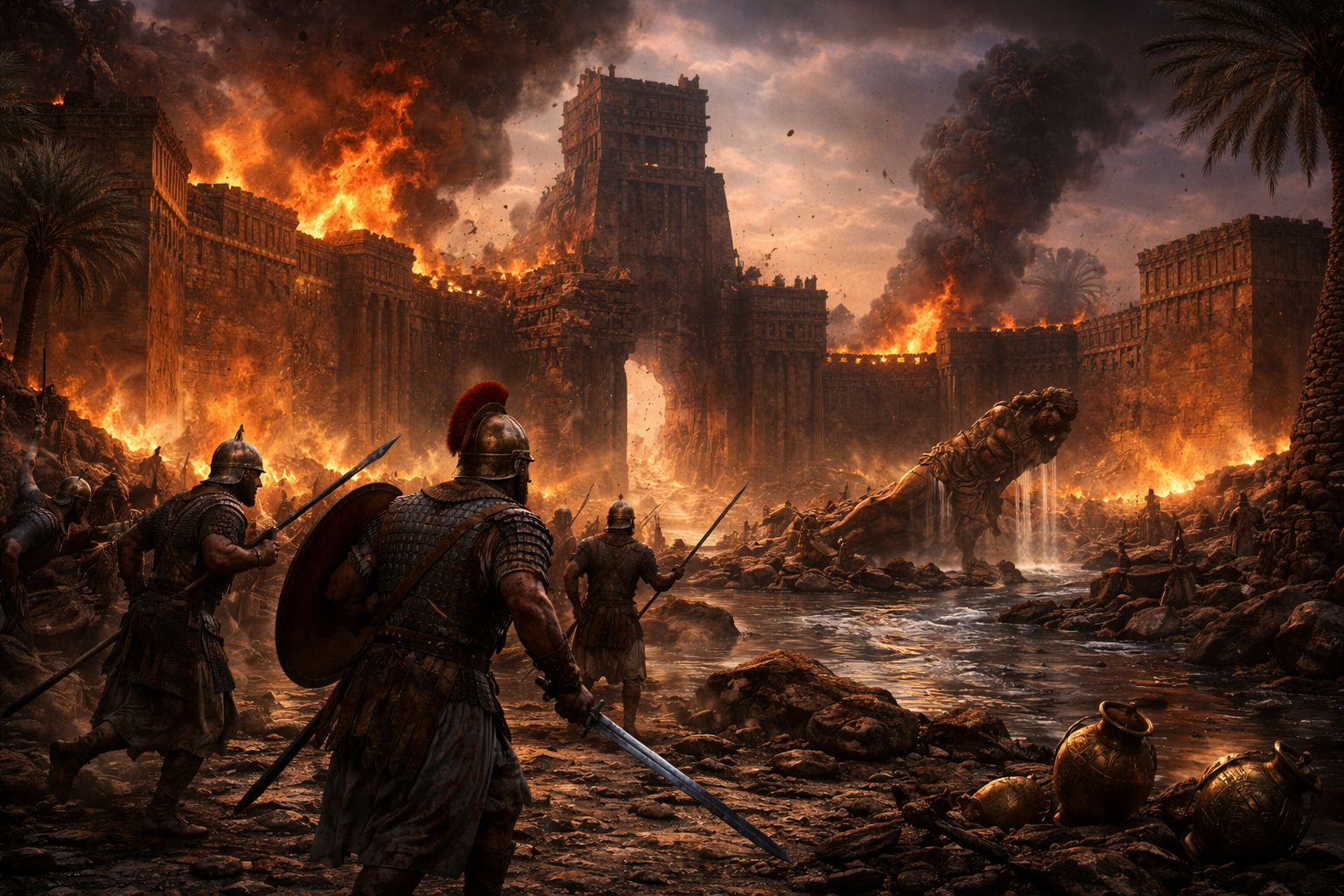
 Jeremiah 51 continues and expands the prophecy of Babylon’s fall. The chapter is long, forceful, and filled with repeated warnings that the mighty empire which God once used as an instrument of judgment would itself be judged for pride, idolatry, cruelty, and violence. The chapter shows that the LORD rules over nations, remembers wrongs done against His people, and brings down even the greatest worldly power.
Babylon is first described as marked out for destruction by the LORD Himself. God says, “I will raise up against Babylon… a destroying wind” (v. 1). The imagery is that of divine judgment sweeping through the land. The city that had seemed unconquerable would be emptied, invaded, and broken. The Medes are part of this judgment (vv. 11, 28), showing that God uses nations to accomplish His purposes, yet those nations remain under His control and are never autonomous from His will.
The chapter also contains a strong word of comfort for Israel and Judah. Though both had sinned greatly and had been chastened, the LORD had not utterly cast them off. Verse 5 says, “For Israel hath not been forsaken, nor Judah of his God, of the LORD of hosts.” That is a precious covenant reminder. Their captivity was real, and their sins were serious, but God’s covenant faithfulness had not failed. In conservative Baptist understanding, this shows both the severity and goodness of God: He disciplines His people, but He does not forget His promises.
A major section exposes Babylon’s pride and false religion. Babylon had been “a golden cup in the LORD’S hand” (v. 7), meaning God had used her to make nations drink the wine of judgment. But that did not make Babylon righteous. She became drunk with her own power. Her graven images, idols, and false confidence are mocked and condemned. Verse 17 says, “Every man is brutish by his knowledge: every founder is confounded by the graven image.” Idolatry is shown again to be vanity and delusion. The contrast comes in verse 19: “The portion of Jacob is not like them.” Israel’s God is the living Creator, not a man-made idol.
The middle portion of the chapter magnifies God as Creator and sovereign Lord. Verses 15–19 echo language found earlier in Jeremiah: God “made the earth by his power,” “established the world by his wisdom,” and “stretched out the heaven by his understanding.” This is doctrinally important. Babylon’s fall is not due merely to military chance or political shifts. It is the work of the Creator-God who rules history. Nations rise and fall under His providence. The true God is not local, tribal, or limited; He is Lord of heaven and earth.
Babylon is also called God’s “battle axe and weapons of war” (v. 20), referring to how the LORD had once used Babylon to break nations and kingdoms. Yet now Babylon itself would be repaid. This is a vital biblical principle: being used by God does not excuse wickedness. The Lord may employ a nation, ruler, or circumstance for His purposes, but He still judges sin. Babylon’s violence against Zion, her pride, and her arrogance brought certain retribution. Verse 24 plainly says, “I will render unto Babylon and to all the inhabitants of Chaldea all their evil that they have done in Zion in your sight.”
The imagery of Babylon’s destruction becomes especially vivid. She is called a “destroying mountain” that would become “a burnt mountain” (v. 25). Her walls, broad and impressive, would fail (v. 58). Her mighty men would lose courage; her waters would be disturbed; her cities would become desolate. Repeatedly the chapter emphasizes total humiliation. The city famed for glory, wealth, and strength would become a place of astonishment and hissing. This is consistent with God’s pattern throughout Scripture: “pride goeth before destruction” is not merely a proverb but a moral reality worked out in history.
The chapter also includes a call for God’s people to separate from Babylon. Verse 6 says, “Flee out of the midst of Babylon,” and verse 45 repeats, “My people, go ye out of the midst of her.” Historically, this concerned literal Babylon and the coming judgment. Spiritually, conservative Baptist application rightly sees here a principle of separation from the world system, idolatry, and corruption. God’s people must not settle comfortably in that which God has marked for judgment.
Another theme is vengeance belonging to the LORD. Zion says, “The violence done to me and to my flesh be upon Babylon” (v. 35), and the LORD answers by taking up her cause. This is not sinful personal revenge but divine justice. God remembers bloodshed. He avenges wrong in His time and way. Verse 36 says, “I will plead thy cause, and take vengeance for thee.” That is a comfort to suffering believers: injustice does not escape the eye of God.
Near the end, the chapter becomes strikingly historical and symbolic. Jeremiah commands Seraiah, who goes with Zedekiah to Babylon, to read these words and then bind a stone to the scroll and cast it into the Euphrates, saying, “Thus shall Babylon sink, and shall not rise from the evil that I will bring upon her” (vv. 63–64). This dramatic act sealed the prophecy with a visible sign. It showed the certainty and finality of Babylon’s judgment. God’s word would not fail. What He declared would surely come to pass.
The closing line, “Thus far are the words of Jeremiah” (v. 64), marks the end of Jeremiah’s prophetic words before the historical appendix in chapter 52. Jeremiah 51 therefore stands as one of Scripture’s strongest declarations that God judges proud empires, vindicates His covenant people, and proves the emptiness of idols before the majesty of the living God.
Key People and Places
Jeremiah
The prophet through whom the LORD delivers this final extended oracle against Babylon. He speaks with divine authority and also instructs Seraiah concerning the written prophecy.
Seraiah
Mentioned in verses 59–64. He is sent to Babylon with Zedekiah and is told to read Jeremiah’s prophecy there and perform the symbolic act of casting the scroll into the Euphrates.
Zedekiah
King of Judah at the time of these events. Verse 59 places this prophecy in connection with the fourth year of his reign.
Israel
The northern covenant people, here joined with Judah in the statement that they have not been forsaken of the LORD (v. 5). Though previously judged, they remain objects of divine covenant concern.
Judah
The southern kingdom, chastened for sin but not abandoned by God. The chapter gives hope that Babylon’s domination will not be final.
Babylon
The chief subject of the chapter. Once used by God as an instrument of judgment, she now becomes the object of divine wrath because of pride, idolatry, violence, and cruelty.
Chaldea
Another name associated with Babylon and its people. The land and its inhabitants are included in the judgment.
The Medes
Named as part of the human means by which God would bring Babylon down (vv. 11, 28). This fits the historical overthrow of Babylon by the Medo-Persian power.
Zion / Jerusalem
Represents God’s people and the place against which Babylon had committed violence. God promises to plead Zion’s cause.
Lebanon
Mentioned in verse 55, likely highlighting the reach of Babylon’s former magnificence and noise, now to be silenced.
Euphrates
The river associated with Babylon and the place where Seraiah was to cast the scroll tied to a stone as a sign of Babylon’s sinking doom.
Merathaim and Pekod
Names used in the prophecy against Babylon (v. 1). They likely function either as regional references or symbolic designations emphasizing rebellion and visitation.
Main Doctrinal or Spiritual Themes
The absolute sovereignty of God over nations
Jeremiah 51 strongly teaches that empires do not rule independently of God. Babylon rose under divine providence and fell under divine decree. The LORD is not reacting helplessly to human history; He governs it.
The certainty of divine judgment
Babylon’s judgment is declared repeatedly and vividly. When God has determined judgment, no wall, army, wealth, or reputation can prevent it. This chapter is a warning to every proud power and every proud heart.
The faithfulness of God to His covenant people
Verse 5 is central: Israel and Judah “hath not been forsaken.” Though God chastens His people for sin, He does not abandon His covenant purposes. His correction is real, but His faithfulness remains.
The vanity of idols
Babylon’s religion is exposed as false and powerless. The idols are man-made and empty, but the God of Jacob is Creator of all things. This sharp contrast runs throughout the chapter and remains doctrinally important.
God as Creator and therefore rightful Judge
Because the LORD made heaven and earth, He has full authority to judge nations and peoples. His wisdom, power, and understanding stand over against the foolishness of idol-makers.
Divine justice and recompense
Babylon had done violence to Zion, shed blood, and exalted herself in cruelty. God would repay. Scripture consistently teaches that vengeance belongs to the LORD, not to sinful human passion.
Separation from the judged world system
The repeated command to flee from Babylon teaches historically that God’s people were not to be destroyed with her. By application, believers should not become at home in a world system marked by pride, idolatry, and opposition to God.
The sure fulfillment of prophecy
The symbolic sinking of the scroll in the Euphrates shows that God’s word is certain. What He speaks will stand. Prophecy is not guesswork but divine revelation fulfilled in God’s time.
Practical Applications or Lessons
Do not envy worldly power
Babylon looked secure, wealthy, cultured, and invincible. Yet God pronounced her downfall. Believers should not measure truth by success or assume that earthly strength means divine approval.
Pride invites destruction
Babylon’s fall is a standing warning against arrogance. Whether in nations, churches, families, or individuals, pride is offensive to God. Humility before the Lord is always the safer path.
God’s people may be chastened, but they are not abandoned
Jeremiah 51 gives comfort to saints who feel under pressure or discipline. The Lord may correct His own severely, but He does not cast them off. His purposes of grace remain intact.
Keep clear of spiritual compromise
The call to flee Babylon reminds believers not to settle into fellowship with corruption. A Christian should maintain doctrinal and moral separation from worldliness, idolatry, and false worship.
Trust the living God, not man-made substitutes
Babylon trusted idols, wealth, military force, and human splendor. All failed. Believers today must beware of modern idols such as money, influence, technology, government, or self-confidence.
Leave vengeance to God
When wronged, the flesh wants immediate retaliation. But this chapter teaches that God sees injustice and will address it righteously. The believer can trust the Judge of all the earth to do right.
Rest in the certainty of God’s word
The symbolic act with the scroll teaches that God’s spoken word is not uncertain. What He promises, warns, or declares will be fulfilled. That should produce both holy fear and strong confidence.
Remember that history is moral, not random
Jeremiah 51 shows that nations are not merely moved by economics and warfare. Behind history stands the holy God who rewards evil, humbles pride, and upholds His purposes. That should shape how believers read both Scripture and the world.
Comments are closed