Chapter Summaries
Isaiah 8
 This chapter continues the historical situation introduced in the previous chapters: the Syro-Ephraimite crisis, when the northern kingdom of Israel (Ephraim) and Syria threatened Judah during the reign of King Ahaz.
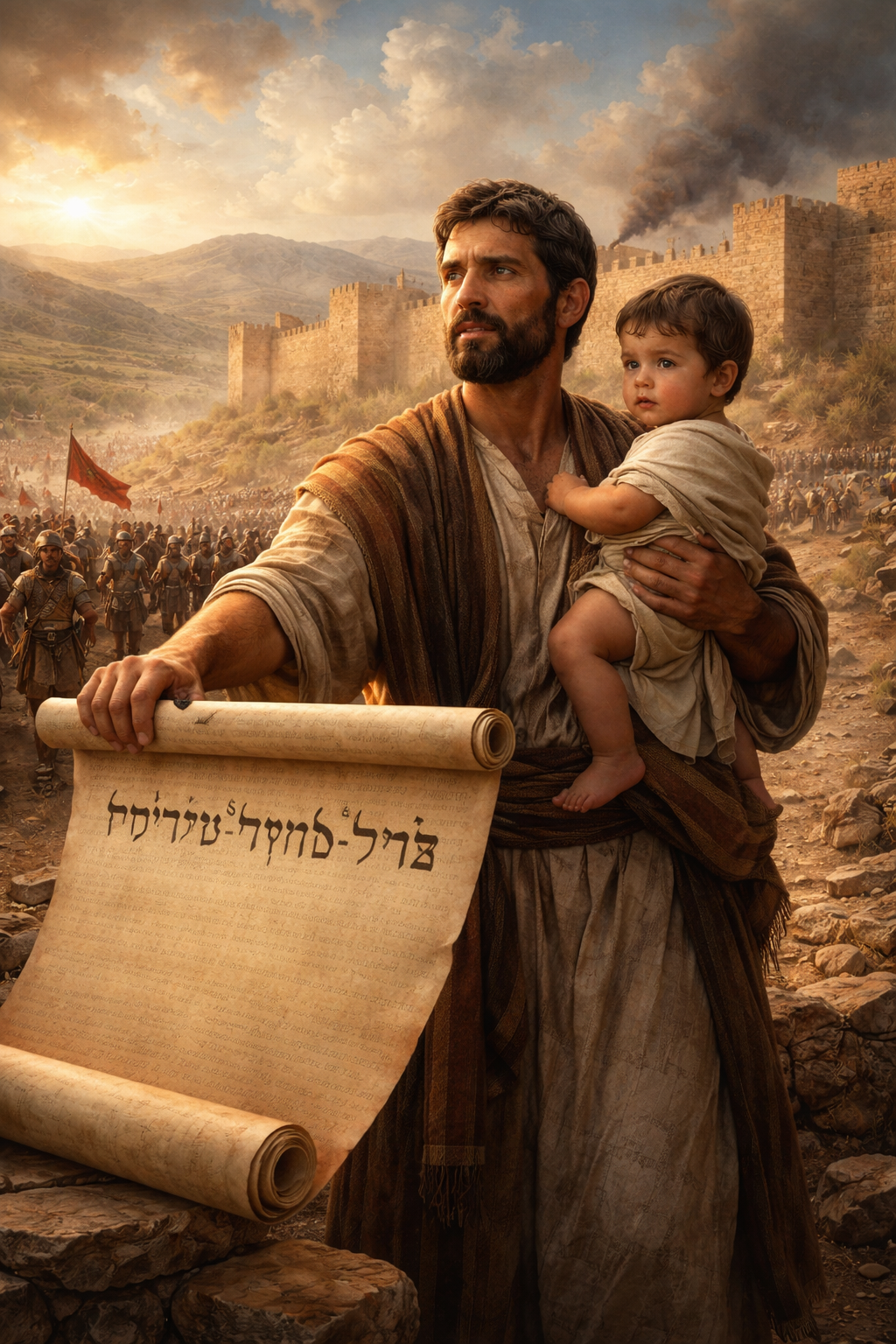
God commands Isaiah to record a prophetic name on a large roll: “Maher-shalal-hash-baz” (Isaiah 8:1). The name means “Haste to the spoil, speed to the prey.” It symbolized the coming rapid destruction of Syria and Israel by the Assyrian empire. Isaiah’s son is given this name as a living prophetic sign.
Isaiah 8:4 explains the meaning:
“Before the child shall have knowledge to cry, My father, and my mother, the riches of Damascus and the spoil of Samaria shall be taken away before the king of Assyria.”
Historically, this was fulfilled when Assyria conquered Damascus (732 BC) and later destroyed Samaria (722 BC).
The prophecy then shifts to Judah. Because the people rejected God’s gentle rule, described as “the waters of Shiloah that go softly” (Isaiah 8:6), God would allow the floodwaters of Assyria to overflow into Judah. Assyria is pictured like a great river rising beyond its banks.
Verses 9–10 show a powerful declaration of God’s sovereignty. Nations may gather and plan war, but they cannot prevail against the purposes of God:
“Associate yourselves, O ye people… and ye shall be broken in pieces… for God is with us.”
Isaiah is instructed not to fear what the people fear. Instead:
“Sanctify the LORD of hosts himself; and let him be your fear” (Isaiah 8:13).
The Lord would be “for a sanctuary” to believers but “a stone of stumbling and for a rock of offence” to unbelieving Israel (Isaiah 8:14). This verse is later applied in the New Testament to Christ.
Isaiah and his children are declared to be “for signs and for wonders in Israel” (Isaiah 8:18), showing how God used the prophet’s family as living messages to the nation.
The chapter closes with a warning against occult practices. Some people sought guidance from “familiar spirits” and “wizards” (Isaiah 8:19). Isaiah responds with the famous principle:
“To the law and to the testimony: if they speak not according to this word, it is because there is no light in them” (Isaiah 8:20).
Those who reject God’s Word fall into darkness, distress, and spiritual despair.
Isaiah 9
The chapter begins with one of the great Messianic prophecies of the Old Testament. Though the land of Zebulun and Naphtali had suffered greatly through Assyrian invasion, God promises that a great light will shine there.
“The people that walked in darkness have seen a great light” (Isaiah 9:2).
This prophecy was fulfilled when Jesus began His ministry in Galilee (Matthew 4:13–16).
Verses 3–5 describe future joy, deliverance from oppression, and the breaking of the enemy’s yoke. The language points beyond immediate historical events toward the ultimate reign of the Messiah.
The centerpiece of the chapter is the prophecy of the coming King:
“For unto us a child is born, unto us a son is given: and the government shall be upon his shoulder” (Isaiah 9:6).
The Messiah is described with four divine titles:
- Wonderful – a miraculous counselor and leader
- Counsellor – the perfect source of wisdom
- The mighty God – affirming His deity
- The everlasting Father – the eternal source of life and protection
- The Prince of Peace – the ruler who will establish true peace
Verse 7 describes the eternal kingdom of David’s greater Son, fulfilled ultimately in Christ’s future reign.
The remainder of the chapter returns to judgment on Israel (the northern kingdom). Despite repeated warnings, the people continued in pride and rebellion.
Four times the phrase appears:
“For all this his anger is not turned away, but his hand is stretched out still” (Isaiah 9:12, 17, 21; 10:4).
This repeated statement emphasizes persistent divine judgment because the nation refused to repent.
The chapter describes societal collapse:
- Pride and arrogance of leadership
- False prophets misleading the people
- Widespread corruption and violence
- Civil strife within the nation
These sins eventually led to Israel’s destruction by Assyria.
Isaiah 10
Isaiah 10 opens with a strong denunciation of corrupt leadership:
“Woe unto them that decree unrighteous decrees” (Isaiah 10:1).
Judges and rulers were oppressing the poor, widows, and fatherless. God promises judgment for such injustice.
Verses 5–19 describe Assyria as the rod of God’s anger. God used Assyria as an instrument to discipline Israel and Judah.
“O Assyrian, the rod of mine anger” (Isaiah 10:5).
However, Assyria itself acted in pride and cruelty. The king of Assyria boasted that his victories came from his own power.
God rebukes this arrogance with a striking analogy:
“Shall the axe boast itself against him that heweth therewith?” (Isaiah 10:15).
Assyria was merely a tool in God’s hand, and because of its pride, it too would face judgment.
Verses 20–23 introduce the important doctrine of the remnant of Israel. Though the nation would be severely judged, a faithful remnant would return to the Lord.
“The remnant shall return, even the remnant of Jacob, unto the mighty God” (Isaiah 10:21).
The chapter concludes with a vivid prophecy of the Assyrian army advancing toward Jerusalem, stopping at various towns on the way. Yet before the enemy can destroy the city, the Lord intervenes and cuts down the proud power of Assyria like trees in a forest.
This foreshadows the dramatic deliverance of Jerusalem during the reign of Hezekiah, when God destroyed the Assyrian army (Isaiah 37).
Key People and Places
Isaiah
The prophet called by God to warn Judah and reveal both judgment and future redemption.
Maher-shalal-hash-baz
Isaiah’s son whose symbolic name foretold the swift destruction of Israel and Syria.
Ahaz
King of Judah during these events. His lack of faith and reliance on foreign alliances contributed to national trouble.
Assyria
The dominant world empire of the time. God used Assyria as an instrument of judgment against Israel and Judah.
Damascus
Capital of Syria, conquered by Assyria as prophesied.
Samaria
Capital of the northern kingdom of Israel, later destroyed by Assyria.
Jerusalem
Capital of Judah and the center of God’s covenant people.
Zebulun and Naphtali
Northern regions of Israel that suffered early Assyrian invasion but later became the setting of Christ’s ministry.
Shiloah (Siloam)
A gentle stream in Jerusalem symbolizing God’s quiet, faithful rule which the people rejected.
Main Doctrinal or Spiritual Themes
1. God’s Sovereignty Over Nations
God raises up and removes empires according to His purposes. Even mighty Assyria was merely an instrument in His hand.
2. The Danger of Rejecting God’s Word
Isaiah 8:20 emphasizes that truth must be measured by Scripture: “To the law and to the testimony.”
3. Judgment for Pride and Injustice
Both Israel and Assyria were judged for arrogance, oppression, and rebellion.
4. The Messiah as the Ultimate Hope
Isaiah 9 presents Christ as the divine King whose government will bring everlasting peace.
5. The Doctrine of the Remnant
Even in judgment, God preserves a faithful remnant of believers.
6. Christ as a Stone of Stumbling
Those who reject God stumble over the very Savior sent to save them.
Practical Applications or Lessons
Trust God Rather Than Human Alliances
Ahaz trusted foreign powers instead of God, bringing trouble upon Judah. Believers today must place their confidence in the Lord rather than worldly solutions.
Measure All Teaching by Scripture
Isaiah’s warning against mediums and false guidance reminds believers to evaluate all spiritual claims by God’s Word.
Pride Leads to Destruction
Both Israel and Assyria illustrate the biblical principle that pride invites divine judgment.
Christ Is the True Light in Darkness
Just as Galilee saw the light of Christ, the world’s only true hope remains the Messiah.
God Preserves His People
Though nations rise and fall, the Lord always preserves a faithful remnant who trust Him.
Fear God Rather Than Circumstances
Isaiah was instructed not to fear what the people feared but to sanctify the Lord in his heart. This remains a timeless principle for believers facing uncertain times.
Comments are closed