Chapter Summaries
Isaiah 42
 This chapter opens with one of the clearest servant passages in Isaiah: “Behold my servant, whom I uphold; mine elect, in whom my soul delighteth” (Isaiah 42:1). In conservative Baptist understanding, this points ultimately to the Messiah, the Lord Jesus Christ. He is presented as the Spirit-anointed Servant who will bring forth judgment to the Gentiles, yet He does so with meekness and restraint: “a bruised reed shall he not break, and the smoking flax shall he not quench” (42:3). This shows both His gentleness and His faithfulness. He is not weak, but perfectly controlled, righteous, and compassionate.
The chapter then expands the scope of His ministry. He is given “for a covenant of the people, for a light of the Gentiles” (42:6). That language reaches beyond Israel alone and shows God’s redemptive purpose extending to the nations. This does not erase Israel’s place, but it does reveal that the Messiah’s work will bless the whole world. The Lord alone deserves this glory, and He plainly declares, “I am the LORD: that is my name: and my glory will I not give to another” (42:8). This is a strong rebuke to idolatry and a declaration of God’s uniqueness.
The tone then shifts into praise and triumph. The nations, wilderness, villages, and islands are called to sing unto the LORD a new song (42:10-12). God goes forth “as a mighty man” and prevails over His enemies (42:13). Yet the chapter also returns to Israel’s spiritual condition. Though Israel had been called to be the Lord’s servant in a national sense, the people were spiritually blind and deaf. “Who is blind, but my servant? or deaf, as my messenger that I sent?” (42:19). This is one of the striking tensions in Isaiah: the perfect Servant, Christ, contrasted with the failing servant, Israel. Israel had received much light, but had not walked in it. Because of disobedience, the nation came under chastening and judgment.
Historically, the chapter speaks into the condition of Judah before and during divine chastisement, while prophetically stretching forward to Christ and His kingdom work.
Isaiah 43
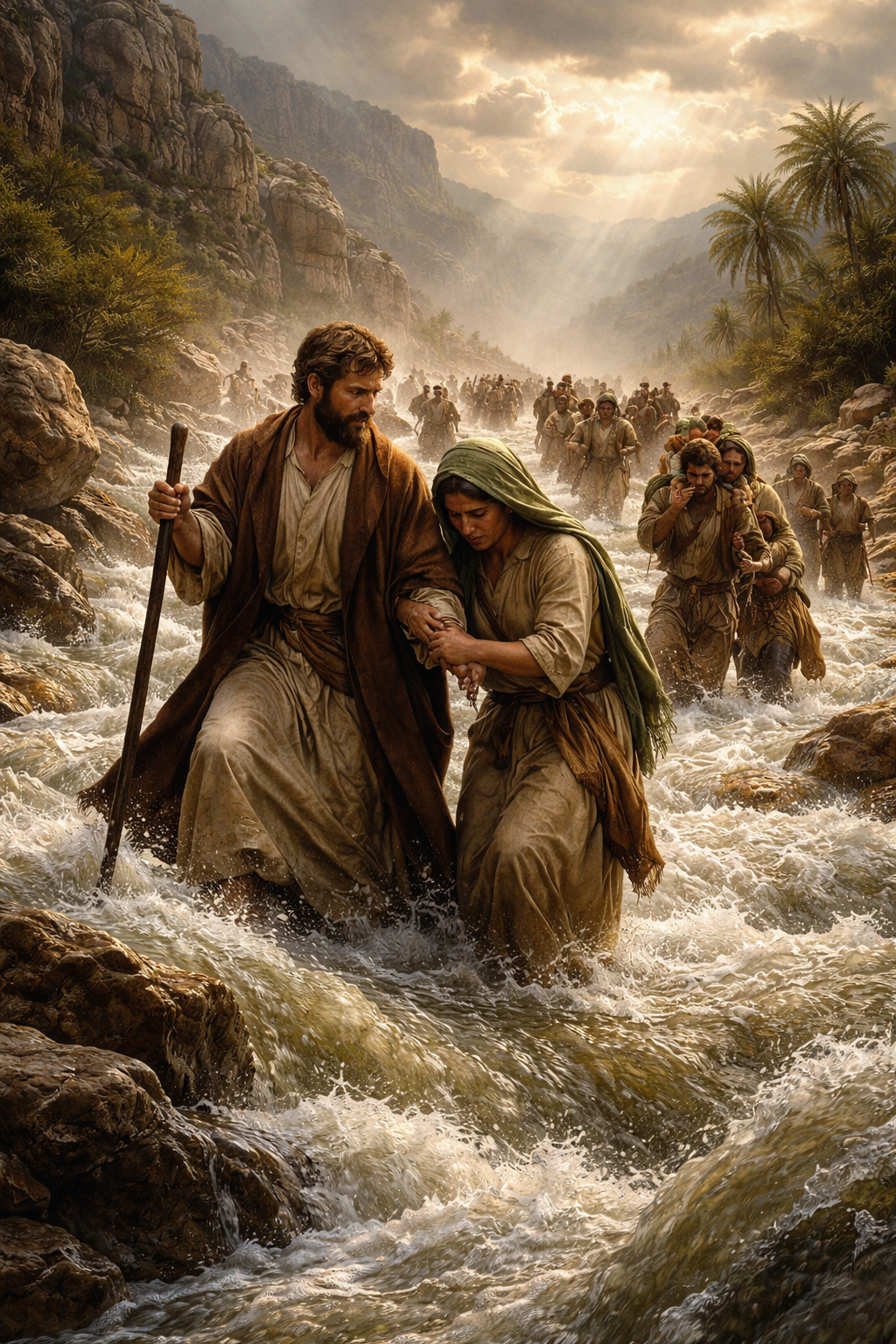
This chapter is full of consolation. After exposing Israel’s blindness, the Lord now says, “Fear not: for I have redeemed thee, I have called thee by thy name; thou art mine” (43:1). The emphasis is on God’s covenant mercy toward Israel. Though they had sinned, He had not cast them off forever. He promises His presence through deep trial: “When thou passest through the waters, I will be with thee” (43:2). This is not a promise of an easy path, but of divine preservation.
The Lord then reminds Israel of her special standing in His purpose: “I have loved thee” (43:4). He will gather His sons and daughters from far away (43:5-6), which has both near and far significance. It includes restoration from dispersion and points toward God’s future regathering of Israel. The chapter repeatedly emphasizes that Israel is meant to be God’s witness: “Ye are my witnesses, saith the LORD” (43:10). They were to testify that the God of Israel alone is God: “before me there was no God formed, neither shall there be after me” (43:10). This is one of the strongest declarations of monotheism in Scripture.
The Lord also declares Himself to be the only Saviour: “I, even I, am the LORD; and beside me there is no saviour” (43:11). From a Baptist and Christ-centered perspective, this harmonizes perfectly with the New Testament revelation of Christ, because Jesus is Jehovah the Saviour in the flesh. The chapter also recalls the exodus, then moves beyond it: “Remember ye not the former things… Behold, I will do a new thing” (43:18-19). God is not bound to former methods. He can make “a way in the wilderness, and rivers in the desert,” showing His power to restore, revive, and deliver His people in fresh ways.
Yet the chapter does not excuse sin. Israel had not faithfully called upon the Lord and had burdened Him with their iniquities (43:22-24). Even so, one of the most precious statements appears here: “I, even I, am he that blotteth out thy transgressions for mine own sake” (43:25). Forgiveness is grounded not in human merit, but in God’s own name, grace, and purpose.
Isaiah 44
Isaiah 44 continues the note of comfort and restoration. “Yet now hear, O Jacob my servant; and Israel, whom I have chosen” (44:1). God promises blessing like water upon dry ground: “I will pour water upon him that is thirsty… I will pour my spirit upon thy seed” (44:3). This suggests future spiritual refreshment and blessing upon Israel’s descendants. It has rich devotional application for believers, but in context it especially concerns God’s future mercy toward His covenant people.
Again the Lord declares His uniqueness: “I am the first, and I am the last; and beside me there is no God” (44:6). No idol, no pagan deity, no rival can compare with Him. The middle section of the chapter contains one of the Bible’s sharpest exposures of idolatry. A man cuts down a tree, uses part of it to warm himself and bake bread, and from the rest fashions a god and bows down to it (44:14-17). The satire is deliberate and powerful. Idolatry is not merely false religion; it is spiritual blindness and irrational rebellion against the living God. The man “feedeth on ashes” and cannot deliver his own soul (44:20). That is a vivid picture of all false worship.
Against that folly stands the grace of God: “I have blotted out, as a thick cloud, thy transgressions” (44:22). The Lord calls His people to return unto Him because He has redeemed them. Heaven and earth are summoned to sing because the LORD hath redeemed Jacob and glorified Himself in Israel (44:23).
The chapter closes with a remarkable prophetic detail: the Lord names Cyrus before his birth as the shepherd who will perform His pleasure and say of Jerusalem, “Thou shalt be built,” and of the temple, “Thy foundation shall be laid” (44:28). This is powerful evidence of divine inspiration and God’s sovereign rule over kings and nations. Long before Cyrus appeared on the stage of history, the Lord declared his role in the restoration of Jerusalem. Historically, this points toward the return from Babylonian captivity. Doctrinally, it demonstrates that God governs world rulers to accomplish His redemptive purposes.
Key People and Places
The LORD / Jehovah
The central figure in all three chapters. He is the Holy One of Israel, the only God, the Redeemer, Creator, King, and Saviour.
The Servant (Isaiah 42:1)
Ultimately the Messiah, fulfilled in the Lord Jesus Christ. He is Spirit-anointed, righteous, gentle, faithful, and appointed to bring light to the Gentiles.
Israel / Jacob / Jesurun
The covenant people of God. In these chapters they are both loved and chastened, blind in sin yet promised future mercy and restoration.
The Gentiles / nations / isles
The broader world beyond Israel. They are included in the scope of the Servant’s mission and are called to acknowledge the true God.
Cyrus
Named prophetically in Isaiah 44:28. A future Persian ruler whom God would use to allow Jerusalem and the temple to be rebuilt.
Jerusalem
The covenant city, central to Israel’s national and spiritual life. Its future rebuilding is specifically mentioned.
The temple
Mentioned in connection with restoration under Cyrus. Its rebuilding signified renewed worship in Jerusalem after judgment.
The wilderness / desert
Used both literally and figuratively. In chapter 43, God makes “a way in the wilderness” and “rivers in the desert,” showing His power to provide and restore.
The villages of Kedar / the rock / the islands
These geographic references in Isaiah 42 widen the praise scene and show that the LORD’s glory is not confined to Jerusalem alone.
Main Doctrinal or Spiritual Themes
1. The Messiah as the perfect Servant
Isaiah 42 presents Christ as the chosen Servant of the LORD. Israel failed in her servant role, but Christ fulfills perfectly what God requires. He is gentle, just, Spirit-filled, and victorious.
2. God’s glory belongs to Him alone
These chapters strongly oppose idolatry. The LORD will not share His glory with graven images. This theme is foundational to true worship.
3. The uniqueness of God
Repeated declarations make this unmistakable: “beside me there is no God” and “beside me there is no saviour.” This upholds biblical monotheism and excludes all false religion.
4. Redemption by grace
Israel did not deserve mercy, yet God says He blots out transgressions “for mine own sake.” Forgiveness flows from God’s grace and covenant faithfulness, not man’s merit.
5. Israel’s blindness and future restoration
National Israel is rebuked for spiritual dullness, yet God has not abandoned His covenant purposes. These chapters balance chastening with future hope.
6. God’s sovereignty over history
The naming of Cyrus ahead of time shows God’s total control over kings, empires, and events. History is not random; it is governed by the Lord.
7. Witness and testimony
Israel was called to be God’s witness before the nations. In application, believers today are also called to testify to the truth of the living God.
8. The futility of idols
Isaiah 44 especially exposes the emptiness, absurdity, and spiritual deadness of idol worship. Anything man makes and then worships is a lie.
9. God’s presence in trial
“When thou passest through the waters, I will be with thee.” God does not always remove affliction immediately, but He preserves His own through it.
10. Light to the Gentiles
The Servant’s ministry reaches beyond Israel. This harmonizes with the New Testament truth that salvation in Christ goes to every nation.
Practical Applications or Lessons
1. Christ is the Servant we must trust.
Israel failed; Christ did not. He is faithful where men are unfaithful. Believers should rest in His perfect righteousness and follow His example of meekness and obedience.
2. Gentleness is not weakness.
The Messiah does not break the bruised reed. There is strength under control in godly ministry. The servant of God should speak truth firmly, yet with compassion.
3. God’s people must not live in spiritual blindness.
Israel had truth but did not obey it. It is possible to be exposed to Scripture and yet remain dull, careless, and unresponsive. We must hear and obey the Word.
4. Fear should give way to faith.
Isaiah 43 repeatedly comforts the redeemed with God’s presence and ownership. When believers pass through deep waters, they should remember whose they are.
5. Forgiveness is rooted in God’s grace, not our worthiness.
That humbles pride and gives hope to the repentant. God blots out sin for His own sake. The sinner’s only refuge is divine mercy.
6. Idolatry is still a present danger.
Modern men may not bow to carved wood, but they bow to money, pleasure, power, self, politics, possessions, and reputation. Anything that takes God’s place becomes an idol.
7. God alone should receive worship and loyalty.
The repeated “I am the LORD” passages call believers to exclusive devotion. We are not to divide allegiance between the Lord and the world.
8. God rules over rulers.
Cyrus did not know the Lord in the saving sense at that point, yet God still used him. That reminds believers that earthly governments are never ultimate. The Lord is sovereign over all political power.
9. The believer should be a witness.
Israel was called to testify that Jehovah alone is God. Christians likewise should testify plainly that salvation is only in the Lord Jesus Christ.
10. God can bring renewal where all seems barren.
He makes rivers in the desert. Whether the need is national, church-wide, or personal, the Lord is able to revive, restore, and provide where man sees no path forward.
Comments are closed