Chapter Summaries
Isaiah 45
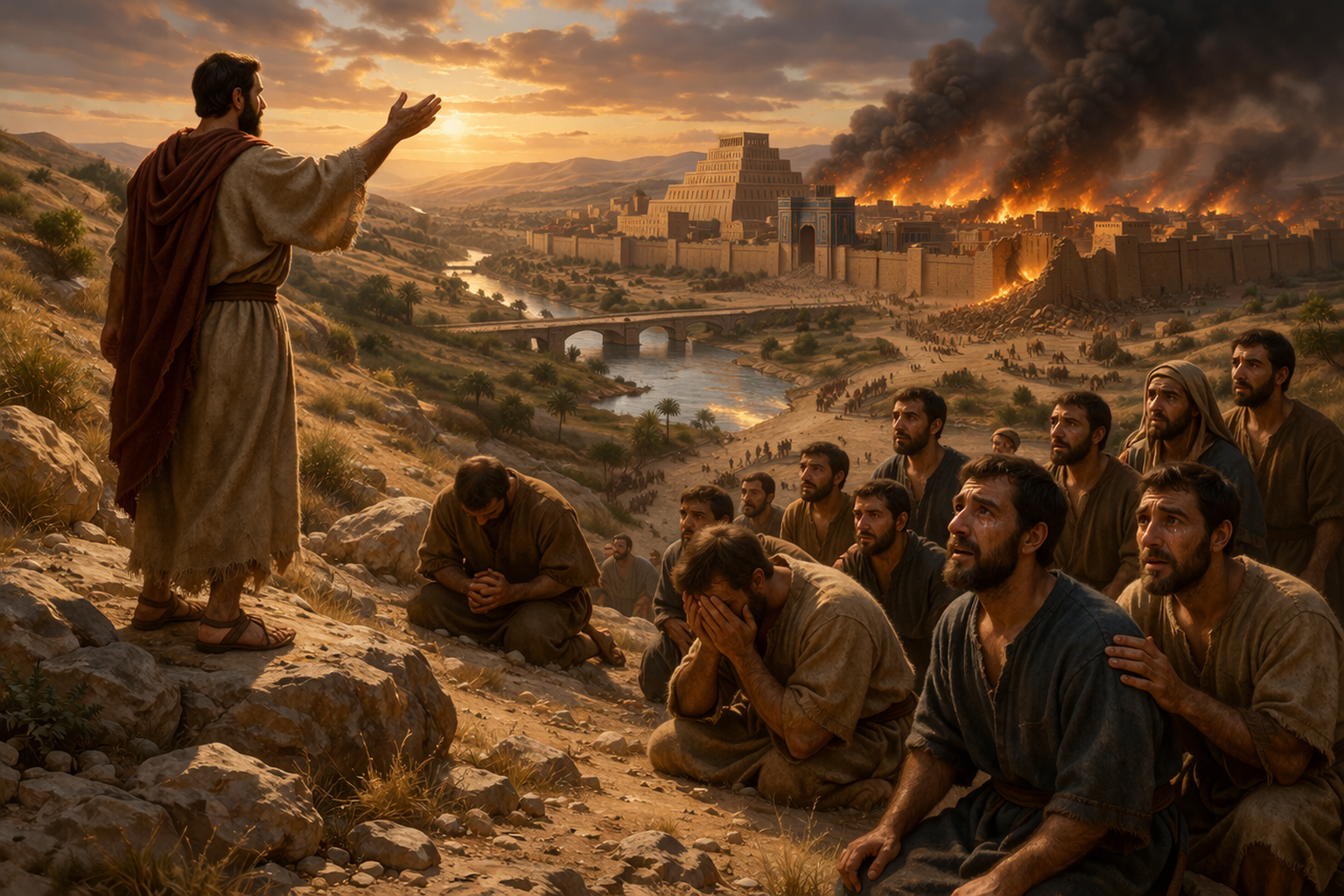
 This chapter continues the Lord’s address concerning Cyrus, the Persian ruler whom God would raise up as His instrument. The Lord says, “Thus saith the LORD to his anointed, to Cyrus, whose right hand I have holden” (Isaiah 45:1). In context, Cyrus is not “anointed” in the sense of being a saved king of Israel or a messianic figure, but rather one specially appointed by God for a providential task: to subdue nations, open gates, and deliver Israel from captivity. This shows the absolute sovereignty of God over kings, empires, and history itself.
The Lord promises to go before Cyrus, “make the crooked places straight,” break “in pieces the gates of brass,” and give him “the treasures of darkness” and “hidden riches of secret places” (45:2–3). The stated purpose is deeply important: “that thou mayest know that I, the LORD, which call thee by thy name, am the God of Israel” (45:3). God names Cyrus before his rise to power, demonstrating divine foreknowledge and control. He acts “for Jacob my servant’s sake, and Israel mine elect” (45:4). Israel is central to the passage; the Gentile ruler is merely the tool in God’s hand.
The chapter then expands from Cyrus to a broader declaration of God’s uniqueness. The Lord says, “I am the LORD, and there is none else, there is no God beside me” (45:5). This repeated theme stands against every form of idolatry and false religion. The chapter is not merely about national deliverance; it is a theological proclamation that the God of Israel alone is Creator, Ruler, and Saviour. He formed the light and created darkness; He makes peace and creates calamity in the sense of judicial disaster (45:7). Nothing falls outside His rule.
Verses 9–13 rebuke any who would strive with their Maker. “Woe unto him that striveth with his Maker!” (45:9). Man has no standing to indict God. The pot cannot rebuke the potter. This is a strong reminder of divine rights over creation. In Baptist theology, this supports the truth that God is sovereign, wise, and just in all His dealings, even when man does not fully understand His ways.
The latter half of the chapter widens further into the future recognition of God by the nations. Egypt, Ethiopia, and the Sabeans are pictured as coming over in submission, saying, “Surely God is in thee; and there is none else” (45:14). Though there was a near historical application in the rise of Persia and fall of Babylon, the language also looks forward to a fuller future acknowledgment of the God of Israel among the nations. The chapter climaxes with the invitation, “Look unto me, and be ye saved, all the ends of the earth” (45:22). This is one of the great salvation texts of Isaiah. The Lord alone is Saviour, and His call extends beyond Israel to the ends of the earth.
The closing verses are majestic: “I have sworn by myself… That unto me every knee shall bow, every tongue shall swear” (45:23). Paul later applies this truth in connection with the universal acknowledgment of God’s authority. The chapter ends with the assurance that “In the LORD shall all the seed of Israel be justified, and shall glory” (45:25). True righteousness is found in Him alone.
Isaiah 46
Isaiah 46 contrasts the living God with the helpless idols of Babylon. “Bel boweth down, Nebo stoopeth” (46:1). These were major Babylonian deities, but now they are pictured as burdens placed upon beasts. Instead of carrying their worshippers, they must themselves be carried. This is a vivid and almost mocking exposure of idolatry. Idols are dead weight. They cannot save themselves, much less anyone else.
In sharp contrast, the God of Israel says that He has borne His people “from the belly” and “from the womb” (46:3). False gods must be carried; the true God carries His people. “Even to your old age I am he; and even to hoar hairs will I carry you” (46:4). What tenderness and faithfulness are shown here. The Lord is not merely a national deity of temporary usefulness. He is the everlasting God who sustains His covenant people throughout life.
Verses 5–7 continue the ridicule of idolatry. Men lavish gold, hire a goldsmith, make a god, then fall down and worship it. They bear it upon the shoulder, set it in its place, and it cannot move. “One shall cry unto him, yet can he not answer, nor save him out of his trouble” (46:7). Isaiah again attacks the foolishness of man-made religion. Whatever men create with their own hands cannot redeem their souls.
The Lord then calls His people to remember and stand firm: “remember the former things of old: for I am God, and there is none else” (46:9). He declares “the end from the beginning” and says, “My counsel shall stand, and I will do all my pleasure” (46:10). This verse is foundational for understanding biblical prophecy. God does not guess the future; He ordains and declares it. That includes His use of Cyrus, described here as “a ravenous bird from the east, the man that executeth my counsel from a far country” (46:11). Again the Lord’s sovereignty over international history is unmistakable.
The chapter ends with a rebuke to the “stouthearted” who are “far from righteousness” (46:12). Yet God declares, “I bring near my righteousness; it shall not be far off, and my salvation shall not tarry” (46:13). Ultimately, righteousness and salvation are not produced by human effort, religious systems, or idols, but by the Lord Himself. “I will place salvation in Zion for Israel my glory” (46:13). This has immediate encouragement for captive Israel and broader messianic overtones in the unfolding plan of redemption.
Isaiah 47
Isaiah 47 is a funeral song of judgment against Babylon, pictured as a proud queen brought down into humiliation. “Come down, and sit in the dust, O virgin daughter of Babylon” (47:1). Babylon had seemed secure, refined, and untouchable, but God announces her fall. She would no longer be called “tender and delicate.” The language is vivid and severe, portraying disgrace, captivity, and exposure.
The imagery of grinding meal, uncovering the leg, passing over the rivers, and having shame exposed (47:2–3) speaks of forced labor and humiliation after conquest. This is the reversal of Babylon’s pride. The empire that once dominated others would itself be brought low. Isaiah inserts a confession of confidence: “As for our redeemer, the LORD of hosts is his name, the Holy One of Israel” (47:4). This statement is crucial. Babylon’s downfall is not random politics; it is the act of Israel’s Redeemer.
The Lord accuses Babylon of cruelty toward His people. “I was wroth with my people… and given them into thine hand: thou didst shew them no mercy” (47:6). God had used Babylon as an instrument of chastening against Judah, but Babylon exceeded the bounds of that role with arrogance and merciless oppression. She said in her heart, “I shall be a lady for ever” (47:7), refusing to consider the end of her actions. This is a sobering truth: God may use a nation for judgment, yet still judge that nation for its pride, violence, and cruelty.
Verses 8–11 expose Babylon’s sinful self-confidence. She says, “I am, and none else beside me” (47:8), language that falsely imitates divine uniqueness. Babylon acts as though she is invincible and self-sufficient. But sudden widowhood and loss of children—symbols of catastrophic national collapse—shall come upon her “in one day” (47:9). Her wickedness, wisdom, and knowledge had perverted her. She trusted in her own heart, saying, “None seeth me” (47:10). Yet judgment would come suddenly, and she would not know how to escape it.
The final section turns to Babylon’s famous occult practices: enchantments, sorceries, astrologers, stargazers, and monthly prognosticators (47:12–13). The Lord challenges them with holy irony: let them stand up and save thee, if they can. But they are powerless. “They shall be as stubble; the fire shall burn them” (47:14). Not only are the gods helpless, but the entire system of occult counsel collapses under divine judgment. The chapter closes with Babylon abandoned, with none to save her (47:15).
Historically, this points toward the fall of Babylon to the Medes and Persians. Doctrinally, it stands as a perpetual warning against pride, cruelty, false security, and every occult substitute for the true God.
Key People and Places
People
Cyrus
A Persian ruler raised up by God as His instrument to overthrow Babylon and facilitate Israel’s release. Called the Lord’s “anointed” in a providential, not messianic, sense (Isaiah 45:1).
The LORD / the Holy One of Israel / Redeemer
The central figure throughout these chapters. He is presented as the only God, the Creator, the righteous Judge, and the only Saviour.
Israel / Jacob
God’s covenant people, afflicted because of chastening, yet not forgotten. Their deliverance demonstrates God’s faithfulness to His promises.
Babylon
Personified as a proud, luxurious woman in chapter 47. Represents worldly power, arrogance, idolatry, and persecuting opposition to God’s people.
Bel and Nebo
Babylonian idols mentioned in Isaiah 46. Their humiliation symbolizes the bankruptcy of false religion.
Egyptians, Ethiopians, and Sabeans
Gentile peoples mentioned in Isaiah 45:14 as eventually acknowledging the true God.
Places
Babylon
The great empire that conquered Judah and carried many Jews into exile. In these chapters it stands for worldly pride, idolatry, cruelty, and coming judgment.
Zion
The place where God promises salvation and glory for Israel (Isaiah 46:13). Often tied to Jerusalem and the covenant center of God’s earthly dealings with His people.
Israel / Jacob
Refers both to the people and their covenant identity in the land and in exile.
The East / a far country
Refers to the direction from which Cyrus would come as the Lord’s appointed instrument.
Egypt, Ethiopia, Seba
Nations south and southwest of Israel, used here to show the worldwide scope of God’s supremacy.
Main Doctrinal or Spiritual Themes
1. The absolute sovereignty of God
These chapters strongly emphasize that God rules kings, nations, history, and prophecy. He raises up Cyrus, topples Babylon, and declares “the end from the beginning” (46:10). Nothing is outside His control. This truth gives believers confidence in dark and unstable times.
2. The uniqueness of the true God
Repeatedly the Lord says, “I am the LORD, and there is none else” (45:5–6, 14, 18, 21–22; 46:9). This is a direct assault on polytheism, idolatry, and every rival authority. Biblical faith is exclusive: there is one God, and He alone is to be worshipped.
3. Salvation is found in the Lord alone
“Look unto me, and be ye saved, all the ends of the earth” (45:22). This chapter teaches plainly that deliverance, righteousness, and justification come from God, not from idols, nations, or human ability. This harmonizes with the broader gospel truth that sinners must look outside themselves to God’s provided salvation.
4. The folly of idolatry
Isaiah 46 especially exposes the absurdity of idols. Men make them, carry them, set them up, and pray to them, yet they cannot answer. Any system of religion that substitutes created things for the Creator is spiritually bankrupt.
5. God’s faithfulness to His covenant people
Though Israel had been chastened, she was not cast off. God still calls them “my servant” and “mine elect” (45:4). He carries them, preserves them, and will yet glorify Himself through them.
6. Judgment on pride and cruelty
Babylon is judged not only for idolatry, but also for arrogance, self-deification, and merciless oppression of God’s people. Pride always brings men and nations into collision with God.
7. The emptiness of occult and pagan wisdom
Isaiah 47 condemns sorceries, enchantments, and astrology. These are not harmless curiosities; they are false substitutes for divine truth and cannot save from judgment. God’s people are to seek the Lord, not forbidden spiritual counterfeits.
8. The universal scope of God’s rule and saving purpose
Though the immediate context concerns Israel and Babylon, Isaiah 45 reaches to “all the ends of the earth.” The Lord is not a tribal god. He is King over all nations, and His salvation call extends worldwide.
Practical Applications or Lessons
1. Trust God’s providence even when world events seem confusing
Cyrus would not have looked like the instrument of Israel’s hope from a merely human viewpoint. Yet God had already appointed him. Believers today should remember that the Lord is never scrambling. He is working His counsel even through rulers and events we do not fully understand.
2. Do not fear human power more than you fear God
Babylon looked invincible. Her gods, wealth, prestige, and influence appeared permanent. Yet one word from God brought her down. Political and cultural powers may seem strong, but they are temporary before the throne of God.
3. Reject every form of idolatry
Most believers will not bow to carved statues, but idolatry still appears wherever men trust wealth, systems, pleasure, reputation, institutions, or self instead of God. Anything that takes God’s place in the heart becomes an idol.
4. Rest in the God who carries His people
Isaiah 46 gives rich comfort. The Lord says He has borne His people from the womb to old age. The Christian life is not sustained by our strength alone. The God who saves also keeps, carries, and preserves His own.
5. Submit to the potter instead of contending with Him
“Woe unto him that striveth with his Maker!” (45:9). Believers should cultivate humility under God’s hand. We may not understand every providence, but we can trust His wisdom, righteousness, and fatherly care.
6. Look to the Lord alone for salvation and righteousness
Isaiah 45:22 is a clear call to faith. Sinners are not told to reform themselves first, but to look unto the Lord. The same principle remains true: salvation is by God’s grace, not human merit.
7. Beware of pride, especially spiritual or national pride
Babylon said, “I shall be a lady for ever.” Pride blinds people to judgment. Churches, nations, and individuals alike are in danger when they assume continued blessing while ignoring God’s holiness.
8. Avoid occult practices and counterfeit spiritual guidance
Astrology, sorcery, and mystical substitutes for God’s Word are condemned here. The believer is to seek wisdom from Scripture, prayer, and godly counsel, not from spiritual darkness dressed up as insight.
9. Remember that God’s chastening does not cancel His covenant faithfulness
Israel had suffered deeply, yet God had not abandoned her. When believers experience discipline, they should not conclude that God has ceased to care. His correction may be painful, but His purposes remain faithful and redemptive.
10. Take courage in the certainty of God’s final triumph
These chapters assure us that idols fall, proud empires collapse, false wisdom fails, and the Lord alone remains. History is not moving toward chaos without purpose, but toward the full vindication of God’s righteousness and glory.
Comments are closed