Chapter Summaries
Luke 17 — Offences, Forgiveness, Faith, Gratitude, and the Coming Kingdom
 Luke 17 begins with the Lord Jesus warning His disciples about offences: “It is impossible but that offences will come: but woe unto him, through whom they come!” This teaches that stumblingblocks will exist in a fallen world, but the one who causes spiritual harm bears fearful responsibility. The warning about a millstone cast into the sea shows how seriously God views leading others into sin, especially “one of these little ones.”
Jesus then teaches repeated forgiveness. “If thy brother trespass against thee, rebuke him; and if he repent, forgive him.” This is not careless tolerance of sin, but a godly pattern of rebuke, repentance, and forgiveness. The apostles respond, “Increase our faith,” showing that true forgiveness often requires spiritual dependence beyond natural strength.
The Lord answers with the mustard seed illustration, teaching that genuine faith in God, even small in size, is powerful when resting in the Lord’s authority. He then gives the lesson of the unprofitable servant: “We have done that which was our duty to do.” This rebukes pride in service. No believer earns merit before God; obedience is the reasonable duty of the servant.
The healing of the ten lepers follows. As Jesus enters a village between Samaria and Galilee, ten lepers cry, “Jesus, Master, have mercy on us.” He sends them to the priests, and “as they went, they were cleansed.” Only one, a Samaritan, returns to give thanks. Jesus asks, “Were there not ten cleansed? but where are the nine?” The passage shows both the mercy of Christ and the rarity of true gratitude. The Samaritan’s return reveals faith, worship, humility, and thankfulness.
The chapter then turns to the kingdom of God. When the Pharisees ask when the kingdom should come, Jesus says, “The kingdom of God cometh not with observation.” His statement, “the kingdom of God is within you,” should be understood carefully. Since He is speaking to Pharisees who rejected Him, the meaning is best understood as the kingdom being “in your midst” in the person of the King. Christ Himself stood among them, yet they did not receive Him.
Jesus then teaches His disciples about the coming days of the Son of man. He compares them to the days of Noah and Lot: normal life continued until judgment suddenly fell. “Remember Lot’s wife” is a solemn warning against looking back with a divided heart. The references to one taken and another left must be read in the context of sudden judgment, not mere curiosity about prophecy. The coming of Christ will expose the heart and bring righteous division.
Luke 18 — Prayer, Humility, Childlike Faith, Riches, the Cross, and Sight Given
Luke 18 begins with the parable of the importunate widow, given so “that men ought always to pray, and not to faint.” The unjust judge grants justice because of the widow’s persistence. The point is not that God is reluctant or unjust, but that if even an unjust man may be moved by persistence, how much more will the righteous God hear His own elect. This encourages persevering prayer while waiting for the Lord’s timing.
Jesus then gives the parable of the Pharisee and the publican. The Pharisee trusts in himself that he is righteous and despises others. His prayer is full of self-congratulation. The publican stands afar off, smites upon his breast, and says, “God be merciful to me a sinner.” Jesus declares, “this man went down to his house justified rather than the other.” This is a clear passage on humility, repentance, and justification. A sinner is not justified by religious pride or outward works, but by casting himself upon the mercy of God.
The Lord then receives little children and says, “Suffer little children to come unto me, and forbid them not.” He teaches that “whosoever shall not receive the kingdom of God as a little child shall in no wise enter therein.” This does not teach childishness, but childlike dependence, humility, and trust.
The rich ruler then asks, “Good Master, what shall I do to inherit eternal life?” Jesus exposes the man’s misplaced confidence in commandment-keeping. When told to sell all and follow Christ, the ruler becomes “very sorrowful: for he was very rich.” The issue is not that poverty saves, but that his riches possessed his heart. Jesus warns, “How hardly shall they that have riches enter into the kingdom of God!” Salvation is impossible with men, “but the things which are impossible with men are possible with God.”
Jesus then speaks plainly to the twelve about His coming death and resurrection. He says He will be delivered to the Gentiles, mocked, spitefully entreated, spitted on, scourged, slain, and rise again the third day. Yet “they understood none of these things.” This shows both the clarity of Christ’s foreknowledge and the spiritual dullness even sincere disciples can have before God opens understanding.
The chapter ends near Jericho with the healing of a blind man. Hearing that Jesus of Nazareth passes by, he cries, “Jesus, thou Son of David, have mercy on me.” Though others rebuke him, he cries “so much the more.” His title “Son of David” shows messianic faith. Jesus asks, “What wilt thou that I shall do unto thee?” He answers, “Lord, that I may receive my sight.” Jesus heals him, saying, “Thy faith hath saved thee.” The healed man follows Him, glorifying God.
Luke 19 — Zacchaeus, the Pounds, the King’s Entry, Jerusalem Wept Over, and the Temple Cleansed
Luke 19 opens in Jericho with Zacchaeus, “chief among the publicans,” who is rich and despised by many. Because he is little of stature, he climbs a sycomore tree to see Jesus. The Lord calls him by name: “Zacchaeus, make haste, and come down; for to day I must abide at thy house.” This reveals Christ’s personal knowledge, sovereign initiative, and willingness to seek sinners.
The crowd murmurs because Jesus goes to be guest with a sinner. Zacchaeus then shows evidence of genuine repentance: he promises generous restitution and care for the poor. Jesus says, “This day is salvation come to this house,” and then gives the great purpose statement: “For the Son of man is come to seek and to save that which was lost.” Zacchaeus is not saved by restitution, but his changed conduct is fruit consistent with true salvation.
Jesus then gives the parable of the pounds because some thought “that the kingdom of God should immediately appear.” A nobleman goes into a far country to receive a kingdom and return. His servants are commanded, “Occupy till I come.” This pictures stewardship during the King’s absence. Believers are to serve faithfully until Christ returns. The faithful servants are rewarded according to their service, while the slothful servant is rebuked. The citizens who hate the nobleman reflect rejection of the rightful king and face judgment when he returns.
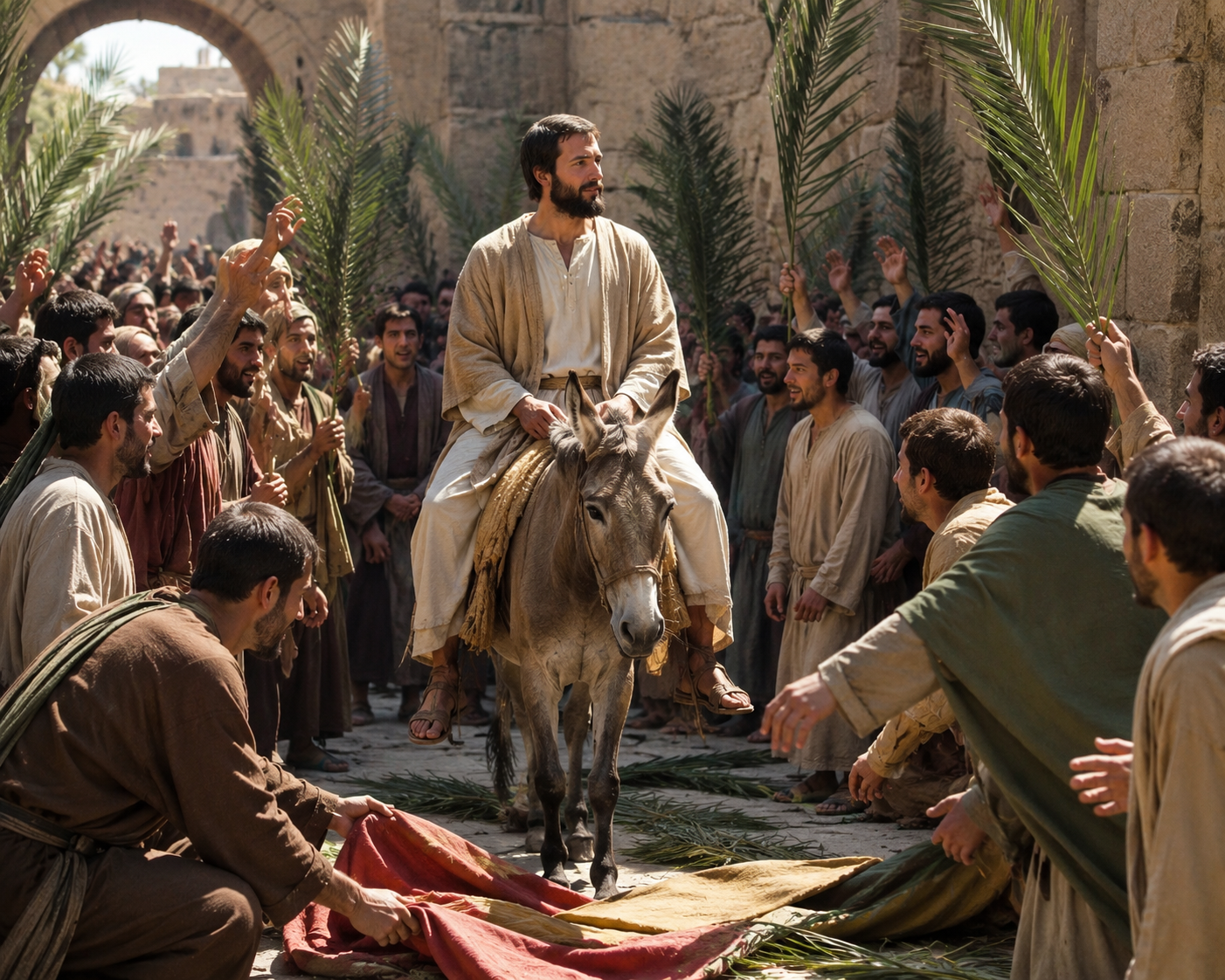
The triumphal entry follows. Jesus approaches Bethphage and Bethany at the mount called Olivet and sends disciples to find a colt. He enters Jerusalem as the promised King, while the multitude praises God, saying, “Blessed be the King that cometh in the name of the Lord.” When the Pharisees tell Him to rebuke His disciples, He answers, “if these should hold their peace, the stones would immediately cry out.” Creation itself would bear witness if men refused.
As Jesus beholds Jerusalem, He weeps over it. He says, “If thou hadst known, even thou, at least in this thy day, the things which belong unto thy peace!” The city missed its day of visitation. His prophecy of surrounding enemies and destruction was solemnly fulfilled in the Roman destruction of Jerusalem. This shows both Christ’s compassion and the certainty of judgment upon unbelief.
The chapter ends with Jesus cleansing the temple, saying, “My house is the house of prayer: but ye have made it a den of thieves.” He teaches daily in the temple, while the chief priests, scribes, and leaders seek to destroy Him. Yet they cannot find what to do, “for all the people were very attentive to hear him.”
Key People and Places
Jesus Christ
The central Person of all three chapters. He teaches, heals, forgives, warns, receives sinners, enters Jerusalem as King, weeps over the city, and cleanses the temple.
The Apostles / Disciples
They are taught about forgiveness, faith, humble service, prayer, stewardship, and the coming suffering of Christ.
The Ten Lepers
A group of diseased outcasts healed by Jesus. Their cleansing shows Christ’s mercy and the importance of obedient faith.
The Samaritan Leper
The only healed leper who returns to thank Jesus. His gratitude rebukes thanklessness and shows sincere faith.
The Pharisees
Religious leaders who question Jesus, misunderstand the kingdom, trust in outward religion, and oppose His public praise.
The Widow
A picture of persistent prayer and patient dependence upon God.
The Unjust Judge
A contrast to God, not a comparison in character. If even an unjust judge can act under persistence, God’s people should confidently pray to their righteous Father.
The Pharisee and the Publican
The Pharisee represents self-righteous religion; the publican represents humble repentance. The publican goes home justified.
The Little Children
Used by Jesus to teach humility, dependence, and simple trust in receiving the kingdom.
The Rich Ruler
A moral and religious man whose riches reveal his divided heart. His sorrow shows the danger of possessions becoming an idol.
The Blind Man near Jericho
A desperate man who cries to Jesus as “Son of David.” His healing shows mercy, faith, and the power of Christ.
Zacchaeus
A rich chief publican in Jericho who is saved and transformed by Christ. His changed life demonstrates repentance and restitution.
The Nobleman in the Parable
A picture of the rightful king who goes away, receives a kingdom, and returns to judge and reward.
Jerusalem
The city of privilege and prophecy, yet also the city that rejects its King. Jesus weeps over it before entering and cleansing the temple.
Jericho
The setting for the healing of the blind man and the salvation of Zacchaeus. It becomes a place where mercy reaches both a beggar and a rich publican.
Samaria and Galilee
The border region where Jesus heals the ten lepers, including the grateful Samaritan.
Bethphage, Bethany, and the Mount of Olives
The area from which Jesus begins His entry into Jerusalem. This setting carries strong messianic significance.
The Temple
The place intended as “the house of prayer,” but corrupted by thieves and religious profiteers.
Main Doctrinal or Spiritual Themes
1. The Seriousness of Offending Others
Jesus gives a severe warning against causing others to stumble. God takes spiritual harm seriously, especially harm done to the weak, young, or vulnerable.
2. Forgiveness Joined with Repentance
The Lord commands forgiveness when a brother repents. Christian forgiveness is not bitterness, revenge, or pride, but neither does it deny the reality of sin.
3. Faith Must Rest in God, Not in Its Own Size
The mustard seed lesson teaches that the strength of faith is not in emotional intensity but in the God upon whom faith rests.
4. Humble Service Is the Believer’s Duty
“We are unprofitable servants” rebukes spiritual pride. Even faithful obedience does not place God in debt to us.
5. Gratitude Is a Mark of True Faith
The Samaritan leper returned to glorify God. Many desire mercy, but few return with worship and thanksgiving.
6. The Kingdom Centers on the King
The kingdom was in their midst because Christ the King stood among them. Men often look for outward signs while missing the Lord Himself.
7. The Coming of Christ Will Bring Sudden Judgment
The days of Noah and Lot warn that normal life can continue right up to divine judgment. Christ’s return must be taken seriously.
8. Persevering Prayer
The widow teaches believers not to faint in prayer. Delay is not denial, and God’s justice is sure.
9. Justification Is by God’s Mercy, Not Religious Pride
The publican’s prayer, “God be merciful to me a sinner,” shows the heart posture of one who comes to God rightly. The self-righteous Pharisee is rejected.
10. Childlike Dependence
The kingdom must be received with humble trust, not earned with self-importance.
11. Riches Can Blind the Soul
The rich ruler shows that morality, religion, and wealth cannot save. Anything loved above Christ becomes a spiritual snare.
12. Christ Foretold His Death and Resurrection
Jesus knew exactly what awaited Him in Jerusalem. His death was not an accident; it was according to divine purpose.
13. Jesus Seeks and Saves the Lost
Luke 19:10 is a central truth of the passage: “For the Son of man is come to seek and to save that which was lost.” This is the heart of the Gospel mission.
14. True Salvation Produces Changed Conduct
Zacchaeus’ restitution did not purchase salvation, but it proved that salvation had reached his heart.
15. Stewardship Until the King Returns
“Occupy till I come” teaches believers to labor faithfully while awaiting the return of Christ.
16. Christ Is the Rejected but Rightful King
The triumphal entry reveals Jesus as King, yet Jerusalem’s leaders reject Him. This pattern continues until His final return in glory.
17. Christ’s Compassion and God’s Judgment Are Both True
Jesus weeps over Jerusalem, yet He also prophesies its destruction. Biblical compassion does not cancel divine justice.
18. Worship Must Not Be Corrupted by Greed
The cleansing of the temple shows the holiness of God’s house and the wickedness of turning worship into merchandise.
Practical Applications or Lessons
1. Be Careful Not to Become a Stumblingblock
Our words, conduct, doctrine, and example influence others. A believer should never treat sin lightly when it may harm another soul.
2. Practice Biblical Forgiveness
When a brother repents, forgive him. Do not keep a ledger of wrongs or nurse bitterness under the appearance of discernment.
3. Ask the Lord for Faith to Obey Hard Commands
The apostles said, “Increase our faith,” in the context of forgiveness. Some commands cannot be obeyed rightly without dependence upon God.
4. Serve Without Demanding Applause
The servant of God should work faithfully without expecting praise as though God owes him something. Duty done for Christ is still duty.
5. Return to Give Thanks
The nine received cleansing but did not return. Believers should be quicker to thank God than to ask Him for the next blessing.
6. Do Not Miss Christ While Looking for Signs
The Pharisees asked about the kingdom while rejecting the King. Religious curiosity cannot replace faith in Christ.
7. Remember Lot’s Wife
Do not look back longingly toward the world. A divided heart is spiritually dangerous.
8. Keep Praying Without Fainting
Persistent prayer honors God. The believer should continue praying even when the answer seems delayed.
9. Come to God Like the Publican
The right approach to God is not, “Look what I have done,” but “God be merciful to me a sinner.” Humility is essential.
10. Bring Children to Christ
Do not hinder children from hearing of the Saviour. Teach them plainly, tenderly, and faithfully.
11. Examine Whether Anything Owns Your Heart
The rich ruler was outwardly respectable but inwardly bound. Money, comfort, reputation, or control can become idols.
12. Cry Out to Jesus Despite Opposition
The blind man was rebuked, but he cried “so much the more.” A needy sinner should not let people silence his cry for mercy.
13. Receive Christ Personally
Zacchaeus did not merely observe Jesus from a tree; he received Him joyfully. Salvation is personal, not merely religious interest.
14. Make Wrongs Right Where Possible
Zacchaeus’ restitution shows that grace changes practical conduct. A saved man should desire a clear conscience before God and men.
15. Occupy Until Christ Comes
The believer’s calling is not speculation, idleness, or fear, but faithful service until the King returns.
16. Praise Christ Boldly
The multitude praised the King, and Jesus accepted that praise. Believers should not be ashamed to honor Him openly.
17. Weep Over the Lost
Jesus wept over Jerusalem. Sound doctrine should not produce a cold heart; it should deepen compassion for those under judgment.
18. Keep Worship Holy
The temple cleansing reminds believers that worship must not be driven by greed, showmanship, or worldly gain. God’s house is to be treated reverently.
Comments are closed