KJV-Based Conservative Baptist Overview of Luke 23–24
Chapter Summaries
Luke 23 — The Condemnation, Crucifixion, Death, and Burial of Jesus Christ
 Luke 23 opens with the Jewish leaders bringing the Lord Jesus before Pilate. Their charge is political, though their true hatred is spiritual. They accuse Him, saying, “We found this fellow perverting the nation, and forbidding to give tribute to Caesar, saying that he himself is Christ a King” (Luke 23:2). Pilate examines Him and declares, “I find no fault in this man” (Luke 23:4). This statement is important: even the Roman governor publicly acknowledged Christ’s innocence.
When Pilate learns that Jesus is a Galilaean, he sends Him to Herod. Herod desires to see a miracle, but the Lord answers him nothing. Herod and his men mock Christ and send Him back to Pilate. Pilate again states that neither he nor Herod has found Him worthy of death. Yet the crowd cries, “Crucify him, crucify him” (Luke 23:21). Barabbas, a murderer and rebel, is released, while the sinless Son of God is delivered to be crucified. This plainly displays substitution: the guilty man goes free, and the innocent Christ is condemned.
As Jesus is led away, Simon of Cyrene is compelled to bear the cross after Him. The women of Jerusalem lament, but Jesus warns them, “Daughters of Jerusalem, weep not for me, but weep for yourselves, and for your children” (Luke 23:28). His words point to coming judgment upon Jerusalem, fulfilled historically in the destruction of the city in A.D. 70. The Lord was not helpless; He was knowingly going to the cross according to the will of God.
At Calvary, Jesus is crucified between two malefactors. Luke records the tender prayer, “Father, forgive them; for they know not what they do” (Luke 23:34). The soldiers part His raiment and cast lots. The rulers mock Him, saying, “He saved others; let him save himself” (Luke 23:35). Yet in truth, if He had saved Himself from the cross, sinners could not be saved.
The superscription over Him reads, “THIS IS THE KING OF THE JEWS” (Luke 23:38). One thief rails on Him, but the other confesses both his own guilt and Christ’s innocence: “we indeed justly; for we receive the due reward of our deeds: but this man hath done nothing amiss” (Luke 23:41). He then cries, “Lord, remember me when thou comest into thy kingdom” (Luke 23:42). Jesus answers, “Verily I say unto thee, To day shalt thou be with me in paradise” (Luke 23:43). This is a clear passage showing salvation by grace through faith, apart from baptism, sacraments, works, or religious merit.
From the sixth hour until the ninth hour there is darkness over the earth. The veil of the temple is rent in the midst, signifying that Christ’s death opens access to God. Jesus cries with a loud voice, “Father, into thy hands I commend my spirit” (Luke 23:46), and gives up the ghost. His death was real, voluntary, and victorious.
A centurion beholds what is done and says, “Certainly this was a righteous man” (Luke 23:47). Joseph of Arimathaea, “a good man, and a just,” who “waited for the kingdom of God,” begs the body of Jesus and lays it in a new sepulchre (Luke 23:50–53). The women observe the tomb, prepare spices and ointments, and rest the sabbath day according to the commandment.
Doctrinally, Luke 23 presents the innocence of Christ, the guilt of man, the wickedness of religious hypocrisy, the reality of substitutionary death, and the certainty that Jesus died exactly as Scripture required.
Luke 24 — The Resurrection, Appearances, Commission, and Ascension of Jesus Christ
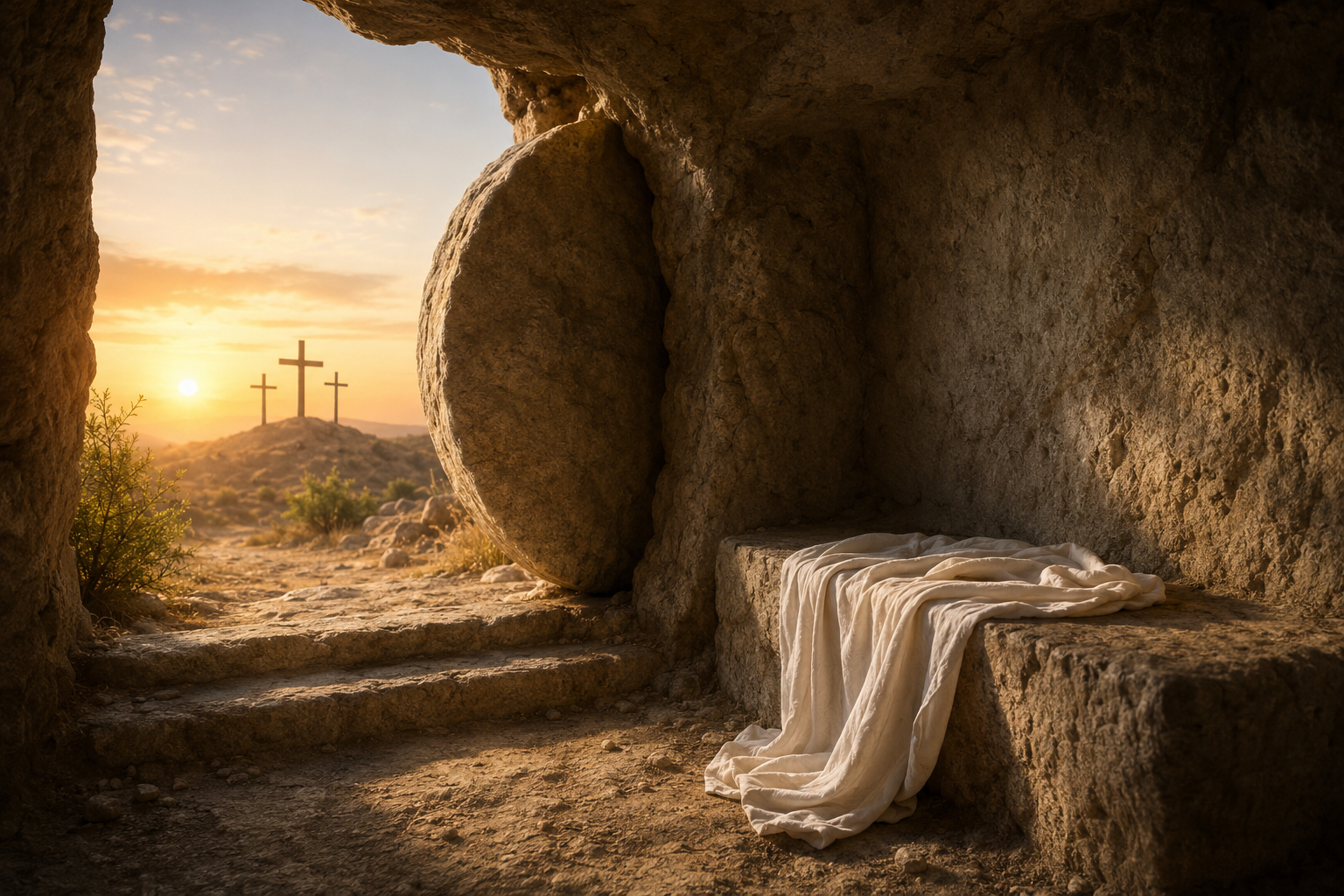
Luke 24 begins “upon the first day of the week, very early in the morning” (Luke 24:1). The women come to the sepulchre with spices, expecting to find the body of Jesus. Instead, they find the stone rolled away and the body gone. Two men in shining garments say, “Why seek ye the living among the dead? He is not here, but is risen” (Luke 24:5–6).
The angels remind them that Jesus had already said the Son of man must “be delivered into the hands of sinful men, and be crucified, and the third day rise again” (Luke 24:7). The resurrection was not an afterthought; it was the fulfillment of Christ’s own words and the Old Testament Scriptures.
The women report these things to the apostles, but “their words seemed to them as idle tales, and they believed them not” (Luke 24:11). Peter runs to the sepulchre and sees the linen clothes laid by themselves. The unbelief of the disciples actually strengthens the historical testimony: they were not gullible men inventing a resurrection story. They were slow to believe until confronted with the risen Christ.
On the road to Emmaus, two disciples speak together of the events surrounding Jesus’ death. The risen Lord draws near, but “their eyes were holden that they should not know him” (Luke 24:16). They had hoped that Jesus “had been he which should have redeemed Israel” (Luke 24:21), but their understanding was incomplete. Jesus rebukes them: “O fools, and slow of heart to believe all that the prophets have spoken” (Luke 24:25). Then, “beginning at Moses and all the prophets, he expounded unto them in all the scriptures the things concerning himself” (Luke 24:27).
This is one of the great Bible-study moments in Scripture. Christ taught that the Old Testament pointed to His sufferings and glory. This does not mean every Old Testament detail should be fancifully allegorized, but it does mean the promises, types, prophecies, sacrifices, and redemptive structure of the Old Testament find their fulfillment in Christ.
When Jesus is made known to them in the breaking of bread, He vanishes out of their sight. They say, “Did not our heart burn within us, while he talked with us by the way, and while he opened to us the scriptures?” (Luke 24:32). True spiritual warmth comes from Christ opening the Scriptures, not from emotionalism or mystical experience.
Jesus then appears among the disciples and says, “Peace be unto you” (Luke 24:36). They are terrified, thinking they have seen a spirit. The Lord corrects them by giving clear evidence of His bodily resurrection: “Behold my hands and my feet, that it is I myself: handle me, and see; for a spirit hath not flesh and bones, as ye see me have” (Luke 24:39). He even eats before them. The resurrection was literal, physical, and bodily—not symbolic, spiritualized, or imaginary.
Jesus then says, “These are the words which I spake unto you… that all things must be fulfilled, which were written in the law of Moses, and in the prophets, and in the psalms, concerning me” (Luke 24:44). He opens their understanding, “that they might understand the scriptures” (Luke 24:45). The message is plainly stated: “Thus it is written, and thus it behoved Christ to suffer, and to rise from the dead the third day” (Luke 24:46).
The commission follows: “repentance and remission of sins should be preached in his name among all nations, beginning at Jerusalem” (Luke 24:47). This is gospel preaching: Christ suffered, Christ rose again, sinners must repent, and remission of sins is in His name. The message begins at Jerusalem but extends to all nations. This does not erase God’s promises to Israel, nor does it make the Church the same as Israel; rather, it shows the worldwide scope of gospel witness in this present age.
The chapter closes with Jesus leading the disciples out as far as Bethany. He lifts up His hands and blesses them. “While he blessed them, he was parted from them, and carried up into heaven” (Luke 24:51). The disciples worship Him and return to Jerusalem “with great joy” (Luke 24:52), continually praising and blessing God.
Luke 24 establishes the foundation of Christian faith: the Scriptures are true, Christ is risen bodily, the gospel must be preached, and the risen Saviour is ascended into heaven.
Key People and Places
Jesus Christ — The sinless Son of God, falsely accused, crucified, buried, risen bodily, and ascended into heaven. He is the suffering Saviour, the risen Lord, and the promised Christ.
Pilate — The Roman governor who repeatedly declared Jesus innocent but surrendered to political pressure.
Herod — Herod Antipas, ruler of Galilee, who mocked Jesus and treated Him with contempt.
Barabbas — A guilty rebel and murderer released instead of Jesus. His release illustrates the guilty going free while the innocent Substitute is condemned.
Simon of Cyrene — The man compelled to bear the cross after Jesus.
The women of Jerusalem — Those who lamented Christ, yet were warned by Him of coming judgment.
The two malefactors — Criminals crucified with Jesus. One died railing; the other believed and was promised paradise that very day.
The repentant thief — A powerful example of salvation by faith apart from works. He had no opportunity for baptism, church membership, restitution, or religious service, yet Christ saved him.
The centurion — A Roman officer who witnessed Christ’s death and declared, “Certainly this was a righteous man.”
Joseph of Arimathaea — A just man who waited for the kingdom of God and provided the tomb for Jesus’ burial.
The women at the tomb — Faithful followers who came with spices and became early witnesses to the empty sepulchre.
Peter — One of the apostles who ran to the tomb and wondered at what had come to pass.
Cleopas and the other disciple — The two disciples on the road to Emmaus who heard Christ expound the Scriptures concerning Himself.
The apostles and gathered disciples — Witnesses of the risen Christ, commissioned to preach repentance and remission of sins in His name.
Jerusalem — The city where Jesus was condemned, crucified nearby, and where gospel preaching would begin.
Calvary — The place where Jesus was crucified: “the place, which is called Calvary” (Luke 23:33).
The sepulchre — The new tomb where Jesus was laid and from which He rose.
Emmaus — The village toward which two disciples walked when the risen Christ appeared to them.
Bethany — The area near which Jesus ascended into heaven after blessing His disciples.
Main Doctrinal or Spiritual Themes
1. The innocence of Christ
Pilate, Herod by implication, the repentant thief, and the centurion all testify in different ways that Jesus was righteous and innocent. He did not die for His own sins. He died for sinners.
2. Substitutionary atonement
Barabbas going free while Jesus is condemned gives a vivid historical picture of substitution. The larger doctrine is that Christ died in the sinner’s place. As the KJV says elsewhere, “Christ died for our sins according to the scriptures” (1 Corinthians 15:3).
3. Salvation by grace through faith
The thief on the cross is one of the clearest examples of salvation apart from works. He simply turns to Christ in faith, acknowledging Him as Lord and King. Jesus promises immediate entrance into paradise. This rejects sacramental salvation, baptismal regeneration, and any system that makes works part of justification.
4. The reality of coming judgment
Jesus warns the daughters of Jerusalem not merely to weep over Him, but over themselves and their children. Rejection of Christ brings judgment. God is merciful, but He is also holy.
5. The fulfillment of Scripture
Luke 24 emphasizes that Christ’s suffering and resurrection were written beforehand in “the law of Moses, and in the prophets, and in the psalms” (Luke 24:44). The cross was not a defeat; it was the fulfillment of God’s revealed plan.
6. The bodily resurrection of Christ
Jesus says, “a spirit hath not flesh and bones, as ye see me have” (Luke 24:39). This guards against liberal and allegorical denials of the resurrection. Christ did not merely live on in memory or influence. He rose bodily from the dead.
7. The authority and sufficiency of Scripture
On the Emmaus road, Jesus does not build faith by entertainment, philosophy, or religious tradition. He opens the Scriptures. Sound faith rests upon the written Word of God.
8. Gospel preaching to all nations
The message is “repentance and remission of sins” in Christ’s name, “among all nations, beginning at Jerusalem” (Luke 24:47). The gospel is not a social program or moral improvement plan. It is the message of the crucified and risen Saviour.
9. The ascension and present glory of Christ
Jesus is “carried up into heaven” (Luke 24:51). The risen Christ is not dead in a tomb; He is alive, exalted, and worthy of worship.
10. Israel and the Church rightly distinguished
The disciples’ concern for Israel’s redemption is not treated as wicked or meaningless, but their understanding needed fuller light. Luke 24 shows that Christ’s suffering, resurrection, and worldwide gospel witness must come according to Scripture. God’s kingdom promises to Israel are not erased, while the gospel mission now goes to all nations.
Practical Applications or Lessons
1. Religious crowds can be terribly wrong.
The multitude cried for Barabbas and rejected Christ. Truth is not determined by majority opinion, public pressure, or religious popularity.
2. Never confuse political convenience with righteousness.
Pilate knew Jesus was innocent, yet delivered Him to be crucified. A man can know the truth and still choose cowardice.
3. Come to Christ while there is mercy.
One thief was saved near death, but the other died railing. The saved thief proves late salvation is possible; the lost thief warns that it is not guaranteed.
4. The cross reveals both man’s sin and God’s grace.
At Calvary, human hatred reached its height, yet divine mercy shone in Christ’s prayer: “Father, forgive them.”
5. Faith must rest on the Word of God.
The Emmaus disciples were corrected because they were “slow of heart to believe all that the prophets have spoken.” Believers today must not pick and choose what they will believe from Scripture.
6. A cold heart is warmed by opened Scripture.
Their hearts burned while Christ opened the Scriptures. The remedy for spiritual dullness is not novelty, but Christ-centered Bible truth.
7. The resurrection gives believers a living hope.
Christian faith is not built on a dead teacher, but on a risen Saviour. Because He lives, gospel preaching is not vain.
8. The gospel message must remain clear.
Luke 24:47 gives the preaching emphasis: repentance and remission of sins in Christ’s name. Churches must not replace this with entertainment, politics, self-help, or religious ritual.
9. Worship belongs to Christ.
After His ascension, the disciples worshipped Him. Jesus is not merely an example; He is God manifest in the flesh and worthy of worship.
10. Obedient witnesses should serve with joy.
The disciples returned to Jerusalem “with great joy.” The resurrection, commission, and ascension should produce joyful obedience in believers.
Comments are closed