The “Morning Star” in Revelation (KJV)
1. Where the term appears in Revelation
 The phrase “morning star” appears explicitly in:
-
Revelation 2:28
-
Revelation 22:16
Revelation 2:28 (KJV)
“And I will give him the morning star.”
This is spoken by Christ to the faithful overcomers in the church at Thyatira.
Revelation 22:16 (KJV)
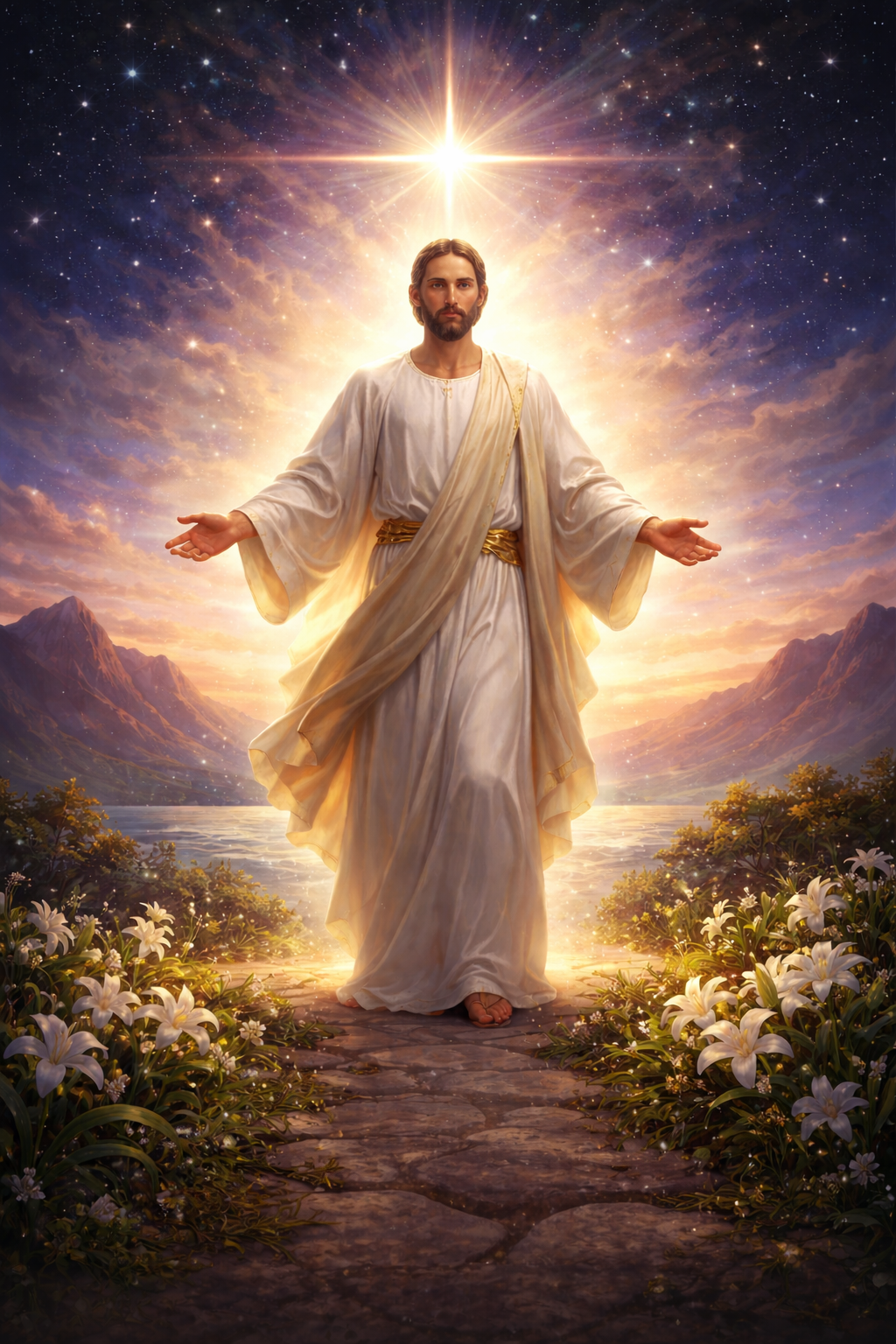
“I Jesus have sent mine angel to testify unto you these things in the churches. I am the root and the offspring of David, and the bright and morning star.”
Here, Jesus explicitly identifies Himself as the Bright and Morning Star.
2. Who is the Morning Star?
From the KJV text alone, the answer is unmistakable:
Jesus Christ is the Morning Star.
This is not symbolic guesswork—it is a direct self-identification by Christ in Revelation 22:16.
3. Meaning of “Morning Star” (Biblical Sense)
In biblical imagery, the morning star (the star seen just before dawn) represents:
-
The end of night
-
The promise of a coming day
-
Hope, victory, and new beginning
Applied to Christ, it means:
-
He appears before the full “day” of the Kingdom
-
He is the herald of God’s coming reign
-
He shines in a dark world just before judgment gives way to restoration
This aligns perfectly with Christ’s role in Revelation as:
-
Judge
-
King
-
Redeemer
-
Restorer
4. Connection to Other KJV Scriptures
a) 2 Peter 1:19 (KJV)
“…until the day dawn, and the day star arise in your hearts”
“Day star” and “morning star” refer to the same astronomical image and point to Christ illuminating the believer before full glory comes.
b) Isaiah 14:12 (Important distinction)
“How art thou fallen from heaven, O Lucifer, son of the morning!”
This verse does NOT call Lucifer “the Morning Star” in the same sense.
-
“Lucifer” means light-bearer (Latin term used by translators)
-
It describes his former position, not his present identity
-
Scripture never calls Satan the Morning Star
-
Only Christ claims that title by name in Revelation
Independent Baptist teaching strongly rejects any attempt to equate Christ with Satan through wordplay here.
5. What does it mean that believers receive “the morning star”? (Rev 2:28)
This does not mean believers become Christ.
It means:
-
Sharing in Christ’s victory
-
Sharing in His reign (cf. Rev 2:26–27)
-
Fellowship with Christ in His glory
-
Participation in the hope of His appearing
In IFB teaching, this is understood as reward and fellowship, not mystical union or deification.
6. Doctrinal Summary (KJV / IFB-safe)
-
? The Morning Star is Jesus Christ
-
? He explicitly claims the title in Revelation 22:16
-
? It symbolizes hope before judgment and glory before the Kingdom
-
? Believers “receive” the Morning Star by sharing in Christ, not replacing Him
-
? Satan is not the Morning Star—any comparison is false doctrine
7. Simple One-Sentence IFB Statement
Jesus Christ is the Bright and Morning Star—God’s promised Light who appears before the dawn of His Kingdom and shares His victory with faithful believers.
Here are the Greek lexicon definitions behind “Morning Star” in Revelation, presented plainly and conservatively, with KJV / IFB alignment and no speculation.
1. Greek Text in Revelation
Revelation 22:16 (Greek phrase)
? ????? ? ??????? ? ???????
(ho ast?r ho lampros ho pr?inos)
= “the bright, the morning star”
This is a definite, descriptive title, not a metaphorical aside.
2. Key Greek Words & Lexicon Definitions
????? (ast?r) — star
Strong’s G792
Lexicon meaning:
-
A star (literal, astronomical)
-
Figuratively: a heavenly luminary of great glory
-
Used of Christ as supreme light and ruler
KJV usage:
-
Matthew 2:2 (Star of Bethlehem)
-
Revelation 1:16, 20 (symbolic authority)
-
Revelation 22:16 (Christ Himself)
? In Koine Greek, ast?r is never a minor light when used figuratively—it implies prominence and authority.
??????? (lamprós) — bright, radiant
Strong’s G2986
Lexicon meaning:
-
Shining
-
Brilliant
-
Splendid
-
Glorious, radiant in appearance
Usage notes:
-
Describes visible glory
-
Used of garments, angels, divine manifestations
-
Emphasizes pure, overwhelming light
? When applied to Christ, it signifies manifest glory, not borrowed or reflected light.
??????? (pr?inós) — morning, belonging to dawn
Strong’s G4408
Lexicon meaning:
-
Pertaining to the early morning
-
Existing just before sunrise
-
The time that announces the coming day
Important nuance:
-
Not “daylight”
-
Not “sun”
-
The herald of dawn
? This is the key theological term:
Christ appears before the full day, announcing what is about to come.
3. Combined Lexical Sense (Literal)
Putting the Greek together without interpretation:
“The star—brilliant, radiant, and belonging to the dawn.”
This describes:
-
A real, glorious light
-
Appearing before full daylight
-
Dominant in the darkness just before morning
4. Lexical Comparison: Isaiah 14:12 (Why This Is NOT the Same)
Isaiah 14:12 (LXX Greek)
Hebrew: helel ben shachar
LXX Greek: ???????? (he?sphoros)
= “dawn-bearer” / “light-bearer”
Key differences:
| Christ (Rev 22:16) | Lucifer (Isa 14:12) |
|---|---|
| ????? (star) | ???????? (light-bearer) |
| Title claimed by Christ | Description of a fallen being |
| Eternal, self-existent | Created, fallen |
| Appears before the Kingdom | Cast down in judgment |
? Different words. Different contexts. Different meanings.
Any attempt to equate them is lexically dishonest.
5. Theological Weight from the Greek (IFB-safe)
From the lexicon alone:
-
Christ is not reflecting light ? He is light
-
Christ is not the sun yet ? He comes before the day
-
Christ is the final star ? No other follows Him
This fits perfectly with:
-
Pre-millennial return
-
Christ’s appearing before the Kingdom
-
Hope before judgment
-
Light before wrath
6. Plain IFB Summary (Lexicon-Based)
In Greek, “the Bright and Morning Star” means Christ is the radiant, sovereign Light who appears at the end of spiritual night to announce the coming Day of His Kingdom.
How useful was this post?
Click on a star to rate it!
Average rating 0 / 5. Vote count: 0
No votes so far! Be the first to rate this post.
We are sorry that this post was not useful for you!
Let us improve this post!
Tell us how we can improve this post?
Comments are closed