 These final chapters record the repopulation, dedication, and reform of Jerusalem after the wall was completed. They show that rebuilding the wall was not the end—God required a holy people, not merely a secure city. The narrative moves from organization (ch. 11–12) to spiritual correction (ch. 13).
Chapter Summaries
Nehemiah 11 — Repopulating Jerusalem
After the wall is finished, the leaders recognize that Jerusalem lacks sufficient population. The people cast lots so that one out of ten would dwell in the city, while others volunteered willingly.
- “The rulers of the people dwelt at Jerusalem” (11:1).
- The city is described as “large and great: but the people were few therein” (11:4).
- Lists are given of Judah, Benjamin, priests, Levites, singers, and porters who live in the city.
Doctrinal emphasis: God values order, willingness, and sacrifice. Dwelling in Jerusalem required personal cost, but it was necessary for the spiritual life of the nation.
Nehemiah 12 — Priests, Levites, and the Dedication of the Wall
This chapter records priestly genealogies and climaxes with the dedication of the wall of Jerusalem.
- Two great companies of thanksgiving walk upon the wall in opposite directions (12:31).
- Instruments of music are used “after the manner of David the man of God” (12:36).
- “The joy of Jerusalem was heard even afar off” (12:43).
The chapter ends with renewed emphasis on proper support of the priests and Levites, ensuring continual worship and obedience to the Law.
Doctrinal emphasis: God is honored by reverent worship, joyful thanksgiving, and obedience rooted in Scripture—not innovation.
Nehemiah 13 — Final Reforms and Separation from Sin
After Nehemiah returns from Persia, he discovers serious spiritual compromise.
Major reforms include:
- Cleansing the temple chambers, where Tobiah the Ammonite had been given space (13:4–9).
- Restoring tithes neglected by the people (13:10–14).
- Rebuking Sabbath violations (13:15–22).
- Correcting intermarriage with heathen nations (13:23–27).
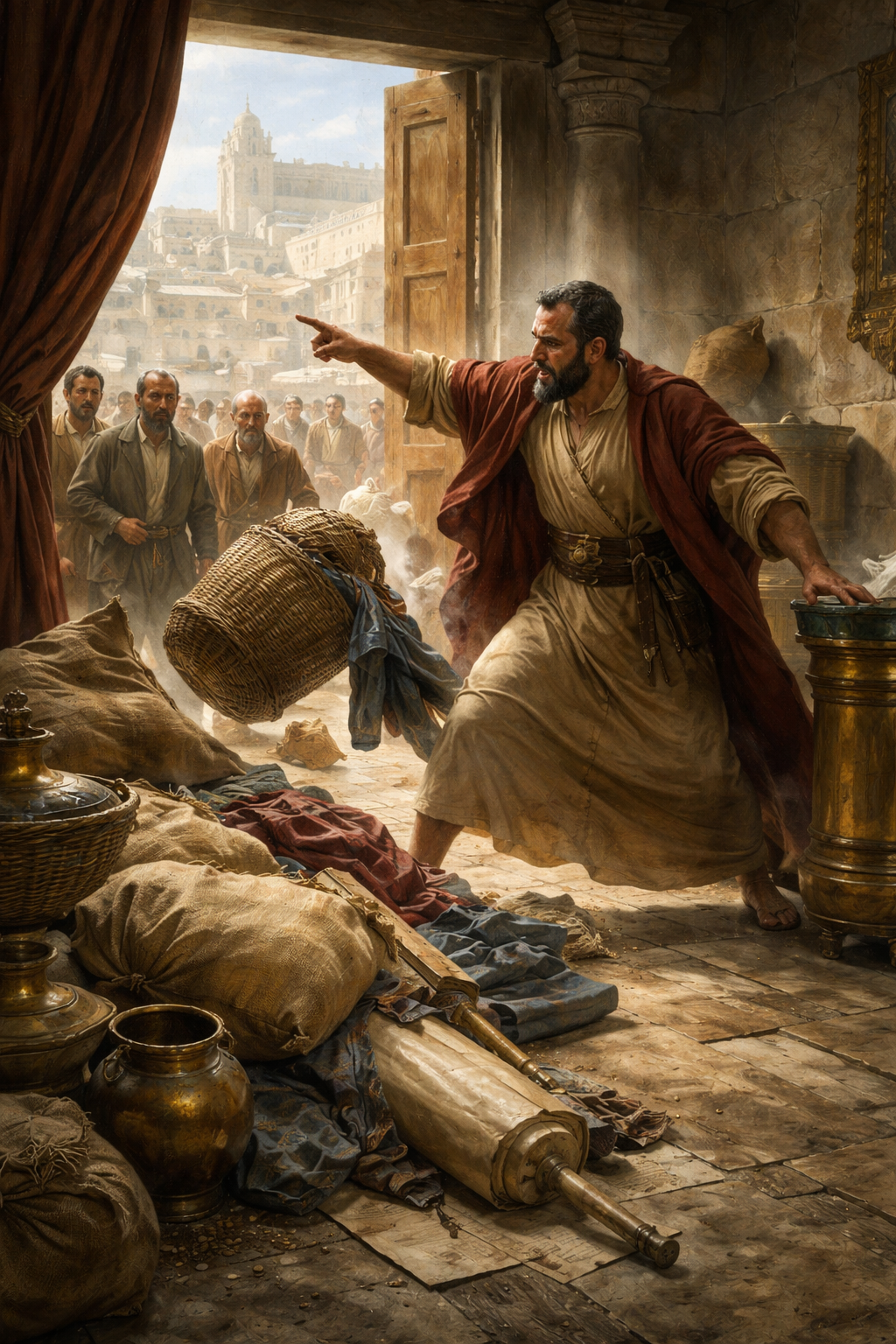
Nehemiah acts decisively, reminding them of Solomon’s downfall and enforcing separation.
- “Should we then hearken unto you to do all this great evil?” (13:27)
- The book closes with Nehemiah’s prayer: “Remember me, O my God, for good” (13:31).
Doctrinal emphasis: Separation from sin is essential to maintaining fellowship with God. Revival must be guarded, or it will decay.
Key People and Places
- Nehemiah — God’s appointed leader, faithful in reform and prayer.
- Jerusalem — The spiritual and political center, requiring both walls and people.
- Priests and Levites — Guardians of worship, teaching, and holiness.
- Tobiah the Ammonite — Symbol of compromise allowed into sacred space.
- Ezra (implied influence) — His reforms and emphasis on the Law continue to shape the nation.
Main Doctrinal or Spiritual Themes
- Holiness Requires Separation
God’s people must be distinct from the world (cf. 13:27). - Worship Must Be Scriptural
Praise followed God’s prescribed order (12:36). - Leadership Must Confront Sin
Nehemiah did not tolerate compromise, even when unpopular. - Revival Is Not Permanent Without Vigilance
The same people who wept under the Word later fell into neglect. - God Honors Willing Sacrifice
Those who volunteered to live in Jerusalem strengthened the nation spiritually.
Practical Applications or Lessons
- Strong walls do not replace strong convictions.
- Compromise begins small—a chamber given to Tobiah led to greater corruption.
- Godly leaders must act, not merely grieve, when truth is violated.
- Joyful worship flows from obedience, not emotion alone.
- Separation is protective, not hateful, preserving devotion to God.
Comments are closed