Chapter Summaries
Nehemiah 8 — The Revival of the Word
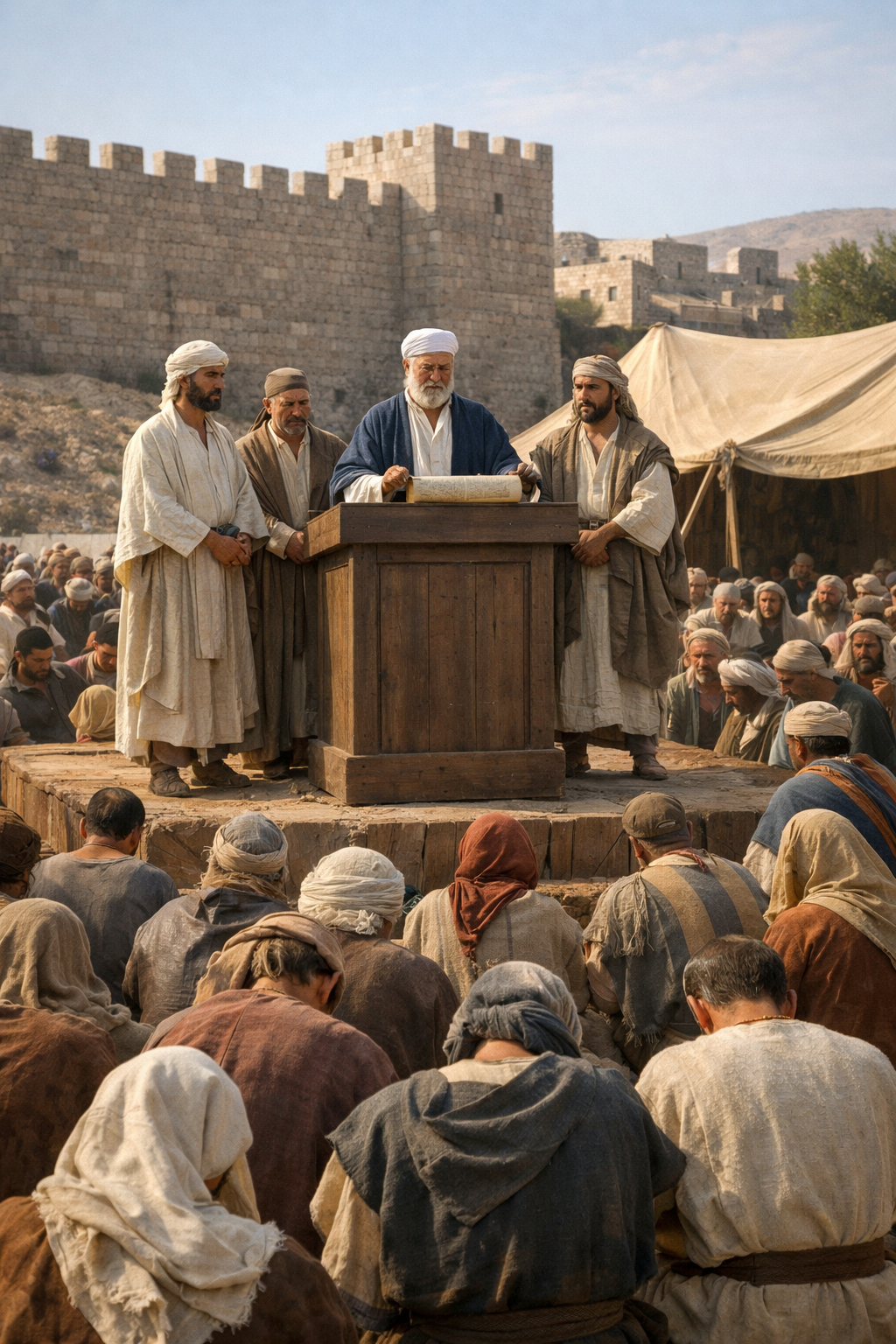
 After the wall is completed, the people gather “as one man” in Jerusalem. Ezra publicly reads the book of the law of Moses from morning until midday. The Levites “gave the sense, and caused them to understand the reading” (8:8).
The people initially weep when confronted by God’s Word, but they are instructed to rejoice, for “the joy of the LORD is your strength” (8:10). The chapter concludes with obedience to Scripture as Israel keeps the Feast of Tabernacles according to what was written—something neglected since the days of Joshua.
Key emphasis: revival comes through clear reading, explanation, and obedience to God’s Word, not emotion alone.
Nehemiah 9 — Confession and Covenant Remembrance
This chapter records one of the longest prayers in Scripture. The people assemble with fasting, sackcloth, and ashes, confessing their sins and the sins of their fathers.
The Levites rehearse Israel’s history—from creation, Abraham, the Exodus, Sinai, wilderness rebellion, conquest, judges, kings, captivity, and return. God’s faithfulness is repeatedly contrasted with Israel’s stubbornness. Despite repeated rebellion, God is described as “ready to pardon, gracious and merciful, slow to anger, and of great kindness” (9:17).
The prayer ends with a solemn acknowledgment: though back in the land, Israel remains under Persian rule because of past sin.
Key emphasis: true repentance includes confession, acknowledgment of God’s righteousness, and submission to His authority.
Nehemiah 10 — A Binding Commitment to Obedience
Following confession, leaders, Levites, and people seal a written covenant. The commitments are specific and practical:
- Separation from pagan marriages
- Observance of the Sabbath
- Support of the temple ministry
- Faithful giving of tithes and offerings
The chapter concludes with the statement: “we will not forsake the house of our God” (10:39).
Key emphasis: repentance must lead to deliberate, accountable obedience, not vague intentions.
Key People and Places
- Nehemiah — God-appointed leader overseeing both physical rebuilding and spiritual reform
- Ezra — Central figure in teaching and explaining Scripture
- Levites — Teachers and spiritual leaders who explain the Law
- Jerusalem — Center of worship, covenant renewal, and national identity
- The Law of Moses — The written Word of God governing Israel’s faith and conduct
Main Doctrinal and Spiritual Themes
- Authority of Scripture — God’s Word must be read, explained, and obeyed
- Biblical Revival — True revival begins with understanding Scripture
- Confession of Sin — Personal and corporate responsibility before God
- God’s Faithfulness — The Lord remains faithful despite human failure
- Separation and Holiness — God’s people are called to distinct living
- Covenant Commitment — Obedience must be intentional and accountable
Practical Applications and Lessons
- God’s people need clear Bible preaching and teaching, not entertainment
- Emotional response to Scripture must result in obedient action
- Confession should be specific, humble, and God-focused
- Remembering God’s past faithfulness strengthens present obedience
- Spiritual decisions should be public, deliberate, and supported by action
- Faithful stewardship and worship are marks of genuine repentance
Comments are closed