Good, serious question—and you’re right to notice how forceful Nehemiah 13 really is. The text does not soften his actions.
Let’s handle this carefully, biblically, and without importing modern assumptions back into the passage.
1. What Nehemiah Actually Did (KJV reality)
 In Nehemiah 13, Nehemiah:
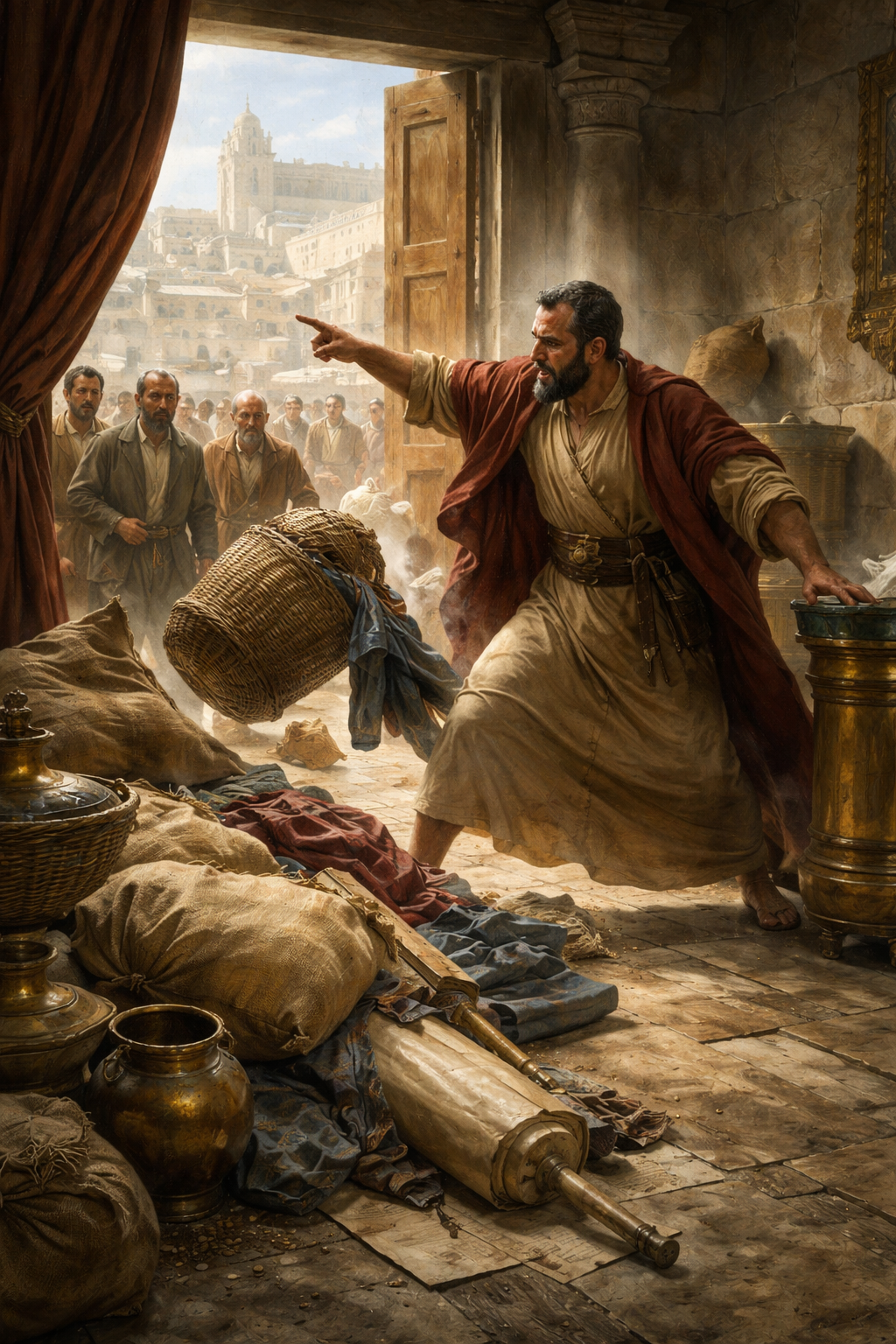
- Threatens physical force against Sabbath-breaking merchants (13:21)
- Contends, curses, smites, and plucks hair from men guilty of intermarriage (13:25)
- Drives out the grandson of the high priest (13:28)
This is not symbolic language. It is physical discipline enforced by civil authority.
Nehemiah is not acting as a private individual losing his temper. He is acting as:
- Governor of Judah
- God-appointed civil ruler
- Executor of Mosaic Law in a theocratic society
That distinction matters enormously.
2. Why Nehemiah’s Actions Were Lawful Then
A. Israel Was a Theocracy
Judah at this time was governed by God’s revealed law, not merely moral persuasion.
- The Law of Moses prescribed civil penalties for covenant violations.
- Sabbath profanation and intermarriage were national sins, not just personal ones.
- Failure to enforce the Law brought judgment on the whole nation (cf. 13:18).
Nehemiah was doing what civil magistrates were commanded to do under the Old Covenant.
B. He Acted to Protect the Covenant People
Nehemiah explicitly appeals to history:
“Did not Solomon king of Israel sin by these things?” (13:26)
This is preventative judgment—cutting off corruption before it destroys the nation again.
3. Why This Does Not Translate Directly to Christians Today
This is where many people go wrong—either by excusing violence or dismissing Scripture.
A. The Church Is Not a Theocratic State
Under the New Covenant:
- The church does not wield the sword
- Discipline is spiritual, not physical
- Authority is exercised through church discipline, not force
Jesus made this clear:
“My kingdom is not of this world: if my kingdom were of this world, then would my servants fight” (John 18:36, KJV)
B. Church Discipline Replaces Civil Punishment
Compare Nehemiah with New Testament instruction:
- Nehemiah: physical enforcement
- Paul: removal from fellowship (1 Corinthians 5)
- Jesus: confrontation ? witnesses ? church ? separation (Matthew 18)
No corporal punishment is authorized for the church.
4. When Is Violence Ever Condoned Today?
A. Civil Government Still Bears the Sword
Romans 13 is explicit:
“He beareth not the sword in vain: for he is the minister of God, a revenger to execute wrath upon him that doeth evil.”
So violence is condoned when:
- Exercised by lawful civil authority
- For punishment of evildoers
- Within just limits
Police, courts, soldiers—this is not sin when rightly used.
B. Personal Violence Is Strictly Limited
For individual Christians:
Permitted:
- Self-defense (Luke 22:36 understood properly)
- Defense of others
- Just war participation under lawful authority
Forbidden:
- Vigilantism
- Personal revenge
- “Religious enforcement” by force
- Church coercion through violence
“Vengeance is mine; I will repay, saith the Lord” (Romans 12:19)
5. What Nehemiah Teaches Christians Today
Not how to act physically—but how seriously to treat sin.
Key Applications:
- Sin is destructive, not harmless
Nehemiah feared compromise more than conflict. - Leadership requires courage
He was willing to be hated to obey God. - Tolerance is not holiness
Love does not mean allowing corruption. - Godly reform is costly
Every revival in Scripture involves confrontation.
6. Final Balance (Important)
- Nehemiah’s actions were righteous then
- Imitating them physically today would be sin
- Ignoring their moral seriousness today is also sin
We are not called to strike people, but we are called to separate from sin, rebuke error, and guard holiness with the same intensity—using the tools Christ has given the church.
How useful was this post?
Click on a star to rate it!
Average rating 0 / 5. Vote count: 0
No votes so far! Be the first to rate this post.
We are sorry that this post was not useful for you!
Let us improve this post!
Tell us how we can improve this post?
Comments are closed