 Malachi is the last book of the Old Testament and stands as Jehovah’s final prophetic message to Israel before the long prophetic silence leading up to John the Baptist. The book addresses a spiritually careless people, corrupt priests, polluted worship, broken homes, robbed tithes, and coming judgment. Yet it also closes with hope: the coming of the Lord, the promise of Elijah, and the call to remember the law of Moses.
Malachi’s message is especially weighty because it exposes religious form without heart obedience. Israel still had temple service, priests, sacrifices, and outward religion, but their fear of God had grown cold. The Lord’s repeated charge is not that they lacked religion, but that they despised His name while still pretending to serve Him.
Chapter Summaries
Malachi 1 — God’s Love, Israel’s Contempt, and Polluted Sacrifices
The book opens with the “burden of the word of the LORD to Israel by Malachi” (Malachi 1:1). The Lord immediately declares His covenant love: “I have loved you, saith the LORD” (Malachi 1:2). Israel responds with unbelieving dullness: “Wherein hast thou loved us?” God answers by reminding them of His sovereign covenant dealings with Jacob and Esau: “Was not Esau Jacob’s brother? saith the LORD: yet I loved Jacob, And I hated Esau” (Malachi 1:2–3).
This does not teach Calvinistic regeneration or fatalistic election unto salvation. In context, it concerns God’s covenant choice of Jacob’s line for the nation of Israel and His judgment upon Edom. The Lord had chosen Israel for covenant privilege, yet Israel had treated that privilege lightly.
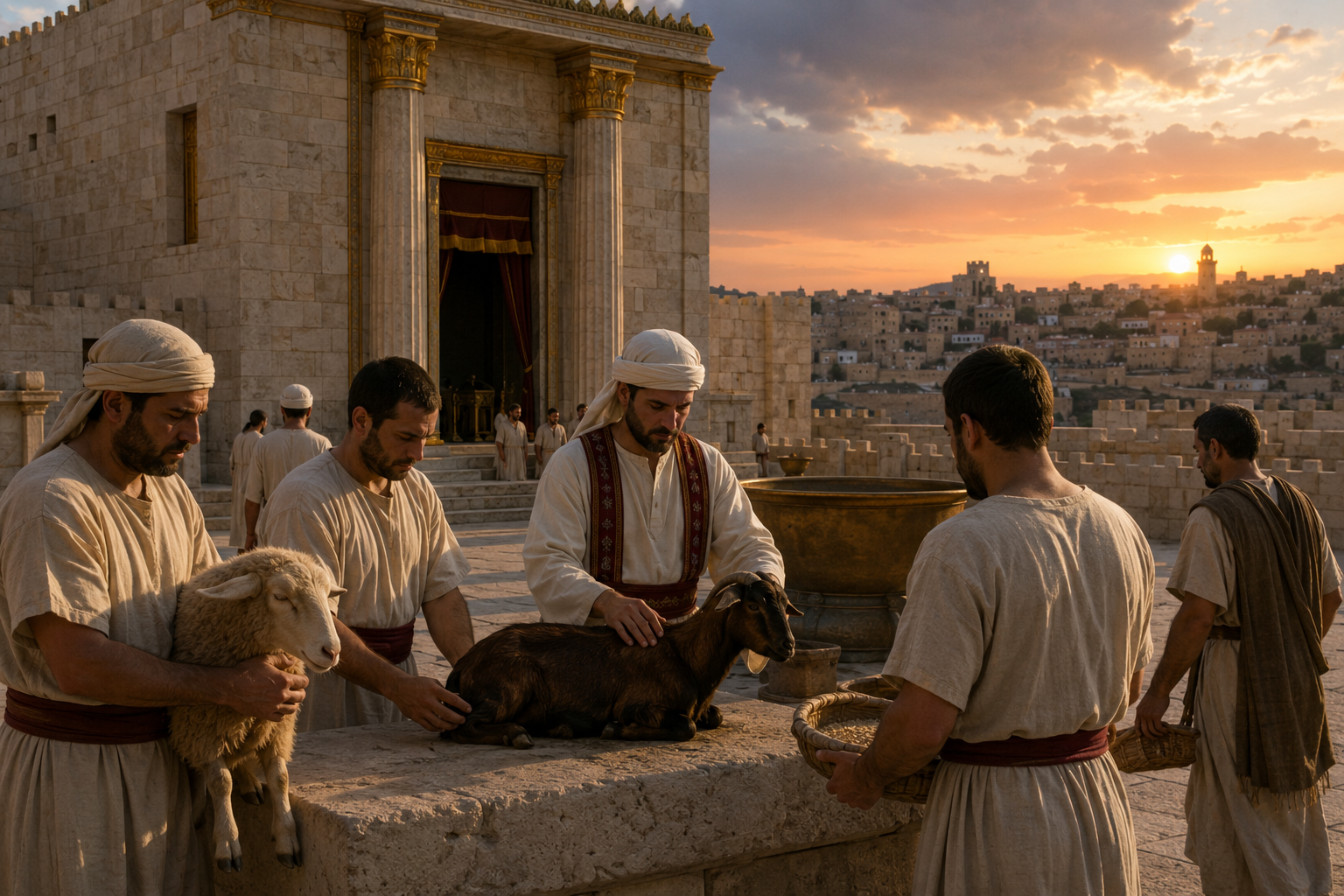
The priests are then rebuked for despising God’s name. The Lord says, “A son honoureth his father, and a servant his master” (Malachi 1:6), yet Israel’s priests failed to honour Jehovah. They asked, “Wherein have we despised thy name?” The answer: they offered “polluted bread” upon His altar and brought blind, lame, and sick sacrifices (Malachi 1:7–8). They gave God what they would not dare give to a governor.
God’s standard for worship was holiness, reverence, and obedience. Israel’s sin was not merely poor quality offerings; it was a heart that counted God unworthy of their best. The Lord says, “I have no pleasure in you” (Malachi 1:10), showing that religious activity without reverent obedience is not acceptable worship.
The chapter also looks beyond Israel’s corruption to the broader honour God will receive: “from the rising of the sun even unto the going down of the same my name shall be great among the Gentiles” (Malachi 1:11). This anticipates God’s wider purpose among the nations, without erasing His covenant distinction between Israel and the Gentiles.
Doctrinal emphasis: God’s love is covenantal and holy. Worship must not be careless. The Lord deserves honour, not leftovers.
Malachi 2 — Corrupt Priests, Broken Covenant, and Treacherous Marriages
Chapter 2 continues the rebuke of the priesthood. God warns, “O ye priests, this commandment is for you” (Malachi 2:1). If they would not hear and “lay it to heart,” God would curse their blessings (Malachi 2:2). Their office was sacred, but they had corrupted it.
The Lord reminds them of His covenant with Levi: “My covenant was with him of life and peace” (Malachi 2:5). Levi feared God, walked with Him “in peace and equity,” and turned many away from iniquity (Malachi 2:6). The priest’s duty was clear: “the priest’s lips should keep knowledge, and they should seek the law at his mouth” (Malachi 2:7). But these priests had “departed out of the way” and caused many to stumble (Malachi 2:8).
This is a sober warning for preachers and teachers. A man who handles the Word of God must not corrupt doctrine, compromise truth, or make light of holiness. Religious office does not excuse sin; it increases accountability.
The chapter then turns to Judah’s unfaithfulness. They had “profaned the holiness of the LORD” and married “the daughter of a strange god” (Malachi 2:11). This was not a condemnation of ethnicity but of spiritual compromise. Israel was entering marriages that drew them into idolatry and covenant disobedience.
The Lord also rebukes treachery in marriage. Men had dealt falsely with “the wife of thy youth” (Malachi 2:14). God says, “the LORD hath been witness between thee and the wife of thy youth” (Malachi 2:14), and then declares, “For the LORD, the God of Israel, saith that he hateth putting away” (Malachi 2:16).
Marriage is not merely a civil arrangement. It is a covenant before God. Malachi 2 defends the sanctity, permanence, and seriousness of marriage. The Lord is against treachery, abandonment, and spiritual compromise in the home.
The chapter ends by exposing another sin: charging God with injustice. “Ye have wearied the LORD with your words” (Malachi 2:17). They said, “Every one that doeth evil is good in the sight of the LORD,” and asked, “Where is the God of judgment?” This is the language of a people morally confused, calling evil good and questioning God’s justice.
Doctrinal emphasis: Spiritual leadership must be faithful to the Word. Marriage is sacred. God does not tolerate treachery, compromise, or moral reversal.
Malachi 3 — The Coming Messenger, Purifying Judgment, Robbing God, and the Faithful Remnant
Chapter 3 opens with prophecy: “Behold, I will send my messenger, and he shall prepare the way before me” (Malachi 3:1). This points to John the Baptist, who prepared the way before the Lord Jesus Christ. The verse continues, “and the Lord, whom ye seek, shall suddenly come to his temple” (Malachi 3:1). This looks to Christ’s coming, including His presentation to Israel and His authority over the temple.
The Lord is described as coming in purifying judgment: “But who may abide the day of his coming? and who shall stand when he appeareth?” (Malachi 3:2). He is “like a refiner’s fire, and like fullers’ soap” (Malachi 3:2). The sons of Levi will be purified, and judgment will fall upon sorcerers, adulterers, false swearers, oppressors, and those that fear not the Lord (Malachi 3:5).
God then declares His immutability: “For I am the LORD, I change not; therefore ye sons of Jacob are not consumed” (Malachi 3:6). This is a major doctrinal statement. Israel’s survival rested not in her faithfulness, but in Jehovah’s unchanging covenant character. God’s holiness does not change. His promises do not change. His Word does not change.
The Lord calls Israel to return: “Return unto me, and I will return unto you” (Malachi 3:7). But again the people answer with spiritual blindness: “Wherein shall we return?” God replies by accusing them of robbing Him: “Will a man rob God? Yet ye have robbed me” (Malachi 3:8). They ask, “Wherein have we robbed thee?” The answer: “In tithes and offerings” (Malachi 3:8).
In its direct context, this concerns Israel under the law and temple economy. The tithe belonged to God’s ordered worship and support of the Levitical ministry. For believers today, this passage still teaches the moral principle that God’s people must not be covetous, careless, or stingy with that which belongs to the Lord. Giving should be obedient, faithful, cheerful, and honouring to God.
God promises blessing upon obedience: “Bring ye all the tithes into the storehouse” (Malachi 3:10). He would open “the windows of heaven” and rebuke the devourer (Malachi 3:10–11). This is not a modern prosperity scheme; it is a covenant promise to Israel, with a continuing practical lesson that God honours faithful stewardship.
The chapter also records the arrogance of the wicked. Some said, “It is vain to serve God” (Malachi 3:14). But in contrast, there was a faithful remnant: “Then they that feared the LORD spake often one to another” (Malachi 3:16). God heard them, and “a book of remembrance was written before him for them that feared the LORD, and that thought upon his name” (Malachi 3:16).
This remnant stands as a beautiful picture of faithful believers in a cold religious age. While many complained against God, some still feared Him, spoke of Him, and thought upon His name.
Doctrinal emphasis: Christ’s coming includes purification and judgment. God is immutable. Stewardship matters. Even in apostasy, God has a faithful remnant.
Malachi 4 — The Day of the LORD, the Sun of Righteousness, and the Promise of Elijah
Chapter 4 looks forward to the coming day of judgment: “For, behold, the day cometh, that shall burn as an oven” (Malachi 4:1). The proud and wicked will be as stubble. This is not symbolic moral improvement; it is real divine judgment. The Lord will judge sin.
But for those that fear His name, there is promise: “But unto you that fear my name shall the Sun of righteousness arise with healing in his wings” (Malachi 4:2). This is a glorious prophetic picture of Christ in His righteous appearing and kingdom blessing. The phrase “Sun of righteousness” points to light, healing, restoration, and righteous rule.
The chapter exhorts Israel: “Remember ye the law of Moses my servant” (Malachi 4:4). The Old Testament closes by pointing Israel back to the law God gave at Horeb. This is important. God does not close the Old Testament by telling Israel to follow dreams, traditions, or human inventions. He commands them to remember His written Word.
Then comes the promise: “Behold, I will send you Elijah the prophet before the coming of the great and dreadful day of the LORD” (Malachi 4:5). In the New Testament, John the Baptist came “in the spirit and power of Elias” (Luke 1:17), preparing the way at Christ’s first coming. Yet the full connection with “the great and dreadful day of the LORD” also points forward in prophetic significance to Israel and the events surrounding the Lord’s second coming. A conservative dispensational reading keeps these prophetic distinctions clear.
The final verse says Elijah’s ministry will “turn the heart of the fathers to the children, and the heart of the children to their fathers” (Malachi 4:6), lest the Lord come and “smite the earth with a curse.” The Old Testament ends with the word “curse,” showing man’s need for redemption and pointing forward to the grace and truth that come by Jesus Christ.
Doctrinal emphasis: Judgment is coming. Christ is Israel’s righteous hope. God’s people must remember His Word. Prophecy will be fulfilled literally and faithfully.
Key People and Places
Malachi — The prophet whose name means “my messenger.” He delivers Jehovah’s final Old Testament prophetic message to Israel.
The LORD / Jehovah — The covenant God of Israel, holy, unchanging, loving, and just. He rebukes sin but preserves His promises.
Israel / Judah — The covenant nation addressed by the prophet. They had returned from captivity but had fallen into cold, corrupt, careless religion.
Jacob — The covenant line chosen by God for Israel’s national promises.
Esau / Edom — Esau represents the rejected line, and Edom is shown under God’s judgment for pride and wickedness.
The Priests — Religious leaders rebuked for offering polluted sacrifices, corrupting the covenant of Levi, and causing others to stumble.
Levi — Represents the priestly covenant ideal: reverence, truth, equity, and turning many from iniquity.
The Wife of Thy Youth — Used in Malachi 2 to emphasize covenant faithfulness in marriage.
The Messenger — In Malachi 3:1, the forerunner who prepares the way before the Lord; fulfilled in John the Baptist at Christ’s first coming.
The Lord Coming to His Temple — A prophecy concerning Christ’s coming and His authority over Israel’s worship.
Elijah — Promised before “the great and dreadful day of the LORD” (Malachi 4:5). John the Baptist came in the spirit and power of Elias, while the prophetic language also bears future significance concerning Israel and the day of the Lord.
Jerusalem / The Temple — Though not always named directly in every rebuke, the temple worship system is central to the book’s setting.
Horeb — The place connected with the law given to Moses, remembered in Malachi 4:4.
Main Doctrinal or Spiritual Themes
1. God’s Covenant Love
“I have loved you, saith the LORD” (Malachi 1:2). God’s love is not sentimental permissiveness. His love is holy, covenantal, faithful, and corrective.
2. God’s Holiness in Worship
The Lord rejected blind, lame, sick, and polluted offerings. God is not pleased with careless service. Worship must be reverent, obedient, and according to His Word.
3. The Accountability of Spiritual Leaders
“The priest’s lips should keep knowledge” (Malachi 2:7). Those who teach or preach must handle the Word faithfully. False, careless, or compromised ministry causes people to stumble.
4. The Sanctity of Marriage
Malachi strongly condemns treachery against “the wife of thy youth” (Malachi 2:14). God sees marriage as covenantal, sacred, and morally binding.
5. Separation from Idolatry and Spiritual Compromise
Judah’s marriages with “the daughter of a strange god” show the danger of religious compromise. God’s people must not join themselves to idolatry or unbelieving spiritual influence.
6. God’s Immutability
“For I am the LORD, I change not” (Malachi 3:6). God’s nature, holiness, promises, and Word are unchanging.
7. Stewardship and Obedience
Israel robbed God in “tithes and offerings” (Malachi 3:8). The believer today must learn reverent stewardship, faithful giving, and freedom from covetousness.
8. The Faithful Remnant
Even in a corrupt religious climate, “they that feared the LORD spake often one to another” (Malachi 3:16). God always knows those who fear Him.
9. The Coming of Christ
Malachi points to the forerunner, the Lord coming to His temple, and the “Sun of righteousness” arising with healing. Christ is the answer to Israel’s need and the hope of righteousness.
10. The Day of the LORD
Malachi ends with coming judgment. The proud and wicked will not escape. God’s patience must never be mistaken for indifference.
Practical Applications or Lessons
1. Give God Your Best
Israel offered God what was defective. A believer must not give the Lord leftover time, half-hearted prayer, careless worship, or unwilling service.
2. Religious Activity Cannot Replace Reverence
The priests were active in religion, but God was displeased. Church attendance, ministry involvement, and outward service mean little if the heart does not fear the Lord.
3. Spiritual Leaders Must Guard Doctrine
The priest’s lips were to keep knowledge. Preachers, teachers, fathers, and Christian leaders must teach sound doctrine and avoid compromise.
4. Do Not Treat Marriage Lightly
God witnessed the covenant between a man and “the wife of thy youth.” Marriage must be protected with faithfulness, humility, forgiveness, and holiness.
5. Beware of Asking Rebellious Questions
Throughout Malachi, Israel answers God with “Wherein?” They were not sincerely seeking truth; they were resisting conviction. A hard heart often disguises rebellion as questioning.
6. God Sees What Men Excuse
Israel excused polluted sacrifices, broken marriages, corrupt priesthood, and robbed offerings. God saw all of it clearly. No sin is hidden from Him.
7. Faithfulness Matters in Dark Times
The faithful remnant in Malachi 3 did not follow the crowd. They feared the Lord, spoke often one to another, and thought upon His name.
8. God’s Word Must Be Remembered
“Remember ye the law of Moses my servant” (Malachi 4:4). God’s people must continually return to Scripture. The cure for spiritual decline is not novelty, but obedience to the Word of God.
9. Judgment Is Certain
Malachi 4 warns that the day will burn as an oven. God is longsuffering, but He is not unjust. Sin will be judged.
10. Christ Is the Hope of Healing and Righteousness
The “Sun of righteousness” is the bright prophetic hope after a book filled with rebuke. Man’s religion fails, but the Lord Himself brings righteousness, healing, and restoration.
Conservative Baptist Summary
Malachi exposes the danger of dead orthodoxy: people can possess temple worship, religious leaders, sacrifices, and correct forms while lacking fear, obedience, and love for God. The book teaches that God is holy, His Word is final, His worship must be pure, His servants must be faithful, marriage must be honoured, giving must be obedient, and judgment is coming.
From a dispensational standpoint, Malachi speaks directly to Israel under the Old Testament covenant, but its moral and spiritual lessons are profitable for believers today. The Church does not replace Israel, and the promises concerning Israel’s future purification, judgment, and restoration will be fulfilled according to God’s Word. The prophecy of the messenger points to John the Baptist, and the hope of the “Sun of righteousness” points to the Lord Jesus Christ, who will judge wickedness and bring righteous healing to those that fear His name.
Malachi closes the Old Testament with a solemn call: remember God’s Word, fear His name, and prepare for the coming of the Lord.
Comments are closed