Chapter Summaries
Lamentations 1
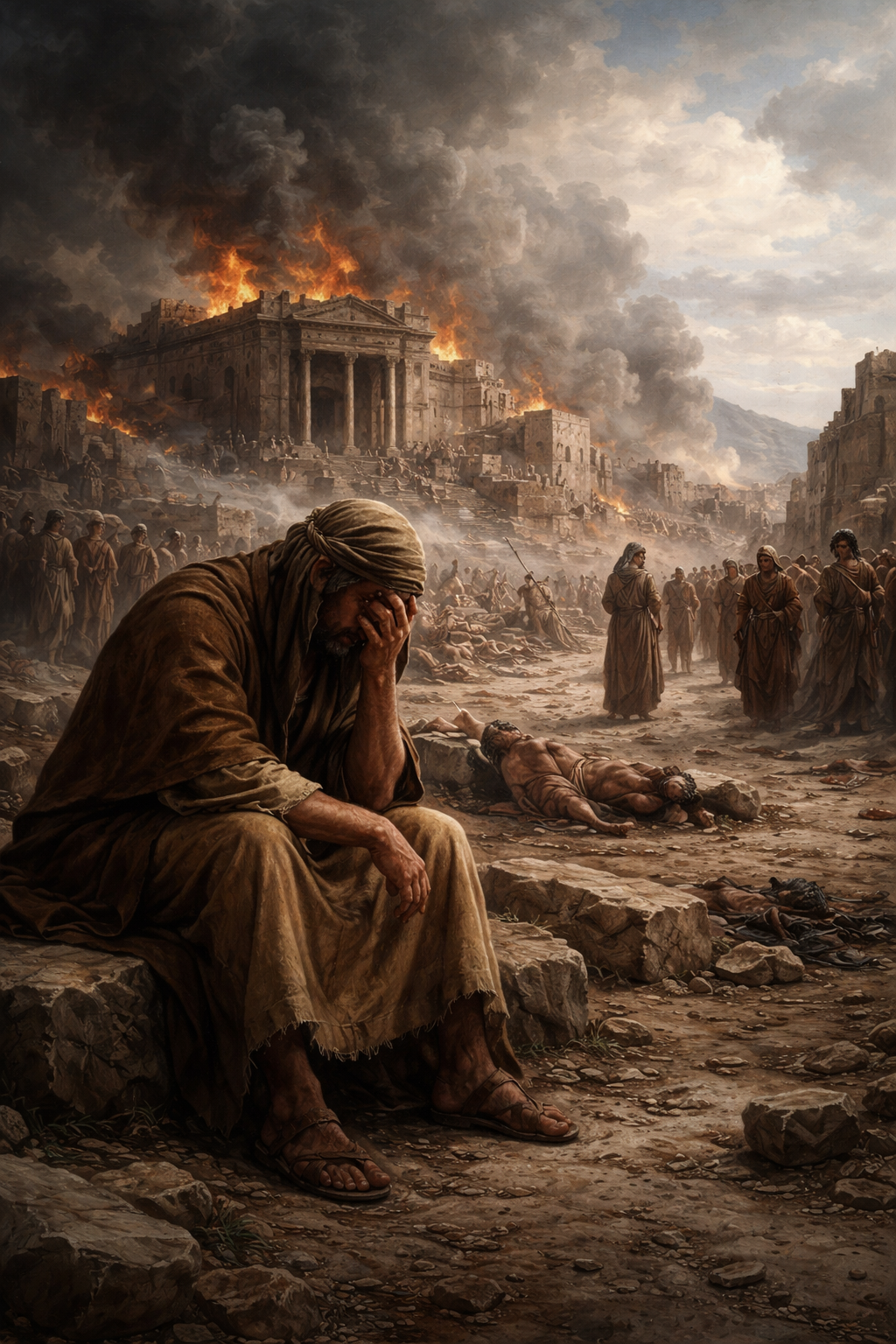
 Lamentations 1 presents Jerusalem as a once-honored city now sitting in desolation: “How doth the city sit solitary, that was full of people!” The chapter is a funeral-like lament over the fall of Jerusalem after the Babylonian destruction. The city is personified as a widow, a princess brought low, and a sorrowing woman weeping in the night. Her lovers have failed her, her friends have become enemies, and none comfort her in her distress.
The chapter emphasizes that this calamity is not merely political or military. It is the chastening hand of God against sin. Verse 5 says, “the LORD hath afflicted her for the multitude of her transgressions.” That is central to the whole chapter. Judah’s suffering is severe, but it is not random. The destruction came because of rebellion against the Lord, covenant disobedience, and persistent refusal to hear His warnings through the prophets.
Jerusalem’s outward misery is described in vivid terms. Her people sigh, her priests mourn, her virgins are afflicted, and her children are gone into captivity. The temple worship has been interrupted, the roads to Zion mourn because none come to the solemn feasts, and the enemy has entered even into the sanctuary. The city that once had glory among the nations has become vile in their eyes.
There is also confession in the chapter. In verse 18 Jerusalem says, “The LORD is righteous; for I have rebelled against his commandment.” That is one of the most important spiritual statements in the book. Even in grief, there is an acknowledgment that God has done right. The suffering is bitter, but the Lord is still righteous. That is not the language of rebellion against God, but of chastened recognition.
The chapter closes with an appeal for the Lord to look upon the affliction and to deal with the enemies who have rejoiced at Judah’s fall. The sorrow is deep, the guilt is real, and the loneliness is crushing, but the cry is still directed to God. Even under judgment, the only hope is the Lord Himself.
Lamentations 2
Lamentations 2 shifts the emphasis from the city’s sorrow to the Lord’s anger. The repeated truth of the chapter is that “the Lord” has done this. He has cast down the beauty of Israel, swallowed up the habitations of Jacob, cut off the horn of Israel, and caused the enemy to rejoice. This chapter is especially strong in showing the holiness and severity of divine judgment.
Jerusalem’s destruction is described as the outpouring of God’s wrath. The chapter does not present Babylon as the ultimate cause, but as the instrument. The true issue is that the Lord was angry because of Judah’s sin. He has removed His protection, withdrawn His favor, and allowed the city, palaces, walls, and sanctuary to be laid waste. Even the temple, the place associated with God’s name, was not spared when the people treated holy things while living in unrepentant sin.
Verse 14 sharply rebukes the false prophets: “Thy prophets have seen vain and foolish things for thee: and they have not discovered thine iniquity.” This is a major doctrinal and practical point. Judah was not helped by flattering preaching. False messages that offered peace without repentance contributed to the nation’s ruin. They failed to expose sin and therefore failed to call the people back to God.
The grief of the chapter becomes intensely personal and emotional. The prophet speaks of his eyes failing with tears and his bowels being troubled as he sees children fainting in the streets. The suffering of the people, especially the weak and helpless, magnifies the horror of sin’s consequences. The chapter paints a city so broken that mothers and children, elders and young men, all lie under judgment.
Yet the chapter ends with a cry. The daughter of Zion is urged to “arise, cry out in the night,” to pour out her heart “like water before the face of the Lord,” and to lift up her hands for the life of her young children. That closing call is significant. Even after devastating judgment, the proper response is not hardened despair, but brokenhearted prayer. The way back begins with honest mourning before God.
Key People and Places
Jeremiah
Traditionally understood as the human author of Lamentations. Though not named in the text, the tone, setting, and historical connection with Jerusalem’s fall fit the “weeping prophet.”
Jerusalem / Daughter of Zion
The central subject of both chapters. The city is personified as a grieving woman, a widow, and a daughter under judgment.
Judah
The southern kingdom whose sins brought divine chastening and Babylonian conquest.
The LORD
The dominant actor in both chapters. His righteousness, holiness, anger against sin, and sovereign rule over the judgment are central.
Babylon / the enemy / adversary
The earthly instrument of God’s judgment. Though not emphasized by name in every verse, the background is the Babylonian destruction of Jerusalem.
Zion
A poetic and covenant-rich name for Jerusalem, especially in relation to worship, the temple, and God’s dealings with His people.
Sanctuary / Temple
The holy place in Jerusalem that was defiled and destroyed. Its ruin shows that outward religion cannot protect a rebellious people.
The roads to Zion
Mentioned as mourning because worshipers no longer come to the solemn feasts. This reflects the collapse of national worship life.
Main Doctrinal or Spiritual Themes
God’s righteousness in judgment
Lamentations 1:18 plainly says, “The LORD is righteous.” God was not unfair in judging Judah. His chastening was morally right because the people had sinned against Him.
The seriousness of sin
These chapters show that sin is not light. Rebellion against God brings ruin, shame, loss, and sorrow. National collapse began with spiritual corruption.
Divine chastening of God’s people
Judah was the covenant people, yet they were not exempt from punishment. Privilege increases responsibility. Having the temple, the law, and prophetic warning did not shield them from judgment when they persisted in disobedience.
The danger of false preaching
Lamentations 2:14 exposes prophets who gave “vain and foolish things” and did not uncover iniquity. Messages that avoid sin and repentance are spiritually destructive.
The collapse of human supports
Lovers, friends, allies, ceremonies, leaders, and defenses all failed Jerusalem. When God’s hand is against a people, earthly supports cannot save them.
The proper place of lament
These chapters show that grief can be expressed reverently before God. Biblical lament is not unbelief; it is sorrow poured out in the presence of the Lord.
Prayer as the only true refuge
The book does not direct the broken remnant to political recovery first, but to cry unto the Lord. Restoration begins with repentance and prayer.
Practical Applications or Lessons
Sin brings consequences, even when warnings have been ignored for a long time.
Judah had been warned repeatedly. God is longsuffering, but He is not indifferent. Believers should not presume upon His patience.
It is right to say God is righteous even when His dealings are painful.
Lamentations teaches submission to God’s holiness. Faith does not deny sorrow, but it bows before divine righteousness.
A preacher or teacher must expose sin, not cover it with soothing words.
False comfort is dangerous. God-honoring ministry tells the truth, calls for repentance, and does not promise peace where there is rebellion.
Outward religion without obedience is empty.
Jerusalem had a temple, feasts, priests, and traditions, yet judgment still came. External forms cannot replace a right heart before God.
When chastened, the right response is confession and prayer, not blame-shifting.
Jerusalem’s strongest moments in these chapters are when she admits guilt and cries to God. Brokenness is the beginning of help.
The sorrow of judgment should stir compassion.
Jeremiah’s tears remind believers not to treat divine judgment lightly or coldly. There should be grief over sin’s devastation in families, churches, and nations.
God’s people should never rely on worldly alliances more than on the Lord.
Jerusalem’s lovers failed her. Human help is uncertain; the Lord alone is faithful.
There is value in holy mourning.
These chapters teach that there is a time to weep, confess, and pour out the heart before God. Such mourning can be part of genuine repentance and spiritual recovery.
Comments are closed