 Chapter Summaries
Isaiah 15 — The Burden of Moab
This chapter contains a prophetic lament over the coming destruction of Moab, Israel’s eastern neighbor across the Dead Sea. The prophecy is presented as a mournful dirge describing cities falling in rapid succession.
The chapter opens:
“The burden of Moab. Because in the night Ar of Moab is laid waste, and brought to silence” (Isaiah 15:1).
Important Moabite cities such as Ar, Kir, Dibon, Nebo, and Medeba are depicted as devastated. The people ascend to their high places and temples to mourn. Even the warriors of Moab cry out in terror.
Isaiah describes widespread grief:
“Every head shall be baldness, and every beard cut off” (Isaiah 15:2).
This reflects the ancient Near Eastern mourning customs of shaving the head and beard.
The prophet depicts the entire nation fleeing southward in panic toward Zoar. The land becomes filled with weeping and desolation. Isaiah himself expresses sorrow over Moab:
“My heart shall cry out for Moab” (Isaiah 15:5).
Even though Moab was historically hostile toward Israel, the prophet grieves the judgment of God upon them. The rivers and waters dry up, symbolizing both famine and destruction.
Historically, Moab frequently opposed Israel (Numbers 22–24; Judges 3), yet God still shows compassion even while announcing judgment.
Isaiah 16 — Moab’s Pride and Coming Ruin
Isaiah continues the prophecy concerning Moab. The chapter begins with a call for Moab to send tribute to Zion, possibly acknowledging the authority of Judah’s king:
“Send ye the lamb to the ruler of the land from Sela to the wilderness, unto the mount of the daughter of Zion” (Isaiah 16:1).
This suggests Moab could find refuge through humility and submission to the Davidic kingdom.
Isaiah also gives a remarkable prophetic glimpse of the Messianic throne:
“And in mercy shall the throne be established: and he shall sit upon it in truth in the tabernacle of David” (Isaiah 16:5).
This anticipates the righteous reign of the Messiah from David’s line.
However, Moab refuses humility. Instead, the nation is characterized by pride:
“We have heard of the pride of Moab; he is very proud” (Isaiah 16:6).
Because of this pride, the once fertile vineyards of Heshbon and Sibmah are destroyed. The prophet again mourns Moab’s fall.
The chapter concludes with a timeframe for the prophecy:
“Within three years, as the years of an hireling… the glory of Moab shall be contemned” (Isaiah 16:14).
Historically this likely refers to devastation caused by the expanding Assyrian Empire in the 8th century BC.
Isaiah 17 — The Burden of Damascus
This chapter pronounces judgment on Damascus, the capital of Syria (Aram).
“Behold, Damascus is taken away from being a city, and it shall be a ruinous heap” (Isaiah 17:1).
This prophecy connects historically with the Syro-Ephraimite alliance, when Syria and the northern kingdom of Israel joined against Judah during the reign of King Ahaz.
God declares that Ephraim (Israel) will also suffer destruction:
“The fortress also shall cease from Ephraim” (Isaiah 17:3).
The once prosperous kingdom will be reduced to a small remnant, compared to olives left after harvest.
In the midst of judgment, Isaiah describes a turning point:
“At that day shall a man look to his Maker, and his eyes shall have respect to the Holy One of Israel” (Isaiah 17:7).
This indicates that God’s judgments are meant to turn people back to Him. The people will abandon idols and false altars.
The chapter closes with a description of God rebuking hostile nations that rage against Israel like the sea.
Isaiah 18 — The Land Beyond the Rivers of Ethiopia
Isaiah now addresses a distant nation, often identified as Ethiopia (Cush).
“Woe to the land shadowing with wings, which is beyond the rivers of Ethiopia” (Isaiah 18:1).
This passage likely refers to Cushite ambassadors traveling by river to form alliances against Assyria. The nation is described as “a nation scattered and peeled.”
God announces that He is watching the nations carefully:
“I will take my rest, and I will consider in my dwelling place” (Isaiah 18:4).
The imagery suggests God observing world events until the proper moment for judgment.
The chapter ends with a remarkable prophecy that the people of this distant land will one day bring tribute to the Lord in Jerusalem:
“In that time shall the present be brought unto the LORD of hosts… to the place of the name of the LORD of hosts, the mount Zion” (Isaiah 18:7).
This hints at the future global recognition of the God of Israel.
Isaiah 19 — The Burden of Egypt
Isaiah prophesies judgment upon Egypt, one of the great powers of the ancient world.
The chapter opens dramatically:
“Behold, the LORD rideth upon a swift cloud, and shall come into Egypt” (Isaiah 19:1).
God will bring internal division:
“I will set the Egyptians against the Egyptians” (Isaiah 19:2).
Civil strife, economic collapse, and the drying of the Nile River are predicted. Egypt’s famous wisdom will fail, and its princes will give foolish counsel.
Yet the prophecy does not end in destruction alone. It moves toward a surprising promise of redemption.
“The LORD shall be known to Egypt” (Isaiah 19:21).
Egyptians will one day worship the true God and offer sacrifice to Him.
The chapter concludes with an extraordinary prophecy of future unity:
“Blessed be Egypt my people, and Assyria the work of my hands, and Israel mine inheritance” (Isaiah 19:25).
This points prophetically toward the millennial kingdom, when former enemies will worship the Lord together.
Isaiah 20 — The Sign of the Naked Prophet
This short chapter records a dramatic prophetic sign.
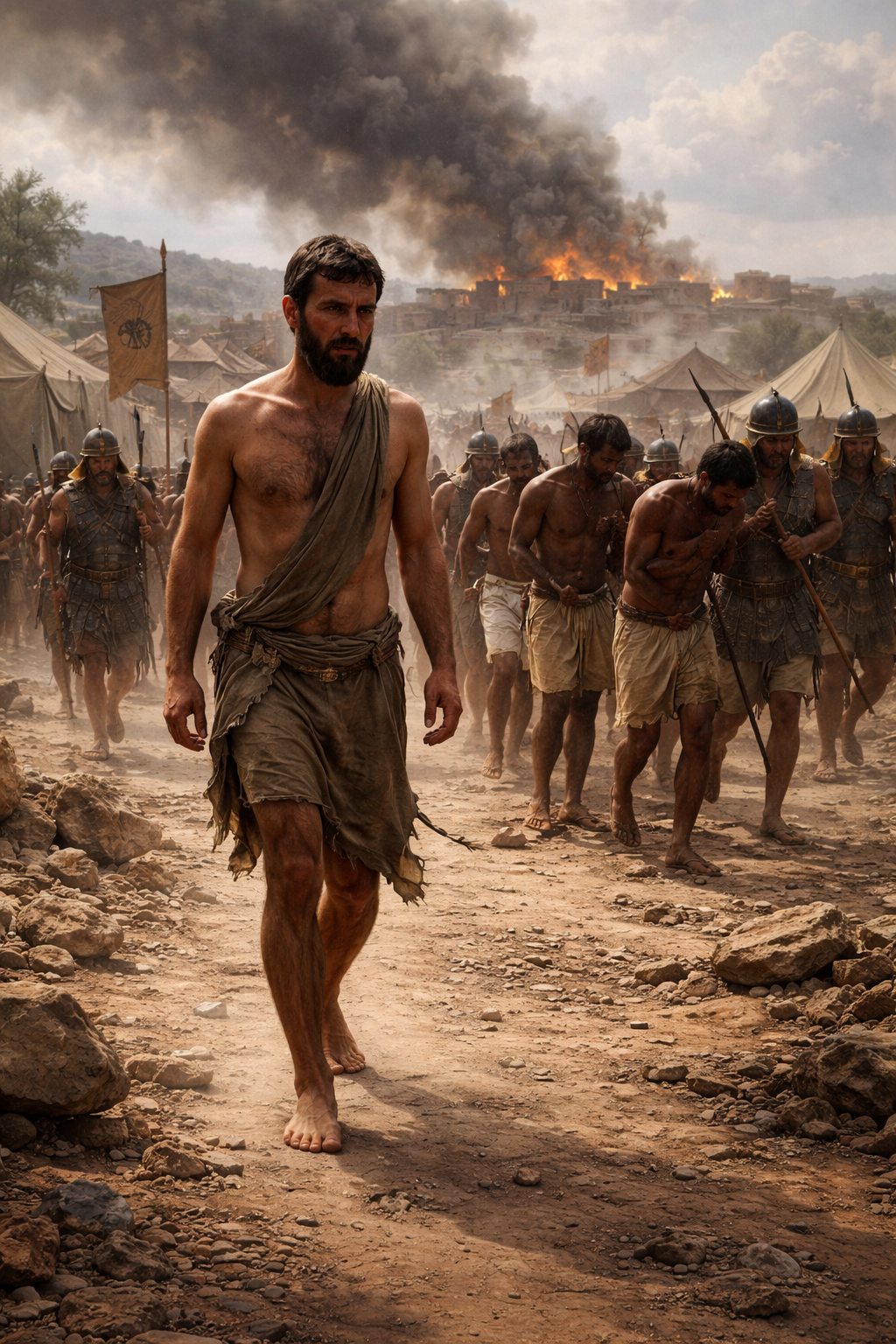
The setting involves the Assyrian commander Tartan, who captures the Philistine city Ashdod.
God then commands Isaiah to perform a symbolic act:
“Loose the sackcloth from off thy loins, and put off thy shoe from thy foot” (Isaiah 20:2).
Isaiah walks “naked and barefoot” for three years as a prophetic sign. This does not necessarily mean total nudity but likely the removal of outer prophetic garments, symbolizing humiliation and captivity.
The message is clear:
“So shall the king of Assyria lead away the Egyptians prisoners, and the Ethiopians captives” (Isaiah 20:4).
This sign warns Judah not to trust Egypt for protection against Assyria. Egypt itself will fall into captivity.
The chapter ends with Judah realizing that alliances with worldly powers cannot save them.
Key People and Places
Isaiah — Prophet of Judah who delivered God’s warnings to both Israel and surrounding nations.
Moab — Nation east of the Dead Sea, descended from Lot. Known for pride and hostility toward Israel.
Damascus — Capital of Syria (Aram), involved in alliances against Judah.
Ephraim (Israel) — The northern kingdom, often condemned for idolatry.
Ethiopia (Cush) — Powerful African kingdom south of Egypt.
Egypt — Major world power often sought as an ally by Israel and Judah.
Assyria — Dominant empire of the 8th century BC used by God to judge nations.
Ashdod — Philistine city captured by Assyria, prompting Isaiah’s prophetic sign.
Zion (Jerusalem) — Center of God’s covenant promises and the future Messianic kingdom.
Main Doctrinal or Spiritual Themes
1. God’s Sovereignty Over All Nations
These chapters show that the Lord rules not only Israel but every nation. Moab, Syria, Egypt, Ethiopia, and Assyria all fall under His authority.
2. The Danger of National Pride
Moab’s downfall is repeatedly attributed to pride (Isaiah 16:6). Pride brings inevitable judgment.
3. The Futility of Trusting Political Alliances
Judah was tempted to rely on Egypt against Assyria, but Isaiah shows that worldly alliances cannot replace dependence on God.
4. Judgment Leading to Repentance
Even in judgment, God’s purpose is often to bring people to Himself (Isaiah 17:7; 19:21).
5. The Future Messianic Kingdom
Isaiah 16 and 19 point forward to a future time when the Messiah reigns and nations worship the Lord together.
Practical Applications or Lessons
Trust God Rather Than Political Power
Believers today must not place ultimate confidence in governments, alliances, or worldly strength.
Pride Leads to Destruction
Moab’s downfall illustrates the biblical principle that:
“Pride goeth before destruction” (Proverbs 16:18).
God Cares Even About His Enemies
Isaiah’s lament over Moab shows God’s compassion even toward those under judgment.
God Uses World Events to Accomplish His Purposes
Empires rise and fall according to God’s plan.
The Gospel Is Ultimately for All Nations
The prophecy that Egypt and other nations will worship the Lord anticipates the global reach of God’s salvation.
Comments are closed