 Chapter Summaries
2 Chronicles 32 — Hezekiah’s Faith, Trial, and Deliverance
After Hezekiah’s faithful reforms (chs. 29–31), Sennacherib king of Assyria invades Judah. This attack comes after Hezekiah had done “that which was good and right and truth before the LORD his God” (32:1), showing that obedience does not exempt God’s people from testing.
Hezekiah responds wisely and faithfully:
- He strengthens Jerusalem’s defenses, stops the waters outside the city, repairs the walls, and builds weapons (32:2–6).
- He exhorts the people to trust the LORD rather than fear Assyria, declaring, “With us is the LORD our God to help us, and to fight our battles” (32:8).
Sennacherib attempts psychological warfare:
- His servants mock the LORD, compare Him to false gods, and accuse Hezekiah of deceiving the people (32:10–19).
- These blasphemies are directed not merely against Judah, but against “the God of Jerusalem.”
Hezekiah and Isaiah respond correctly:
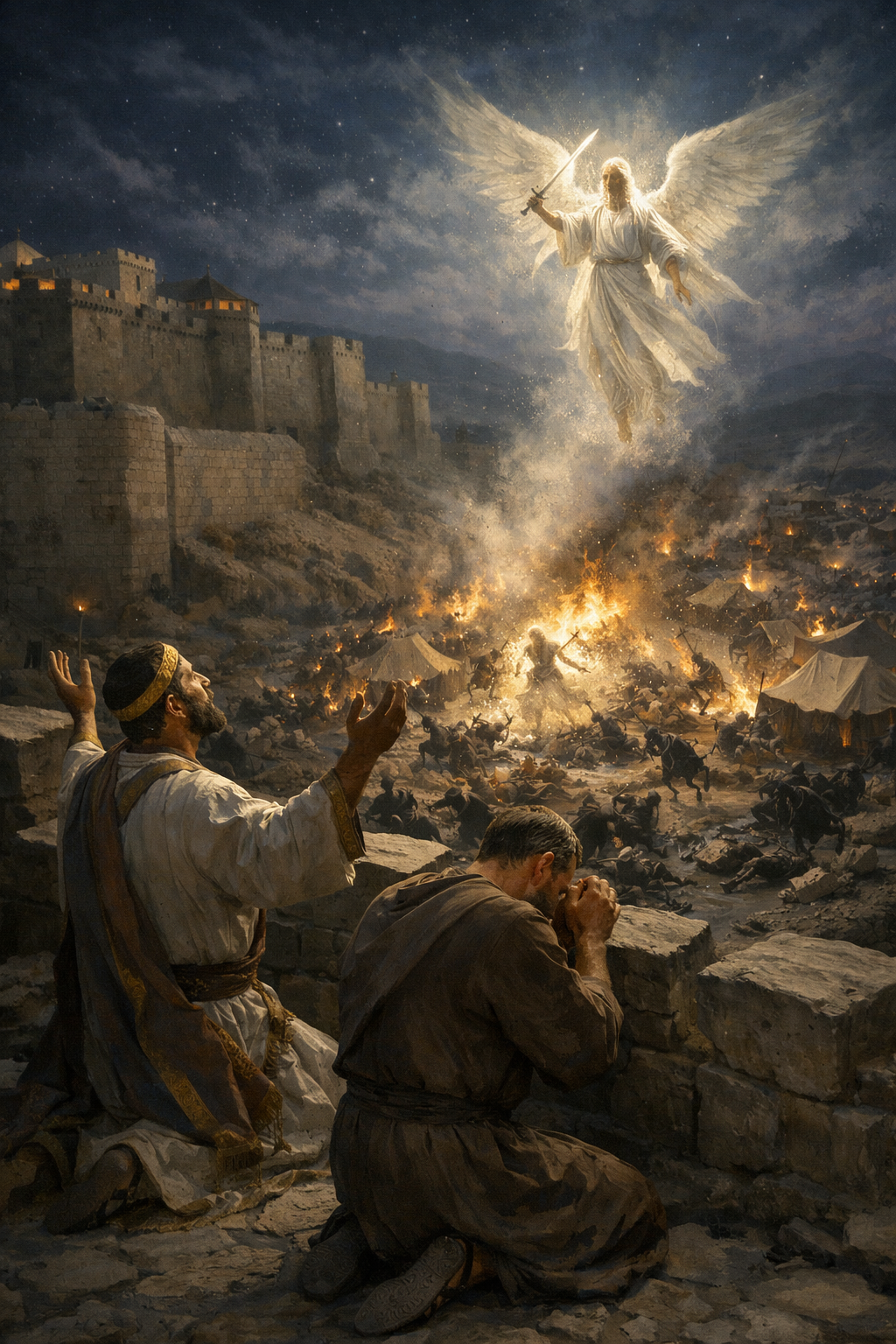
- They pray and cry to heaven (32:20).
- The LORD sends an angel who destroys the Assyrian host, forcing Sennacherib to return in shame, where he is later slain by his own sons (32:21).
Later in the chapter:
- Hezekiah becomes sick “unto death” but prays, and God heals him, giving a sign (32:24).
- However, Hezekiah’s heart is lifted up in pride after his recovery, and wrath is delayed but not removed (32:25–26).
- When Babylonian envoys visit, Hezekiah shows them his treasures, revealing a lapse in spiritual discernment (32:31).
The chapter closes by affirming Hezekiah’s honor, prosperity, and burial among the kings of Judah.
2 Chronicles 33 — Manasseh’s Wickedness and Remarkable Repentance
Manasseh, Hezekiah’s son, reigns for 55 years and represents one of the darkest spiritual periods in Judah’s history.
His sins are extensive and deliberate:
- He rebuilds the high places, erects altars to Baalim, worships the host of heaven, practices witchcraft, consults familiar spirits, and places an idol in the house of God (33:1–7).
- He causes Judah to err worse than the heathen nations the LORD had destroyed (33:9).
God responds with judgment:
- The LORD brings the captains of Assyria, who take Manasseh bound with fetters to Babylon (33:11).
In captivity, a turning point occurs:
- Manasseh humbles himself greatly and prays to the LORD (33:12).
- God hears his supplication and restores him to Jerusalem, demonstrating divine mercy and the power of true repentance (33:13).
After restoration:
- Manasseh removes strange gods, repairs the altar of the LORD, commands Judah to serve the LORD, and strengthens Jerusalem’s defenses (33:14–16).
- Though the people still sacrifice in high places, it is now to the LORD alone (33:17), indicating partial but sincere reform.
Manasseh dies, and his son Amon reigns briefly:
- Amon does not humble himself, multiplies transgression, and is assassinated by his servants (33:21–24).
- The people execute the conspirators and make Josiah king, setting the stage for future reform.
Key People and Places
- Hezekiah — God-fearing king of Judah; trusted the LORD during Assyrian threat; later struggled with pride.
- Sennacherib — King of Assyria; blasphemed the LORD and was supernaturally defeated.
- Isaiah the prophet — Spiritual leader who joined Hezekiah in prayer and counsel.
- Manasseh — Son of Hezekiah; extremely wicked king who later experienced genuine repentance.
- Amon — Son of Manasseh; wicked and unrepentant; assassinated.
- Jerusalem — Capital city; fortified by Hezekiah and divinely protected.
- Babylon — Place of Manasseh’s captivity and humiliation.
- House of the LORD — Profaned by Manasseh’s idolatry, later partially restored.
Main Doctrinal or Spiritual Themes
- God’s Sovereignty Over Nations
The LORD alone defeats Assyria without Judah lifting a sword (32:21). - The Power of Prayer
Deliverance comes when Hezekiah and Isaiah cry to heaven (32:20). - Pride After Blessing
Spiritual victories must be guarded; Hezekiah’s pride follows healing (32:25). - Judgment as a Means to Repentance
Manasseh’s captivity is severe but purposeful (33:11–13). - The Depth of God’s Mercy
Even extreme wickedness is forgivable when met with genuine humility and repentance (33:12–13). - Personal Responsibility Before God
A godly father does not guarantee a godly son (Amon vs. Hezekiah).
Practical Applications or Lessons
- Faith must be exercised under pressure, not merely professed in peace.
- Prayer is the believer’s first response, not the last resort.
- Victory can breed vulnerability if pride is allowed to take root.
- No sinner is beyond repentance, but repentance must include humility and turning from sin.
- Leadership deeply affects a nation, for good or for evil.
- Partial obedience still falls short, even when intentions improve.
Comments are closed