Chapter Summaries
2 Chronicles 34 — Josiah’s Reforms and the Book of the Law
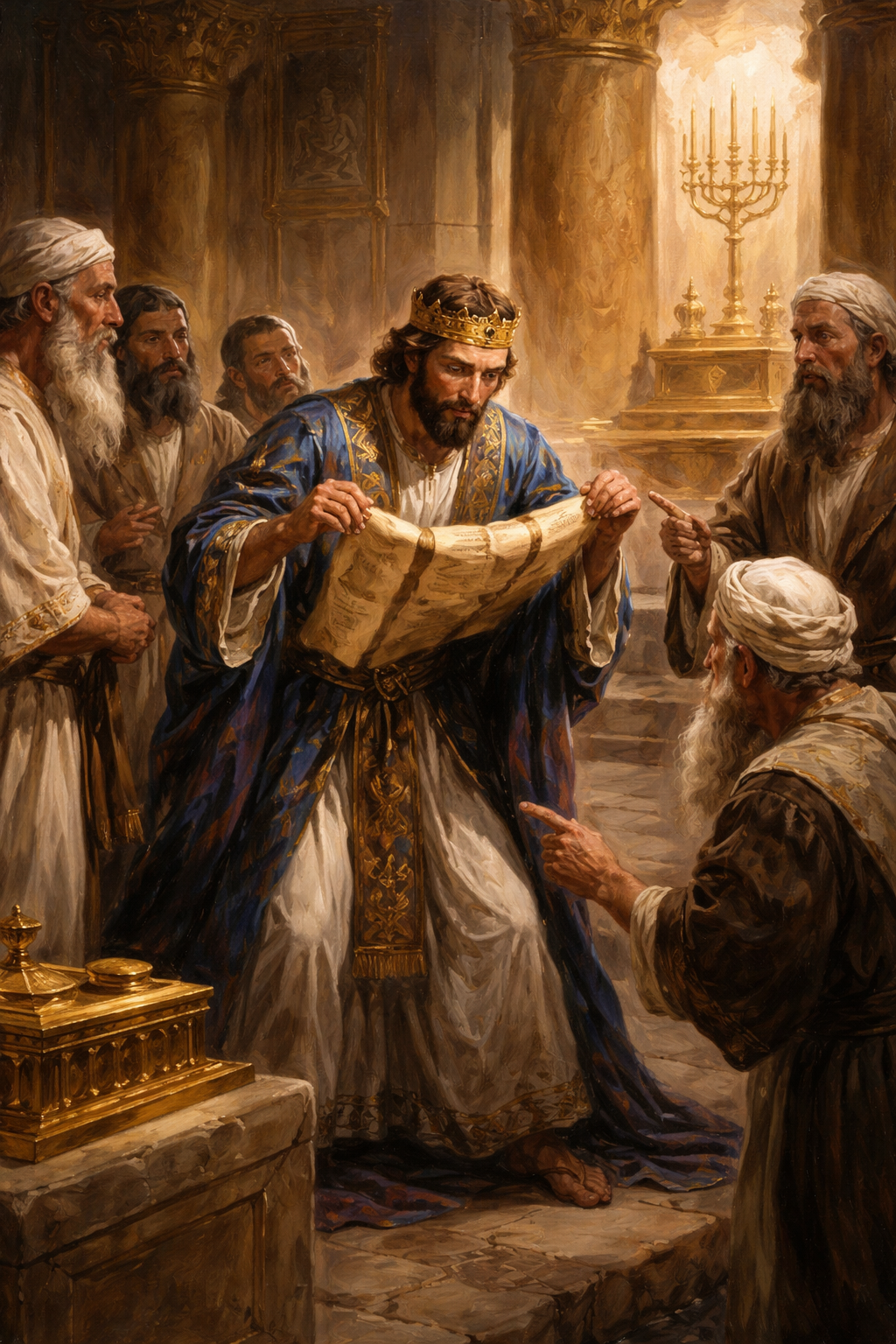
 Josiah begins to reign at eight years old and, while still young, “began to seek after the God of David his father” (34:3). He aggressively purges Judah and Jerusalem of idolatry—breaking down high places, groves, images, and altars. In the eighteenth year of his reign, while repairing the house of the LORD, the Book of the Law of the LORD given by Moses is found.
When the words of the Law are read, Josiah rends his clothes, recognizing Judah’s guilt and God’s wrath. Through the prophetess Huldah, the LORD confirms that judgment will come, yet promises Josiah peace because his heart was tender and humble. Josiah leads the nation in covenant renewal, standing by a pillar and causing the people to “stand to it” (34:32).
Key emphasis: Revival rooted in Scripture, humility before God, and obedience to revealed truth.
2 Chronicles 35 — The Passover of Josiah and His Death
Josiah keeps a Passover “such as was not kept in Israel from the days of Samuel the prophet” (35:18). The priests and Levites are properly organized according to Davidic and Mosaic instruction, emphasizing obedience to God’s order of worship. The observance is generous, reverent, and Scripture-centered.
Despite his godly reign, Josiah later involves himself in a battle against Pharaoh Necho of Egypt—against a warning that God had spoken through Necho. Josiah is mortally wounded and dies. Jeremiah laments him, and all Judah mourns.
Key emphasis: True worship according to God’s Word, and the tragic consequences of acting outside God’s will—even for a godly man.
2 Chronicles 36 — The Fall of Judah and the Babylonian Captivity
Following Josiah, Judah rapidly declines under a series of weak and rebellious kings: Jehoahaz, Jehoiakim, Jehoiachin, and Zedekiah. The leaders mock God’s messengers, misuse the house of the LORD, and harden their hearts.
Because “there was no remedy” (36:16), God brings Nebuchadnezzar of Babylon against Jerusalem. The temple is burned, the walls destroyed, and the people carried away captive. The land enjoys its sabbaths during seventy years of desolation, fulfilling the word of the LORD spoken by Jeremiah.
The book closes with hope: Cyrus king of Persia issues a decree allowing the Jews to return and rebuild the house of the LORD at Jerusalem—showing God’s sovereignty even over pagan kings.
Key emphasis: Final judgment on persistent rebellion, yet hope preserved by God’s covenant faithfulness.
Key People and Places
- Josiah — Godly king of Judah; leader of spiritual reform grounded in Scripture.
- Hilkiah — High priest who finds the Book of the Law.
- Huldah — Prophetess who confirms God’s coming judgment and Josiah’s mercy.
- Jeremiah — Prophet who laments Josiah and foretells judgment and restoration.
- Pharaoh Necho — Egyptian king whose warning Josiah wrongly ignores.
- Nebuchadnezzar — King of Babylon; instrument of God’s judgment on Judah.
- Cyrus — King of Persia; used by God to initiate restoration.
- Jerusalem / House of the LORD — Center of worship, later destroyed because of persistent sin.
- Babylon — Place of captivity and divine chastening.
Main Doctrinal and Spiritual Themes
- Authority of the Word of God
Revival begins when Scripture is rediscovered, read, believed, and obeyed. - Personal and National Accountability
God judges nations and leaders for persistent rebellion, despite previous blessings. - True Revival vs. External Reform
Josiah’s reforms were sincere, but later generations lacked heart obedience. - God’s Holiness and Longsuffering
God repeatedly sends messengers before judgment, showing mercy before wrath. - Sovereignty of God Over Nations
God uses both Babylon and Persia to accomplish His purposes. - Judgment with Hope
Even in captivity, God preserves His promises and prepares restoration.
Practical Applications and Lessons
- Revival must be rooted in Scripture, not emotion, tradition, or culture.
- Humility before God delays judgment and brings mercy.
- Obedience matters even for mature believers—good intentions do not replace God’s will.
- Ignoring God’s warnings hardens the heart and invites severe consequences.
- God remains faithful even when His people fail, preserving hope for repentance and restoration.
- Leadership influences spiritual direction—godly leaders matter, but each generation must choose obedience.
Comments are closed