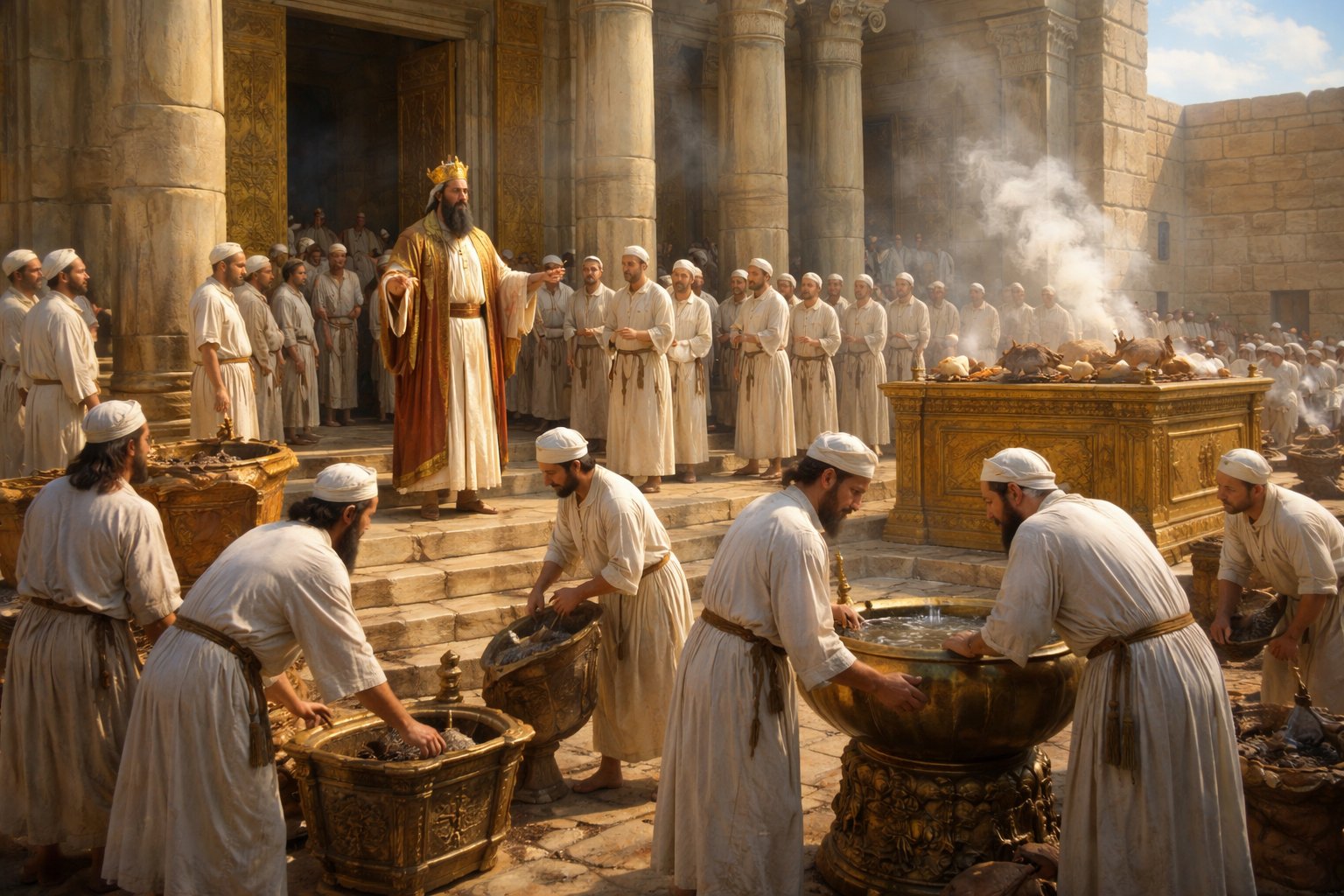
In 2 Chronicles 29:11, Hezekiah says to the Levites:
“My sons, be not now negligent: for the LORD hath chosen you to stand before him, to serve him, and that ye should minister unto him, and burn incense.”
At first glance, “minister unto him” and “burn incense” can sound redundant — but they are related, not identical.
1. “Minister unto Him” — the broader calling
 This phrase describes the general priestly service to the LORD.
In KJV usage, minister includes:
- Standing before the LORD in His presence
- Performing all duties assigned by God’s law
- Serving for God’s sake, not merely for the people
This covers:
- Sacrifices
- Temple upkeep
- Music and praise (Levites)
- Teaching the law
- Guarding holiness of the sanctuary
So “minister unto Him” = the whole scope of sacred service.
2. “Burn incense” — a specific, restricted act
Burning incense is one particular priestly duty, singled out because of its importance and sensitivity.
Key points:
- Incense symbolized prayer and intercession rising to God
- It was done before the LORD, near the holy place
- It required strict obedience (cf. Nadab & Abihu)
Not all ministry involved incense,
and not all Levites were allowed to burn it — this was primarily a priestly function, though Levites assisted.
3. Why list both?
Because Hezekiah is emphasizing both:
- General faithfulness in service (“minister unto Him”)
- Restoration of proper worship practices that had been neglected (“burn incense”)
Under Ahaz:
- The temple was shut
- Incense was offered to false gods
- True worship was abandoned
So Hezekiah is saying, in effect:
You are called not only to serve God in general, but to restore the very acts of worship that belong to Him alone.
4. Doctrinal significance (Conservative Baptist understanding)
- Service ? Worship acts
One can serve outwardly yet neglect true worship. - Worship must be God-directed and God-defined
Incense wasn’t optional or symbolic creativity — it was commanded. - Prayer and intercession are central, not peripheral
By naming incense separately, Scripture highlights prayer as a core priestly work.
5. In simple terms
They are connected, but not the same:
- “Minister unto Him” = your whole life and service belong to God
- “Burn incense” = your worship and prayer must be restored and rightly offered
Hezekiah is calling for complete obedience, not partial reform.
Comments are closed