Historical Setting
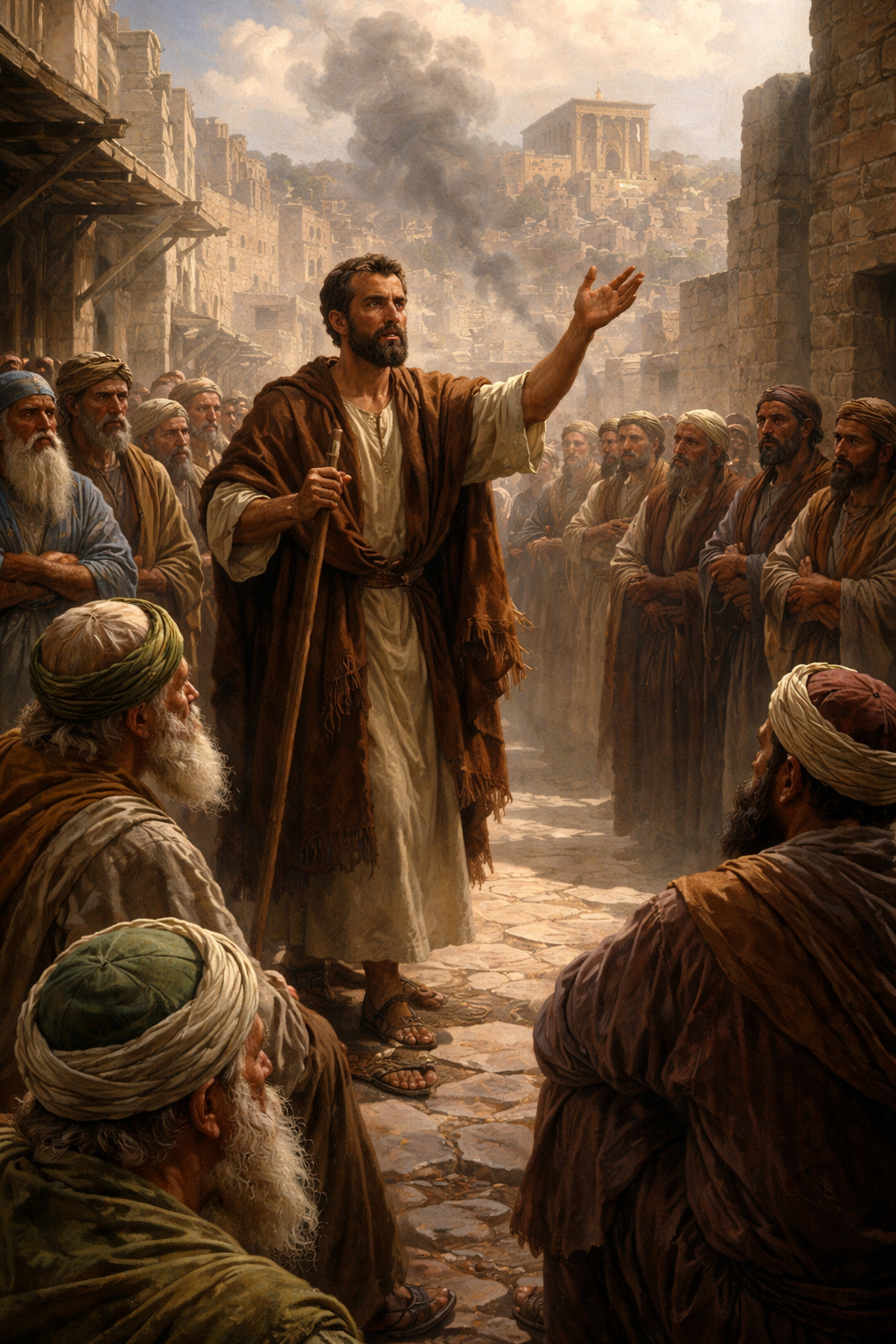
 The book of Isaiah opens during a turbulent period in the history of Judah. Isaiah prophesied “in the days of Uzziah, Jotham, Ahaz, and Hezekiah, kings of Judah” (Isaiah 1:1). This spans roughly 740–686 B.C.
During this time:
- Judah was materially prosperous at times but spiritually corrupt.
- The northern kingdom of Israel was nearing destruction by Assyria (722 B.C.).
- Idolatry, injustice, and empty religion had infected the nation.
Isaiah’s opening chapters function like a courtroom indictment. God summons His covenant people and exposes their rebellion, yet still offers mercy if they will repent.
Chapter Summaries
Isaiah 1 — God’s Indictment Against a Sinful Nation
The chapter begins with God calling creation itself as witnesses against His people.
“Hear, O heavens, and give ear, O earth: for the LORD hath spoken, I have nourished and brought up children, and they have rebelled against me.” (1:2)
God describes Judah as more ignorant than animals:
“The ox knoweth his owner, and the ass his master’s crib: but Israel doth not know.” (1:3)
The Condition of the Nation
The people are described as:
- “A sinful nation”
- “A people laden with iniquity”
- “Children that are corrupters” (1:4)
Their moral and spiritual state is compared to a diseased body:
“The whole head is sick, and the whole heart faint.” (1:5)
Judgment had already begun. The land was desolate, cities burned, and enemies devouring the land (1:7). Only a small remnant remained.
Isaiah compares Judah to Sodom and Gomorrah, emphasizing the severity of their corruption.
Empty Religion Condemned
One of the strongest themes of the chapter is God’s rejection of hypocritical worship.
The people were still offering sacrifices, keeping feast days, and assembling in worship—but their hearts were wicked.
God declares:
“To what purpose is the multitude of your sacrifices unto me?” (1:11)
Their religious ceremonies had become meaningless because they were paired with:
- violence
- injustice
- oppression
God even says:
“Your new moons and your appointed feasts my soul hateth.” (1:14)
This echoes the warning often emphasized by conservative preachers: religion without repentance is offensive to God.
God’s Call to Repentance
Despite the indictment, the chapter contains one of Scripture’s greatest invitations:
“Come now, and let us reason together, saith the LORD: though your sins be as scarlet, they shall be as white as snow.” (1:18)
Repentance would bring blessing:
“If ye be willing and obedient, ye shall eat the good of the land.” (1:19)
But rebellion would bring judgment:
“If ye refuse and rebel, ye shall be devoured with the sword.” (1:20)
Isaiah concludes with a promise that God will purify Zion and restore righteous leadership.
Isaiah 2 — The Future Glory of Zion and Present Judgment
Isaiah now shifts between future hope and present warning.
The Millennial Kingdom
The chapter begins with a prophecy of the future reign of the Messiah.
“In the last days… the mountain of the LORD’S house shall be established in the top of the mountains.” (2:2)
Nations will come to Jerusalem to learn God’s ways.
“For out of Zion shall go forth the law, and the word of the LORD from Jerusalem.” (2:3)
One of the most famous prophecies appears here:
“They shall beat their swords into plowshares.” (2:4)
This describes the future kingdom of Christ, when war will cease and the Messiah will rule the nations.
Conservative Baptist interpretation views this as a literal future kingdom when Christ reigns from Jerusalem.
Judah’s Present Sin
The prophecy then shifts back to the present condition of Judah.
They were guilty of:
- idolatry
- sorcery
- foreign pagan influence
- trust in wealth and military power
Isaiah says:
“Their land also is full of idols; they worship the work of their own hands.” (2:8)
The Day of the LORD
Isaiah introduces the theme of the Day of the LORD, when God humbles human pride.
God will bring down:
- the proud
- the lofty
- the wealthy
- the powerful
Men will flee into caves and rocks in terror:
“They shall go into the holes of the rocks… for fear of the LORD.” (2:19)
The chapter ends with a warning against trusting man:
“Cease ye from man, whose breath is in his nostrils.” (2:22)
Isaiah 3 — Judgment Through Social Collapse
Chapter 3 describes how judgment will unfold within the society of Judah.
God will remove the pillars of stability:
“The stay and the staff, the whole stay of bread, and the whole stay of water.” (3:1)
Leadership Removed
God announces He will remove:
- mighty men
- judges
- prophets
- elders
- counselors
- skilled craftsmen
As a result, immature and incompetent rulers will take control:
“I will give children to be their princes.” (3:4)
This describes the collapse of responsible leadership.
Moral Chaos
Society becomes disorderly:
- young people oppress the elderly
- people refuse responsibility
- no one wants to lead
Isaiah explains the root cause:
“Their tongue and their doings are against the LORD.” (3:8)
The people had openly embraced sin:
“They declare their sin as Sodom, they hide it not.” (3:9)
The Fate of the Righteous and Wicked
Isaiah reminds the reader that God sees individuals within the nation.
“Say ye to the righteous, that it shall be well with him.” (3:10)
But:
“Woe unto the wicked! it shall be ill with him.” (3:11)
God will judge corrupt leaders who exploit the people.
Judgment on the Proud Women of Zion
The chapter closes with a rebuke of the luxurious women of Jerusalem who were characterized by pride and vanity.
They are described as:
- “haughty”
- walking with “stretched forth necks”
- living in extravagant display (3:16–23)
God promises to strip away their luxury and replace beauty with humiliation and poverty.
Key People and Places
Isaiah
The prophet called by God to deliver warnings and promises to Judah. His name means “The LORD is salvation.”
Judah
The southern kingdom of Israel, centered in Jerusalem.
Jerusalem (Zion)
The capital city and spiritual center of Judah. Isaiah prophesies both its judgment and its future glory.
Kings of Judah (Uzziah, Jotham, Ahaz, Hezekiah)
The rulers during Isaiah’s ministry. Their reigns form the historical backdrop for the prophecy.
Sodom and Gomorrah
Used symbolically to describe the moral corruption of Judah.
Main Doctrinal or Spiritual Themes
1. The Holiness of God
God cannot accept worship that is mixed with sin and hypocrisy. Isaiah emphasizes that outward religion without inward obedience is unacceptable.
2. The Sinfulness of Man
The nation was described as morally diseased and corrupt. Sin affects the entire person and society.
3. The Necessity of Repentance
God repeatedly calls His people to return to Him.
“Wash you, make you clean; put away the evil of your doings.” (1:16)
4. Judgment Against Pride
Human pride—whether in wealth, power, or beauty—is repeatedly condemned.
5. The Hope of Redemption
Even in judgment, God promises cleansing and restoration for those who repent.
6. The Future Messianic Kingdom
Isaiah introduces the coming reign of Christ when the nations will learn God’s law and war will cease.
Practical Applications or Lessons
1. Religion Without Obedience Is Worthless
God rejected sacrifices and festivals when the people lived in sin. Modern believers must guard against outward religion without true repentance.
2. National Sin Leads to National Judgment
Isaiah shows how moral corruption leads to societal collapse, failed leadership, and instability.
3. God Always Preserves a Remnant
Even when judgment falls, God preserves those who remain faithful.
4. Pride Always Brings Downfall
Whether political pride, social pride, or personal pride, God humbles the exalted.
5. God Still Offers Mercy
One of the most powerful truths of these chapters is the invitation:
“Though your sins be as scarlet, they shall be as white as snow.” (1:18)
No matter how deep the sin, repentance brings cleansing.
Comments are closed