
Chapter Summaries
Ezekiel 24 — The Boiling Pot and the Death of Ezekiel’s Wife
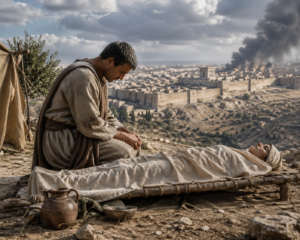 Ezekiel 24 opens with a precise date: “in the ninth year, in the tenth month, in the tenth day of the month” (Ezekiel 24:1). This was the very day when the king of Babylon set himself against Jerusalem. God commands Ezekiel to record the day because Jerusalem’s final siege had begun.
The chapter has two main signs.
First, the LORD gives the parable of the boiling pot. Jerusalem is pictured as a pot, and the people inside are pictured as flesh being boiled. Earlier, wicked leaders had arrogantly thought Jerusalem was like a protective pot and they were the choice flesh inside it. But now God turns the image into judgment. The city that thought itself secure would become the place of wrath.
The LORD says, “Woe to the bloody city” (Ezekiel 24:6). Jerusalem had become guilty of open bloodshed, idolatry, corruption, and uncleanness. Her blood was not hidden in the dust, but “upon the top of a rock” (Ezekiel 24:7), meaning her sin was bold, public, and crying out for judgment. The scum in the pot pictures the filthiness of Jerusalem’s sin. Even fierce boiling would not remove it. The city was so defiled that only judgment would answer it.
The fire under the pot represents the coming wrath of God through Babylon. The LORD says, “I the LORD have spoken it: it shall come to pass” (Ezekiel 24:14). This is a solemn reminder that God’s warnings are not empty threats. When mercy is despised long enough, judgment comes.
Second, Ezekiel is given a deeply personal sign. God tells him, “Son of man, behold, I take away from thee the desire of thine eyes with a stroke” (Ezekiel 24:16). Ezekiel’s wife dies, but the prophet is commanded not to mourn publicly in the normal Jewish manner. He is not to cry aloud, remove his turban, cover his lips, or eat the bread of mourners.
This does not mean Ezekiel did not love his wife or that grief itself is wrong. Rather, his restrained mourning became a sign to the Jews in captivity. Jerusalem, the temple, and their national pride were “the desire of your eyes” (Ezekiel 24:21). When the temple was destroyed, the people would be so stunned, overwhelmed, and spiritually broken that normal expressions of grief would be swallowed up by horror and shame.
The chapter ends by saying that when the escaped messenger arrives with news of Jerusalem’s fall, Ezekiel’s mouth would be opened. Until then, his prophetic ministry continued under God’s hand as a living sign to Israel.
Doctrinal emphasis: God is holy. Sin defiles. Religious privilege does not protect a rebellious people. God’s servant may be called to bear personal sorrow for the sake of a divine message.
Ezekiel 25 — Judgment on Ammon, Moab, Edom, and Philistia
Ezekiel 25 begins a new section of judgment against surrounding nations. After declaring judgment on Jerusalem, God shows that the heathen nations are also accountable to Him. The LORD is not merely the God of Israel; He is Lord over all nations.
The chapter addresses four neighboring peoples.
Ammon
The Ammonites rejoiced when the sanctuary was profaned, the land of Israel was made desolate, and the house of Judah went into captivity. They said, “Aha” against the sanctuary and against Israel’s fall (Ezekiel 25:3). Their sin was not merely political hostility; it was malicious joy over God’s judgment on His people.
Because of this, God says He would deliver Ammon to “the men of the east” for a possession (Ezekiel 25:4). Rabbah, their chief city, would become “a stable for camels” (Ezekiel 25:5). Their pride and cruelty would be answered by desolation.
Moab and Seir
Moab’s sin was contempt for Judah. They said, “Behold, the house of Judah is like unto all the heathen” (Ezekiel 25:8). In other words, they treated Judah’s fall as proof that Judah’s God was no different from the idols of the nations.
God judged Moab because they despised the covenant distinction God had placed upon His people. Though Judah had sinned grievously, Moab had no right to mock the people of God or to belittle the LORD.
Edom
Edom is condemned because it “hath dealt against the house of Judah by taking vengeance” (Ezekiel 25:12). Edom descended from Esau and had a long history of hostility toward Israel. Their hatred was especially wicked because it was brotherly hatred. Instead of showing mercy during Judah’s calamity, Edom sought revenge.
God declares that He would lay His vengeance upon Edom “by the hand of my people Israel” (Ezekiel 25:14). Edom’s revenge would be answered by divine vengeance.
Philistia
The Philistines are condemned for acting “by revenge” and with “a despiteful heart” (Ezekiel 25:15). Like Edom, they had ancient hatred toward Israel. Their opposition was not merely temporary conflict; it was rooted in long-standing spite.
God promises to cut off the Cherethims and destroy the remnant of the sea coast. The purpose repeated throughout the chapter is clear: “they shall know that I am the LORD” (Ezekiel 25:17).
Doctrinal emphasis: God judges not only Israel but all nations. Rejoicing over another’s judgment is sin. Hatred, revenge, and contempt for God’s people bring accountability before the LORD.
Ezekiel 26 — Judgment on Tyrus
Ezekiel 26 begins a detailed prophecy against Tyrus, or Tyre, the wealthy Phoenician city on the Mediterranean coast. Tyre was famous for trade, seafaring, wealth, and commercial pride.
The chapter is dated in the eleventh year, after Jerusalem’s fall had begun to unfold. Tyre rejoiced over Jerusalem’s downfall, saying, “Aha, she is broken that was the gates of the people: she is turned unto me” (Ezekiel 26:2). Tyre saw Jerusalem’s ruin as a business opportunity. With Jerusalem broken, Tyre expected greater trade advantage.
This was cold, covetous, worldly thinking. Tyre did not tremble at God’s judgment. Tyre did not show compassion. Tyre saw another city’s destruction as a chance for profit.
Therefore, God says, “Behold, I am against thee, O Tyrus” (Ezekiel 26:3). That phrase is terrifying. No nation, city, church, family, or individual can stand when God says, “I am against thee.”
The LORD says many nations would come against Tyre “as the sea causeth his waves to come up” (Ezekiel 26:3). Tyre’s walls would be destroyed, her towers broken down, and even her dust scraped from her, making her “like the top of a rock” (Ezekiel 26:4). The city would become “a place for the spreading of nets” (Ezekiel 26:5).
The chapter specifically names Nebuchadrezzar king of Babylon as a chief instrument of judgment (Ezekiel 26:7). He would come from the north with horses, chariots, horsemen, and much people. The prophecy describes siegeworks, battering engines, broken walls, slain people, and the loss of Tyre’s strength.
Historically, this prophecy is notable because Tyre’s judgment came in stages. Nebuchadnezzar attacked the mainland city, and later conquerors continued the judgment. Conservative interpreters often point out that the language of “many nations” fits the broader historical unfolding of Tyre’s fall, including later destruction that left the site associated with bare rock and fishing nets. The main point, however, is not historical curiosity but divine certainty: proud commercial power cannot resist the decree of God.
The surrounding maritime peoples would mourn Tyre’s fall. Princes of the sea would come down from their thrones, lay away their robes, and tremble. Their lament would say, “How art thou destroyed, that wast inhabited of seafaring men, the renowned city” (Ezekiel 26:17).
The chapter ends with Tyre brought down to the pit, made a terror, and no more found in her former glory.
Doctrinal emphasis: Wealth without righteousness leads to pride. Commercial success cannot shield a people from God. God judges nations that profit from the suffering of others.
Key People and Places
Ezekiel
The prophet of God among the captives in Babylon. In chapter 24, Ezekiel becomes a living sign through the death of his wife and his restrained mourning. His life illustrates the burden of prophetic ministry: God’s messenger must obey even when obedience is personally painful.
Ezekiel’s Wife
She is called “the desire of thine eyes” (Ezekiel 24:16). Her death becomes a sign of the coming loss of Jerusalem and the temple. She is not named, but her role in the chapter is solemn and significant.
Jerusalem
The central city under judgment in Ezekiel 24. It is pictured as the bloody city and the boiling pot. Jerusalem had the temple, the priesthood, the sacrifices, and the law, yet had become polluted by sin.
The Temple / Sanctuary
Called “my sanctuary” in Ezekiel 24:21. It was “the excellency of your strength, the desire of your eyes.” Its destruction would crush false confidence. The Jews had treated the temple almost like a charm while ignoring the holiness of the God who dwelt there.
Babylon
The empire God used as the instrument of judgment against Jerusalem. Babylon’s siege began on the date recorded in Ezekiel 24.
Nebuchadrezzar
The KJV spelling in Ezekiel 26 for Nebuchadnezzar, king of Babylon. He is named as God’s instrument against Tyre.
Ammon
A nation east of Jordan, descended from Lot. Ammon rejoiced over the profaning of the sanctuary and the desolation of Israel.
Moab
Another nation descended from Lot. Moab mocked Judah’s covenant distinction, saying Judah was like all the heathen.
Seir
Associated with Edom. The name points to the mountainous region connected with Esau’s descendants.
Edom
Descendants of Esau. Edom acted with revenge against Judah and is judged for hatred and vengeance.
Philistia
Longtime enemy of Israel along the coastal plain. The Philistines acted with an old, spiteful hatred.
Cherethims
A people associated with the Philistine region. God says He would cut them off in judgment.
Tyrus / Tyre
A wealthy seacoast city known for trade, ships, merchants, and pride. Tyre rejoiced over Jerusalem’s fall and expected economic advantage from it. God declared judgment against it.
The Men of the East
Likely desert peoples or eastern tribes whom God would use against Ammon. They would take possession and reduce Ammon’s pride.
Main Doctrinal or Spiritual Themes
1. God’s Judgment Is Certain
Ezekiel 24:14 says, “I the LORD have spoken it: it shall come to pass.” God’s patience should never be mistaken for weakness. When God speaks judgment, no human strength can prevent it.
This is a major theme in all three chapters. Jerusalem, Ammon, Moab, Edom, Philistia, and Tyre all face divine accountability.
2. Religious Privilege Does Not Excuse Sin
Jerusalem had the temple and the law, yet God called her “the bloody city.” This teaches that outward religion without repentance is offensive to God.
A conservative Baptist application is plain: church membership, baptism, Bible knowledge, ministry activity, or religious heritage cannot replace genuine repentance, faith, and obedience.
3. God’s Servants Must Obey Even in Sorrow
Ezekiel’s personal grief became part of his message. God did not ask him to pretend his wife did not matter. Rather, God used his loss as a sign to the people.
Faithfulness in ministry does not mean the absence of pain. Sometimes the preacher, missionary, pastor, or faithful believer must serve while wounded.
4. Sin Defiles
The scum in the pot pictures deep moral uncleanness. Jerusalem’s problem was not merely political weakness; it was spiritual pollution. God’s people had become defiled by idolatry, bloodshed, and rebellion.
Sin is never clean, harmless, or private before God. It corrupts individuals, homes, churches, and nations.
5. God Judges Cruel Rejoicing
Ammon rejoiced over Judah’s fall. Tyre saw Jerusalem’s destruction as opportunity. Edom took vengeance. Philistia acted with spite.
God condemns a heart that delights in the ruin of others. Even when God chastens someone, others have no right to mock, exploit, or rejoice wickedly.
6. Pride in Wealth Is Dangerous
Tyre was powerful, wealthy, and internationally connected. But her riches could not save her. The ships, merchants, walls, towers, and princes of the sea could not stop the judgment of God.
The Bible repeatedly warns that riches can blind a man to eternity. Prosperity without humility becomes a snare.
7. God Is Sovereign Over All Nations
These chapters show that the LORD is not a local tribal deity. He rules Jerusalem, Babylon, Ammon, Moab, Edom, Philistia, and Tyre. Every nation is accountable to Him.
The repeated phrase “they shall know that I am the LORD” shows the purpose of judgment: God will vindicate His holiness and reveal His authority.
8. Vengeance Belongs to the LORD
Edom and Philistia are judged for revenge. God’s people are not to live by personal vengeance. The LORD sees injustice and will judge rightly.
This agrees with the broader biblical truth: “Vengeance is mine; I will repay, saith the Lord” (Romans 12:19).
Practical Applications or Lessons
1. Do Not Mistake Delay for Escape
Jerusalem had heard warning after warning. Many likely thought judgment would never come. But Ezekiel 24 records the exact day the siege began.
A person may ignore preaching, conviction, chastening, and warnings for years, but God is not mocked. Delayed judgment is mercy, not permission.
2. Keep a Tender Heart Toward God’s Correction
The Jews became hardened. The scum remained in the pot. The tragedy is that judgment became necessary because repentance had been refused.
A believer should pray for a tender conscience. When God convicts, the right response is immediate confession and obedience.
3. Do Not Rejoice When Others Fall
Ammon, Edom, Philistia, and Tyre all show different forms of wicked reaction to Judah’s trouble. Some mocked. Some sought revenge. Some saw profit.
A Christian should never gloat over another person’s chastening, failure, or loss. Even when someone is wrong, our spirit should be humble: “But for the grace of God, there go I.”
4. Beware of Using Religion as a Cover for Sin
Jerusalem had the sanctuary but lacked holiness. That is a warning to every Bible-believing church and every professing Christian.
Sound doctrine must be joined with clean living. Separation from error must also include separation from personal sin.
5. Serve God Faithfully Even When Life Hurts
Ezekiel’s obedience after his wife’s death is one of the most sobering pictures of prophetic faithfulness in the book. God’s call does not exempt His servants from suffering.
Missionaries, pastors, teachers, parents, and faithful church members may all face seasons where obedience is costly. The lesson is not coldness, but surrender.
6. Do Not Build Your Confidence on Earthly Security
Jerusalem trusted in the city and temple. Tyre trusted in wealth, trade, walls, and seapower. Both fell under God’s judgment.
The believer’s confidence must be in the LORD, not buildings, bank accounts, political systems, national strength, or religious reputation.
7. God Sees National Sin
These chapters are not only personal; they are national. God judges cities and nations for violence, pride, idolatry, revenge, and cruelty.
A nation may be prosperous and still be guilty before God. A city may be admired by men and still be under divine displeasure.
8. Compassion Is Better Than Opportunism
Tyre looked at Jerusalem’s fall and thought of gain. That is a worldly spirit. The godly response to another’s suffering is compassion, prayer, and humility.
A Christian should not ask, “How can I benefit from their loss?” but rather, “How can I act righteously before God?”
9. God’s Word Will Stand
Ezekiel’s prophecies were not guesses. God said what would happen, and it came to pass. This strengthens confidence in the inspiration and authority of Scripture.
The Bible is not merely religious literature. It is the Word of God. What God says is true, whether men believe it or not.
Summary Thought
Ezekiel 24–26 moves from the fall of Jerusalem to the judgment of surrounding nations. Jerusalem is judged for uncleanness, bloodshed, and rebellion. The neighboring nations are judged for mockery, revenge, hatred, and pride. Tyre is judged for commercial arrogance and rejoicing over Jerusalem’s ruin.
The central truth is clear: God is holy, God sees sin, God keeps His word, and all people and nations must answer to Him.
Comments are closed