Chapter Summaries
Song of Solomon 5
 This chapter begins with the bridegroom rejoicing in the marriage union. In verse 1 he declares:
“I am come into my garden, my sister, my spouse: I have gathered my myrrh with my spice…”
The language celebrates the consummation and joy of marital love. The garden imagery continues from earlier chapters and reflects the intimacy and exclusivity of marriage.
Beginning in verse 2, the scene shifts into a dramatic episode. The bride describes a nighttime experience where she hears the bridegroom knocking:
“Open to me, my sister, my love, my dove, my undefiled…”
However, she hesitates, saying she has already removed her garments and washed her feet. By the time she rises to open the door, he has withdrawn.
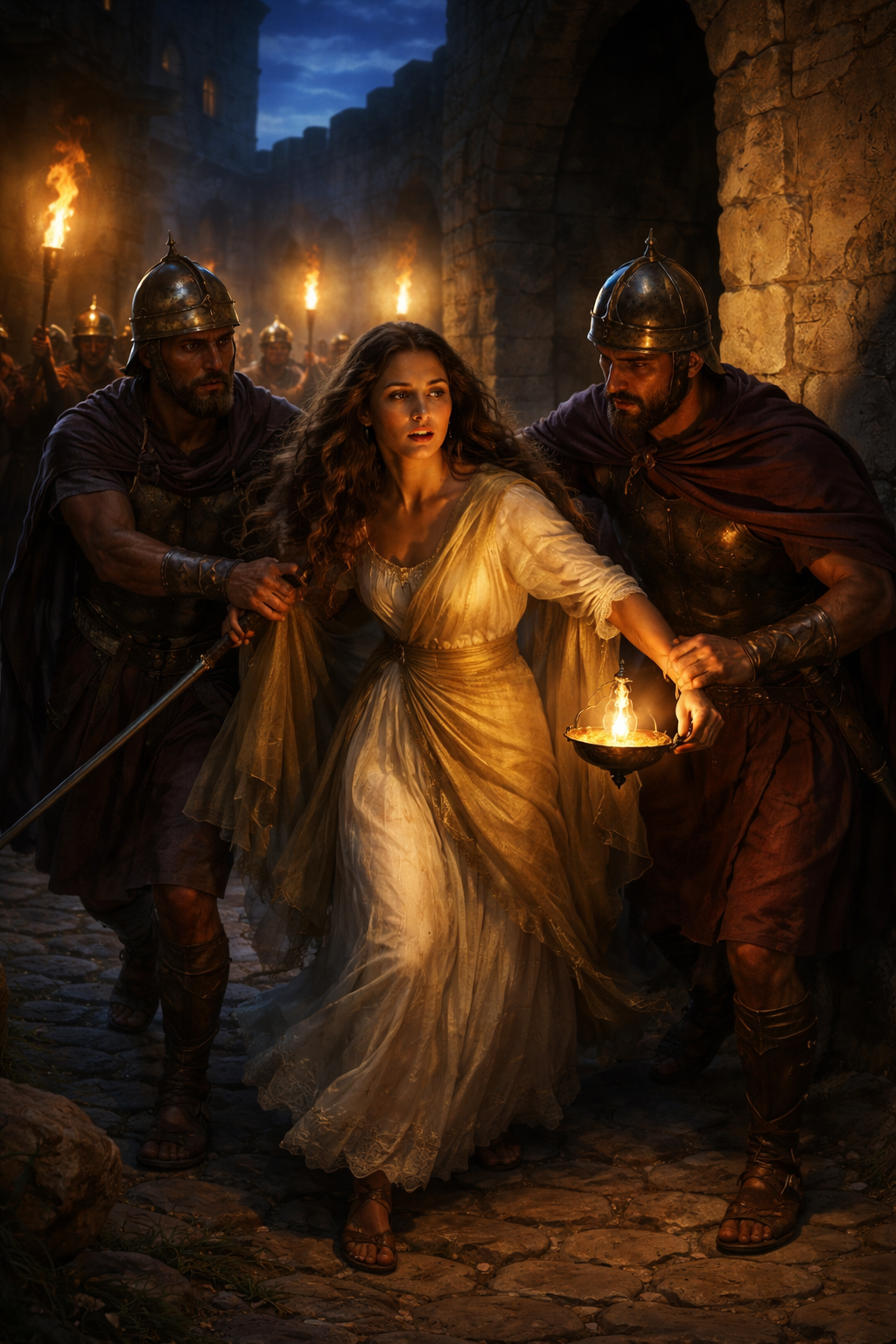
She then goes out searching for him in the city. The watchmen find her and strike her, taking away her veil (5:7). This illustrates the distress and longing produced when fellowship is interrupted.
The daughters of Jerusalem ask why her beloved is so special. She responds with one of the most vivid descriptions of the bridegroom in Scripture (5:10–16):
“My beloved is white and ruddy, the chiefest among ten thousand.”
She describes his head, eyes, cheeks, lips, hands, body, and voice using poetic imagery of gold, jewels, and ivory.
The chapter ends with the declaration:
“This is my beloved, and this is my friend.”
Historically, conservative commentators have recognized the passage primarily as a celebration of marital love. At the same time, many Baptist teachers have seen a devotional parallel between the believer and Christ: delayed obedience can hinder fellowship.
Song of Solomon 6
The daughters of Jerusalem ask where the beloved has gone so they may help search for him.
The bride replies:
“My beloved is gone down into his garden, to the beds of spices…” (6:2)
She expresses renewed assurance:
“I am my beloved’s, and my beloved is mine.” (6:3)
The bridegroom then praises the bride again. He compares her beauty to notable cities:
“Thou art beautiful, O my love, as Tirzah, comely as Jerusalem…” (6:4)
Tirzah was once the capital of the northern kingdom before Samaria, known for its pleasant setting. Jerusalem symbolized majesty and splendor.
Verses 8–9 emphasize her uniqueness:
“My dove, my undefiled is but one…”
Even among many queens and concubines, she stands out.
The chapter closes with admiration expressed by observers as the bride moves with grace and dignity.
Historically, the passage highlights the stability and renewed joy in a committed marriage relationship.
Song of Solomon 7
This chapter contains another extended description of the bride’s beauty by the bridegroom.
Beginning with her feet and moving upward, the description reflects admiration and affection:
“How beautiful are thy feet with shoes, O prince’s daughter!”
The imagery uses precious materials, architecture, and nature—ivory, wheat, towers, and vineyards.
Such poetic language celebrates physical attraction within the bounds of marriage. Conservative commentators consistently emphasize that the passage honors marital intimacy rather than sensuality outside God’s design.
The bride responds with devotion:
“I am my beloved’s, and his desire is toward me.” (7:10)
This expresses security in the relationship.
She then invites him to go into the countryside:
“Let us go forth into the field; let us lodge in the villages.” (7:11)
The vineyards, blossoms, and fruits symbolize love flourishing in the context of companionship and shared life.
Song of Solomon 8
The final chapter brings the love story to its conclusion.
The bride expresses a desire for unrestricted affection:
“O that thou wert as my brother…” (8:1)
In ancient culture, public affection between siblings was socially acceptable, so this wish expresses the desire to show love openly without restraint.
Verses 6–7 present one of the most famous declarations about love:
“Set me as a seal upon thine heart, as a seal upon thine arm: for love is strong as death…”
The passage continues:
“Many waters cannot quench love, neither can the floods drown it.”
This portrays true marital love as enduring, powerful, and priceless.
Later verses refer to the bride’s brothers guarding her purity in earlier years (8:8–9), highlighting the biblical value of chastity before marriage.
The bride then declares her faithfulness:
“I am a wall, and my breasts like towers…”
This indicates she has preserved her virtue.
The book concludes with mutual longing between the bride and bridegroom and the bride’s invitation:
“Make haste, my beloved.”
The ending leaves the picture of love continuing in anticipation and joy.
Key People and Places
Solomon
The king of Israel and the bridegroom in the song. Known for wisdom, wealth, and poetic writings. The book reflects the culture and prosperity of Israel during his reign.
The Shulamite Bride
The central female figure. She represents purity, devotion, and faithful love within marriage.
Daughters of Jerusalem
Young women who observe and comment throughout the book, functioning almost like a chorus in Hebrew poetry.
Watchmen of the City
City guards who appear during the bride’s nighttime search in chapter 5.
Jerusalem
The capital city of Israel and a symbol of beauty and majesty.
Tirzah
An ancient city later used as a capital of the northern kingdom, known for its attractive setting.
Main Doctrinal or Spiritual Themes
1. The Sanctity of Marriage
Song of Solomon strongly affirms God’s design for romantic love within marriage. Physical affection is presented as honorable and joyful when kept within the covenant relationship.
2. Purity Before Marriage
The references to guarded virtue emphasize the biblical importance of sexual purity. Scripture consistently teaches chastity before marriage and faithfulness within it.
3. Exclusive Devotion
Repeated statements like:
“My beloved is mine, and I am his”
illustrate the exclusivity and loyalty that should characterize marriage.
4. The Power and Permanence of Love
Chapter 8 teaches that genuine love is enduring and cannot be purchased:
“If a man would give all the substance of his house for love, it would utterly be contemned.” (8:7)
Love is presented as priceless and steadfast.
5. Fellowship and Responsiveness
Chapter 5 shows how hesitation can interrupt closeness. Many pastors have used this passage devotionally to illustrate the importance of responding quickly to the Lord’s call.
Practical Applications or Lessons
1. Marriage Is God’s Good Gift
The book reminds believers that romantic love within marriage is not worldly or sinful. It is part of God’s design and should be honored.
2. Guard Purity Before Marriage
The emphasis on guarded virtue encourages believers to maintain moral purity until marriage.
3. Cultivate Affection and Appreciation
The bridegroom repeatedly praises the bride. Healthy marriages thrive when spouses express admiration and gratitude.
4. Do Not Delay Obedience
The bride’s hesitation in chapter 5 led to distress. Spiritually, believers should respond promptly when God speaks through His Word.
5. True Love Is Faithful and Enduring
Biblical love is not merely emotional—it is committed, enduring, and sacrificial.
Comments are closed