Chapter Summaries
Song of Solomon 1
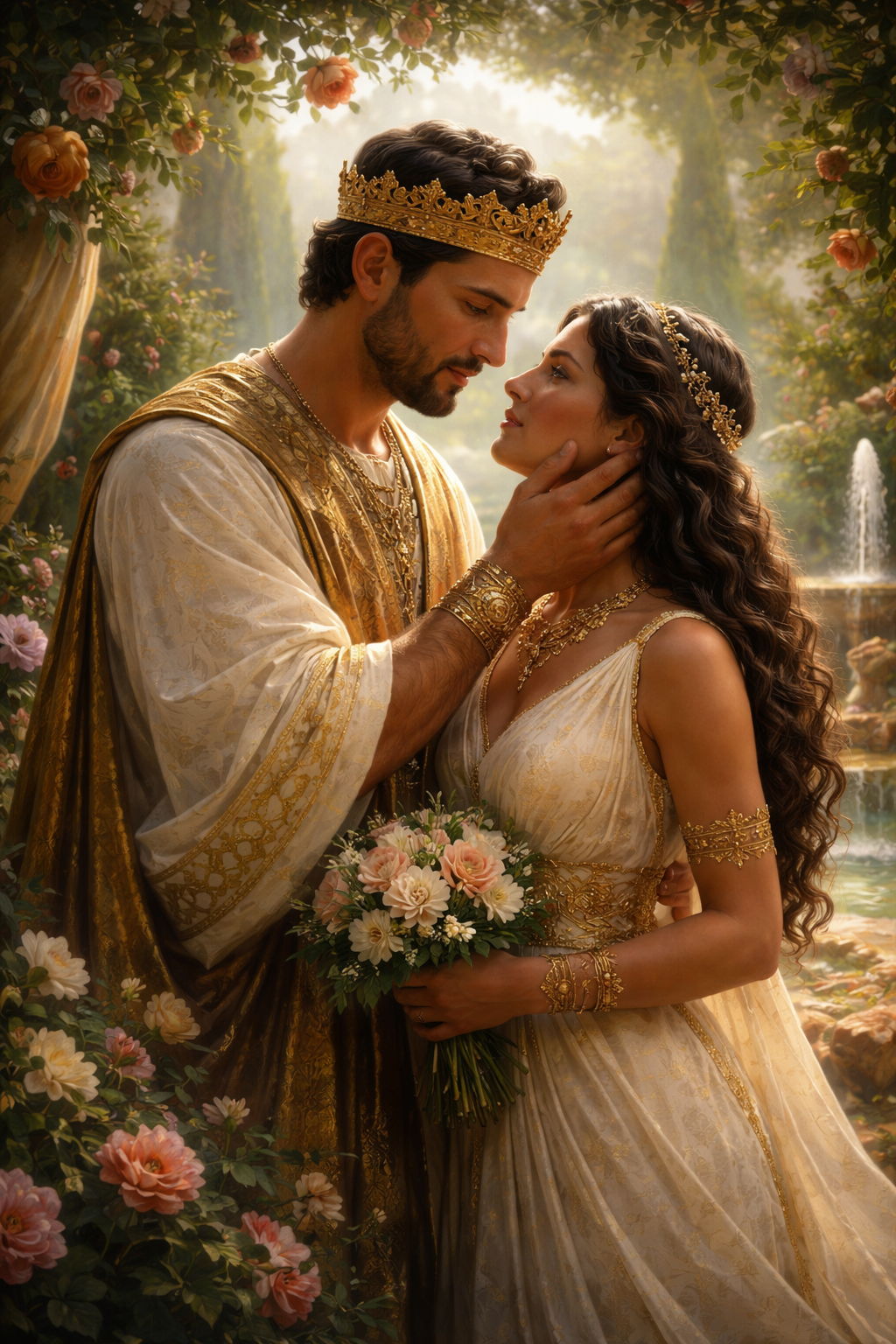
 The book opens with the bride expressing her deep love and desire for the bridegroom. She declares, “Let him kiss me with the kisses of his mouth: for thy love is better than wine” (1:2). The language is poetic and affectionate, emphasizing the sweetness and delight of true love.
She speaks of the fragrance of the king’s name: “because of the savour of thy good ointments thy name is as ointment poured forth” (1:3). This illustrates the reputation and character of the beloved. In Scripture, a name represents a person’s character; thus the bride delights not merely in the man but in who he is.
The bride acknowledges her humble condition, saying, “I am black, but comely, O ye daughters of Jerusalem” (1:5). The darkness of her skin likely refers to sun exposure from outdoor labor, indicating a rural background. She had been made to keep the vineyards but neglected her own, symbolizing the hardship she endured.
She seeks the presence of her beloved, asking where he feeds his flock (1:7). The bridegroom responds by directing her to follow the footsteps of the flock (1:8), suggesting that love grows through faithful companionship and shared life.
The chapter concludes with affectionate praise exchanged between the couple. The bridegroom compares her to “a company of horses in Pharaoh’s chariots” (1:9), a compliment emphasizing beauty, dignity, and strength. The imagery of jewels, gold, and fragrant plants (spikenard, myrrh, camphire) portrays the richness and delight of their relationship.
Historically and doctrinally, conservative commentators often see this book primarily as a celebration of God-ordained marital love, while also recognizing a secondary spiritual illustration of Christ’s love for His people.
Song of Solomon 2
Chapter 2 continues the dialogue between the bride and bridegroom. The bride describes herself humbly as “the rose of Sharon, and the lily of the valleys” (2:1), indicating modest beauty rather than royal grandeur.
The bridegroom responds by elevating her worth: “As the lily among thorns, so is my love among the daughters” (2:2). In other words, she stands apart from all others.
The bride compares the beloved to “an apple tree among the trees of the wood” (2:3), emphasizing nourishment, shade, and delight. She says, “His fruit was sweet to my taste.” The imagery suggests satisfaction and security in his presence.
A famous line follows: “He brought me to the banqueting house, and his banner over me was love” (2:4). The idea is public devotion and open affection. Love is not hidden but honored.
The bride urges restraint and purity in love:
“I charge you, O ye daughters of Jerusalem… that ye stir not up, nor awake my love, till he please” (2:7). This warning emphasizes waiting for the proper time and context of love—marriage.
The bride describes the coming of her beloved across the hills (2:8–13), calling her to rise and come away. The setting is springtime, symbolizing new life and blossoming love: “The winter is past… the flowers appear on the earth.”
However, a caution appears in verse 15:
“Take us the foxes, the little foxes, that spoil the vines.”
Small problems can damage relationships if left unchecked. Love must be guarded.
The chapter ends with mutual belonging:
“My beloved is mine, and I am his” (2:16), expressing covenant commitment.
Song of Solomon 3
Chapter 3 begins with a scene that resembles a dream or night search. The bride longs for her beloved and cannot find him:
“By night on my bed I sought him whom my soul loveth: I sought him, but I found him not” (3:1).
She rises and searches the city streets, asking the watchmen if they have seen him (3:2–3). Soon afterward she finds him and refuses to let him go, bringing him to her mother’s house (3:4). Again the warning about premature love is repeated (3:5).
The scene then shifts dramatically to a royal wedding procession. The question is asked:
“Who is this that cometh out of the wilderness like pillars of smoke?” (3:6).
This likely describes Solomon approaching Jerusalem for the marriage celebration. The imagery includes:
- Perfume of myrrh and frankincense
- Sixty mighty men guarding the royal litter (3:7–8)
- A richly decorated carriage made of Lebanon wood (3:9–10)
The daughters of Zion are invited to see King Solomon wearing the crown “in the day of his espousals, and in the day of the gladness of his heart” (3:11).
This chapter celebrates the dignity and joy of marriage.
Song of Solomon 4
Chapter 4 records an extended description of the bride’s beauty by the bridegroom. This poetic praise emphasizes admiration, tenderness, and devotion.
He describes her features in rich imagery:
- Eyes like doves (4:1)
- Hair like a flock of goats descending Mount Gilead
- Teeth like sheep freshly washed (4:2)
- Lips like a thread of scarlet (4:3)
These comparisons were culturally understood as compliments describing harmony, purity, and vitality.
In verse 7 he declares:
“Thou art all fair, my love; there is no spot in thee.”
Within the context of love, he sees her as flawless.
The bridegroom invites her to come with him from Lebanon (4:8), symbolizing leaving the old life and entering their shared future.
He says:
“Thou hast ravished my heart, my sister, my spouse” (4:9).
The phrase “sister, my spouse” reflects closeness, purity, and covenant relationship.
The bride is compared to a locked garden (4:12), representing purity reserved for her husband. The imagery of spices, fruits, fountains, and flowing waters portrays beauty, fertility, and life.
This chapter highlights the sanctity and exclusivity of marital love.
Key People and Places
Solomon (the Bridegroom)
King of Israel, son of David. Represents royal dignity and the lover in the poem.
The Shulamite Woman (the Bride)
A rural young woman who becomes Solomon’s beloved bride. Her humility and devotion stand out.
Daughters of Jerusalem
Women of the royal city who serve as observers and occasional participants in the dialogue.
Watchmen of the City
City guards mentioned in the bride’s nighttime search (3:3).
Jerusalem
The royal capital of Israel and setting for portions of the story.
Lebanon
Mountain region known for its cedar forests, referenced poetically in chapter 4.
Sharon and the Valleys
Fertile regions of Israel symbolizing natural beauty (2:1).
Main Doctrinal or Spiritual Themes
1. God’s Design for Marriage
The Song of Solomon celebrates romantic love within the framework of marriage. Scripture affirms marriage as God’s institution from Genesis onward.
2. Purity and Moral Boundaries
Repeated warnings to not awaken love prematurely stress chastity and patience before marriage.
3. Covenant Commitment
Statements like “My beloved is mine, and I am his” highlight exclusivity and lifelong devotion.
4. Joy in Righteous Love
Unlike worldly lust, biblical love is joyful, honoring, and deeply relational.
5. A Picture of Christ and His People
While the primary meaning concerns human marriage, many conservative teachers see an illustration of Christ’s love for His church—devoted, sacrificial, and intimate.
Practical Applications or Lessons
1. Marriage Should Be Cherished
The affectionate language reminds believers that love within marriage is honorable and should be nurtured.
2. Guard the Relationship from “Little Foxes”
Small sins, neglect, bitterness, or lack of communication can harm a marriage if ignored.
3. Wait for God’s Timing
The repeated admonition not to awaken love prematurely emphasizes purity before marriage.
4. Express Love Openly
The couple freely expresses admiration and appreciation. Healthy marriages thrive on encouragement and affirmation.
5. Value Character Above Appearance
The bride is loved not only for beauty but for devotion and loyalty.
Comments are closed