These four psalms, attributed primarily to Asaph, move from national devastation and lament to remembrance of God’s mighty works. Historically, they reflect seasons when Israel faced severe judgment—most fittingly the destruction of Jerusalem and the Temple (likely Babylonian), though the principles apply broadly to national chastening. Theologically, they emphasize covenant discipline, God’s sovereignty, His faithfulness in judgment, and the spiritual necessity of remembering His works.
Chapter Summaries
Psalm 74
Major Events and Flow of the Text
 This psalm is a national lament over the destruction of the sanctuary.
- Verses 1–3 – The psalmist cries, “O God, why hast thou cast us off for ever?” The appeal is covenantal: “Remember thy congregation, which thou hast purchased of old.” The reference to Zion shows this concerns the holy city and Temple.
- Verses 4–8 – The enemies have “roared in the midst of thy congregations.” They have “set up their ensigns for signs,” broken carved work, and burned the sanctuary. Verse 8 declares, “They have burned up all the synagogues of God in the land.”
- Verses 9–11 – The people see “not our signs: there is no more any prophet.” It feels like divine silence.
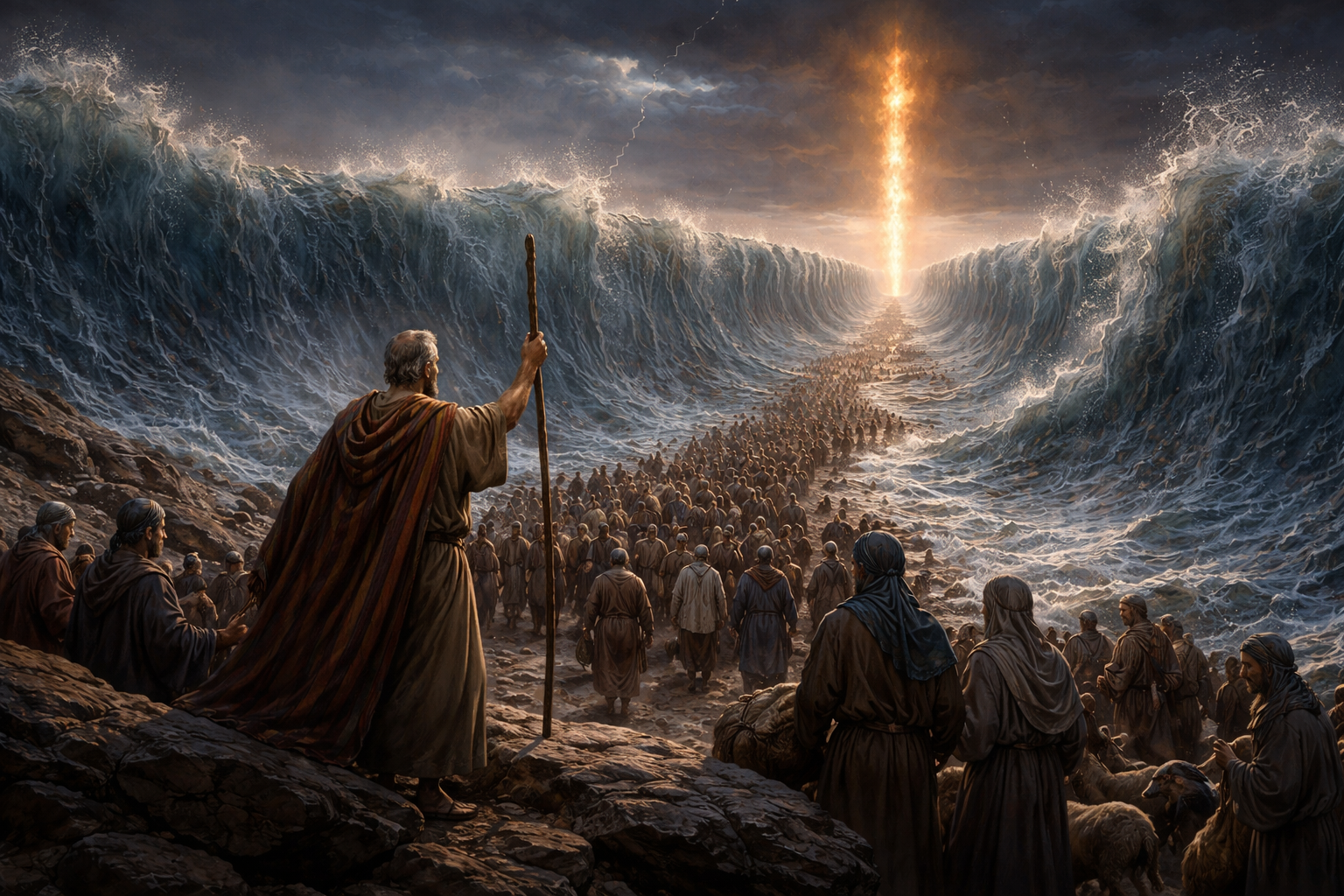
- Verses 12–17 – The tone shifts to remembrance. “For God is my King of old, working salvation in the midst of the earth.” The psalmist recalls creation power and the dividing of the sea—likely referencing the Red Sea. “Thou brakest the heads of leviathan in pieces” points to God’s triumph over chaotic powers.
- Verses 18–23 – Prayer for vindication: “Arise, O God, plead thine own cause.”
Historical and Doctrinal Background
This strongly reflects the Babylonian destruction (586 B.C.), when the Temple was burned (2 Kings 25). Conservative commentators affirm this as divine chastening for covenant unfaithfulness. Yet the psalm does not accuse God of injustice—it pleads covenant mercy.
Psalm 75
Major Events and Flow of the Text
A psalm of praise affirming God as righteous Judge.
- Verse 1 – Thanksgiving: “For that thy name is near thy wondrous works declare.”
- Verses 2–3 – God speaks: “When I shall receive the congregation I will judge uprightly.” Though the earth dissolves morally, “I bear up the pillars of it.”
- Verses 4–5 – Warning to the wicked: “Lift not up your horn on high.”
- Verses 6–7 – A key doctrinal statement: “Promotion cometh neither from the east, nor from the west… But God is the judge: he putteth down one, and setteth up another.”
- Verse 8 – The cup of divine wrath: “The dregs thereof, all the wicked of the earth shall wring them out.”
- Verses 9–10 – The righteous rejoice; the wicked are cut off.
Doctrinal Emphasis
God’s sovereignty over nations and leaders is absolute. This aligns with Daniel 2:21: He “removeth kings, and setteth up kings.” The psalm corrects human pride and political boasting.
Psalm 76
Major Events and Flow of the Text
A psalm celebrating God’s victory over enemies.
- Verses 1–3 – “In Judah is God known: his name is great in Israel.” Salem (Jerusalem) is His tabernacle. God breaks “the arrows of the bow.”
- Verses 4–6 – God is “more glorious and excellent than the mountains of prey.” Enemies are cast into sleep—possibly alluding to the destruction of Sennacherib’s army (2 Kings 19).
- Verses 7–9 – “Thou, even thou, art to be feared.” God arises “to save all the meek of the earth.”
- Verse 10 – “Surely the wrath of man shall praise thee.”
- Verses 11–12 – Vows and reverent fear are commanded.
Historical Context
Many conservative interpreters connect this with the miraculous defeat of Assyria under Hezekiah, though the psalm speaks more broadly of divine intervention.
Psalm 77
Major Events and Flow of the Text
A deeply personal lament that turns to triumphant remembrance.
- Verses 1–3 – “In the day of my trouble I sought the Lord.” The psalmist feels overwhelmed.
- Verses 4–9 – Spiritual crisis: “Will the Lord cast off for ever?” “Hath God forgotten to be gracious?”
- Verse 10 – Turning point: “This is my infirmity: but I will remember the years of the right hand of the most High.”
- Verses 11–15 – Deliberate remembrance of God’s wonders.
- Verses 16–20 – The Red Sea deliverance is described vividly: “The waters saw thee, O God.” “Thy way is in the sea.” “Thou leddest thy people like a flock by the hand of Moses and Aaron.”
Spiritual Insight
This psalm teaches that discouragement is real, but faith must anchor itself in God’s past faithfulness.
Key People and Places
- Asaph – Levitical musician appointed by David (1 Chron. 16). His descendants continued temple ministry.
- Zion / Jerusalem / Salem – The covenant city, dwelling place of God’s name.
- Sanctuary / Tabernacle – The visible center of Israel’s worship.
- Moses and Aaron – Leaders of the Exodus, representing divine deliverance.
- The Red Sea – Symbol of miraculous salvation.
- Leviathan – Symbolic of chaos or powerful opposition subdued by God.
Main Doctrinal or Spiritual Themes
- Divine Chastening of Nations – God judges covenant-breaking people (Psalm 74).
- God’s Sovereignty Over Authority – He sets up and removes rulers (Psalm 75).
- The Fear of the Lord – Reverence is commanded (Psalm 76).
- The Wrath of Man Subordinate to God – Even rebellion serves His ultimate purposes.
- Faith Strengthened by Remembrance – Spiritual recovery begins by recalling God’s works (Psalm 77).
- Covenant Faithfulness of God – Though Israel fails, God remains faithful to His promises.
Practical Applications or Lessons
- National Sin Brings National Consequences
The destruction in Psalm 74 warns that sin invites judgment. Churches and nations must not presume upon God’s blessing. - God Controls Political Outcomes
Believers should not boast in human power. “Promotion… cometh… from God.” - Reverence Is Not Optional
“Thou… art to be feared.” Casual attitudes toward God dishonor Him. - Discouragement Must Be Answered with Scripture Memory
Psalm 77 models spiritual recovery by remembering God’s mighty acts. - God’s Silence Is Not His Absence
Even when there is “no more any prophet,” the covenant promises stand. - The Meek Are Remembered
Psalm 76 assures that God rises “to save all the meek of the earth.”
Comments are closed