Chapter Summaries
1 Chronicles 26 — Gatekeepers, Treasurers, and Stewards
 This chapter records the organization of the porters (gatekeepers) of the house of the LORD. Their duties were not menial but sacred, guarding entrances, overseeing storerooms, and protecting holy things. Families descended from Korah and Merari are named, emphasizing orderly service by divine appointment.
In addition, treasurers and officers are appointed over the dedicated things—spoil set apart by David, Samuel, Saul, Abner, and Joab. These resources were reserved “to maintain the house of the LORD.”
The chapter closes with administrative officers assigned throughout Israel west and east of Jordan, underscoring that God’s work required faithful oversight in both spiritual and civil matters.
1 Chronicles 27 — Military and Civil Organization
David organizes the twelve divisions of the army, each serving one month per year. This system ensured readiness without exhausting the people. Tribal leaders, stewards over royal property, and counselors are also listed.
Joab is mentioned in connection with the census but not praised—subtly reminding the reader of David’s past failure. The chapter shows a kingdom structured with wisdom, restraint, and accountability under God.
1 Chronicles 28 — David’s Charge to Solomon
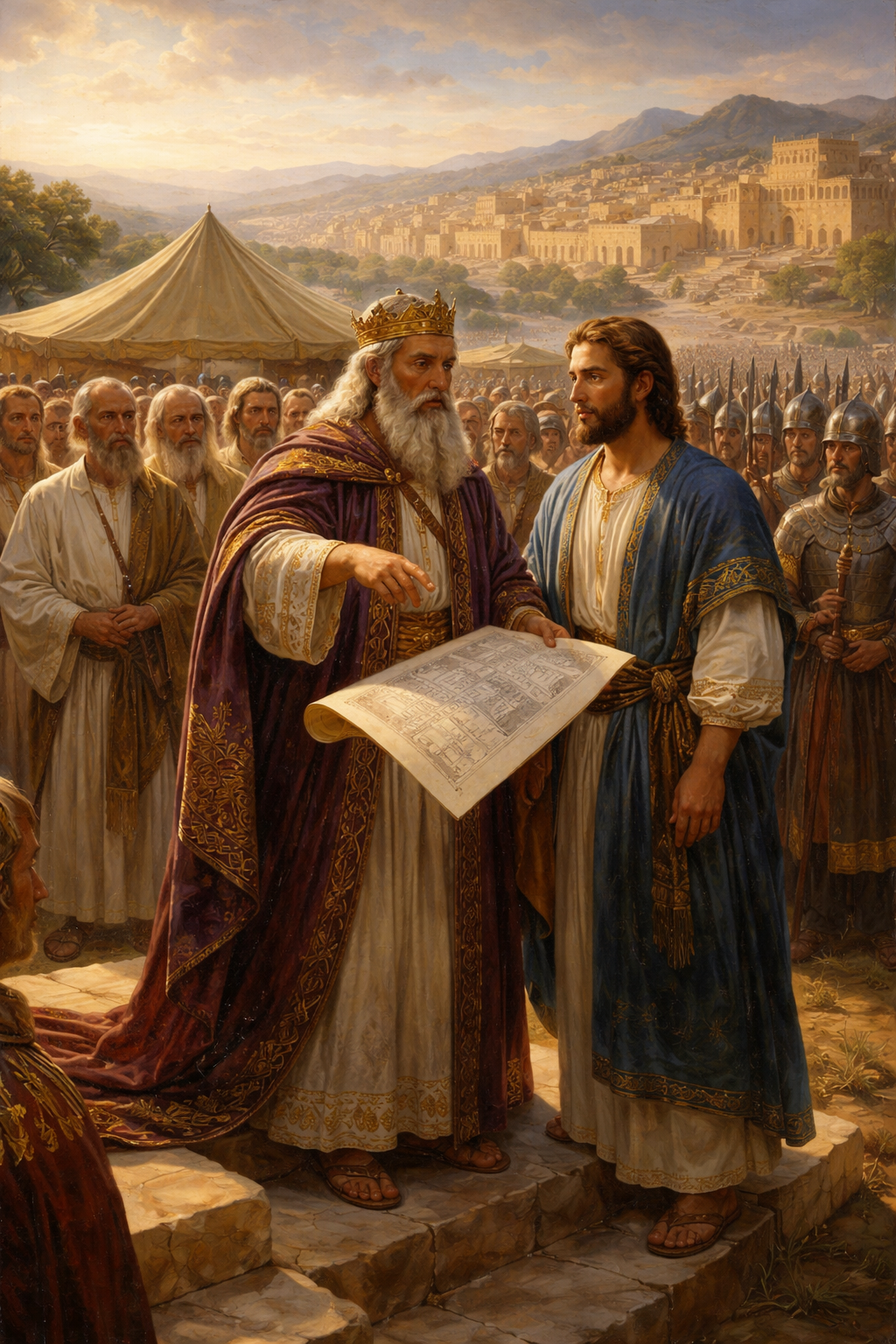
David publicly assembles the princes, captains, judges, and mighty men and declares that God chose Solomon to build the temple. Though David desired to build it, the LORD had appointed another for that task.
David exhorts Solomon to “know thou the God of thy father, and serve him with a perfect heart and with a willing mind” (KJV phrasing). He then delivers the divinely given pattern of the temple, emphasizing that the design came “by the Spirit.”
The chapter closes with David’s encouragement: “Be strong and of good courage… the LORD God… will not fail thee, nor forsake thee.”
Key People and Places
- David — The organizing king who prepared materials, leadership, and plans for the temple.
- Solomon — Chosen by God to build the house of the LORD.
- Jerusalem — The center of worship and government.
- Gatekeepers (Porters) — Levites entrusted with guarding sacred space and resources.
- Joab — Commander of the host, referenced in connection with the incomplete census.
Main Doctrinal or Spiritual Themes
- Order in God’s Work — God values structure, accountability, and faithful administration.
- Stewardship of Sacred Things — Dedicated resources are to be guarded and used reverently.
- Divine Calling and Submission — David submits to God’s will even when denied a cherished desire.
- Heart Religion — God looks beyond service to the condition of the heart.
- Continuity of God’s Plan — God’s work moves forward across generations.
Practical Applications or Lessons
- Faithful service includes unseen duties; guarding doors and managing resources matters to God.
- God’s work should be organized wisely, not carelessly or presumptuously.
- Personal desire must yield to God’s sovereign choice.
- Spiritual leadership must be rooted in knowing God, not merely performing tasks.
- Preparing the next generation for obedience and courage is a sacred responsibility.
Comments are closed