Chapter Summaries
Chapter 22 — David’s Preparation for the House of the LORD
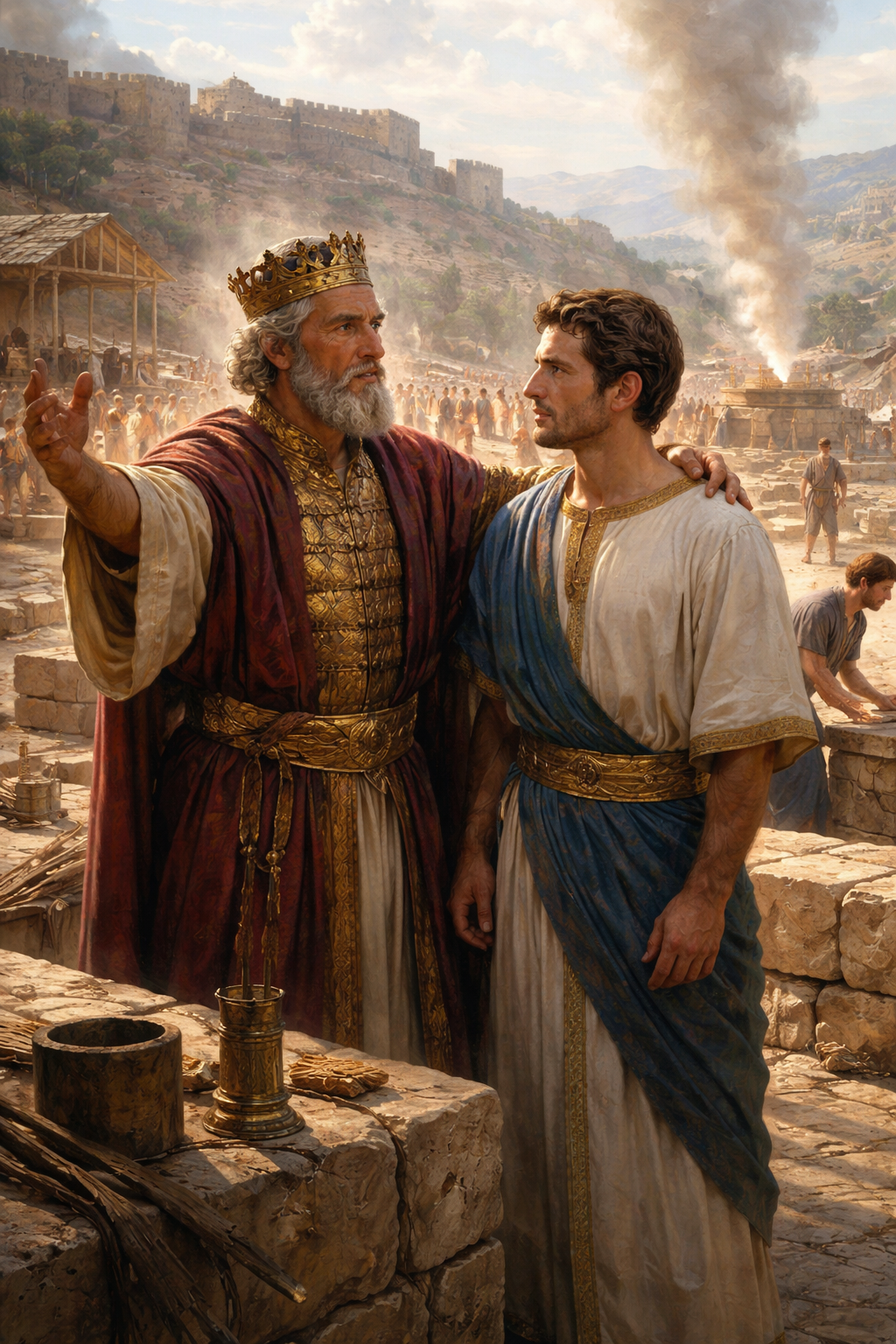
 David declares that the site purchased on Mount Moriah is to be “the house of the LORD God” and the place of Israel’s burnt offerings (22:1). Though David is forbidden to build the temple because he is a man of war and has shed blood, he makes extensive preparations for it. He gathers iron, brass, cedar wood, gold, silver, and stone “in abundance” (22:2–5). David charges Solomon to be strong, courageous, and obedient, reminding him that the LORD chose him to build the house. David also commands the princes of Israel to help Solomon, emphasizing wholehearted devotion to seeking the LORD.
Doctrinal emphasis: God’s holiness determines who may do certain works for Him; preparation and obedience matter even when one is not permitted to complete the task personally.
Chapter 23 — Organization of the Levites
As David’s reign draws to a close, he organizes the Levites for temple service. The Levites are numbered from thirty years old and upward (23:3), then reassigned to duties appropriate for a permanent temple rather than the tabernacle’s wilderness mobility. Their responsibilities include assisting the priests, overseeing the courts and chambers, purifying holy things, and leading praise to the LORD morning and evening (23:28–30).
Doctrinal emphasis: God is a God of order, and worship must be conducted according to His design, not human convenience.
Chapter 24 — Division of the Priests
The sons of Aaron—through Eleazar and Ithamar—are divided into twenty-four courses by lot. These rotations establish orderly priestly service in the temple. The casting of lots emphasizes divine sovereignty in assignment rather than human preference. This chapter later provides historical background for New Testament priestly service (cf. Zacharias in Luke 1).
Doctrinal emphasis: God appoints His servants according to His will, and faithful service often occurs within structured, God-ordained systems.
Chapter 25 — Organization of the Musicians
David, together with military and civil leaders, appoints Levites for musical ministry. The sons of Asaph, Heman, and Jeduthun are set apart to “prophesy with harps, with psalteries, and with cymbals” (25:1). Their ministry is not entertainment but worship that declares God’s truth. Musicians are trained, skilled, and organized by lot, both small and great, teacher and scholar alike.
Doctrinal emphasis: Music in worship is sacred, instructional, and God-directed, requiring both spiritual calling and disciplined preparation.
Key People and Places
- David — King of Israel; prepares materials, organization, and spiritual instruction for the temple he cannot build.
- Solomon — David’s son; divinely chosen builder of the temple, charged to obey the LORD fully.
- Levites — Tribe appointed for temple service, administration, and worship support.
- Aaron’s sons (Eleazar and Ithamar) — Foundations of the priestly divisions.
- Asaph, Heman, Jeduthun — Leaders of temple music and prophetic praise.
- Jerusalem / Mount Moriah — Site designated for the house of the LORD.
Main Doctrinal or Spiritual Themes
- God’s holiness and qualifications for service — Not every servant is permitted every role.
- Preparation before visible results — Faithful labor often benefits future generations.
- Order in worship — God values structure, accountability, and organization.
- Calling and gifting — God appoints individuals to specific functions within His work.
- Worship as ministry — Music and service are acts of reverent obedience, not performance.
Practical Applications or Lessons
- Faithful believers should labor diligently even when they will not personally see completion.
- God’s work should be done God’s way, with reverence, discipline, and obedience.
- Leadership includes preparing others to succeed spiritually.
- Worship requires both a right heart and right order.
- Every role in God’s work—visible or unseen—matters when done unto the LORD.
Comments are closed