Zionistic Meaning: What Does Zion Mean in the Bible?
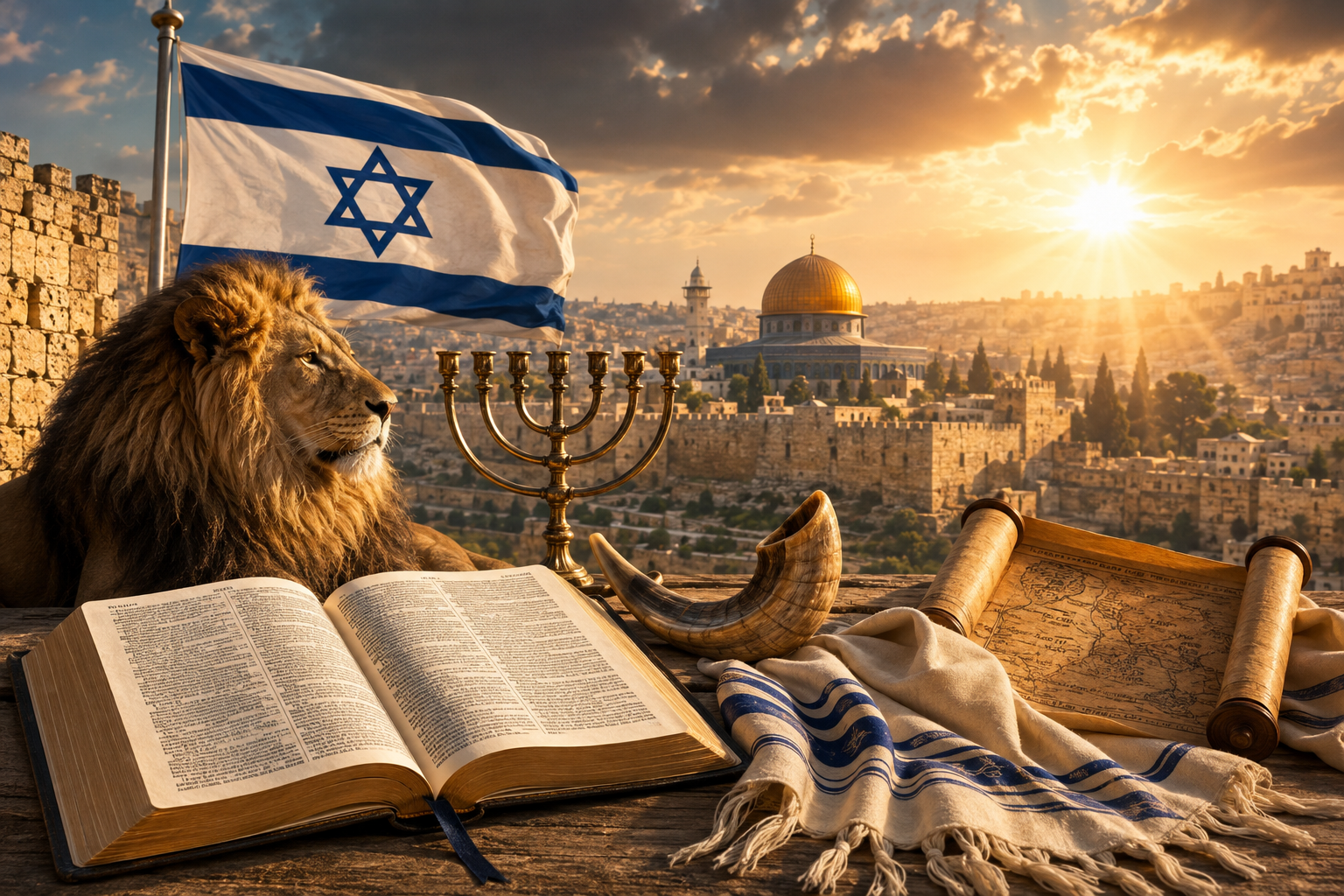
 The word “zionistic” is not found in the King James Bible. In modern usage, it may describe something connected with Zion, the Jewish people, Jerusalem, or the restoration of Israel to the land. Biblically, however, our understanding must begin with what the Scriptures themselves say about Zion.
Zion in the Old Testament
Zion was originally associated with a literal location in Jerusalem. When David conquered the stronghold of Zion, Scripture says:
“Nevertheless David took the strong hold of Zion: the same is the city of David.”
2 Samuel 5:7
Thus, Zion was not originally an abstract religious idea. It was a real geographical location connected with the city of David.
As Scripture progresses, “Zion” becomes closely associated with Jerusalem, the people of Israel, the throne of David, and God’s purposes for that city.
Psalm 132:13 says:
“For the LORD hath chosen Zion; he hath desired it for his habitation.”
God placed a special significance upon Zion because of His covenant purposes concerning Israel and the Davidic kingdom.
Psalm 48:1-2 declares:
“Great is the LORD, and greatly to be praised in the city of our God, in the mountain of his holiness.
Beautiful for situation, the joy of the whole earth, is mount Zion, on the sides of the north, the city of the great King.”
The Bible therefore presents Zion as closely connected with Jerusalem and the reign of the King whom God has appointed.
Zion and the Messiah
Zion also has an important prophetic connection with Jesus Christ.
Psalm 2:6 says:
“Yet have I set my king upon my holy hill of Zion.”
This prophecy ultimately points to the reign of Christ. Jesus Christ will not merely reign spiritually in the hearts of men. According to the plain prophetic Scriptures, He will return and establish His kingdom.
Isaiah 2:3 says:
“And many people shall go and say, Come ye, and let us go up to the mountain of the LORD, to the house of the God of Jacob; and he will teach us of his ways, and we will walk in his paths: for out of Zion shall go forth the law, and the word of the LORD from Jerusalem.”
Notice that Scripture connects Zion with Jerusalem. This passage anticipates the future earthly reign of the Messiah.
Zechariah likewise says:
“Thus saith the LORD; I am returned unto Zion, and will dwell in the midst of Jerusalem: and Jerusalem shall be called a city of truth; and the mountain of the LORD of hosts the holy mountain.”
Zechariah 8:3
The conservative, premillennial understanding is therefore that God’s promises concerning Zion and Jerusalem should be interpreted literally unless the Scripture itself indicates otherwise.
Zion and Israel
A biblical understanding of Zion also requires recognizing God’s continuing purposes for the nation of Israel.
Paul writes:
“And so all Israel shall be saved: as it is written, There shall come out of Sion the Deliverer, and shall turn away ungodliness from Jacob:”
Romans 11:26
Romans 11 does not teach that the Church has replaced Israel. Paul specifically speaks of Israel, Jacob, and God’s covenant promises.
He continues:
“For the gifts and calling of God are without repentance.”
Romans 11:29
God has not abandoned the promises He made to Abraham, Isaac, Jacob, David, and the nation of Israel.
Therefore, if the word “zionistic” is used biblically, it should point toward recognition of God’s revealed purposes concerning Zion, Jerusalem, Israel, and the coming kingdom of Jesus Christ.
Biblical Zion and Modern Zionism Are Not Identical
It is important, however, not to confuse biblical Zion automatically with every belief or action associated with modern political Zionism.
The Bible is our authority—not a political party, nation, movement, or government.
Christians can recognize God’s prophetic purposes for Israel without declaring that every decision made by the modern State of Israel is righteous. Like every nation, Israel consists of sinful men who need salvation through Jesus Christ.
Scripture says:
“For all have sinned, and come short of the glory of God;”
Romans 3:23
Jew and Gentile alike must be saved through faith in Christ.
Paul declared:
“For I am not ashamed of the gospel of Christ: for it is the power of God unto salvation to every one that believeth; to the Jew first, and also to the Greek.”
Romans 1:16
Biblical support for God’s promises to Israel must never be confused with teaching that Jewish ancestry itself saves a person. Salvation is only through Jesus Christ.
Zion Has a Future
The prophetic Scriptures reveal that Zion has an important place in God’s future plan.
Isaiah 59:20 says:
“And the Redeemer shall come to Zion, and unto them that turn from transgression in Jacob, saith the LORD.”
Jesus Christ will return. Israel will experience God’s promised restoration, and Christ will reign according to the promises of Scripture.
Isaiah 24:23 declares:
“Then the moon shall be confounded, and the sun ashamed, when the LORD of hosts shall reign in mount Zion, and in Jerusalem, and before his ancients gloriously.”
This agrees with the premillennial teaching of Scripture: Christ returns bodily, Israel is restored according to God’s promises, and the Messiah reigns.
The Biblical Meaning of “Zionistic”
From a biblical standpoint, zionistic could properly describe something relating to Zion and God’s revealed purposes for Jerusalem and Israel. But the word itself is not inspired terminology and should therefore be used carefully.
Biblical Zion is connected with:
- Jerusalem and the city of David.
- God’s covenant purposes for Israel.
- The promised Messiah.
- The future return and reign of Jesus Christ.
- The restoration promised to Israel.
- The fulfillment of God’s prophetic Word.
Christians should neither idolize a modern political movement nor deny the plain promises God made concerning Israel.
The proper biblical position is to believe exactly what God has written.
“For the LORD hath chosen Zion; he hath desired it for his habitation.”
Psalm 132:13
God’s purposes concerning Zion have not failed. His promises to Israel have not been transferred away, and Jesus Christ will fulfill every word concerning His kingdom.
Comments are closed