Theme: The coming “day of the LORD,” God’s judgment on sin, and His promised restoration of a purified remnant.
Zephaniah prophesied “in the days of Josiah the son of Amon, king of Judah” (Zephaniah 1:1). Josiah was a godly reforming king, but Zephaniah shows that outward reform did not remove all inward corruption. Judah still had idolatry, compromise, violence, pride, and spiritual indifference. The book warns that the Lord’s judgment is certain, but it also ends with strong hope: God will purify, gather, rejoice over, and restore His people.
Chapter Summaries
Zephaniah 1 — The Day of the LORD Against Judah
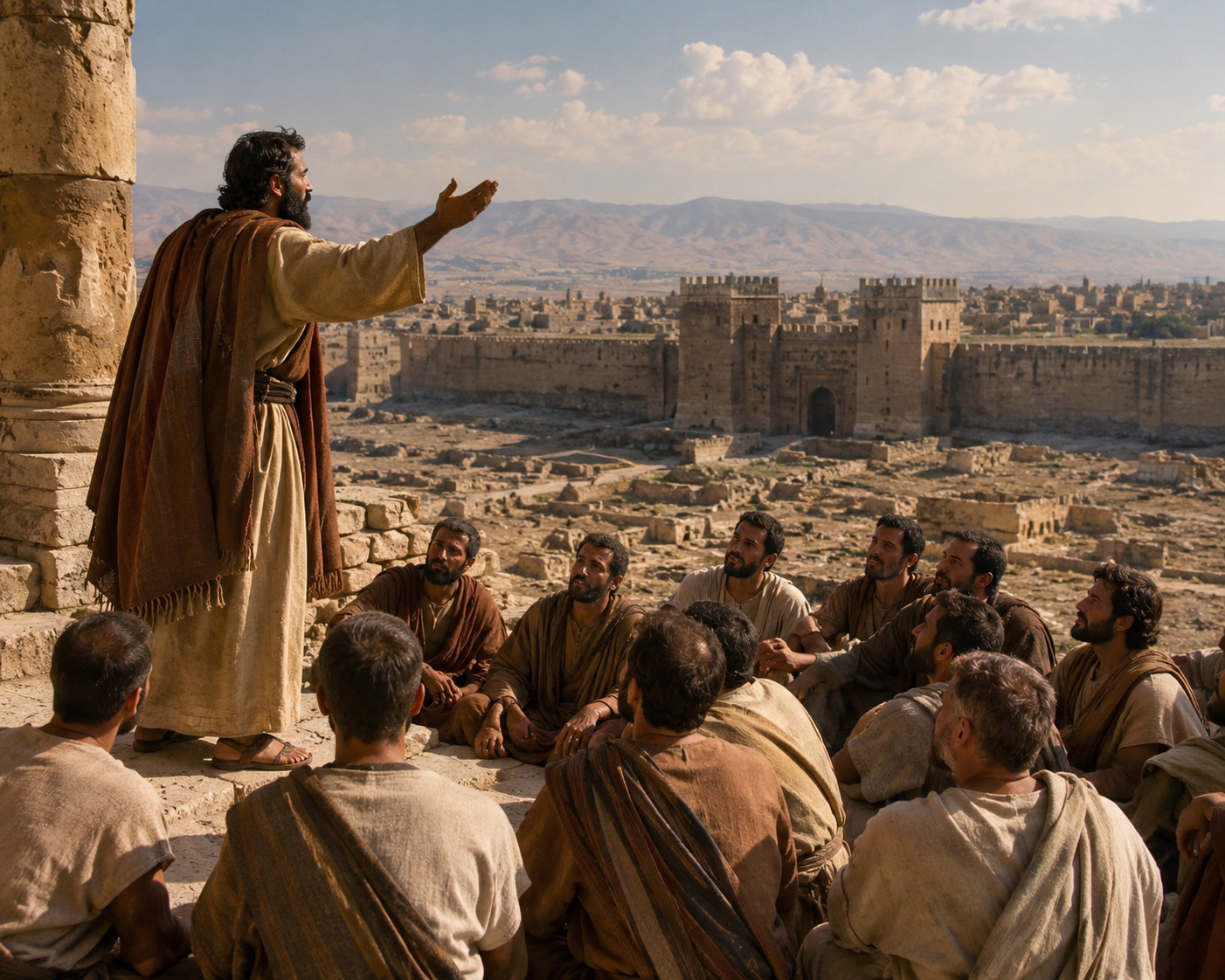
 Zephaniah opens with a severe declaration of judgment: “I will utterly consume all things from off the land, saith the LORD” (1:2). The language is broad and terrifying, showing that God’s judgment is not light or symbolic only. The Lord is holy, and sin cannot stand before Him.
The prophecy focuses especially on Judah and Jerusalem. God says, “I will also stretch out mine hand upon Judah, and upon all the inhabitants of Jerusalem” (1:4). The sins named include Baal worship, false priests, worship of the host of heaven, swearing by the LORD while also swearing by Malcham, and turning back from following the LORD (1:4–6). This is religious mixture—trying to keep the name of the LORD while also serving idols.
Zephaniah then announces, “Hold thy peace at the presence of the Lord GOD: for the day of the LORD is at hand” (1:7). The “day of the LORD” is a major theme of the book. In the immediate sense, it points to coming judgment upon Judah, historically fulfilled through Babylonian invasion. In the larger prophetic sense, it also looks toward God’s final intervention in judgment upon the nations.
The chapter rebukes the princes, the king’s children, those “clothed with strange apparel” (1:8), those who commit violence and deceit, and merchants who trust in wealth. God also condemns complacent sinners who say in their heart, “The LORD will not do good, neither will he do evil” (1:12). That is practical atheism—living as if God will never intervene.
The chapter ends with one of the Bible’s strongest descriptions of judgment: “The great day of the LORD is near, it is near, and hasteth greatly” (1:14). It is called “a day of wrath,” “a day of trouble and distress,” “a day of wasteness and desolation,” and “a day of darkness and gloominess” (1:15). Neither silver nor gold will deliver men in that day (1:18). Wealth cannot buy mercy when judgment falls.
Main flow:
Judah’s hidden idolatry is exposed. The day of the LORD is announced. God warns that judgment will reach religious leaders, rulers, merchants, careless sinners, and all who trust in earthly security.
Zephaniah 2 — A Call to Seek the LORD Before Judgment Falls
Chapter 2 begins with mercy before judgment: “Gather yourselves together, yea, gather together, O nation not desired” (2:1). Though judgment is near, God still calls men to repentance.
The key verse is Zephaniah 2:3: “Seek ye the LORD, all ye meek of the earth, which have wrought his judgment; seek righteousness, seek meekness.” This is not salvation by works, but a call to humble submission before God. The phrase “it may be ye shall be hid in the day of the LORD’S anger” shows the urgency of seeking refuge in the Lord before wrath comes.
The chapter then turns to surrounding nations. Philistine cities are named: Gaza, Ashkelon, Ashdod, and Ekron (2:4). The land of the Philistines will be judged, yet God promises that “the remnant of the house of Judah shall feed thereupon” (2:7). Judgment on enemies becomes future blessing for God’s people.
Moab and Ammon are judged for their pride and reproach against God’s people. They had “reproached my people” and “magnified themselves against their border” (2:8). The Lord declares that Moab shall become like Sodom and Ammon like Gomorrah (2:9). Their sin was not merely political hostility; it was proud defiance against the people of the living God.
Ethiopia is also mentioned: “Ye Ethiopians also, ye shall be slain by my sword” (2:12). Then Assyria and Nineveh are addressed. Nineveh, the great city that repented under Jonah, had returned to pride and wickedness. God says He will make Nineveh “a desolation, and dry like a wilderness” (2:13). The city that said, “I am, and there is none beside me” becomes a place for beasts and desolation (2:15).
Main flow:
God calls the meek to seek Him before wrath comes. Then He announces judgment on Philistia, Moab, Ammon, Ethiopia, and Assyria. The chapter shows that God judges both His own people and the surrounding nations.
Zephaniah 3 — Jerusalem’s Sin, God’s Judgment, and Final Restoration
Chapter 3 begins with a lament over Jerusalem: “Woe to her that is filthy and polluted, to the oppressing city!” (3:1). Jerusalem had greater light than the heathen nations, yet she refused correction. “She obeyed not the voice; she received not correction; she trusted not in the LORD; she drew not near to her God” (3:2).
The leaders are condemned. Her princes are “roaring lions,” her judges are “evening wolves,” her prophets are “light and treacherous persons,” and her priests “have polluted the sanctuary” and “done violence to the law” (3:3–4). This is a fearful picture of national corruption from the top down. Civil leaders, judges, prophets, and priests all failed.
In contrast to Jerusalem’s corruption, “The just LORD is in the midst thereof; he will not do iniquity” (3:5). Man is sinful, but God remains righteous. The Lord had judged other nations as warnings, but Jerusalem did not fear Him or receive instruction (3:6–7).
The prophecy then widens to global judgment: “Therefore wait ye upon me, saith the LORD, until the day that I rise up to the prey” (3:8). God declares that He will gather the nations and pour upon them His indignation. This looks beyond the immediate Babylonian crisis to the final day when God deals with the nations.
But after judgment comes restoration. God says, “For then will I turn to the people a pure language, that they may all call upon the name of the LORD” (3:9). The remnant will no longer be proud and rebellious. God says, “I will also leave in the midst of thee an afflicted and poor people, and they shall trust in the name of the LORD” (3:12).
The restored remnant is described beautifully: “The remnant of Israel shall not do iniquity, nor speak lies” (3:13). The chapter then turns from warning to rejoicing: “Sing, O daughter of Zion; shout, O Israel; be glad and rejoice with all the heart” (3:14). Why? Because “the LORD hath taken away thy judgments” and “the king of Israel, even the LORD, is in the midst of thee” (3:15).
One of the most tender statements in the Minor Prophets appears in Zephaniah 3:17: “The LORD thy God in the midst of thee is mighty; he will save, he will rejoice over thee with joy.” God is not merely removing judgment; He is rejoicing over His redeemed people.
The book closes with gathering and restoration. God promises to undo affliction, save the lame, gather the outcast, and make His people “a name and a praise among all people of the earth” (3:19–20). The book that began with consuming judgment ends with covenant mercy and restoration.
Main flow:
Jerusalem’s corruption is exposed. God’s justice is declared. The nations are warned. Then the Lord promises to purify a remnant, dwell among His people, rejoice over them, and restore them.
Key People and Places
Zephaniah — The prophet who delivered the message. He prophesied during the reign of Josiah, warning Judah of judgment and calling for repentance.
Josiah — King of Judah during Zephaniah’s ministry. His reign included major reforms, but Zephaniah shows that many hearts in Judah remained corrupt.
Judah — The southern kingdom, the main target of Zephaniah’s warning. Judah had the temple, the law, and the Davidic line, yet had fallen into idolatry and spiritual compromise.
Jerusalem — The capital city and religious center of Judah. Zephaniah condemns Jerusalem’s rulers, judges, prophets, priests, and people for rebellion and corruption.
Baal — A false god associated with Canaanite idolatry. Worship of Baal represented spiritual adultery against the LORD.
Malcham / Molech — A false deity connected with pagan worship. Zephaniah condemns those who tried to swear by the LORD and by Malcham, showing divided loyalty.
Philistia — The region of Israel’s longtime enemies, including Gaza, Ashkelon, Ashdod, and Ekron. God announces judgment on these cities.
Moab and Ammon — Nations descended from Lot. They are judged for pride, reproach, and hostility against God’s people.
Ethiopia / Cush — A southern power mentioned as falling under God’s sword. The reference shows the reach of divine judgment beyond Judah’s immediate neighbors.
Assyria — A major world empire known for cruelty and pride. Zephaniah announces judgment against Assyria.
Nineveh — The capital of Assyria. Though Nineveh repented in Jonah’s day, later generations returned to pride and wickedness. Zephaniah foretells its desolation.
The Remnant of Israel — The purified people whom God preserves and restores. They are humble, trusting, and cleansed from rebellion.
Main Doctrinal or Spiritual Themes
1. The Holiness of God
Zephaniah strongly declares that God is holy and will judge sin. He does not overlook idolatry, pride, violence, false worship, or spiritual indifference. The Lord is patient, but His patience must not be mistaken for approval.
2. The Day of the LORD
The “day of the LORD” is central to Zephaniah. It refers to a time when God intervenes in judgment. In Zephaniah, it includes near historical judgment upon Judah and the nations, but also points forward to the final reckoning when the Lord judges the world.
3. Judgment Begins With Greater Light
Judah had more privilege than Philistia, Moab, Ammon, Ethiopia, or Assyria, yet Judah was judged severely. The more light a people have, the more accountable they are. Religious privilege does not excuse sin.
4. False Worship and Mixture Are Sin
Zephaniah rebukes those who swear by the LORD and by Malcham. God does not accept divided worship. A person cannot serve the Lord faithfully while keeping idols in the heart.
5. Spiritual Indifference Is Dangerous
The people who said, “The LORD will not do good, neither will he do evil” were not necessarily denying God’s existence with their mouths, but they denied His involvement by their lives. Practical unbelief is a deadly condition.
6. Pride Brings Nations Down
Moab, Ammon, Assyria, and Nineveh are judged for arrogance. Nineveh said, “I am, and there is none beside me.” Such pride belongs to God alone and becomes the ruin of men and nations.
7. God Preserves a Remnant
Even in judgment, God keeps a remnant. Zephaniah 3 shows that God will leave an “afflicted and poor people” who trust in His name. This agrees with the consistent biblical truth that God preserves His people by grace.
8. True Restoration Includes Purity
God’s restoration is not merely political or material. He purifies speech, removes pride, cleanses rebellion, and brings His people to trust in Him. Biblical restoration includes holiness.
9. The LORD Dwells Among His People
Zephaniah ends with the Lord in the midst of His people. “The king of Israel, even the LORD, is in the midst of thee” (3:15). This points to the blessed hope of God’s presence with His redeemed people.
10. God Rejoices Over His Redeemed
Zephaniah 3:17 gives a precious picture of divine delight: “he will rejoice over thee with joy.” The same God who judges sin also delights in saving, restoring, and comforting His people.
Practical Applications or Lessons
1. Do Not Confuse Religious Activity With True Repentance
Judah had temple worship, priests, prophets, and religious language, yet much of the nation was corrupt. Church attendance, religious vocabulary, and outward reform are not substitutes for a heart right with God.
2. Remove Spiritual Mixture
The people tried to combine the worship of the LORD with pagan devotion. Believers today must guard against divided loyalty. Christ must not be added to a life full of idols; He must be Lord.
3. Take God’s Warnings Seriously
Zephaniah’s message is urgent. Judgment was not imaginary. God’s Word is not given for curiosity but for repentance, obedience, and preparation.
4. Seek the LORD While Mercy Is Offered
“Seek ye the LORD” (2:3) is one of the great calls of the book. The sinner should seek salvation. The believer should seek cleansing, humility, and renewed obedience.
5. Pride Is a National and Personal Danger
Nineveh’s attitude—“I am, and there is none beside me”—is the spirit of self-sufficiency. Pride destroys homes, churches, leaders, and nations. God resists the proud.
6. Leaders Are Accountable to God
Princes, judges, prophets, and priests are all addressed in Zephaniah. Those who lead politically, spiritually, or morally will answer to God for their influence.
7. Do Not Live as Though God Is Inactive
The complacent said, “The LORD will not do good, neither will he do evil.” Many today live the same way, assuming God will never judge or intervene. Zephaniah reminds us that God sees, knows, and acts.
8. God’s People Should Be Humble and Trusting
The remnant in Zephaniah is “afflicted and poor” and trusts in the name of the LORD. God is not looking for self-exalting religion but humble faith.
9. Judgment and Mercy Are Both Biblical Truths
Zephaniah does not present a soft view of God. He is holy and wrathful against sin. But He is also merciful, saving, restoring, and rejoicing over His people. Sound doctrine must hold both truths together.
10. The Final Hope of God’s People Is the Presence of the Lord
The greatest blessing in Zephaniah 3 is not merely safety, land, or honor. It is this: “The LORD thy God in the midst of thee is mighty.” The highest joy of redemption is God Himself dwelling with His people.
Conservative Baptist Emphasis
Zephaniah should be preached as a solemn warning and a glorious promise. The book exposes sin, condemns false worship, rebukes pride, and calls men to seek the Lord. It also magnifies the grace of God toward a remnant.
From a conservative Baptist standpoint, Zephaniah supports these truths:
God is holy and must judge sin.
Man is accountable before God.
Religious hypocrisy is offensive to the Lord.
Repentance must be real, not merely outward.
The nations are under God’s authority.
God keeps His promises to Israel.
The Lord will restore His people according to His covenant mercy.
True hope is found only in the saving power and presence of God.
Zephaniah moves from wrath to restoration, from silence before judgment to singing in redemption. The same Lord who says, “I will utterly consume,” also says, “he will rejoice over thee with joy.” That is the balance of the book: sin is deadly, judgment is certain, but God is mighty to save.
How useful was this post?
Click on a star to rate it!
Average rating 0 / 5. Vote count: 0
No votes so far! Be the first to rate this post.
We are sorry that this post was not useful for you!
Let us improve this post!
Tell us how we can improve this post?
Comments are closed