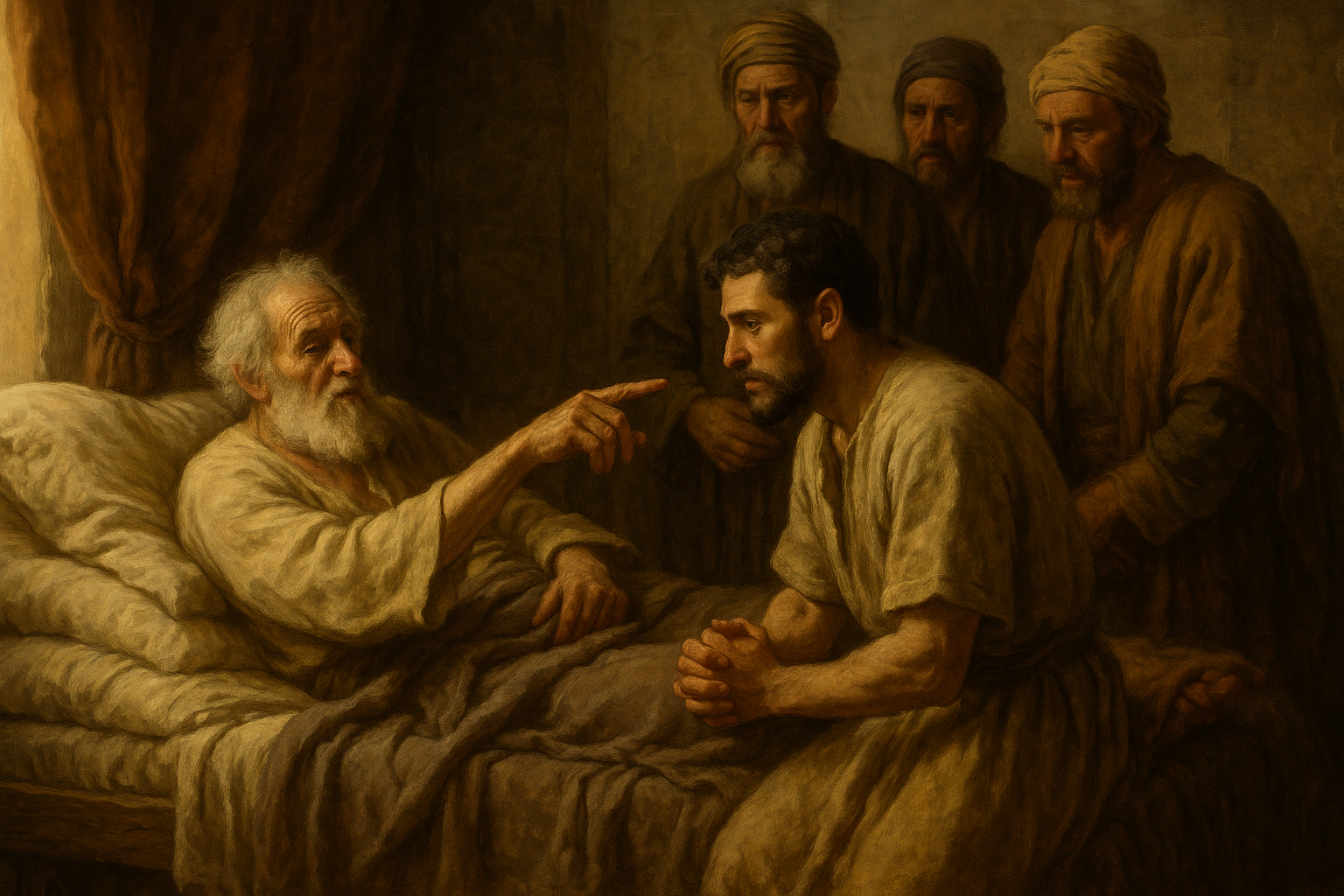
1. David’s “Pardon” of Shimei Was Political, Not Judicial
 Shimei first appears cursing David during Absalom’s rebellion in 2 Samuel 16. Under the Law, that act alone was capital treason.
Later, when David returns victorious, Shimei begs for mercy. David answers:
“Thou shalt not die.” (2 Samuel 19:23, KJV)
This was:
-
A personal oath
-
Made during a fragile national reconciliation
-
Spoken to prevent civil war
-
NOT a formal court acquittal
-
NOT a declaration of innocence
David spared Shimei for the sake of peace, not because Shimei was righteous.
2. David Could Not Lawfully Execute Shimei After Swearing an Oath
By swearing in the LORD’s name, David placed himself under binding obligation:
-
Kings in Israel were not above their own vows
-
Breaking a sworn oath would make David guilty
So even though Shimei deserved death, David was now personally restrained from executing him without violating righteousness.
That is why David says on his deathbed:
“I sware to him by the LORD, saying, I will not put thee to death with the sword.” (1 Kings 2:8)
3. Why David Transfers the Matter to Solomon
David then says:
“Now therefore hold him not guiltless: for thou art a wise man.” (1 Kings 2:9)
This is not vengeance. This is legal transfer of unresolved judgment.
Key truth:
-
David removed immediate execution
-
God did not remove Shimei’s guilt
-
Justice was delayed—not canceled
Solomon is instructed to:
-
Watch Shimei closely
-
Act legally, not emotionally
-
Let Shimei’s own conduct expose his heart
This is judicial wisdom, not bloodthirst.
4. Shimei Dies by His Own Willful Disobedience
Solomon gives Shimei a clear, merciful boundary:
“The day thou goest out, and passest over the brook Kidron, thou shalt know for certain that thou shalt surely die.” (1 Kings 2:37)
Shimei agrees.
Years later:
-
Shimei breaks his oath knowingly
-
Leaves Jerusalem
-
Violates the king’s direct command
Solomon executes him lawfully, not by David’s private grudge.
This proves:
-
Shimei was not repentant
-
He merely feared consequences, not God
-
His rebellion continued quietly until it surfaced again
5. The Doctrinal Truth at the Core
This episode teaches:
? Mercy can delay judgment
? Oaths bind even kings
? Sin can be shelved but not erased
? God ensures justice is completed righteously
? A man’s end proves his heart—not his words
David did not ask Solomon to murder an innocent man.
He asked Solomon to execute wise, lawful justice at the proper time.
6. Why This Matters Spiritually
Shimei is a picture of someone who:
-
Knows he is guilty
-
Accepts temporary mercy
-
But never repents inwardly
-
And eventually reveals his unchanged heart
That is why:
-
The Law was satisfied
-
The throne was cleansed
-
And Solomon’s kingdom was established in righteousness (1 Kings 2:46)
In One Sentence
David spared Shimei temporarily by oath, but transferred final justice lawfully to Solomon, and Shimei condemned himself by willful disobedience.
How useful was this post?
Click on a star to rate it!
Average rating 0 / 5. Vote count: 0
No votes so far! Be the first to rate this post.
We are sorry that this post was not useful for you!
Let us improve this post!
Tell us how we can improve this post?
Comments are closed