
Psalm 118 is the closing psalm of the Egyptian Hallel section, traditionally associated with praise, deliverance, and public worship. It is a psalm of thanksgiving, triumph, and Messianic prophecy. The repeated emphasis is that “his mercy endureth for ever” and that the LORD is the true refuge, strength, salvation, and victory of His people.
From a conservative Baptist perspective, Psalm 118 points clearly to God’s covenant mercy toward Israel, His deliverance of His servant, and prophetically to the Lord Jesus Christ, especially in the rejected stone becoming “the head stone of the corner” in verse 22.
Chapter Summary
Psalm 118:1–4 — A Call to Praise the LORD for His Everlasting Mercy
 The psalm begins with a clear command:
“O give thanks unto the LORD; for he is good: because his mercy endureth for ever.”
Psalm 118:1
The psalmist calls three groups to testify of God’s enduring mercy:
Israel — the covenant nation of God.
The house of Aaron — the priestly line.
Them now that fear the LORD — all who reverence Him.
This opening establishes the theme of the entire psalm: God is good, and His mercy is not temporary, weak, or uncertain. His mercy “endureth for ever.”
This is not a shallow emotional statement; it is a doctrinal confession. Israel had failed many times, yet God’s mercy remained. The believer today can likewise say that salvation, forgiveness, and daily help are rooted in the goodness and mercy of God, not in human merit.
Psalm 118:5–9 — The LORD as Refuge in Distress
The psalmist testifies:
“I called upon the LORD in distress: the LORD answered me, and set me in a large place.”
Psalm 118:5
The phrase “in distress” speaks of pressure, trouble, confinement, or danger. God answered by setting him “in a large place,” picturing liberty, relief, and deliverance.
The psalmist then declares:
“The LORD is on my side; I will not fear: what can man do unto me?”
Psalm 118:6
This verse does not mean that believers never suffer harm from men, but that no man can overthrow God’s ultimate purpose, protection, or promise. The child of God may be opposed, slandered, persecuted, or pressed, but he is never abandoned by the LORD.
The psalm gives a strong warning against misplaced confidence:
“It is better to trust in the LORD than to put confidence in man.”
Psalm 118:8
“It is better to trust in the LORD than to put confidence in princes.”
Psalm 118:9
This is a needed reminder for every generation. Political power, human influence, religious systems, and worldly wisdom cannot substitute for trust in God.
Psalm 118:10–14 — Surrounded by Enemies, Strengthened by the LORD
The psalmist describes being surrounded by enemies:
“All nations compassed me about: but in the name of the LORD will I destroy them.”
Psalm 118:10
This phrase is repeated in verses 10–12, emphasizing overwhelming opposition. The enemies are compared to bees and to a fire of thorns:
“They compassed me about like bees; they are quenched as the fire of thorns…”
Psalm 118:12
Bees suggest painful, swarming attack. A fire of thorns burns hot but quickly dies out. The picture is of fierce opposition that seems dangerous for a time but cannot stand before the power of God.
The psalmist then confesses:
“Thou hast thrust sore at me that I might fall: but the LORD helped me.”
Psalm 118:13
This verse is deeply practical. The enemy’s goal was collapse, but God’s grace brought help. The believer may be pushed hard by temptation, persecution, discouragement, or spiritual warfare, but the LORD is able to uphold His own.
Verse 14 echoes the language of Exodus 15:2:
“The LORD is my strength and song, and is become my salvation.”
Psalm 118:14
The LORD is not merely the giver of strength; He is the believer’s strength. He is not merely the reason for singing; He is the song. He is not merely one who offers salvation; He Himself becomes salvation to His people.
Psalm 118:15–18 — Rejoicing in Victory and Chastening unto Life
The psalm turns to public rejoicing:
“The voice of rejoicing and salvation is in the tabernacles of the righteous…”
Psalm 118:15
The righteous have reason to rejoice because the LORD has acted with power:
“The right hand of the LORD doeth valiantly.”
Psalm 118:15
The repetition of “the right hand of the LORD” in verses 15–16 emphasizes divine power, authority, and victory. God’s people do not triumph by fleshly strength but by the mighty hand of God.
The psalmist then says:
“I shall not die, but live, and declare the works of the LORD.”
Psalm 118:17
This is not boasting in personal strength. It is confidence that God had preserved him for testimony and service. Life is not merely for survival; it is for declaring the works of the LORD.
Verse 18 gives an important balance:
“The LORD hath chastened me sore: but he hath not given me over unto death.”
Psalm 118:18
God’s chastening is real, but it is not the same as destruction. For the believer, chastening is fatherly correction, not condemning wrath. Hebrews 12 gives the same principle: whom the Lord loveth He chasteneth. God may correct severely, but He does so to restore, purify, and strengthen His people.
Psalm 118:19–21 — Entering the Gates of Righteousness
The psalmist calls:
“Open to me the gates of righteousness: I will go into them, and I will praise the LORD.”
Psalm 118:19
The language suggests worship, possibly at the temple gates, where the delivered servant of God comes to give thanks. The gates belong to righteousness because entrance into God’s presence is not casual or profane. Worship must be approached with reverence.
Verse 20 says:
“This gate of the LORD, into which the righteous shall enter.”
Psalm 118:20
The righteous are not those who are sinless in themselves, but those who stand rightly before God according to His way. In the fuller light of the New Testament, righteousness before God comes through faith in Christ, not through human works.
The psalmist continues:
“I will praise thee: for thou hast heard me, and art become my salvation.”
Psalm 118:21
Praise is tied directly to answered prayer and salvation. The proper response to deliverance is thanksgiving, worship, and testimony.
Psalm 118:22–24 — The Rejected Stone Becomes the Corner Stone
This is the great Messianic center of the psalm:
“The stone which the builders refused is become the head stone of the corner.”
Psalm 118:22
In its immediate setting, this may refer to one whom men rejected but whom God exalted. But the New Testament plainly applies this verse to the Lord Jesus Christ.
Jesus applied this verse to Himself in Matthew 21:42 after giving the parable of the wicked husbandmen. Peter also used this verse in Acts 4:11, declaring to the rulers of Israel that Jesus Christ of Nazareth was the stone set at nought by the builders but made the head of the corner.
The builders represent those who should have recognized God’s work but rejected it. The stone represents Christ, rejected by the religious leaders, crucified by wicked hands, yet raised and exalted by God.
Verse 23 declares:
“This is the LORD’S doing; it is marvellous in our eyes.”
Psalm 118:23
The death, burial, resurrection, and exaltation of Christ were not accidents of history. They were the work of God. Man rejected Christ; God exalted Him.
Verse 24 is often quoted devotionally:
“This is the day which the LORD hath made; we will rejoice and be glad in it.”
Psalm 118:24
While it may be rightly applied to daily gratitude, in context it especially points to the day of God’s victorious work—the day of deliverance, exaltation, and triumph. In a Messianic sense, it points toward the victory accomplished through Christ.
Psalm 118:25–26 — “Save Now” and the Blessed Coming One
Verse 25 says:
“Save now, I beseech thee, O LORD: O LORD, I beseech thee, send now prosperity.”
Psalm 118:25
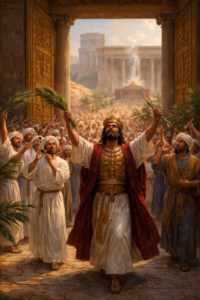
The phrase “Save now” is connected to the Hebrew expression behind “Hosanna.” This becomes especially significant in the triumphal entry of Christ, when the multitude cried:
“Hosanna to the Son of David: Blessed is he that cometh in the name of the Lord…”
Matthew 21:9
Psalm 118:26 says:
“Blessed be he that cometh in the name of the LORD: we have blessed you out of the house of the LORD.”
This verse is directly associated with Christ’s presentation to Israel. The people used this language when Jesus entered Jerusalem. Yet many who shouted praise did not truly receive Him as Messiah and Saviour. The nation’s leaders rejected Him, fulfilling the rejected-stone prophecy.
From a Baptist doctrinal standpoint, this reminds us that outward religious excitement is not the same as saving faith. Christ must be personally received by faith.
Psalm 118:27–29 — Sacrifice, Praise, and Final Thanksgiving
Verse 27 says:
“God is the LORD, which hath shewed us light…”
Psalm 118:27
God gives light. He reveals truth. He brings deliverance out of darkness. For Israel, this light was tied to God’s covenant mercy and worship. For the New Testament believer, Christ is the true Light.
The verse continues:
“bind the sacrifice with cords, even unto the horns of the altar.”
Psalm 118:27
This points to worship involving sacrifice. In the Old Testament setting, sacrifices pointed forward to the need for atonement. In the New Testament fulfillment, Christ is the final and sufficient sacrifice for sin. The believer no longer brings animal sacrifices for atonement, because Jesus Christ offered Himself once for all.
The psalmist closes with personal praise:
“Thou art my God, and I will praise thee: thou art my God, I will exalt thee.”
Psalm 118:28
Then the psalm ends as it began:
“O give thanks unto the LORD; for he is good: for his mercy endureth for ever.”
Psalm 118:29
This forms a beautiful frame around the entire psalm. Everything between verses 1 and 29 rests on this truth: God is good, and His mercy endureth for ever.
Key People and Places
The LORD
The central Person of the psalm. He is good, merciful, powerful, faithful, and saving. He answers prayer, gives strength, chastens His people, and brings victory.
Israel
Mentioned in verse 2. Israel is called to confess that the mercy of the LORD endureth for ever. The psalm reflects God’s covenant dealings with His people.
The House of Aaron
Mentioned in verse 3. This refers to the priestly family in Israel. They are called to testify of God’s mercy, especially as those connected with temple worship and sacrifice.
Them That Fear the LORD
Mentioned in verse 4. This includes all who reverence God. It broadens the call to worship beyond national and priestly identity to all true worshippers.
The Psalmist / Delivered Servant
The speaker gives testimony of distress, answered prayer, opposition, chastening, deliverance, and praise. He represents the servant of God who has been brought through trouble by the LORD.
The Nations
Mentioned in verse 10. They represent hostile powers surrounding and opposing the servant of God.
The Builders
Mentioned in verse 22. Prophetically, they picture the religious leaders who rejected Christ, though He was chosen and exalted by God.
The Rejected Stone / Head Stone of the Corner
Verse 22 points prophetically to the Lord Jesus Christ. He was rejected by men but exalted by God as the foundation and chief corner stone.
The Gates of Righteousness
Mentioned in verse 19. These likely refer to entrance into the place of worship, picturing access to God in righteousness and praise.
The House of the LORD
Mentioned in verse 26. This refers to the place of worship connected with God’s presence and blessing.
The Altar
Mentioned in verse 27. The altar points to sacrifice, worship, dedication, and ultimately forward to the finished sacrifice of Christ.
Main Doctrinal and Spiritual Themes
1. The Everlasting Mercy of God
The repeated statement “his mercy endureth for ever” is the foundation of the psalm. God’s mercy is not brief, unstable, or exhausted by human weakness. His mercy toward His people is steadfast.
This does not excuse sin, but it magnifies grace. God’s people should never take mercy lightly, but they should rejoice that mercy is available through the goodness of God.
2. God Is Better Than Human Confidence
Psalm 118:8–9 teaches that trust in the LORD is better than confidence in man or princes. Human help is limited. Political strength changes. Influential people fail. God alone is perfectly faithful.
This is especially important in a day when many place their confidence in governments, personalities, finances, churches, or systems. The believer’s first confidence must be in the LORD.
3. Prayer in Distress
The psalmist says:
“I called upon the LORD in distress…”
Psalm 118:5
Trouble should drive the believer to prayer, not panic. God may not always remove every difficulty immediately, but He answers according to His wisdom and sets His people where they can serve Him.
4. Divine Help in Spiritual Conflict
The enemies surrounded the psalmist, but the LORD helped him. This is a picture of spiritual warfare and divine deliverance. The believer is not promised a life without enemies, but he is promised the help of God.
5. Chastening Without Destruction
Verse 18 is a sober reminder:
“The LORD hath chastened me sore: but he hath not given me over unto death.”
God corrects His children. Chastening may be painful, but it is not hatred. It is fatherly discipline intended for restoration and holiness.
6. Christ the Rejected Stone
Psalm 118:22 is one of the clearest Messianic prophecies in the Psalms:
“The stone which the builders refused is become the head stone of the corner.”
The New Testament applies this to Jesus Christ. He was rejected by Israel’s leaders, crucified, buried, and raised again. God exalted the very One men rejected.
This doctrine is central: salvation is not found in religious leadership, human tradition, or national privilege. Salvation is in Christ alone.
7. True Worship Includes Thanksgiving
The psalm begins and ends with thanksgiving. Biblical worship is not entertainment, performance, or empty ritual. It is reverent praise directed to the LORD for who He is and what He has done.
8. Light Comes From God
“God is the LORD, which hath shewed us light…”
Psalm 118:27
God reveals truth. Man does not discover saving truth by his own wisdom. God gives light through His Word, and ultimately through Christ.
9. Sacrifice and Fulfillment in Christ
The reference to sacrifice and the altar belongs to the Old Testament worship system, but it points forward to Christ. The sacrifices could never fully take away sin, but they pointed to the Lamb of God who would.
A conservative Baptist understanding sees Christ’s sacrifice as complete, final, substitutionary, and sufficient.
Practical Applications and Lessons
1. Give Thanks Because God Is Good
The psalm both begins and ends with thanksgiving. Gratitude should not depend only on circumstances. The believer gives thanks because God is good and His mercy endures.
A thankful Christian is a spiritually healthy Christian.
2. Call on the LORD in Distress
When trouble presses in, the right response is prayer:
“I called upon the LORD in distress…”
Psalm 118:5
The believer should not wait until every human solution has failed before turning to God. Prayer should be the first response, not the last resort.
3. Do Not Fear Man More Than God
“The LORD is on my side; I will not fear: what can man do unto me?”
Psalm 118:6
This does not mean men cannot cause pain, but it means they cannot defeat God’s purpose. Christians should live with holy courage, not intimidation.
4. Trust God More Than Leaders, Systems, or Influence
“It is better to trust in the LORD than to put confidence in princes.”
Psalm 118:9
Believers should be good citizens, but their hope must never be in government, politics, religious celebrities, or human institutions. God alone is worthy of ultimate confidence.
5. Expect Opposition, But Depend on God’s Help
The psalmist was surrounded by enemies. The Christian life includes opposition from the world, the flesh, and the devil. But the LORD is able to help His people stand.
Victory comes “in the name of the LORD,” not in fleshly strength.
6. Understand Chastening Biblically
Hard seasons are not always punishment, but when God does chasten, He does so as a loving Father. The believer should respond with humility, repentance, and renewed obedience.
God may correct severely, but He does not abandon His own.
7. Live to Declare the Works of the LORD
“I shall not die, but live, and declare the works of the LORD.”
Psalm 118:17
God gives life and deliverance for a purpose. Every spared day should be used for testimony, service, holiness, and witness.
8. Receive Christ as the Corner Stone
The great issue of Psalm 118 is not merely that men rejected a servant, but that men rejected God’s chosen Stone. Christ is either the foundation of a person’s life or the stone over which he stumbles.
No one is saved by admiring Christ from a distance. Sinners must personally trust Him as Saviour.
9. Rejoice in the LORD’s Doing
“This is the LORD’S doing; it is marvellous in our eyes.”
Psalm 118:23
God’s saving work should still amaze us. The cross, the resurrection, the preservation of His Word, answered prayer, and daily mercy are all reasons for wonder.
10. Keep Worship Centered on God, Not Man
Psalm 118 is God-centered from beginning to end. The LORD saves, helps, strengthens, chastens, enlightens, and receives praise. True worship magnifies God rather than man.
Churches and believers today should keep worship reverent, biblical, thankful, and Christ-honoring.
Conservative Baptist Emphasis
Psalm 118 strongly supports several historic Baptist convictions:
The LORD alone is worthy of trust.
Salvation is of God’s mercy, not human merit.
Prayer should be made directly to the LORD.
God’s people should live separated from worldly confidence.
Chastening is real in the life of God’s children.
Jesus Christ is the rejected Stone and exalted Corner Stone.
Old Testament sacrifice points forward to the finished work of Christ.
True worship is grounded in thanksgiving, reverence, and truth.
Psalm 118 is both a hymn of deliverance and a prophetic testimony of Christ. It begins with mercy, moves through distress and victory, rises to Messianic prophecy, and ends again with thanksgiving. The believer can rest in this truth:
“O give thanks unto the LORD; for he is good: for his mercy endureth for ever.”
Psalm 118:29
Comments are closed