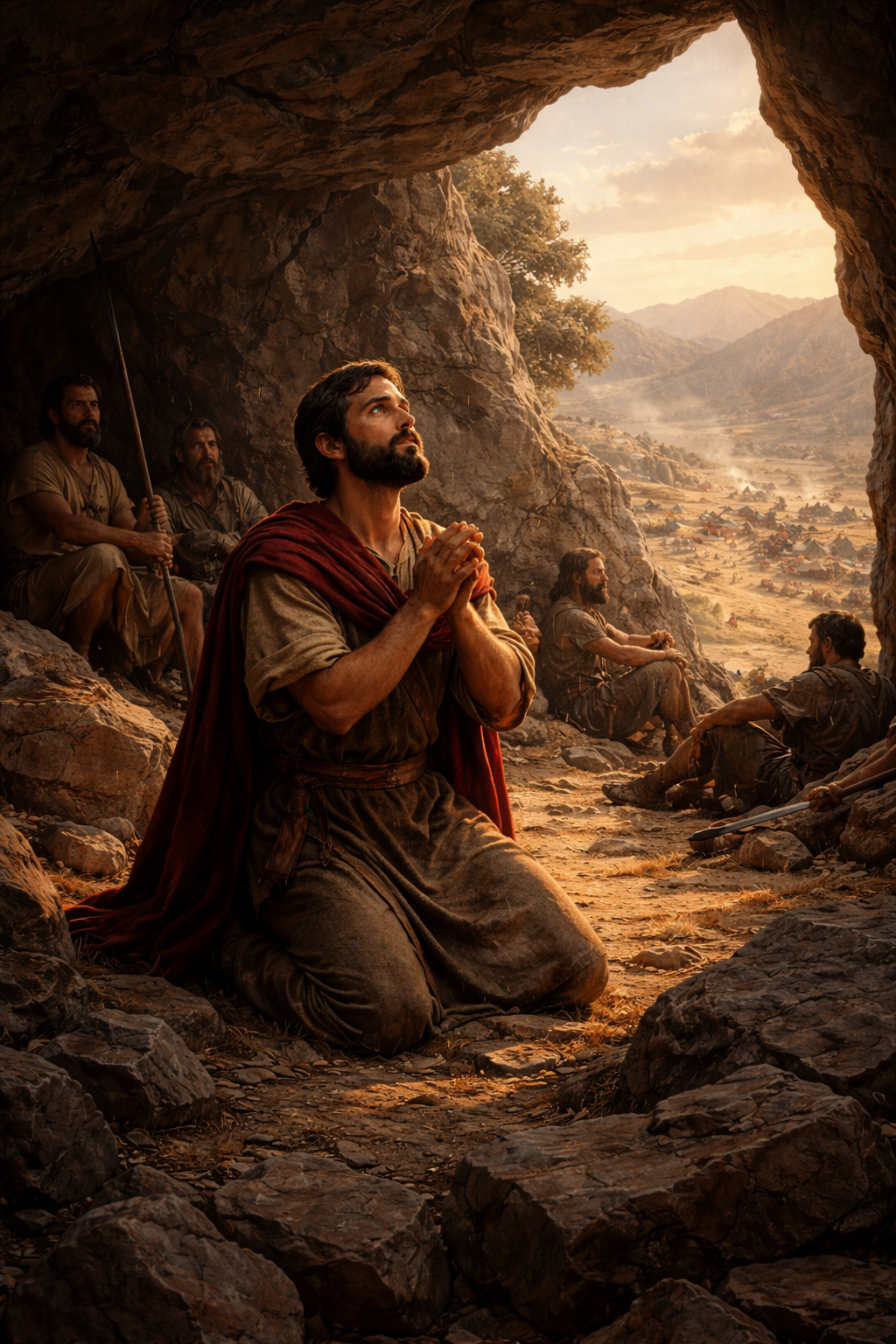
These psalms continue the early Davidic collection and reflect a period of intense personal trial, persecution, and spiritual testing—most plausibly during David’s years of flight from Saul. Throughout Psalms 11–18, David consistently contrasts the instability of the wicked with the unshakable righteousness, justice, and covenant faithfulness of the LORD. The section culminates in Psalm 18, a great psalm of deliverance and thanksgiving that looks back over God’s mighty acts on David’s behalf.
Chapter Summaries
 Psalm 11
David rejects counsel to flee in fear and affirms unwavering trust in the LORD. Though “the foundations be destroyed,” the LORD remains on His throne in heaven. God tests both the righteous and the wicked, loves righteousness, and will judge violence and deceit.
Key emphasis: God’s sovereign rule and moral government.
Psalm 12
David laments the disappearance of godly men and the rise of flattering, deceitful speech. Human words are corrupt, but the words of the LORD are pure, preserved, and trustworthy. God promises to protect the poor and needy despite the arrogance of the wicked.
Key emphasis: The purity and preservation of God’s words versus human deception.
Psalm 13
A brief but deeply personal lament. David cries, “How long?” as he feels forgotten and oppressed. The psalm moves from anguish to trust and praise as David recalls the LORD’s mercy and salvation.
Key emphasis: Faith persevering through emotional darkness.
Psalm 14
David describes the moral corruption of humanity, declaring, “The fool hath said in his heart, There is no God.” Universal sinfulness is exposed, but hope is held out for Israel’s future deliverance.
Key emphasis: Total human depravity and the need for divine salvation.
Psalm 15
A psalm of character and conduct. David asks who may dwell in God’s tabernacle. The answer describes a life of integrity, truthfulness, moral purity, and reverence for God.
Key emphasis: God’s standard for fellowship with Him.
Psalm 16
A psalm of trust and hope. David rejoices in the LORD as his portion and inheritance. He expresses confidence in God’s guidance and preservation, with prophetic language that ultimately points beyond David to the resurrection.
Key emphasis: Security and joy found in God alone.
Psalm 17
David prays for protection from violent enemies, appealing to God’s righteousness. He contrasts the temporary satisfaction of the wicked with his own hope of seeing God’s face in righteousness.
Key emphasis: Eternal hope versus earthly reward.
Psalm 18
A triumphant psalm of deliverance. David recounts how the LORD rescued him from death and enemies through divine power, judgment, and covenant faithfulness. The psalm celebrates God as rock, fortress, deliverer, and strength.
Key emphasis: God’s mighty salvation and faithfulness to His anointed.
Key People and Places
- David – The psalmist; God’s anointed king, writing from personal experience of persecution and deliverance.
- The LORD (Jehovah) – Covenant God of Israel; righteous Judge, protector of the faithful, and deliverer.
- The Wicked – A recurring group representing violent, deceitful, and God-rejecting individuals.
- Zion / God’s Holy Habitation – Symbolic reference to God’s dwelling and rightful rule.
- Tabernacle – Represents fellowship with God and access to His presence (Psalm 15).
Main Doctrinal or Spiritual Themes
- God’s Sovereignty – The LORD reigns from heaven regardless of earthly chaos.
- Righteous Judgment – God tests hearts and will judge the wicked in due time.
- Preservation of Scripture – God’s words are pure and preserved (Psalm 12).
- Human Depravity – All are sinful apart from God’s grace (Psalm 14).
- Justification and Fellowship – God desires righteousness, truth, and obedience.
- Messianic Foreshadowing – Hints of resurrection and eternal inheritance (Psalm 16).
- Divine Deliverance – God rescues His servants by His power (Psalm 18).
Practical Applications or Lessons
- Stand firm in faith when fear-driven counsel contradicts trust in God.
- Value and trust God’s Word above human opinion or cultural trends.
- Bring honest lament to God, knowing faith can coexist with sorrow.
- Recognize mankind’s sinful condition, cultivating humility and dependence on grace.
- Pursue godly character, not merely religious profession.
- Find satisfaction in God alone, not earthly security or success.
- Give God glory for deliverance, remembering past mercies strengthens present faith.
Comments are closed