Chapter Summaries
Luke 12 — Christ Warns Against Hypocrisy, Covetousness, Fear, and Spiritual Carelessness
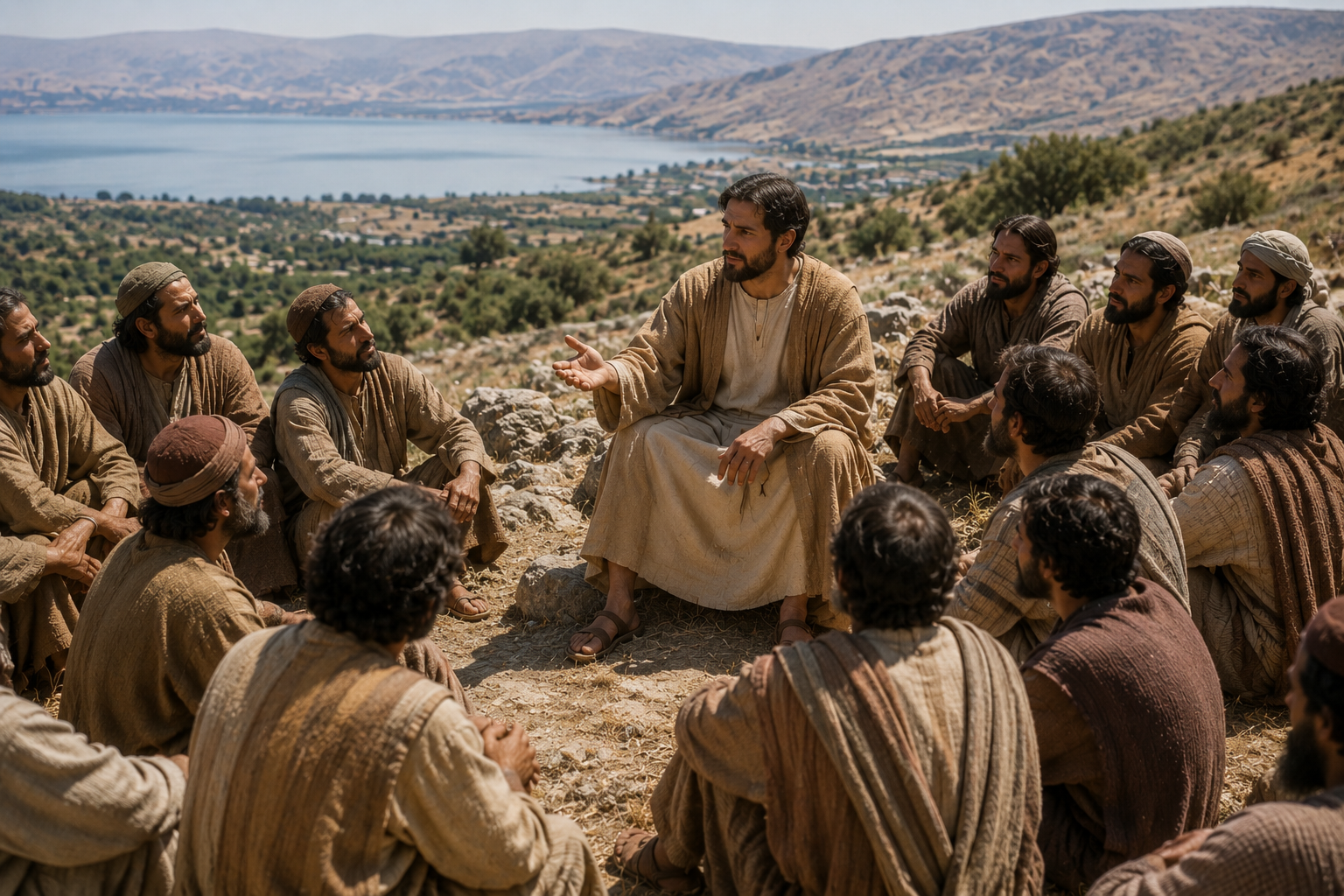
Luke 12 opens with “an innumerable multitude of people,” yet the Lord  .” The crowd is large, but Christ is concerned with truth, sincerity, and discipleship, not popularity.
He begins by warning, “Beware ye of the leaven of the Pharisees, which is hypocrisy” (Luke 12:1). The Pharisees appeared religious outwardly, but Christ exposed the inward corruption. Nothing is truly hidden from God: “there is nothing covered, that shall not be revealed” (Luke 12:2). This is a solemn warning that religious pretense will not survive divine judgment.
Christ then teaches the fear of God above the fear of man. Men can kill the body, but God “hath power to cast into hell” (Luke 12:5). This is plain Bible doctrine: hell is real, judgment is real, and God must be feared. Yet the same passage gives comfort to believers: “Fear not therefore: ye are of more value than many sparrows” (Luke 12:7). The God who judges the hypocrite also cares for His own.
The Lord warns that men must confess Him openly: “Whosoever shall confess me before men, him shall the Son of man also confess before the angels of God” (Luke 12:8). He also warns of blasphemy against the Holy Ghost and promises the disciples help when brought before rulers: “the Holy Ghost shall teach you in the same hour what ye ought to say” (Luke 12:12). This fits the apostolic witness in Acts, where believers were brought before councils and rulers for Christ’s sake.
A man then asks Jesus to settle an inheritance dispute. Christ refuses to become an earthly divider of property and instead exposes the deeper sin: “Take heed, and beware of covetousness” (Luke 12:15). The parable of the rich fool follows. The man’s ground brings forth plentifully; he plans bigger barns, ease, eating, drinking, and merriment. But God says, “Thou fool, this night thy soul shall be required of thee” (Luke 12:20). His sin was not industry, farming, or possession of goods; his sin was living without God, laying up treasure for himself, and being “not rich toward God” (Luke 12:21).
Christ then teaches His disciples not to live in anxious bondage over food, clothing, or earthly provision. He points to ravens and lilies, saying, “Consider the ravens” and “Consider the lilies how they grow” (Luke 12:24, 27). The believer is not to be careless or lazy, but he is not to live like the world, consumed by temporal needs. The command is, “seek ye the kingdom of God; and all these things shall be added unto you” (Luke 12:31).
The Lord then commands readiness: “Let your loins be girded about, and your lights burning” (Luke 12:35). The servants are to watch for their lord’s return. This has strong practical application for the church age: believers are to live soberly, serving faithfully, looking for the coming of Christ. “Be ye therefore ready also: for the Son of man cometh at an hour when ye think not” (Luke 12:40). This agrees with the blessed hope of Christ’s return and the need for readiness before the judgment seat of Christ.
Peter asks whether the parable is for the disciples or for all. Christ answers with the picture of a faithful and wise steward. Those who know the Lord’s will have greater accountability: “unto whomsoever much is given, of him shall be much required” (Luke 12:48). Preachers, teachers, parents, and all believers entrusted with light must answer to God for faithfulness.
The chapter closes with Christ speaking of division. He did not come to bring false peace based on compromise: “Suppose ye that I am come to give peace on earth? I tell you, Nay; but rather division” (Luke 12:51). Christ divides households because truth divides belief from unbelief, obedience from rebellion, and faith from mere religion. The people could discern weather signs, but not “this time” (Luke 12:56). Israel’s leaders failed to recognize their Messiah, though the Scriptures testified of Him.
Luke 13 — Repentance, Fruitfulness, Sabbath Mercy, the Strait Gate, and Jerusalem’s Rejection
Luke 13 begins with a report about Galileans whose blood Pilate had mingled with their sacrifices. Some evidently assumed these men suffered because they were greater sinners. Christ rejects that false conclusion and gives the true lesson: “except ye repent, ye shall all likewise perish” (Luke 13:3). He then mentions eighteen people killed when the tower in Siloam fell and repeats, “except ye repent, ye shall all likewise perish” (Luke 13:5).
This is not salvation by works. Repentance is not human merit or religious reformation. Biblical repentance is a change of mind and heart toward God, inseparable from faith. The Lord is warning sinners that tragedy should not lead to comparison with others, but to personal repentance before God.
Christ then gives the parable of the barren fig tree. A man seeks fruit on his fig tree for three years and finds none. The dresser of the vineyard pleads, “Lord, let it alone this year also” (Luke 13:8). Historically, this fits Israel’s privileged position under divine patience. God had long looked for fruit among His covenant people, yet unbelief and barrenness marked the nation. Practically, it warns every hearer that privilege without fruit is dangerous. God is longsuffering, but longsuffering is not permission to remain barren.
Jesus then heals a woman in the synagogue who had “a spirit of infirmity eighteen years” and “was bowed together” (Luke 13:11). He says, “Woman, thou art loosed from thine infirmity” (Luke 13:12). The ruler of the synagogue becomes indignant because the healing occurred on the sabbath day. Christ exposes his hypocrisy: they would loose an ox or ass to watering, yet object to a daughter of Abraham being loosed from bondage. The Lord’s mercy does not violate the sabbath; it exposes the emptiness of man-made religion. True holiness is never contrary to compassion.
The parables of the mustard seed and leaven follow. The kingdom of God is compared to a mustard seed that grows into a great tree, and to leaven hidden in meal. In a dispensational Baptist understanding, these parables should not be turned into a liberal dream of the whole world gradually becoming Christian through social reform. In Scripture, leaven often pictures corruption, and Luke 12 has just used “leaven” for hypocrisy. These pictures warn that the outward sphere associated with the kingdom would grow large and include mixture. Christendom would become outwardly impressive, but not all connected with it would be truly born again.
As Jesus journeys “toward Jerusalem” (Luke 13:22), one asks, “Lord, are there few that be saved?” Christ answers personally and directly: “Strive to enter in at the strait gate” (Luke 13:24). The issue is not curiosity about numbers but urgency about one’s own soul. Many will seek too late. Religious familiarity will not save: “We have eaten and drunk in thy presence” (Luke 13:26) is answered by, “I know you not whence ye are; depart from me, all ye workers of iniquity” (Luke 13:27). Salvation is not by proximity to religious things, but by personal faith in Christ.
Christ then warns that many from “the east, and from the west, and from the north, and from the south” shall sit down in the kingdom of God, while many privileged unbelievers will be thrust out (Luke 13:28–29). This preserves the distinction between Israel and the Gentiles while also showing that unbelief bars entrance, and faith receives mercy.
Some Pharisees warn Jesus that Herod will kill Him. Christ calls Herod “that fox” (Luke 13:32), showing both Herod’s craftiness and Christ’s fearless obedience to the Father’s timetable. No earthly ruler could stop the Lord before His appointed hour.
The chapter ends with Christ’s lament over Jerusalem: “O Jerusalem, Jerusalem, which killest the prophets, and stonest them that are sent unto thee” (Luke 13:34). The Lord’s words show both divine compassion and Israel’s responsibility: “how often would I have gathered thy children together… and ye would not!” Their house is left desolate until the future day when Israel says, “Blessed is he that cometh in the name of the Lord” (Luke 13:35). This looks beyond that generation to Israel’s future recognition of her Messiah.
Key People and Places
Jesus Christ — The central figure, teaching with divine authority, warning against hypocrisy, calling sinners to repentance, healing the afflicted, and moving steadily toward Jerusalem and the cross.
The disciples — The primary audience at the beginning of Luke 12. They are warned against fear, covetousness, anxiety, and unfaithfulness.
The Pharisees — Religious leaders marked here by hypocrisy. Their “leaven” is outward religion without inward truth.
The rich fool — A prosperous man who planned for earth but not eternity. He is a warning against covetousness and practical atheism.
Peter — Asks whether Christ’s teaching on watchfulness applies only to the disciples or to all, leading to the lesson on stewardship and accountability.
The faithful and wise steward — A picture of responsible service while awaiting the Lord’s return.
The unfaithful servant — A warning against careless living, abuse of responsibility, and unbelieving delay.
Pilate — The Roman governor connected with the death of certain Galileans. His mention reminds the reader of Roman oppression and the uncertainty of life.
The Galileans — People whose deaths became the occasion for Christ’s warning: “except ye repent, ye shall all likewise perish.”
The eighteen at Siloam — Victims of a fallen tower, used by Christ to teach that sudden death should drive men to repentance, not self-righteous comparison.
The barren fig tree — A symbol especially fitting for Israel’s fruitless privilege, and practically for all who receive light but produce no fruit.
The woman bowed together — A suffering daughter of Abraham whom Christ healed after eighteen years of infirmity.
The ruler of the synagogue — A religious hypocrite more concerned with sabbath regulation than mercy.
Abraham, Isaac, Jacob, and the prophets — Mentioned in connection with the kingdom of God, showing continuity with God’s promises and the reality of future kingdom blessing.
Herod — The ruler who threatened Christ. Jesus calls him “that fox,” showing Herod’s cunning but also his inability to hinder God’s plan.
Jerusalem — The city that killed the prophets and would reject Christ, yet remains central in God’s prophetic dealings with Israel.
Galilee — Region associated with the slain Galileans and much of Christ’s earthly ministry.
Siloam — A location in Jerusalem where a tower fell, killing eighteen.
Synagogue — The place where Jesus healed the bowed woman, exposing dead formalism and demonstrating divine mercy.
Main Doctrinal or Spiritual Themes
1. Hypocrisy is hateful to God.
The “leaven of the Pharisees” is hypocrisy. God is not impressed by religious appearance when the heart is false.
2. The fear of God must govern the believer.
Christ commands men not to fear those who can kill the body, but to fear God, who has authority over eternal judgment.
3. Hell and judgment are real.
Luke 12:5 and Luke 13:27–28 plainly teach divine judgment. Conservative Bible doctrine must not soften what Christ Himself preached.
4. God values and cares for His people.
The sparrows, ravens, and lilies teach God’s providential care. Believers are not abandoned in a hostile world.
5. Covetousness is soul-destroying.
The rich fool had barns, goods, and plans, but he was not ready to meet God. Earthly success without God is eternal failure.
6. Repentance is necessary.
“Except ye repent, ye shall all likewise perish” is repeated twice. This is not works salvation; it is the sinner turning from rebellion toward God, inseparable from faith.
7. Salvation is personal and urgent.
The question “are there few that be saved?” is answered with “Strive to enter in at the strait gate.” No man should hide behind religious curiosity.
8. Watchfulness is required of servants.
The Lord’s servants are to be ready, faithful, and working when He comes.
9. Greater light brings greater accountability.
“Unto whomsoever much is given, of him shall be much required.” Bible-believing Christians are responsible for the truth they have received.
10. Christ brings division where truth is rejected.
The gospel brings peace with God, but it also divides believers from unbelievers when men reject Christ.
11. Religious formalism can oppose the mercy of God.
The synagogue ruler objected to healing on the sabbath. Christ exposed religion that values rules above souls.
12. Israel and the kingdom remain prophetically important.
Jerusalem’s desolation and future confession, “Blessed is he that cometh in the name of the Lord,” point to God’s continuing dealings with Israel.
Practical Applications or Lessons
Beware of religious appearance without inward truth. A man may look sound before others and still be exposed before God.
Fear God more than man. The believer should not compromise truth to avoid rejection, persecution, or family division.
Confess Christ openly. Secret discipleship is not the pattern Christ commends. A saved man should not be ashamed of the Saviour.
Do not measure life by possessions. “A man’s life consisteth not in the abundance of the things which he possesseth” should correct worldly ambition.
Prepare for eternity. The rich fool planned for many years, but God required his soul that night.
Trust God for daily needs. Anxiety should not rule the child of God. The Father knows what His children need.
Seek first spiritual things. The kingdom of God must have priority over comfort, wealth, reputation, and earthly security.
Live ready for the Lord’s return. The servant should be faithful whether the Lord comes soon or later than expected.
Use spiritual privilege faithfully. Those with sound doctrine, a Bible-preaching church, and the preserved Word of God in English have great responsibility.
Let tragedy humble you, not make you self-righteous. When others suffer or die suddenly, the proper response is not “they were worse sinners,” but “Am I ready to meet God?”
Bear fruit under God’s patience. Longsuffering is mercy, not approval of barrenness.
Do not let man-made religion choke compassion. True Bible holiness will never despise mercy, truth, or the needs of souls.
Enter by the strait gate. Religious familiarity, church attendance, family heritage, or knowledge about Jesus cannot save. A sinner must personally come to Christ by faith.
Do not presume upon opportunity. In Luke 13, some seek entrance after the door is shut. The time to be saved is now.
Grieve over lost people and rebellious cities. Christ wept in spirit over Jerusalem’s refusal. A Bible believer should stand for truth while still having compassion for souls.
Comments are closed