
Joel is a prophetic book of warning, repentance, judgment, restoration, and future kingdom hope. The immediate setting involves a devastating locust plague and drought in Judah, but the Spirit of God uses that present calamity to point forward to the greater “day of the LORD.” Joel speaks first to Judah and Jerusalem, but his prophecy reaches into future tribulation judgment, Israel’s national repentance, the outpouring of God’s Spirit, the judgment of the nations, and the millennial blessing of Jerusalem under the reign of the LORD.
Joel 1:1 identifies the prophet simply: “The word of the LORD that came to Joel the son of Pethuel.” The authority of the book rests not in Joel’s personality, but in the fact that it is “the word of the LORD.”
Chapter Summaries
Joel 1 — The Locust Plague and a Call to Lamentation
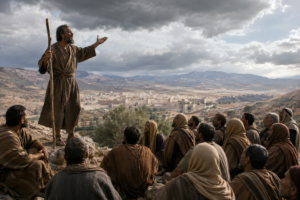 Joel opens with a solemn summons: “Hear this, ye old men, and give ear, all ye inhabitants of the land” (Joel 1:2). The calamity was so severe that it was to be told to future generations: “Tell ye your children of it, and let your children tell their children, and their children another generation” (Joel 1:3).
The immediate judgment is pictured through a fourfold locust destruction: “That which the palmerworm hath left hath the locust eaten; and that which the locust hath left hath the cankerworm eaten; and that which the cankerworm hath left hath the caterpiller eaten” (Joel 1:4). Whether these are stages of locusts or successive swarms, the point is total devastation. God had stripped the land.
The drunkards are commanded to awake because “the new wine” is cut off from their mouth (Joel 1:5). The vine and fig tree, symbols of national blessing and agricultural prosperity, are ruined: “He hath laid my vine waste, and barked my fig tree” (Joel 1:7).
Joel calls the nation to mourn as a virgin girded with sackcloth for the husband of her youth (Joel 1:8). The judgment affected worship itself: “The meat offering and the drink offering is cut off from the house of the LORD” (Joel 1:9). The priests, husbandmen, and vinedressers are all commanded to lament, because joy had withered away from the sons of men (Joel 1:10–12).
The chapter then turns from description to spiritual response. Joel commands: “Gird yourselves, and lament, ye priests: howl, ye ministers of the altar” (Joel 1:13). The proper answer to divine chastening is not mere agricultural planning, political blame, or human optimism, but repentance before God: “Sanctify ye a fast, call a solemn assembly” (Joel 1:14).
The chapter closes by connecting the present disaster to the coming day of the LORD: “Alas for the day! for the day of the LORD is at hand, and as a destruction from the Almighty shall it come” (Joel 1:15). The beasts groan, the rivers are dried up, and fire has devoured the pastures. Joel himself cries, “O LORD, to thee will I cry” (Joel 1:19).
Doctrinal note: God used a literal calamity to awaken Judah spiritually. The plague was not merely “nature”; it was providential judgment. Conservative interpretation should not reduce Joel’s message to social commentary. The burden is sin, judgment, repentance, and restoration.
Joel 2 — The Day of the LORD, Repentance, Restoration, and the Spirit Poured Out
Joel 2 begins with alarm: “Blow ye the trumpet in Zion, and sound an alarm in my holy mountain” (Joel 2:1). The reason is clear: “for the day of the LORD cometh, for it is nigh at hand.” This phrase reaches beyond the immediate locust plague to future prophetic judgment. It includes God’s direct intervention in wrath, especially in connection with Israel, the nations, and the end times.
The invading army is described in terrifying language: “A fire devoureth before them; and behind them a flame burneth” (Joel 2:3). The land before them is “as the garden of Eden,” but behind them “a desolate wilderness.” Their appearance is “as the appearance of horses” (Joel 2:4), and they move with discipline and irresistible force.
Whether the imagery begins with locusts and then expands into a future invading army, the theological meaning is plain: when God rises in judgment, man cannot resist Him. Joel 2:11 says, “the LORD shall utter his voice before his army: for his camp is very great.” The question follows: “for the day of the LORD is great and very terrible; and who can abide it?”
Yet God’s warning is merciful. Judgment is announced so sinners may repent. The LORD says, “Turn ye even to me with all your heart, and with fasting, and with weeping, and with mourning” (Joel 2:12). This repentance must be inward, not merely ceremonial: “Rend your heart, and not your garments” (Joel 2:13). The verse also gives a precious statement of God’s character: “for he is gracious and merciful, slow to anger, and of great kindness.”
Joel again calls for a solemn assembly: “Blow the trumpet in Zion, sanctify a fast, call a solemn assembly” (Joel 2:15). All classes are included: elders, children, bridegroom, bride, priests, and people. The priests are to pray, “Spare thy people, O LORD, and give not thine heritage to reproach” (Joel 2:17).
Beginning in Joel 2:18, the tone changes from judgment to restoration: “Then will the LORD be jealous for his land, and pity his people.” God promises to send corn, wine, and oil, remove the northern army, restore the years eaten by the locust, and cause His people to eat in plenty (Joel 2:19–26). The great purpose is that Israel should know the LORD: “And ye shall know that I am in the midst of Israel, and that I am the LORD your God, and none else” (Joel 2:27).
Then comes one of the most important prophetic passages in the Old Testament:
“And it shall come to pass afterward, that I will pour out my spirit upon all flesh” (Joel 2:28).
Peter quoted this passage in Acts 2, showing that Pentecost was related to Joel’s prophecy. However, from a conservative dispensational Baptist standpoint, Acts 2 did not exhaust the prophecy. Joel includes wonders “in the heavens and in the earth, blood, and fire, and pillars of smoke,” with the sun turned into darkness and the moon into blood “before the great and the terrible day of the LORD come” (Joel 2:30–31). Those cosmic signs point forward to end-time events connected with Israel and the coming kingdom.
Joel 2 ends with a salvation promise: “whosoever shall call on the name of the LORD shall be delivered” (Joel 2:32). This truth is echoed in Romans 10:13. Salvation is by grace through faith, calling upon the Lord, not by works, ritual, or national privilege.
Joel 3 — The Judgment of the Nations and the Future Blessing of Jerusalem
Joel 3 moves clearly into prophetic end-time territory. The LORD says, “For, behold, in those days, and in that time, when I shall bring again the captivity of Judah and Jerusalem” (Joel 3:1). This concerns Israel and Judah specifically. The Church must not be read back into this passage as though Israel has disappeared. God still has covenant purposes for Judah and Jerusalem.
The nations are gathered to judgment: “I will also gather all nations, and will bring them down into the valley of Jehoshaphat” (Joel 3:2). The name Jehoshaphat means “Jehovah judges,” fitting the context. The issue includes how the nations have treated God’s people and land: “they have scattered them among the nations, and parted my land” (Joel 3:2).
Joel mentions Tyre, Zidon, and the coasts of Palestine as representative enemies (Joel 3:4). These nations had taken God’s silver and gold, carried away His pleasant things, and sold the children of Judah and Jerusalem (Joel 3:5–6). God promises recompense: “I will return your recompence upon your own head” (Joel 3:7).
Then comes a call to the nations to prepare for war: “Prepare war, wake up the mighty men” (Joel 3:9). In ironic reversal of Isaiah 2:4, Joel says, “Beat your plowshares into swords, and your pruninghooks into spears” (Joel 3:10). This is not kingdom peace yet; this is the gathering of rebellious nations to divine judgment.
The scene climaxes with the harvest of judgment: “Put ye in the sickle, for the harvest is ripe” (Joel 3:13). The multitudes are gathered in “the valley of decision” (Joel 3:14). This is not mainly a revival invitation text, though it may be applied evangelistically with care. In context, it is the place where God decides judgment upon the nations.
Cosmic signs appear again: “The sun and the moon shall be darkened, and the stars shall withdraw their shining” (Joel 3:15). Then the LORD Himself intervenes: “The LORD also shall roar out of Zion, and utter his voice from Jerusalem” (Joel 3:16). Yet for His people, He is refuge: “the LORD will be the hope of his people, and the strength of the children of Israel.”
The book closes with kingdom blessing. Jerusalem shall be holy: “then shall Jerusalem be holy, and there shall no strangers pass through her any more” (Joel 3:17). The land will be fruitful, the mountains will drop down new wine, the hills will flow with milk, and a fountain shall come forth “of the house of the LORD” (Joel 3:18).
Egypt and Edom are judged for violence against Judah (Joel 3:19), but Judah and Jerusalem abide: “Judah shall dwell for ever, and Jerusalem from generation to generation” (Joel 3:20). The final statement is majestic: “for the LORD dwelleth in Zion” (Joel 3:21).
Doctrinal note: Joel 3 strongly supports the premillennial expectation that God will judge the nations, restore Israel, sanctify Jerusalem, and dwell in Zion. The passage should not be spiritualized into merely “the church age.” It speaks of Judah, Jerusalem, Zion, the nations, and the land.
Key People and Places
Joel
Joel means “Jehovah is God.” He is called “the son of Pethuel” (Joel 1:1). Little is given about his personal life, which keeps the focus on the message: “The word of the LORD.”
Pethuel
Joel’s father, mentioned only in Joel 1:1. No further details are given in Scripture.
The Priests
The priests are repeatedly addressed because the judgment affected temple worship. “The meat offering and the drink offering is withholden from the house of your God” (Joel 1:13). They are commanded to weep and intercede for the people (Joel 2:17).
The Elders
The elders are called to hear and bear witness to the severity of the judgment (Joel 1:2, 14). They represent national memory and responsibility.
The Drunkards
Joel directly confronts them: “Awake, ye drunkards, and weep” (Joel 1:5). Their pleasure was cut off. This is a sober reminder that sensual living leaves men unprepared for God’s chastening.
Judah
Judah is central to the prophecy. The land is judged, called to repentance, restored, and promised future blessing.
Jerusalem
Jerusalem is both a present place of worship and a future center of divine rule. Joel 3 closes with the promise: “the LORD dwelleth in Zion.”
Zion
Zion is the holy mountain associated with Jerusalem, worship, warning, refuge, and future reign. The trumpet is blown in Zion (Joel 2:1), and the LORD roars out of Zion (Joel 3:16).
The Valley of Jehoshaphat
This is the place of divine judgment upon the nations in Joel 3:2 and 3:12. The name means “Jehovah judges.” The precise geographical identification is debated, but the doctrinal meaning is unmistakable: God will judge the nations.
The Valley of Decision
Mentioned in Joel 3:14. In context, it is not primarily man deciding for God, but God deciding judgment upon the gathered multitudes.
Tyre, Zidon, and the Coasts of Palestine
These are enemies judged for their treatment of Judah and Jerusalem (Joel 3:4–6). They represent Gentile hostility toward God’s covenant people.
Egypt and Edom
Named in Joel 3:19 as objects of judgment “for the violence against the children of Judah.” They stand as examples of nations guilty before God.
Main Doctrinal or Spiritual Themes
1. The Word of the LORD Is Authoritative
Joel begins with “The word of the LORD” (Joel 1:1). This is not Joel’s philosophy or religious opinion. The prophet speaks because God has spoken.
2. God Judges Sin in Time and in the Future
The locust plague was a real judgment in the land, but it also points toward the greater “day of the LORD.” God is longsuffering, but He is not indifferent to sin.
3. The Day of the LORD Is Terrible for the Unrepentant
Joel repeatedly warns of “the day of the LORD.” It is “at hand” in Joel 1:15, “great and very terrible” in Joel 2:11, and connected with cosmic signs and judgment in Joel 2–3. This doctrine should produce sobriety, not speculation.
4. True Repentance Is Inward and Genuine
Joel 2:13 says, “Rend your heart, and not your garments.” God is not satisfied with outward religion while the heart remains proud, rebellious, or worldly.
5. God Is Gracious and Merciful
Even in judgment, God calls sinners back. Joel 2:13 declares Him “gracious and merciful, slow to anger, and of great kindness.” This does not weaken His holiness; it magnifies His mercy.
6. National Israel Still Has a Future
Joel speaks plainly of Judah, Jerusalem, Zion, Israel, the land, and the nations. A conservative Baptist, dispensational reading maintains the distinction between Israel and the Church. God has not cast away His covenant purposes for Israel.
7. The Nations Are Accountable for Their Treatment of Israel
Joel 3:2 says the nations are judged because they “scattered” God’s people and “parted my land.” God takes seriously how nations treat His people and His land.
8. The Spirit of God Is Poured Out by Divine Promise
Joel 2:28–32 promises the outpouring of the Spirit. Acts 2 shows a real connection to Pentecost, but the full prophetic setting includes Israel’s future deliverance, cosmic signs, and the day of the LORD.
9. Salvation Is for Whosoever Calls upon the LORD
Joel 2:32 says, “whosoever shall call on the name of the LORD shall be delivered.” This agrees with the gospel truth that salvation is by grace through faith, not by works, sacraments, Calvinistic regeneration, or human merit.
10. The LORD Will Reign from Zion
Joel ends with restoration, holiness, judgment satisfied, and the LORD dwelling in Zion. The final hope is not human government, religious compromise, or world reform, but the reign and presence of God.
Practical Applications or Lessons
1. Calamity Should Drive God’s People to Prayer
Joel did not tell Judah merely to analyze the locusts. He cried, “O LORD, to thee will I cry” (Joel 1:19). When trouble comes, believers should examine their hearts and seek the Lord.
2. Parents Must Teach Their Children the Works and Warnings of God
Joel 1:3 says, “Tell ye your children of it.” Each generation must be taught God’s truth, God’s judgments, and God’s mercy.
3. Pleasure and Carelessness Leave Men Spiritually Blind
The drunkards were commanded to awake (Joel 1:5). Sin dulls spiritual perception. A believer should live soberly, watchfully, and separated from fleshly bondage.
4. Religious Leaders Must Lead in Repentance and Intercession
The priests were told to lament and cry unto the LORD (Joel 1:13–14; 2:17). Preachers must not entertain people while judgment approaches. They must call sin what God calls it and plead for mercy.
5. Outward Religion Cannot Substitute for a Broken Heart
“Rend your heart, and not your garments” (Joel 2:13). Church attendance, public words, and religious appearance mean nothing without genuine humility before God.
6. God Can Restore What Sin and Judgment Have Wasted
Joel 2:25 says, “I will restore to you the years that the locust hath eaten.” This does not excuse sin, but it gives hope to the repentant. God is able to restore usefulness, joy, fruitfulness, and blessing.
7. Nations Should Fear God
Joel 3 shows that nations are morally accountable before the LORD. Political power, military strength, and economic pride cannot protect a nation from divine judgment.
8. Believers Should Live in Light of the Coming Day of the LORD
The day of the LORD is not a minor doctrine. It should produce holiness, urgency in soul-winning, separation from worldliness, and faithfulness in service.
9. God’s Promises to Israel Prove His Faithfulness
If God keeps His promises to Judah and Jerusalem, then believers can trust every promise He has made. God does not forget His Word.
10. The Final Victory Belongs to the LORD
Joel ends not with locusts, drought, armies, or Gentile oppression, but with this truth: “the LORD dwelleth in Zion” (Joel 3:21). God’s presence is the final answer to judgment, sorrow, and desolation.
Concluding Summary
Joel 1–3 moves from devastation to repentance, from repentance to restoration, and from restoration to prophetic kingdom glory. The book warns that sin brings judgment, but it also reveals that God is merciful to those who turn to Him. It teaches that the day of the LORD will be terrible for the wicked, but the LORD will be the hope and strength of His people.
From a conservative KJV Baptist standpoint, Joel should be read plainly: Judah is Judah, Jerusalem is Jerusalem, Zion is Zion, and the nations are the nations. The prophecy looks beyond Joel’s immediate day to future events involving Israel, divine judgment, and the reign of the LORD. The believer today should take from Joel a sober call to repentance, prayer, holiness, confidence in Scripture, and hope in the coming triumph of God.
Comments are closed