Historical and Doctrinal Context
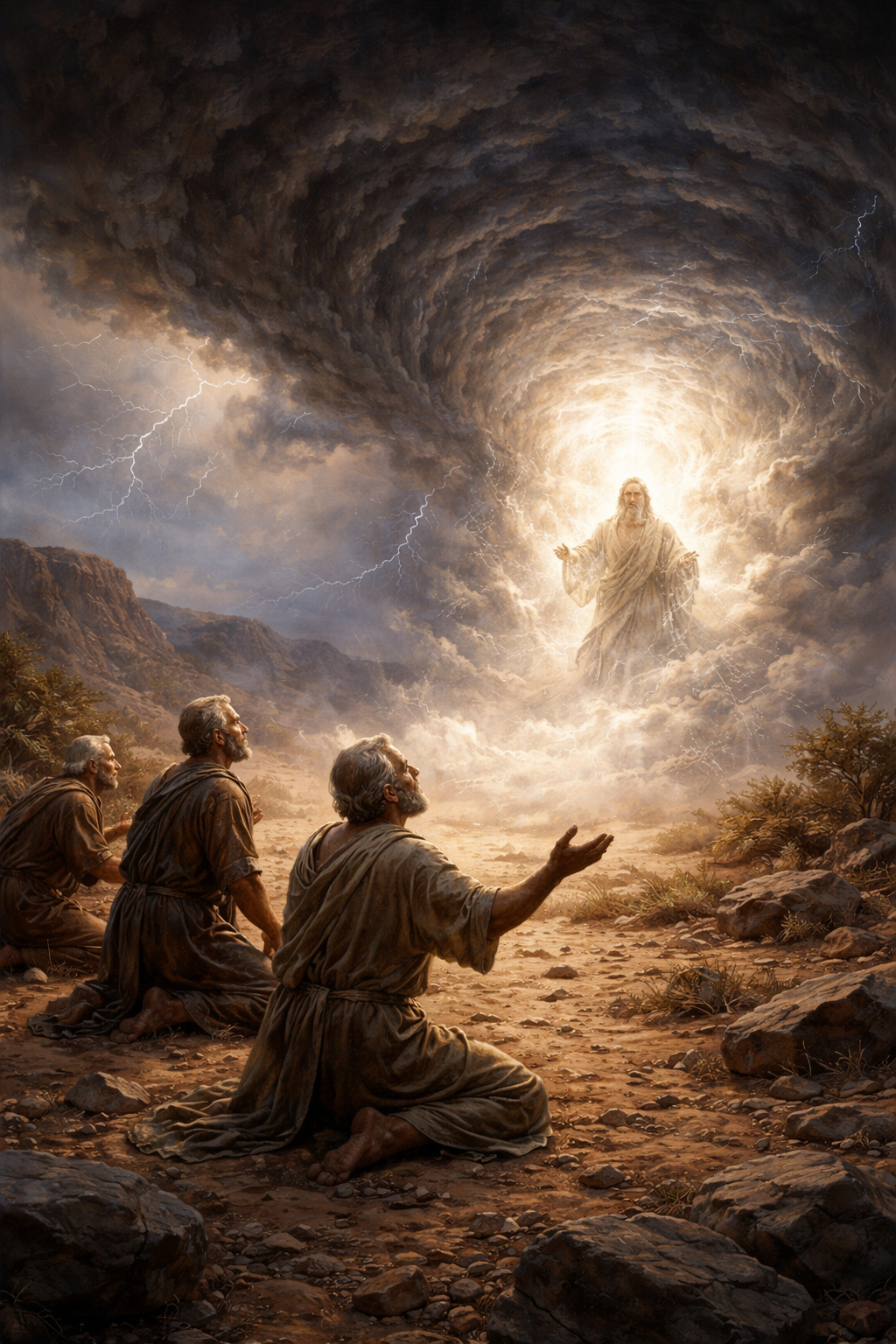
 Job 38–42 records the climax and resolution of the book of Job. After prolonged human reasoning from Job and his friends—and the rebuke from Elihu—the LORD Himself finally speaks. God does not explain why Job suffered; instead, He reveals who He is. The focus shifts from human justice to divine sovereignty, reminding man of his creaturely limitations and God’s absolute authority.
These chapters emphasize that God is righteous even when His ways are beyond human comprehension. The book closes with Job’s repentance, God’s vindication of Job over his friends, intercessory prayer, and divine restoration.
Chapter Summaries
Job 38 — The LORD Speaks from the Whirlwind
- The LORD answers Job “out of the whirlwind” (38:1).
- God does not accuse Job of specific sin; instead, He challenges Job’s understanding.
- A series of rhetorical questions highlights God’s role as Creator and Sustainer:
- Foundations of the earth
- Boundaries of the sea
- Morning light
- Storehouses of snow and hail
- Ordinances of heaven
- The purpose is to humble Job by revealing the vast gap between divine wisdom and human ignorance.
Key emphasis: Man is not competent to judge God’s governance of the universe.
Job 39 — God’s Sovereign Care Over Creation
- The LORD continues by pointing to the animal kingdom:
- Wild goats, hinds, wild ass, unicorn (wild ox), ostrich, horse, hawk, and eagle.
- God shows that He governs creatures beyond human control, yet all function according to His design.
- Strength, instinct, freedom, and limitation are all God-given.
Key emphasis: God’s wisdom governs even what appears untamed or chaotic to man.
Job 40 — Job Humbled; Behemoth Described
- God asks whether Job, who questions divine judgment, can “instruct” or “condemn” God.
- Job responds briefly and humbly:
- “Behold, I am vile; what shall I answer thee?” (40:4)
- God introduces Behemoth, a powerful creature under God’s control, illustrating divine supremacy over strength and fearsome power.
Key emphasis: Human pride is silenced in the presence of God’s majesty.
Job 41 — Leviathan and God’s Absolute Power
- God describes Leviathan, a creature no man can tame or conquer.
- Leviathan symbolizes irresistible power that belongs fully under God’s dominion.
- The chapter underscores that if man cannot master such a creature, he certainly cannot challenge God.
Key emphasis: God alone is supreme; nothing in creation threatens His rule.
Job 42 — Job Repents; God Restores
- Job responds with repentance:
- “I have uttered that I understood not”
- “I abhor myself, and repent in dust and ashes”
- God rebukes Job’s three friends:
- They “have not spoken of me the thing that is right, as my servant Job hath.”
- Job acts as an intercessor for his friends.
- God restores Job:
- Double possessions
- New children
- Long life and peace
Key emphasis: God honors humility, correct doctrine, and obedient submission.
Key People and Places
- Job — A righteous man humbled and restored through submission to God.
- The LORD (Jehovah) — The sovereign Creator who speaks directly and authoritatively.
- Eliphaz, Bildad, Zophar — Friends rebuked for misrepresenting God.
- The Whirlwind — The setting of divine revelation, emphasizing God’s power and holiness.
- Uz — Job’s land; backdrop for God’s dealings with His servant.
Main Doctrinal or Spiritual Themes
- Sovereignty of God — God rules creation, history, and suffering.
- Human Limitation — Man lacks the wisdom to judge God’s purposes.
- Divine Wisdom — God’s ways are right even when unexplained.
- Repentance and Humility — Right response to God is submission, not argument.
- Intercession — Job foreshadows Christ-like mediation by praying for others.
- Restoration by Grace — God restores according to His mercy, not human merit.
Practical Applications or Lessons
- Believers must trust God even when no explanation is given.
- Questioning God’s justice leads to pride; submitting to God leads to peace.
- True repentance flows from a clearer vision of God’s holiness.
- Sound doctrine matters—misrepresenting God is a serious offense.
- God may allow suffering, but He never abdicates His throne.
- Restoration follows humility, not self-justification.
Comments are closed