Chapter Summaries
Jeremiah 4
 Jeremiah 4 opens with a call to genuine repentance. The LORD says, “If thou wilt return, O Israel… return unto me,” and commands them to “put away thine abominations” and not wander any more. The repentance required is not mere outward reform, but a true turning of heart and life back to God. Verse 3 gives the vivid command, “Break up your fallow ground, and sow not among thorns,” showing that Judah’s problem was deeper than public behavior. Their hearts had become hard, overgrown, and unfruitful. Verse 4 presses the matter still further: “Circumcise yourselves to the LORD, and take away the foreskins of your heart.” This is heart religion, not empty ritual. Though the nation possessed covenant signs and temple privileges, they lacked inward holiness and obedience.
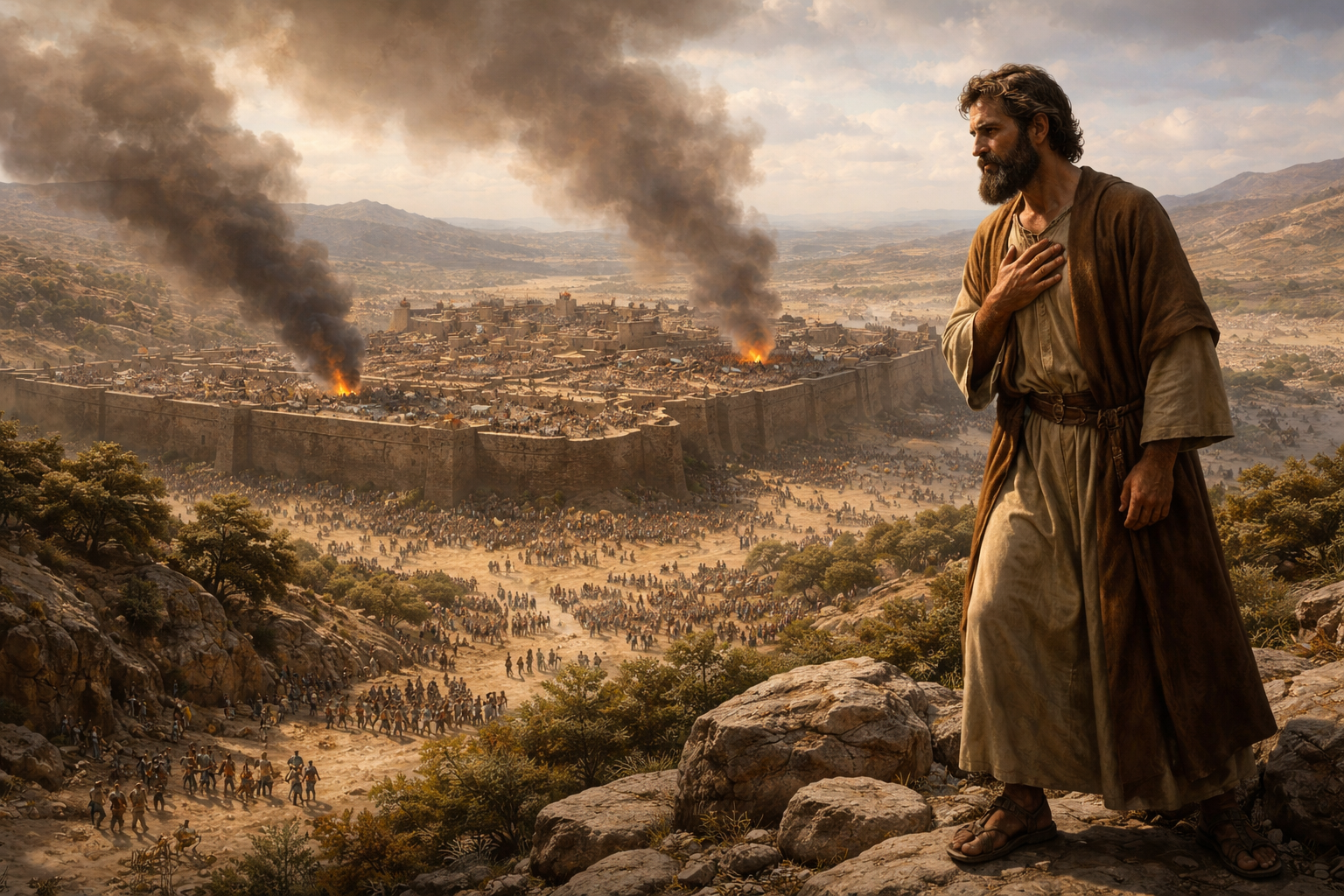
The chapter then shifts from invitation to warning. Judgment from the north is announced. A destroyer is coming, and the people are told to flee, gather into defenced cities, and sound the trumpet in the land. The “lion” coming from his thicket and the “destroyer of the Gentiles” points to the invading Babylonian power that God would use as His rod of chastening. The prophet shows that this coming calamity is not accidental or merely political. It is divine judgment against persistent sin. Verse 18 is especially searching: “Thy way and thy doings have procured these things unto thee.” Judah could not blame fate, enemies, or circumstance. Her own rebellion had brought this bitter harvest.
Jeremiah then speaks with deep anguish. The prophet does not deliver God’s warnings coldly. He cries, “My bowels, my bowels! I am pained at my very heart.” He feels the weight of national ruin before it fully arrives. This reveals something important about faithful preaching: it is possible to speak stern truth with a broken heart. Jeremiah is not cruel; he is grieved. He sees the trumpet of war, the destruction spreading, and the land laid waste.
Verses 23–28 give one of the most sobering descriptions in the book. Jeremiah says, “I beheld the earth, and, lo, it was without form, and void.” The language echoes Genesis 1:2, not to teach a second creation account, but to show the devastation of divine judgment. The land, once ordered and fruitful under God’s blessing, is pictured as reduced to desolation and chaos because of sin. The mountains tremble, the hills move lightly, there is no man, and the birds are fled. Yet even in judgment there is mercy: “Yet will I not make a full end.” God chastens severely, but He does not utterly destroy His covenant purposes.
The chapter closes with the image of a daughter in travail, gasping in distress, unable to escape the consequences of sin. Judah has painted herself, adorned herself, and sought lovers, but none can save her. Her false alliances and outward beautifying are useless before the judgment of God. Spiritual adultery cannot be covered with cosmetic religion.
Jeremiah 5
Jeremiah 5 continues the LORD’s controversy with Jerusalem. The challenge is given: “Run ye to and fro through the streets of Jerusalem… if ye can find a man… that seeketh the truth; and I will pardon it.” This does not mean there was not a single godly person in absolute terms, but it emphasizes how rare justice, truth, and integrity had become in public life. Corruption was widespread. Even when men said, “The LORD liveth,” they swore falsely. Public religion remained, but truth had departed.
Jeremiah at first thinks perhaps the common people are ignorant because they are poor and do not know “the way of the LORD.” But when he turns to the great men, he finds the same rebellion. They too had “broken the yoke, and burst the bonds.” This is a striking picture of total moral collapse across social classes. The problem in Judah was not limited to the uneducated or powerless. Leaders, influential men, and those who should have known better were equally guilty.
Because of this, judgment is again described in terms of devouring beasts: a lion, a wolf, and a leopard. These figures portray the certainty and fierceness of coming destruction. The LORD asks, “How shall I pardon thee for this?” The people had forsaken Him and sworn by gods that are no gods. After being fed to the full, they committed adultery and assembled in troops in the harlots’ houses. Their sin was not weakness alone; it was willful, shameless, and aggravated by the goodness of God they had abused.
Verses 10 and 18 contain an important balance. God commands judgment upon the nation, yet says, “make not a full end.” Again, there is severe chastening, but not total annihilation. God preserves a remnant and remains faithful to His larger covenant purposes.
The middle section of the chapter stresses Judah’s spiritual blindness. They are described as “a foolish people, and without understanding; which have eyes, and see not; which have ears, and hear not.” They do not fear the God who placed the sand for the bound of the sea, who governs creation with sovereign power, and who gives “rain, both the former and the latter, in his season.” Their refusal to fear God is especially wicked because His power and goodness are plainly displayed in creation and providence. Their sins have “withholden good things” from them. Moral rebellion has real consequences.
The chapter closes by exposing the corruption of the nation’s public life. Wicked men lay wait like fowlers, set traps, wax fat, and prosper in evil. They do not judge rightly, especially in the cause of the fatherless and the needy. Worst of all, “the prophets prophesy falsely, and the priests bear rule by their means; and my people love to have it so.” This is one of the most penetrating verses in Jeremiah. Religious leadership was corrupt, civil and spiritual authority worked together in falsehood, and the people preferred comforting lies over faithful truth. The chapter ends with the piercing question: “what will ye do in the end thereof?” False preaching may soothe for a time, but it cannot save in the day of judgment.
Key People and Places
Jeremiah
The prophet called by God to preach repentance, warn of coming judgment, and grieve over the sins of Judah and Jerusalem.
The LORD
The covenant God of Israel, holy, just, merciful, and patient, who calls His people to return but also warns of certain judgment if they persist in rebellion.
Judah
The southern kingdom, the chief object of warning in these chapters. Though outwardly privileged, Judah had become corrupt in heart and practice.
Jerusalem
The capital city, center of worship and government, but also a center of falsehood, injustice, and hypocrisy in Jeremiah 5.
Israel
Sometimes used in a broader covenant sense in the opening call to return. In Jeremiah’s setting, the northern kingdom had already fallen, serving as a warning to Judah.
The enemy from the north
Historically this points toward Babylon, though Jeremiah speaks of it prophetically in imagery of invasion, destruction, and desolation.
Zion
The hill and city associated with Jerusalem; in chapter 4 it is the place toward which warning is sounded and from which distress is described.
Defenced cities
Refers to Judah’s fortified urban centers, places of attempted refuge when invasion comes.
Main Doctrinal or Spiritual Themes
1. True repentance must be inward, not merely outward
“Break up your fallow ground” and “circumcise yourselves to the LORD” show that God requires heart repentance. External religion without inward change is unacceptable.
2. God’s judgment is righteous and deserved
Judah’s calamity is not arbitrary. “Thy way and thy doings have procured these things unto thee.” Divine judgment answers moral guilt.
3. Sin brings national ruin
These chapters strongly connect moral corruption with social collapse, political danger, and public injustice. A nation cannot despise truth and righteousness without consequence.
4. God is sovereign over nations and creation
The invading power is under God’s control, not outside it. The God who rules the sea, rain, harvest, and seasons also directs the rise of kingdoms for His purposes.
5. Religious hypocrisy is especially offensive to God
Judah had oaths, priests, prophets, and public worship, yet lacked truth and holiness. False religion deepens guilt because it cloaks rebellion under sacred language.
6. False preaching destroys people
“The prophets prophesy falsely.” When spiritual leaders deny sin, soften judgment, or preach peace apart from repentance, they help prepare a people for ruin.
7. God tempers judgment with mercy
Twice the LORD says He will not make “a full end.” This shows His faithfulness, restraint, and preserving mercy even in chastening.
8. Truth matters in personal and national life
Jeremiah 5 stresses justice, truth, proper judgment, and care for the needy. The collapse of truth in public life is a spiritual issue, not merely a social one.
Practical Applications or Lessons
1. God wants repentance from the heart
It is possible to maintain forms of Christianity while the heart remains hard. Believers must not be content with outward profession, but should ask God to search and soften the inner man.
2. Sin eventually bears bitter fruit
Judah’s sorrow did not arise suddenly. Their choices prepared the way for their chastening. Men still reap what they sow. Private sin, public compromise, and spiritual neglect all carry consequences.
3. Faithful preaching must include warning
Jeremiah teaches that a man of God must speak plainly about sin, judgment, and the need for repentance. Love does not require silence. In fact, real love warns.
4. Faithful preaching should also be compassionate
Jeremiah’s tears matter. He was burdened by the message he preached. Truth should not be delivered with pride or harsh delight, but with earnest grief and concern for souls.
5. Empty religion cannot protect a people
Judah had religious vocabulary, institutions, and ceremonies, but these could not shield them from judgment while they lived in rebellion. Church attendance, Christian language, and outward respectability are no substitute for obedience.
6. A people that enjoy falsehood are in grave danger
“My people love to have it so.” One of the worst conditions is when hearers prefer soothing error over searching truth. Believers should desire preaching that exposes sin and exalts God’s holiness.
7. Leaders bear great responsibility
The failure of prophets, priests, and rulers intensified the nation’s guilt. Spiritual and civil leaders alike should act justly, speak truthfully, and remember they are accountable to God.
8. God’s mercy remains even in chastening
Though judgment comes, the repeated promise not to make a full end reminds believers that God’s chastening is not the same as abandonment. For His people, there is hope beyond discipline.
9. Societies decline when truth and justice are abandoned
Jeremiah 5 shows corruption in courts, leadership, religion, and treatment of the needy. This is a warning that moral and spiritual decay spread outward into every part of public life.
10. The fear of God is foundational
These chapters expose a people who no longer feared the LORD. Where the fear of God disappears, restraint weakens, truth fades, and sin multiplies. The believer must cultivate reverence for God’s Word, power, and holiness.
Comments are closed