Chapter Summaries
Ezra 5 — The Work Resumed Under God’s Word
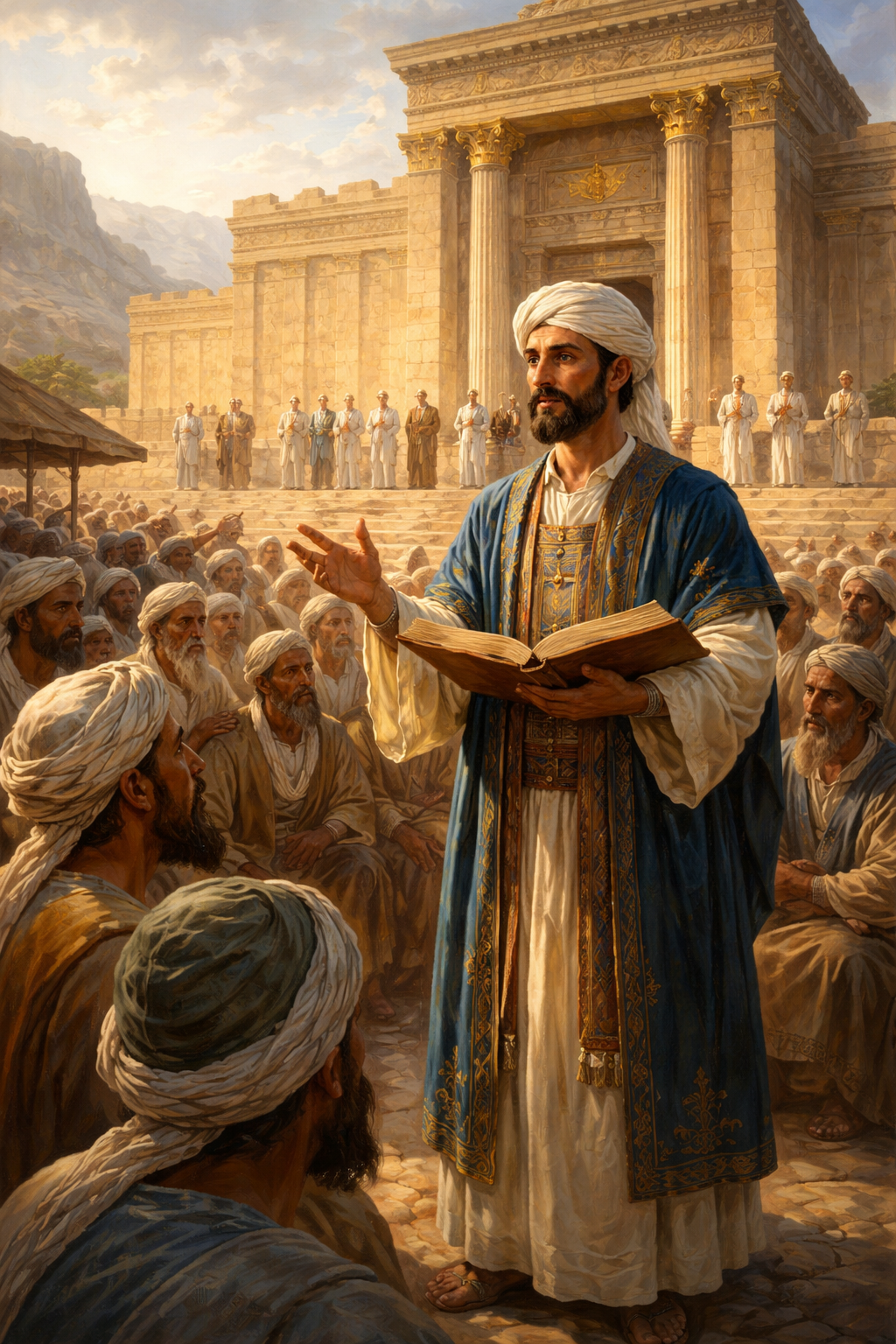
 After years of delay, the rebuilding of the temple resumes through the preaching of Haggai and Zechariah (Ezra 5:1). Their ministry stirs obedience, not political rebellion. Persian officials, led by Tatnai, question the Jews’ authority to rebuild. Instead of ceasing work in fear, the elders testify plainly that the project is commanded by “the God of heaven and earth” and authorized under Cyrus. The chapter closes with a formal inquiry sent to Darius, while the Jews continue building under God’s watchful eye.
Ezra 6 — God Vindicates His Work
Darius orders a search of the Persian archives, and Cyrus’s decree is found intact. The king not only confirms the Jews’ right to build, but commands Tatnai to support the work financially. God turns opposition into provision. The temple is finished in the sixth year of Darius, and dedicated with joy and proper sacrifices. The priests and Levites are set “in their divisions,” showing a return to biblical order. The chapter concludes with the keeping of the Passover, emphasizing separation from heathen defilement and renewed obedience to the Law of Moses.
Ezra 7 — Ezra the Scribe Sent by God
The narrative jumps forward to the reign of Artaxerxes. Ezra, a priest and skilled scribe, is introduced as a man who “had prepared his heart to seek the law of the LORD, and to do it, and to teach” (Ezra 7:10). Artaxerxes issues a sweeping decree authorizing Ezra to lead a return to Jerusalem, appoint magistrates, teach God’s law, and enforce both God’s law and the king’s law. The chapter ends with Ezra blessing God for placing such favor in the king’s heart and strengthening him to gather faithful men for the journey.
Key People and Places
- Ezra — Priest and scribe committed to God’s Word and obedience.
- Haggai — Prophet who stirred the people to resume building.
- Zechariah — Prophet who encouraged faith and hope.
- Darius — King who upheld God’s work through official decree.
- Artaxerxes — King used by God to empower Ezra’s mission.
- Jerusalem — Center of worship and restoration.
- Babylon — Place of exile from which God’s people return.
Main Doctrinal or Spiritual Themes
- The Authority of God’s Word
Revival begins when God’s Word is preached and obeyed (Ezra 5:1–2). - God’s Sovereignty Over Kings
The Lord directs pagan rulers to accomplish His will without compromising holiness. - Faithful Obedience Despite Opposition
God’s people continue the work while leaving vindication to the Lord. - Biblical Worship and Separation
The restored temple worship follows God’s prescribed order and rejects pagan influence. - Prepared Servants for God’s Work
Ezra’s effectiveness flows from a prepared heart, not political power.
Practical Applications or Lessons
- God’s work advances when His Word is proclaimed without fear.
- Opposition cannot stop what God has authorized.
- Obedience often brings provision from unexpected sources.
- True spiritual leadership begins with personal submission to Scripture.
- Revival is sustained by teaching, order, and separation unto God.
Comments are closed