Chapter Summaries
 Ezra 8 — The Journey Prepared and Protected
This chapter records those who went up from Babylon with Ezra. The genealogies confirm priestly and Levitical order. Ezra notes the absence of Levites and sends for ministers for the house of God.
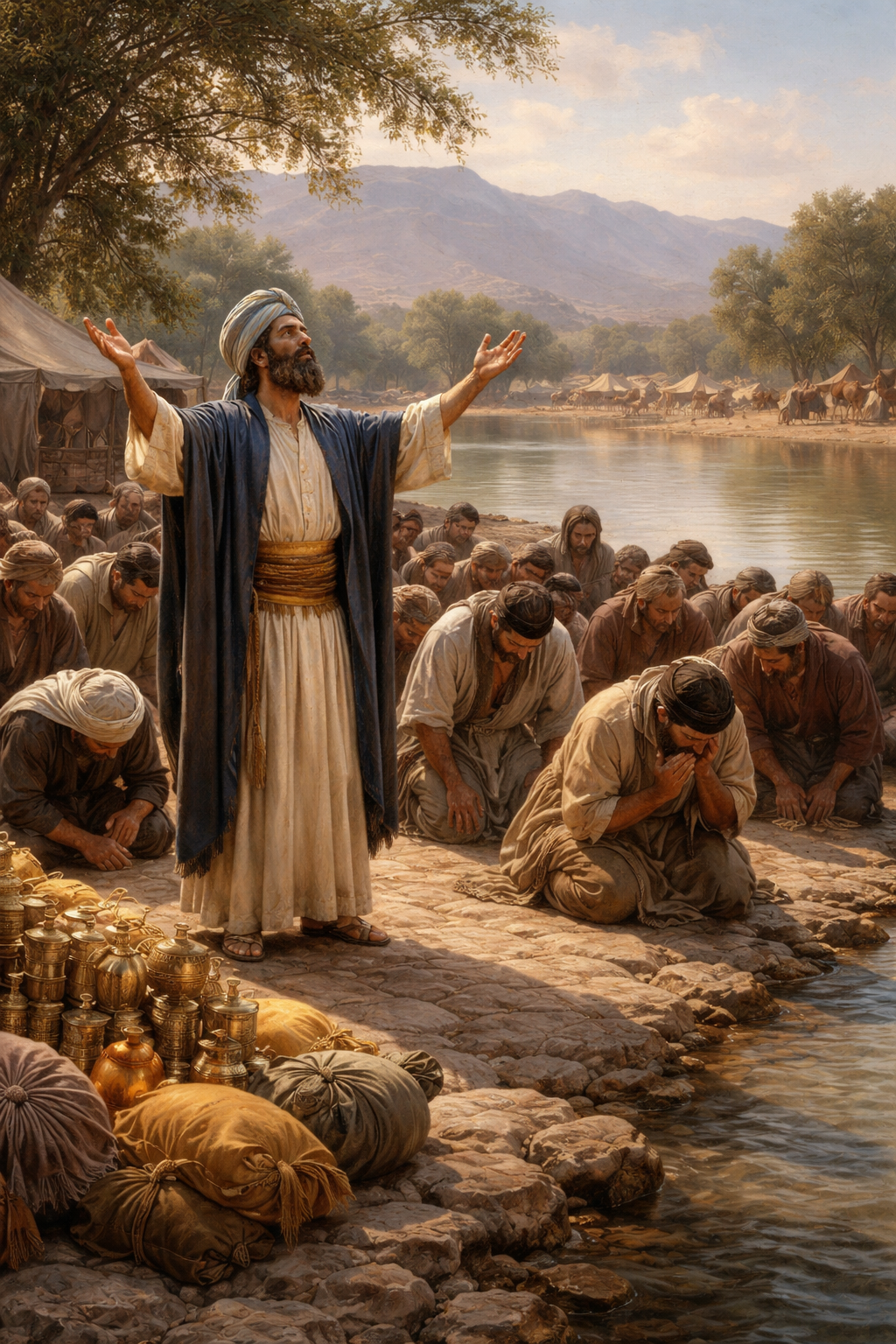
Before departure, Ezra proclaims a fast at the river Ahava, seeking God’s protection. He refuses a military escort so as not to dishonor the testimony that “the hand of our God is upon all them for good that seek him” (Ezra 8:22, KJV).
The silver, gold, and vessels are weighed and entrusted to faithful priests. God answers prayer, delivers them from enemies, and the offerings are presented at Jerusalem.
Ezra 9 — Sin Discovered and Confessed
Ezra learns that Israel has mixed with the peoples of the lands, even among priests and Levites. He is astonished and grieved, seeing this as a violation of God’s command to remain separate.
At the evening sacrifice, Ezra prays a public prayer of confession, acknowledging national guilt, God’s mercy, and their unworthiness. He recognizes that God had granted “a little space” of grace (Ezra 9:8, KJV) after captivity, yet the people again trespassed.
Ezra 10 — Separation and Restoration
The people assemble trembling because of the matter and the rain. Under the leadership of Shechaniah, repentance is proposed: the strange wives are to be put away according to the law.
Ezra requires an oath and appoints judges to investigate the cases. The chapter closes with a list of offenders, including priests. Though difficult and painful, the action preserves covenant obedience and the spiritual future of the nation.
Key People and Places
- Ezra — Priest and scribe devoted to the Law of the LORD
- Shechaniah — Spokesman urging repentance and obedience
- Priests and Levites — Spiritual leaders held to higher accountability
- Babylon — Place of captivity and departure
- Jerusalem — Center of worship and restoration
- River Ahava — Gathering place for fasting and prayer before travel
Main Doctrinal or Spiritual Themes
- The Hand of God — God protects and prospers those who seek Him in faith
- Separation from Sin — God demands holiness and obedience, especially among leaders
- Corporate Responsibility — National sin requires public confession and correction
- Grace after Judgment — Restoration is a mercy, not a right
- Fear of the LORD — True repentance involves trembling at God’s Word
Practical Applications or Lessons
- God’s work must be done God’s way, trusting His protection rather than human strength.
- Spiritual leadership carries greater responsibility and stricter judgment.
- Tolerated sin eventually weakens testimony and invites chastening.
- True repentance is costly but necessary for restoration.
- Seasons of mercy should deepen obedience, not encourage compromise.
Comments are closed