Chapter Summaries
Ezekiel 17 — The Parable of the Two Eagles, the Vine, and the Tender Twig
 Ezekiel 17 opens with the LORD commanding Ezekiel to “put forth a riddle, and speak a parable unto the house of Israel” (Ezekiel 17:2). The chapter uses symbolic language, but the interpretation is given within the chapter itself, so we are not left to speculation.
The first “great eagle with great wings, longwinged, full of feathers” represents the king of Babylon. He came to Jerusalem, took the highest branch of the cedar, and carried it into “a land of traffick” and “a city of merchants” (17:3–4). This points to Nebuchadnezzar carrying away Jehoiachin and the royal seed of Judah into Babylon.
The “seed of the land” planted by the waters represents Zedekiah, whom Babylon placed on the throne in Jerusalem as a vassal king (17:5–6). Judah became like a low spreading vine, dependent upon Babylon rather than independent.
Then another “great eagle” appears, representing Egypt (17:7). The vine bends its roots toward this second eagle, picturing Zedekiah’s rebellion against Babylon and his attempt to seek Egyptian help. This was not merely bad politics; it was covenant-breaking. Zedekiah had sworn loyalty to Babylon, and that oath was taken seriously before God.
The LORD asks, “Shall it prosper?” (17:9). The answer is no. Zedekiah’s rebellion would fail. The vine would be plucked up, withered, and destroyed. Historically, this was fulfilled when Nebuchadnezzar returned, destroyed Jerusalem, blinded Zedekiah, and carried him captive to Babylon.
The doctrinal weight of the chapter is found in Ezekiel 17:19: “Surely mine oath that he hath despised, and my covenant that he hath broken, even it will I recompense upon his own head.” Even though the covenant was made with a pagan empire, God held Judah’s king responsible for his oath. The LORD is a God of truth, and He expects truthfulness from His people.
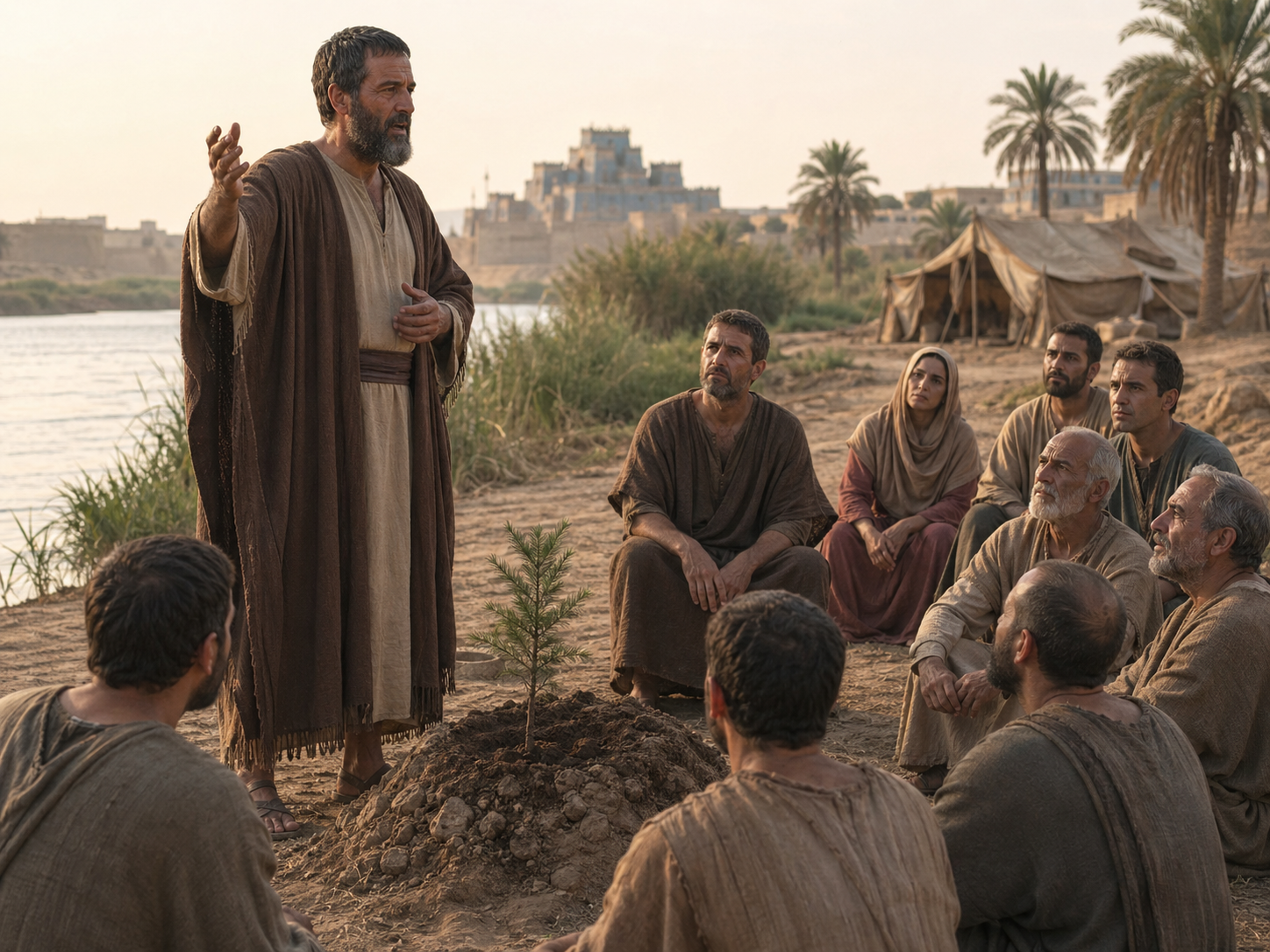
Yet the chapter does not end in judgment. In verses 22–24, God promises to take “of the highest branch of the high cedar” and plant it upon “an high mountain and eminent.” This tender twig would become a goodly cedar, and “under it shall dwell all fowl of every wing” (17:23). This points beyond Zedekiah and the failed kings of Judah to the coming Messiah, the righteous Branch of David’s line. God would bring down the proud tree and exalt the low tree. Human kings failed, but God’s King would not fail.
Conservative Baptist application sees here both a historical prophecy concerning Judah and a Messianic promise ultimately fulfilled in Christ. Earthly thrones collapse, but the Lord Jesus Christ, the Son of David, reigns forever.
Ezekiel 18 — Personal Responsibility Before God
Ezekiel 18 confronts a proverb being used in Israel: “The fathers have eaten sour grapes, and the children’s teeth are set on edge” (18:2). The people were blaming their fathers for their present suffering, as though they themselves were innocent victims of inherited guilt.
The LORD rejects this excuse. “Behold, all souls are mine; as the soul of the father, so also the soul of the son is mine” (18:4). The great principle of the chapter is: “the soul that sinneth, it shall die.”
This does not deny that children can suffer consequences from their parents’ sins. Israel was certainly suffering nationally because of generations of rebellion. But the chapter teaches that each person stands morally accountable before God for his own sin and response to God.
The LORD gives several examples:
A just man who walks uprightly, avoids idolatry, refuses oppression, shows mercy, and obeys God’s statutes shall “surely live” (18:5–9).
If that righteous man has a violent and wicked son, the son will not live merely because his father was righteous. His own sin brings judgment (18:10–13).
If that wicked son has a son who sees his father’s sins and refuses to follow them, he shall not die for his father’s iniquity. He shall live because he turns from evil and does right (18:14–17).
The chapter also teaches the reality of repentance. If the wicked man turns from his sins and does that which is lawful and right, “he shall surely live, he shall not die” (18:21). But if a righteous man turns away from righteousness and commits iniquity, his former outward righteousness will not excuse his present rebellion (18:24).
This chapter is not teaching salvation by works. The whole Bible teaches that salvation is by grace through faith, and the New Testament makes that plain. But Ezekiel 18 is dealing with visible repentance, moral accountability, and the justice of God’s dealings with Israel. True repentance produces a changed direction. A man cannot honestly claim to be right with God while clinging to rebellion.
The LORD’s heart is clearly revealed in Ezekiel 18:23: “Have I any pleasure at all that the wicked should die? saith the Lord GOD: and not that he should return from his ways, and live?” Again in verse 32: “For I have no pleasure in the death of him that dieth, saith the Lord GOD: wherefore turn yourselves, and live ye.”
A conservative Baptist reading should emphasize both truths: God is just in judging sin, and God is merciful in calling sinners to repentance. No sinner may blame his ancestry, environment, culture, or family history as an excuse for refusing God. Every soul belongs to God.
Ezekiel 19 — A Lamentation for the Princes of Israel
Ezekiel 19 is a lamentation, a funeral-like song over the fallen princes of Israel. It is poetic, sorrowful, and severe. The chapter uses two main pictures: lion cubs and a vine.
The mother lioness represents Judah, especially the royal house of David. She raises young lions among the nations. One young lion becomes strong and learns to catch prey (19:3). This likely points to Jehoahaz, son of Josiah, who reigned briefly before being taken captive to Egypt. Ezekiel 19:4 says, “he was taken in their pit, and they brought him with chains unto the land of Egypt.”
When the first lion cub is removed, another rises in his place (19:5–6). This lion also becomes violent and destructive. He is eventually captured and brought to the king of Babylon (19:9). This likely points either to Jehoiachin or Zedekiah, with the general focus being the collapse of Judah’s final kings. The Davidic throne, once strong under men like David and Josiah, had become corrupt and doomed under wicked rulers.
The second image is of a vine planted by waters, fruitful and strong (19:10). This represents Judah in her former strength and privilege. She had “strong rods for the sceptres of them that bare rule” (19:11), meaning she had royal authority and kingly strength. But the vine is plucked up in fury, cast down, dried up, and consumed by fire (19:12). This pictures Judah’s destruction and the end of her monarchy.
The final verse says, “This is a lamentation, and shall be for a lamentation” (19:14). The fall of Judah’s princes was not merely political tragedy; it was spiritual tragedy. Sin had ruined the throne. Rebellion had brought shame on the house of David. The royal line appeared cut down, yet Ezekiel 17 had already shown that God would still preserve His Messianic promise through the tender twig He Himself would plant.
Ezekiel 19 reminds us that leadership matters. When rulers are violent, proud, rebellious, or unfaithful, their people suffer. But it also reminds us that God’s covenant purposes cannot be destroyed by failed human leaders.
Key People and Places
Ezekiel
The prophet of the captivity, ministering among the Jews in Babylon. He faithfully declared God’s judgment upon Jerusalem and also gave hope concerning future restoration.
The LORD God
The central Person in the passage. He judges covenant-breaking, calls sinners to repentance, defends His own justice, and promises a future righteous King.
Nebuchadnezzar / King of Babylon
Represented by the first great eagle in Ezekiel 17. He was used by God as an instrument of judgment against Judah.
Zedekiah
The king of Judah placed on the throne by Babylon. He broke his oath and sought help from Egypt. His rebellion brought disastrous judgment.
Jehoiachin
The king of Judah taken captive to Babylon. He is connected with the royal branch removed from Jerusalem.
Pharaoh / Egypt
Represented by the second eagle in Ezekiel 17. Egypt became the false hope to which Judah turned instead of submitting to God’s chastening.
The Princes of Israel
The fallen royal rulers lamented in Ezekiel 19. They represent Judah’s corrupt and collapsing monarchy.
Jerusalem
The city under judgment. Though still standing at this point in Ezekiel’s prophecy, its destruction was certain because of covenant unfaithfulness.
Babylon
The land of captivity and judgment. God used Babylon to humble Judah and fulfill His warnings.
Egypt
The place of false refuge. Judah’s leaders looked to Egypt for deliverance, but Egypt could not save them.
The High Mountain of Israel
In Ezekiel 17:22–23, this becomes the place where God plants the tender twig. It points to God’s future restoration and ultimately to the Messianic reign of Christ.
Main Doctrinal or Spiritual Themes
1. God Judges Broken Covenants
Zedekiah’s oath to Babylon mattered because God is a God of truth. A promise made before God is not a light thing. Ezekiel 17 teaches that deceit, oath-breaking, and political scheming cannot prosper when God is against them.
2. Trusting Man Instead of God Leads to Ruin
Judah looked to Egypt for help rather than humbling herself under God’s chastening. Egypt represents a false arm of flesh. The believer must beware of trusting human strength, worldly systems, or clever strategies while ignoring obedience to God.
3. God’s Sovereignty Over Nations
Babylon, Egypt, Judah, kings, treaties, and wars are all under God’s rule. Ezekiel 17 shows that world politics are not outside God’s government. He raises up, brings down, plants, plucks up, exalts, and abases.
4. The Coming Messiah from David’s Line
The tender twig of Ezekiel 17:22–24 points to the Lord’s preservation of the Davidic promise. Judah’s kings failed, but God would bring forth the true King. From a humbled royal line, God would raise up Christ.
5. Personal Responsibility Before God
Ezekiel 18 strongly teaches that every soul belongs to God and every person is accountable before Him. A man cannot hide behind his parents’ sins, his culture, his past, or his surroundings. “The soul that sinneth, it shall die.”
6. God’s Justice Is Righteous
The people accused God’s way of being unequal, but the LORD answered that their ways were unequal. God does not judge unfairly. He deals with men according to truth.
7. Genuine Repentance Is Required
Ezekiel 18 repeatedly calls the wicked to turn. Biblical repentance is not mere sorrow over consequences. It is a turning from sin toward God. The chapter emphasizes that God takes no pleasure in the death of the wicked but calls men to live.
8. Leadership Carries Grave Responsibility
Ezekiel 19 mourns the failure of Judah’s princes. Leaders who become like devouring lions bring destruction on themselves and sorrow to their people. God holds rulers accountable.
9. Sin Brings Lamentation
Ezekiel 19 is not written in a light tone. It is a funeral song over a ruined nation and fallen kings. Sin may appear strong for a time, but it ends in grief, bondage, and loss.
10. God Brings Down the Proud and Exalts the Low
Ezekiel 17:24 says the LORD brings down the high tree, exalts the low tree, dries up the green tree, and makes the dry tree flourish. This is the way of God’s government. Pride is never safe, and humility is never wasted.
Practical Applications or Lessons
1. Keep Your Word
Ezekiel 17 shows that God takes promises seriously. A Christian should be known for honesty, faithfulness, and plain dealing. Our word should not be slippery, manipulative, or conditional upon convenience.
2. Do Not Run to Egypt for Help
Judah’s leaders sought Egypt instead of submitting to God. Believers today must beware of running to worldly solutions while refusing spiritual obedience. Human help is not wrong in itself, but it becomes wrong when it replaces trust and obedience toward God.
3. Do Not Blame Others for Your Sin
Ezekiel 18 removes excuses. A person may have had poor examples, painful history, or sinful influences, but he is still responsible before God. The right response is not blame-shifting but repentance.
4. Take Sin Personally and Seriously
“The soul that sinneth, it shall die” is a sobering statement. Sin is not a small mistake. It is rebellion against the God who owns every soul. The only safe response is repentance and faith.
5. Rejoice That God Calls Sinners to Turn
Ezekiel 18 is stern, but it is also merciful. God says, “turn yourselves, and live ye.” The sinner is not invited to despair but to turn to the Lord. In New Testament fullness, that call leads us to Christ, who alone can save.
6. Former Obedience Does Not Excuse Present Rebellion
Ezekiel 18 warns against turning from righteousness into iniquity. A person cannot live on yesterday’s obedience while walking in today’s disobedience. Faithfulness must be present and real.
7. A Wicked Heritage Can Be Broken
The son of a wicked father does not have to repeat his father’s sins. By God’s grace, a man can refuse the pattern of evil he saw before him. Family sin is serious, but it is not sovereign.
8. Godly Leadership Matters
Ezekiel 19 shows the sorrow that comes when leaders are proud, violent, and unfaithful. This applies in homes, churches, ministries, and nations. God’s people should pray for righteous leadership and seek to be faithful in any place of influence.
9. Sin’s End Is Grief
The lion cubs looked strong. The vine looked fruitful. But rebellion ended in chains, fire, and lamentation. Sin often begins with pride and ends with sorrow.
10. Hope in God’s King, Not Man’s Kings
Judah’s princes failed, but God’s promise did not fail. Ezekiel 17 points forward to the righteous Branch. Our final hope is not in political rulers, religious personalities, or human strength, but in the Lord Jesus Christ, the true Son of David and coming King.
Conservative Baptist Doctrinal Emphasis
Ezekiel 17–19 presents a strong view of God’s holiness, man’s accountability, and the certainty of judgment. These chapters also preserve hope through the promise of God’s own planting—the future King from David’s line.
A sound Baptist reading should avoid turning the passage into vague moral symbolism. Ezekiel is dealing with real kings, real nations, real covenants, real sin, and real judgment. At the same time, the passage fits into the larger biblical promise that Christ, the righteous Branch, will reign where Judah’s kings failed.
The gospel truth is seen in the moral need exposed by Ezekiel 18. Every soul belongs to God. Every sinner is accountable. No man can save himself by excuses, ancestry, or outward religion. The sinner must turn to God. In the full light of Scripture, that means repentance toward God and faith toward our Lord Jesus Christ.
Comments are closed