Chapter Summaries
 Deuteronomy 11 — The Call to Love, Obey, and Remember
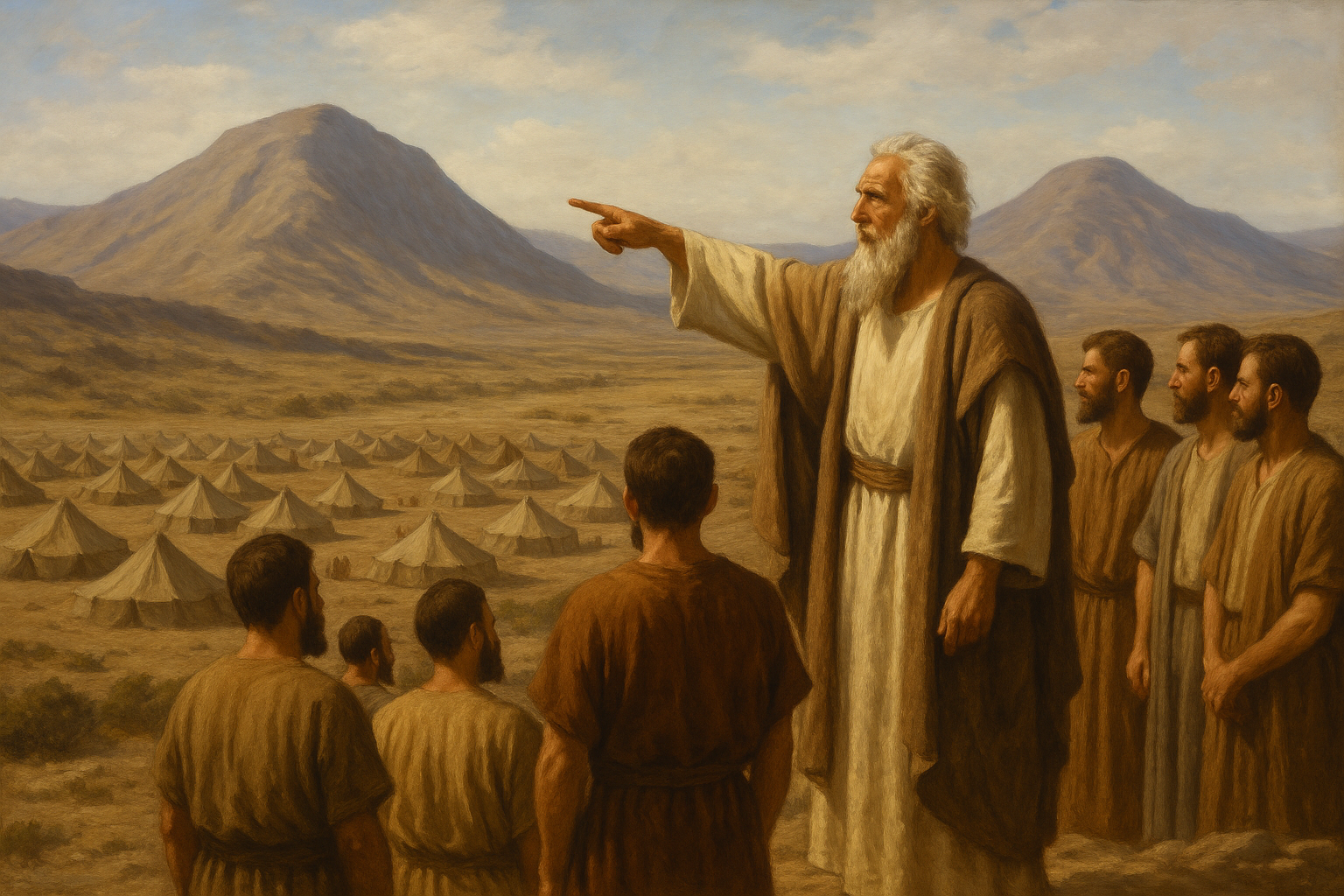
Moses continues his exhortation to Israel as they prepare to enter Canaan, reminding them to “love the LORD thy God, and keep his charge” (v.1). The generation listening had witnessed God’s mighty acts in Egypt and the wilderness—His judgments on Pharaoh, His miracles at the Red Sea, and His discipline upon rebels like Dathan and Abiram.
Moses contrasts Egypt—where irrigation depended on human effort—with Canaan, “a land of hills and valleys, and drinketh water of the rain of heaven” (v.11). This emphasized their dependence on God, not on man’s labor. Obedience would bring blessing: “That your days may be multiplied… as the days of heaven upon the earth” (v.21). Disobedience, however, would bring drought and destruction (vv.16–17).
He instructs them to keep God’s Word close—to “lay up these my words in your heart and in your soul… bind them for a sign upon your hand” (vv.18–20)—teaching their children continually. The chapter concludes with the command to set blessings upon Mount Gerizim and curses upon Mount Ebal once they enter the land (vv.29–32), symbolizing the clear choice between obedience and rebellion.
Deuteronomy 12 — The Place God Chooses for Worship
Here Moses establishes Israel’s worship boundaries. They are to utterly destroy all Canaanite altars, groves, and idols: “Ye shall overthrow their altars, and break their pillars” (v.3). God alone determines where He will be worshiped—“the place which the LORD your God shall choose to put his name there” (v.5).
This centralization of worship preserved Israel from idolatry and emphasized purity in service. Sacrifices, tithes, and offerings were not to be offered just anywhere, but only at the appointed place. Blood was to be poured out and not eaten (v.16), maintaining reverence for life.
The people were warned not to do “every man whatsoever is right in his own eyes” (v.8). Once settled in Canaan, worship was to be marked by obedience and rejoicing before the Lord (v.12). Moses repeats the warning to abstain from idolatrous practices, even curiosity toward pagan worship: “Take heed… that thou enquire not after their gods” (v.30).
Deuteronomy 13 — Guarding Against Apostasy
This chapter sternly warns against any person—prophet, dreamer, family member, or city—that entices others to idolatry. Even if a prophet performs a sign or wonder, if he says “Let us go after other gods” (v.2), he must be rejected and executed (v.5). Love for God must exceed all earthly attachments; even if a close relative secretly urges idolatry, the people must “not consent unto him, nor hearken unto him” (vv.8–9).
If a city turned to serve other gods, the whole city was to be destroyed (vv.12–16). The seriousness of this command demonstrates the holiness of God and the necessity of maintaining spiritual purity among His people. Israel’s survival depended on separation from idolatry and full loyalty to Jehovah alone.
Key People and Places
-
Moses — God’s chosen leader and prophet, delivering the final instructions before his death.
-
Dathan and Abiram — Examples of rebellion, referenced as a warning against disobedience (11:6).
-
Mount Gerizim and Mount Ebal — Mountains west of the Jordan near Shechem, designated for proclaiming blessings and curses (11:29).
-
Canaan — The Promised Land, “a land which the LORD thy God careth for” (11:12), symbolizing both promise and responsibility.
-
False prophets and idolaters — Instruments of Satan to lead Israel astray, representing the ever-present danger of apostasy.
Main Doctrinal or Spiritual Themes
-
Obedience as Evidence of Love
Love for God is shown not by sentiment but by submission—“Therefore thou shalt love the LORD thy God, and keep his charge” (11:1). -
The Danger of Idolatry and Apostasy
Idolatry is spiritual adultery. God demands exclusive worship. Even signs and wonders are to be tested by doctrine (13:1–3). -
Divine Blessing and Cursing
Blessings are conditional upon obedience, while curses follow rebellion (11:26–28). God’s moral law is unchanging. -
Purity in Worship
True worship must be God-centered and according to His command, not human invention (12:8–14). -
Separation from Evil
The destruction of pagan altars and execution of idolaters underscore the necessity of spiritual separation for holiness (12:2–3; 13:5).
Practical Applications or Lessons
-
1. Love Obeys.
Real love for God produces faithful obedience. Christianity today should not be driven by emotion alone but by a yielded will. -
2. Guard the Heart and Home.
Just as Israel was told to teach their children diligently, Christian parents must impress God’s Word upon their families (11:19). -
3. Worship Only as God Commands.
Modern believers must avoid entertainment-driven or man-centered worship, keeping Christ at the center. -
4. Test Every Spirit.
Not every sign or “miracle” is from God (13:1–3). Doctrine must be tested by Scripture, not emotion or popularity. -
5. Purge the Evil.
The believer must separate from false teachers and worldly influences, not out of pride but out of loyalty to God’s holiness. -
6. Choose Obedience Daily.
As Israel faced blessings and curses, believers must daily choose to follow Christ in holiness, rejecting compromise with sin.
Comments are closed