
Chapter Summaries
 2 Chronicles 7
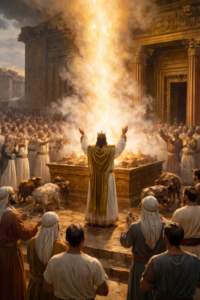
The chapter opens with God’s visible acceptance of Solomon’s prayer: “the fire came down from heaven, and consumed the burnt offering and the sacrifices; and the glory of the LORD filled the house” (7:1). The priests could not enter because of the overwhelming manifestation of God’s presence. Israel observed a fourteen-day dedication feast marked by sacrifice, joy, and obedience.
God later appeared to Solomon by night, confirming that He had chosen the temple as a place of sacrifice and prayer. The conditional promise of 7:14 establishes a national principle for Israel: humility, prayer, seeking God’s face, and turning from wicked ways precede divine forgiveness and healing. God also warned Solomon that blessing was contingent upon obedience; idolatry would bring judgment, even upon the temple itself.
2 Chronicles 8
This chapter records Solomon’s administrative wisdom and organizational faithfulness. He completed building projects throughout Israel, including fortified cities and storage centers. The chapter emphasizes Solomon’s careful adherence to Mosaic law and Davidic instruction in temple worship, priestly courses, and sacrifices.
Foreign laborers were placed under tribute, while Israelites retained leadership and military roles. Solomon’s reign is portrayed as orderly, prosperous, and God-honoring when aligned with God’s commands.
2 Chronicles 9
The Queen of Sheba visited Jerusalem to test Solomon’s wisdom. Upon witnessing his understanding, wealth, and the order of temple service, she acknowledged that Solomon’s wisdom came from the LORD. The chapter catalogues Solomon’s immense wealth, throne, tribute, and international renown.
Yet the chapter closes with Solomon’s death, reminding the reader that earthly glory is temporary. Though Solomon reigned in splendor, the Chronicler subtly points forward to the need for a greater, eternal King.
Key People and Places
- Solomon — King of Israel, endowed with wisdom and prosperity by God, yet warned to remain obedient.
- The LORD (Jehovah) — Reveals His holiness through fire, glory, covenant promises, and warnings.
- Queen of Sheba — Gentile ruler who recognized God’s blessing upon Israel through Solomon.
- Jerusalem — Political and spiritual center of Israel.
- The Temple — God’s chosen house for prayer, sacrifice, and worship.
Main Doctrinal or Spiritual Themes
- God’s Holiness and Glory — God visibly manifests His presence and demands reverence.
- Conditional National Blessing — Israel’s prosperity is tied to obedience, repentance, and humility.
- The Power of Prayer — God responds to sincere, repentant prayer according to His covenant.
- Wisdom from God — True wisdom and blessing originate with the LORD, not human achievement.
- The Danger of Prosperity — Material abundance must not replace faithfulness.
Practical Applications or Lessons
- God desires obedience more than ceremony.
- Humility and repentance are prerequisites for restored fellowship.
- Prayer must be accompanied by a turning from sin.
- Prosperity tests faithfulness as much as adversity.
- God’s promises are sure, but His warnings are real.
Comments are closed