Chapter Summaries
1 Kings 13 — The Man of God and the Disobedient Prophet
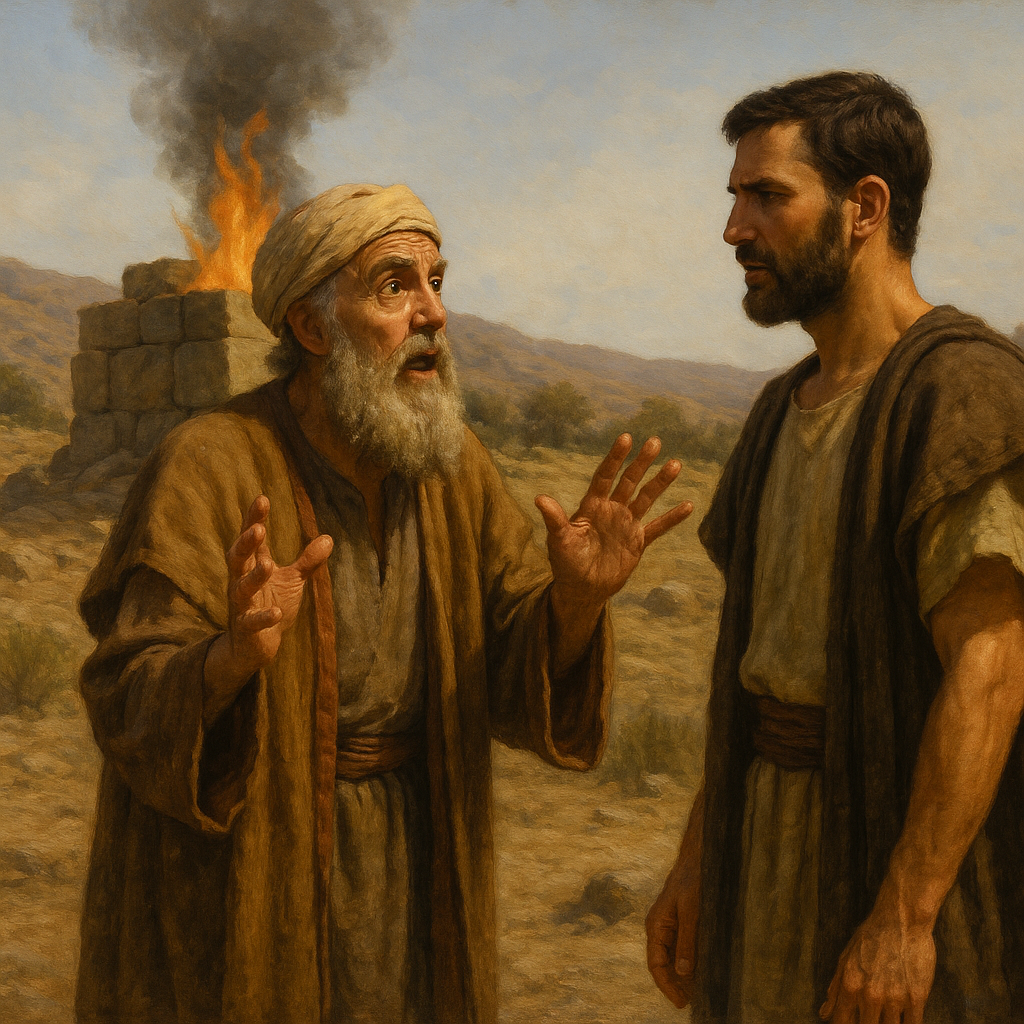
 This chapter records God’s direct confrontation with Jeroboam’s false worship system at Bethel. A man of God out of Judah is sent by the LORD to prophesy against the altar Jeroboam had erected for idol worship. He declares that a future king, Josiah, will defile that altar, demonstrating God’s sovereign foreknowledge and judgment (v. 2).
God immediately confirms the prophecy with signs:
-
The altar is rent apart.
-
Jeroboam’s hand withers when he attempts to seize the prophet, then is restored after the prophet’s prayer (vv. 4–6).
The man of God had been given a clear command: he was not to eat bread, drink water, or return by the same way. This emphasized separation from idolatry and full obedience.
However, an old prophet in Bethel deceives him by falsely claiming a new revelation from an angel. The man of God disobeys the original command of the LORD. As judgment, he is slain by a lion on the road. The unusual sign—his body not consumed and the donkey unharmed—confirms divine judgment rather than random tragedy (vv. 24–28).
The chapter ends with Jeroboam continuing in his sin, refusing to repent despite clear warnings, thereby sealing judgment upon his house.
1 Kings 14 — Judgment on Jeroboam and Rehoboam
This chapter records the formal pronouncement of judgment against both the northern and southern kingdoms.
Jeroboam sends his wife in disguise to Ahijah the prophet to inquire about their sick son. Though blind, Ahijah recognizes her by divine revelation. He delivers God’s verdict: Jeroboam’s dynasty will be cut off completely for leading Israel into idolatry. The child will die as a sign, but mercifully, he alone will be buried honorably because God found some good thing in him (vv. 7–13).
Jeroboam’s reign ends in failure, and his sin becomes the pattern that defines the northern kingdom:
“Jeroboam… made Israel to sin” (v. 16).
The chapter then turns to Rehoboam, Solomon’s son. Judah also falls into grievous sin, adopting idolatrous practices. As judgment, Shishak king of Egypt invades Jerusalem and takes the treasures of the temple and the palace. Rehoboam replaces Solomon’s golden shields with brass—an outward symbol of spiritual decline.
The chapter concludes with the deaths of Jeroboam and Rehoboam, showing that neither kingdom escaped consequences for departing from the LORD.
Key People and Places
-
Jeroboam — First king of the northern kingdom; architect of institutional idolatry.
-
Man of God from Judah — Faithful messenger who failed through partial obedience.
-
Old Prophet of Bethel — A compromised figure who deceived another servant of God.
-
Ahijah the Shilonite — Prophet who pronounced judgment on Jeroboam’s house.
-
Rehoboam — King of Judah; allowed spiritual decline.
-
Bethel — Center of false worship.
-
Jerusalem — Capital of Judah; site of temple desecration by Shishak.
-
Egypt (Shishak) — Instrument of God’s chastisement.
Main Doctrinal or Spiritual Themes
-
Absolute obedience to God’s Word — God’s commands are not altered by circumstances or other voices.
-
The danger of spiritual compromise — Both prophets and kings fall when they depart from God’s truth.
-
False revelation vs. revealed truth — God does not contradict His own Word.
-
Divine judgment and mercy — Judgment is sure, yet God shows mercy where repentance or faith is found.
-
Leadership accountability — National sin follows spiritual leaders.
Practical Applications or Lessons
-
Obedience delayed or diluted is disobedience.
-
Spiritual authority does not excuse error; truth is measured by God’s Word alone.
-
God’s warnings are acts of mercy; ignoring them invites judgment.
-
Parents’ spiritual choices affect future generations.
-
External religion without heart obedience leads to decline.
Comments are closed