Chapter Summaries
Isaiah 21
 This chapter contains several prophetic burdens (oracles) against specific nations.
- Babylon (21:1–10):
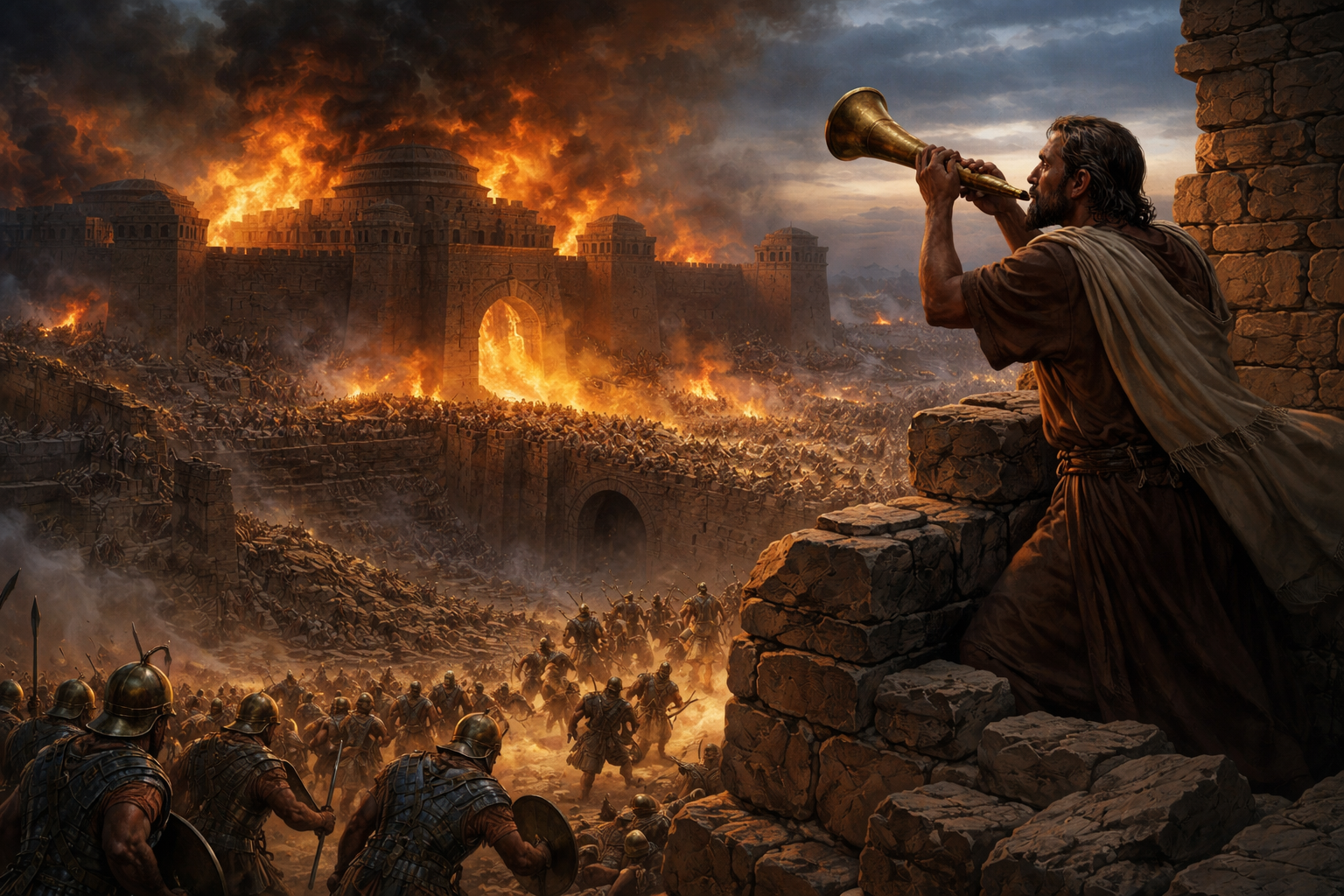
Called “the burden of the desert of the sea,” Isaiah describes a terrifying vision of invasion. The Medes and Persians are implied instruments of judgment. The cry is declared: “Babylon is fallen, is fallen” (v. 9), signaling the collapse of a proud world power.
The watchman faithfully reports what he sees, illustrating vigilance in proclaiming God’s truth. - Dumah / Edom (21:11–12):
A brief exchange: “Watchman, what of the night?” The answer is solemn—morning comes, but also night. There is no lasting relief apart from turning to God. - Arabia (21:13–17):
The tribes of Arabia face judgment within a year. Their strength (notably Kedar) will diminish, showing that even remote or seemingly secure peoples are accountable to God.
Doctrinal note: God governs all nations, not just Israel. No power escapes His judgment.
Isaiah 22
This chapter addresses Jerusalem (“the valley of vision”).
- The people respond to impending judgment with celebration instead of repentance:
“Let us eat and drink; for to morrow we shall die” (v. 13). - God rebukes their misplaced trust in human defenses (fortifications, water systems) rather than in Himself.
- Shebna, a proud steward, is condemned for self-exaltation and will be removed.
- Eliakim is raised up as a faithful servant, described as one who will bear responsibility:
“I will commit thy government into his hand” (v. 21).
He becomes a type of a dependable ruler, pointing ultimately toward Christ.
Doctrinal note: Trust in human strength without repentance leads to ruin; God resists pride and honors faithful stewardship.
Isaiah 23
This chapter prophesies judgment against Tyre, the wealthy commercial city.
- Tyre’s fall will bring mourning to merchants and seafarers:
“Howl, ye ships of Tarshish” (v. 1). - The city’s pride in wealth and trade is brought low by God.
- After 70 years, Tyre will revive, but her gain will ultimately be consecrated to the Lord (v. 18), indicating that even commerce can be brought under divine purposes.
Doctrinal note: Wealth and economic power cannot shield from God’s judgment; ultimately, all resources belong to Him.
Isaiah 24
This chapter expands from local judgments to a global, prophetic vision—often understood as foreshadowing end-times judgment.
- Universal devastation:
“Behold, the LORD maketh the earth empty… and turneth it upside down” (v. 1). - Judgment falls on all classes alike—no one escapes accountability.
- The cause is moral and spiritual rebellion:
“They have transgressed the laws… broken the everlasting covenant” (v. 5). - Joy ceases; the earth mourns under sin.
- Yet a remnant lifts up praise to God (v. 14–16), showing that God preserves a faithful people even in judgment.
- The chapter ends with the LORD reigning gloriously in Zion (v. 23), pointing toward the future kingdom.
Doctrinal note: This anticipates a worldwide judgment consistent with prophetic passages concerning the Day of the LORD.
Key People and Places
- Babylon — A dominant world empire judged for pride and wickedness.
- Medes (and Persians implied) — Instruments of God’s judgment on Babylon.
- Dumah / Edom — Represents nations in uncertainty and spiritual darkness.
- Arabia / Kedar — Desert tribes facing divine judgment.
- Jerusalem (Valley of Vision) — God’s people, yet rebuked for spiritual blindness and misplaced trust.
- Shebna — A proud, self-seeking leader removed by God.
- Eliakim — A faithful servant elevated to authority; a picture of righteous leadership.
- Tyre — Wealthy trade city humbled by God.
- Tarshish — Maritime trading region affected by Tyre’s fall.
- The Earth (Isaiah 24) — The whole world under divine judgment.
- Zion / Jerusalem (future) — The place of the LORD’s reign in glory.
Main Doctrinal or Spiritual Themes
- God’s Sovereignty Over Nations
Every kingdom—Babylon, Tyre, Arabia, Jerusalem—is under God’s authority. - Judgment on Pride and Self-Reliance
Whether political, military, or economic, human confidence apart from God leads to downfall. - Accountability for Sin
Isaiah 24 emphasizes universal guilt: all have “transgressed the laws.” - The Faithful Remnant
Even in judgment, God preserves those who honor Him. - The Certainty of the Day of the LORD
A coming global judgment followed by God’s visible reign. - Righteous Leadership vs. Corrupt Leadership
Contrasted in Shebna and Eliakim.
Practical Applications or Lessons
- Do not trust in human systems over God
Nations and individuals alike are tempted to rely on resources, defenses, or wealth. These will fail without God. - Respond to warning with repentance—not indifference
Jerusalem’s attitude (“eat and drink”) reflects a careless spirit that invites judgment. - Guard against pride in position or success
Shebna’s fall warns against self-promotion; God honors humility and faithfulness. - Remain faithful even when judgment is widespread
Like the remnant in Isaiah 24, believers should continue to praise God regardless of circumstances. - Remember that God sees the whole world, not just your situation
His purposes extend globally and eternally. - Live with awareness of coming judgment and future glory
The end of Isaiah 24 reminds believers that God will ultimately reign in righteousness.
Comments are closed