
Chapter Summaries
 Ezekiel 33 — The Watchman, the Wicked, and the News of Jerusalem’s Fall
Ezekiel 33 marks a turning point in the book. Earlier chapters emphasized judgment against Judah, Jerusalem, and surrounding nations. Here, after Jerusalem’s fall, Ezekiel’s ministry begins to turn more strongly toward warning, responsibility, repentance, and future restoration.
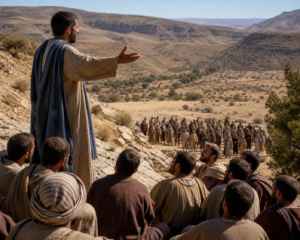
The chapter opens with the renewed picture of the watchman. If a watchman sees the sword coming and blows the trumpet, the people are responsible for whether they heed the warning. If he fails to warn them, their blood is required at his hand. The LORD applies this directly to Ezekiel:
“Son of man, I have set thee a watchman unto the house of Israel” — Ezekiel 33:7
This is a solemn picture of the preacher’s responsibility. Ezekiel was not called to entertain, flatter, or please the people. He was called to faithfully deliver God’s warning.
The LORD then declares His heart concerning judgment:
“As I live, saith the Lord GOD, I have no pleasure in the death of the wicked; but that the wicked turn from his way and live” — Ezekiel 33:11
This is one of the clearest statements in Ezekiel of God’s mercy and His call to repentance. God’s judgment is righteous, but He does not delight in the destruction of sinners. The command is clear: “turn ye, turn ye from your evil ways.”
The chapter also teaches personal responsibility before God. A righteous man who turns from righteousness and commits iniquity will not be delivered by his former righteousness. Likewise, a wicked man who turns from his sin and does “that which is lawful and right” shall live. This does not teach salvation by works, but it does show that true repentance is not empty talk. A changed heart shows itself in a changed direction.
Then the major historical announcement comes:
“The city is smitten” — Ezekiel 33:21
A fugitive from Jerusalem arrives and reports that the city has fallen. This confirms everything Ezekiel had preached. The people who once mocked or ignored his warnings now see that the word of the LORD was true.
The chapter closes with a tragic description of religious hearers who listen but do not obey. They come to Ezekiel as though they desire the word of God, but their hearts are still covetous:
“They hear thy words, but they will not do them” — Ezekiel 33:31
God says Ezekiel is to them like “a very lovely song” and one who has “a pleasant voice,” but they do not obey the message. This is a warning against enjoying preaching while refusing repentance.
Ezekiel 34 — False Shepherds and the True Shepherd
Ezekiel 34 rebukes the corrupt shepherds of Israel. The “shepherds” were the leaders: kings, princes, priests, and rulers who should have cared for God’s people. Instead, they fed themselves and neglected the flock.
The LORD says:
“Woe be to the shepherds of Israel that do feed themselves! should not the shepherds feed the flocks?” — Ezekiel 34:2
They failed in their duty. They did not strengthen the diseased, heal the sick, bind up the broken, bring back those driven away, or seek the lost. Instead, they ruled with “force and with cruelty.” Because of this, the sheep were scattered and became prey.
This chapter has strong pastoral application. God holds spiritual leaders accountable for how they treat His people. A pastor is not a lord over God’s heritage, but an undershepherd who must care for the flock faithfully.
The LORD then declares that He Himself will search for His sheep:
“Behold, I, even I, will both search my sheep, and seek them out” — Ezekiel 34:11
This is one of the most comforting portions in Ezekiel. Though human leaders failed, God would not fail. He would gather, feed, heal, and restore His people. He would bring them out from among the nations and feed them upon the mountains of Israel.
The chapter also contains judgment among the flock. God will judge between cattle and cattle, between the rams and the he goats. This means He sees not only the sins of leaders, but also the oppression and selfishness among the people themselves.
The chapter reaches a great prophetic promise:
“And I will set up one shepherd over them, and he shall feed them, even my servant David” — Ezekiel 34:23
Since David had been dead for centuries, this points beyond David himself to the Messiah, the promised Son of David. From a conservative Baptist and dispensational viewpoint, this has direct connection to Christ’s future righteous rule over restored Israel, while also revealing Christ’s present character as the Good Shepherd.
The chapter ends with promises of peace, safety, fruitfulness, deliverance, and covenant blessing. God says:
“Ye my flock, the flock of my pasture, are men, and I am your God” — Ezekiel 34:31
That verse is tender and humbling. God’s people are weak sheep, but they belong to the LORD.
Ezekiel 35 — Judgment Against Mount Seir
Ezekiel 35 turns to judgment against Mount Seir, representing Edom. Edom descended from Esau and had a long history of hostility toward Israel. When Judah was brought low, Edom acted with hatred, violence, and opportunism.
The LORD says:
“Behold, O mount Seir, I am against thee” — Ezekiel 35:3
Edom’s sin was not merely political rivalry. It was rooted in old hatred:
“Because thou hast had a perpetual hatred, and hast shed the blood of the children of Israel” — Ezekiel 35:5
The phrase “perpetual hatred” is important. Edom’s grudge against Israel had continued for generations. Rather than fear God when Jerusalem fell, Edom rejoiced and sought to possess what God had given to Israel.
Edom said:
“These two nations and these two countries shall be mine, and we will possess it” — Ezekiel 35:10
But the LORD adds:
“whereas the LORD was there”
That phrase shows the seriousness of Edom’s sin. They were not merely claiming empty land. They were despising the covenant purposes of God. The land belonged to Israel by divine promise, and Edom’s arrogance was rebellion against the LORD Himself.
God promises that Edom will be made desolate. Their hatred, bloodshed, and boasting would return upon their own head. The chapter closes with this solemn truth:
“When the whole earth rejoiceth, I will make thee desolate” — Ezekiel 35:14
Ezekiel 35 shows that God judges nations for their treatment of His people, their pride, their cruelty, and their defiance of His purposes.
Key People and Places
Ezekiel
The prophet of God and watchman to Israel. In these chapters, Ezekiel is renewed in his responsibility to warn the people faithfully. His ministry is vindicated when news arrives that Jerusalem has fallen, just as God had said.
The House of Israel
The covenant nation addressed by Ezekiel. In chapter 33, they are warned to repent and take personal responsibility before God. In chapter 34, they are pictured as sheep scattered by corrupt shepherds but still known and loved by the LORD.
The Watchman
A symbolic figure used to describe Ezekiel’s prophetic duty. The watchman must see danger, blow the trumpet, and warn the people. This image applies especially to the duty of faithful preaching and spiritual leadership.
The Wicked Man
The sinner who refuses God’s warning. Ezekiel 33 teaches that the wicked must turn from sin and live. God takes no pleasure in the death of the wicked, but He does require repentance.
The Righteous Man
The man who has walked rightly but then turns aside into iniquity. Ezekiel 33 warns against trusting in past righteousness while presently rebelling against God.
The Shepherds of Israel
The failed leaders of Israel. These included rulers, priests, princes, and those responsible for guiding the nation. They fed themselves instead of the flock and are condemned by God.
The Flock
God’s people, pictured as sheep. They had been scattered, wounded, neglected, and oppressed, but God promises to seek, gather, feed, and restore them.
“My Servant David”
A Messianic title pointing to the promised King from David’s line. This looks forward to the Lord Jesus Christ, the true Shepherd and King, who fulfills the Davidic promises.
Jerusalem
The city whose fall is confirmed in Ezekiel 33. The report “The city is smitten” proves that God’s warnings through Ezekiel were true.
Mount Seir
The mountainous region associated with Edom. In Ezekiel 35, Mount Seir represents Edom’s pride, hatred, violence, and opposition to Israel.
Edom
The nation descended from Esau. Edom had a long-standing hostility toward Israel and rejoiced in Judah’s trouble. God condemns Edom for “perpetual hatred.”
The Mountains of Israel
The promised land of Israel, where God says He will gather and feed His people. This phrase becomes important in the restoration promises surrounding these chapters.
Main Doctrinal or Spiritual Themes
1. The Responsibility of the Watchman
God requires His messenger to warn faithfully. The watchman is not responsible for how people respond, but he is responsible to sound the warning. This is a strong reminder that preaching must be truthful, plain, and urgent.
A preacher who refuses to warn sinners is unfaithful. A church that only wants pleasant words and no warning is in danger. God’s people need truth, not flattery.
2. Personal Accountability Before God
Ezekiel 33 teaches that each person must answer before God. People could not hide behind the nation, their ancestors, their past, or their religious appearance.
The wicked man must turn from wickedness. The righteous man must not turn aside into sin. God sees the present reality of the heart and life.
This does not cancel the Bible doctrine of salvation by grace through faith. Rather, it shows that real repentance is never merely verbal. A man who truly turns to God will turn from the evil way.
3. God’s Mercy Toward Sinners
Ezekiel 33:11 is a powerful statement of divine mercy:
“I have no pleasure in the death of the wicked.”
God’s holiness requires judgment, but His mercy calls sinners to repentance. The problem is not that God is unwilling to forgive. The problem is that men love their sin and refuse to turn.
This agrees with the gospel message: sinners must repent and believe. God delights to save, but He will not excuse rebellion.
4. The Danger of Hearing Without Obeying
The people in Ezekiel 33 enjoyed Ezekiel’s words but did not obey them. They treated the prophet like entertainment.
This is a serious warning for church people. A man may enjoy sermons, admire Bible preaching, agree with doctrine, and still refuse to obey God. Hearing truth without doing truth hardens the heart.
5. God Judges False Shepherds
Ezekiel 34 shows God’s anger toward leaders who exploit His people. The shepherds fed themselves, neglected the weak, and ruled with cruelty.
This applies to every spiritual leader. Pastors, teachers, and church leaders must not use people for personal gain, pride, control, or comfort. They must feed the flock with truth, seek the wandering, strengthen the weak, and care for souls.
6. The LORD as the Faithful Shepherd
Where human shepherds failed, God Himself promised to seek His sheep. He would gather the scattered, heal the broken, and feed them in good pasture.
This points beautifully to the Lord Jesus Christ. He is the Good Shepherd who gives His life for the sheep, the Great Shepherd who cares for them, and the Chief Shepherd who will appear again.
7. The Messianic Hope of David’s Son
The promise of “my servant David” points to the Messiah. Christ is the rightful King, the Shepherd of Israel, and the fulfillment of God’s covenant promises.
From a conservative Baptist view, this includes both Christ’s present spiritual care for His people and His future reign in fulfillment of God’s promises to Israel.
8. God’s Covenant Faithfulness to Israel
Even after severe judgment, God does not cast away His covenant purposes. Ezekiel 34 shows future regathering, blessing, peace, and restoration for Israel.
God chastens His people, but He does not forget His promises. His dealings with Israel display both His holiness and His faithfulness.
9. God Judges National Pride and Hatred
Ezekiel 35 shows that God sees the spirit of nations. Edom’s “perpetual hatred” was not overlooked. Their violence, arrogance, and desire to possess Israel’s land brought judgment.
God judges hatred, cruelty, and boasting. No nation can defy God’s purposes and prosper forever.
10. The Sin of Rejoicing at Another’s Judgment
Edom rejoiced when Judah fell. Instead of trembling before God, Edom took pleasure in Israel’s calamity.
This is a warning against a bitter spirit. Even when others are chastened, God’s people should not rejoice wickedly in their fall. We should fear God, examine ourselves, and leave vengeance with Him.
Practical Applications or Lessons
1. Faithful Men Must Sound the Warning
Ezekiel’s watchman responsibility reminds believers, especially preachers, parents, and spiritual leaders, that truth must be spoken. Warning is not hatred. In Scripture, warning is often an act of mercy.
A preacher who warns about sin, judgment, hell, false doctrine, and compromise is not being unloving. He is blowing the trumpet.
2. Do Not Blame God for the Consequences of Sin
Israel complained that God’s ways were not equal. But God answered that their ways were not equal. Men often accuse God when judgment comes, but the true problem is sin.
The right response is not bitterness, but repentance.
3. Past Obedience Does Not Excuse Present Rebellion
Ezekiel 33 warns the man who trusts in former righteousness while turning into sin. A person cannot say, “I used to serve God,” while presently walking in rebellion and expect God’s approval.
Believers should continue faithfully, not merely remember a better spiritual season from the past.
4. Repentance Must Be Real
The wicked man in Ezekiel 33 is called to turn from sin and do what is lawful and right. True repentance is not just sorrow, fear, or words. It is a genuine turning toward God.
A man who says he repents but clings to his sin is deceiving himself.
5. Beware of Enjoying Preaching Without Obeying It
The people liked hearing Ezekiel, but they would not do what he said. This is a danger in Bible-believing churches too. A person may enjoy strong preaching, admire the preacher, and say “Amen,” yet refuse to change.
The blessing is not in hearing only, but in hearing and obeying.
6. Spiritual Leaders Must Feed the Flock, Not Themselves
Ezekiel 34 is a sobering passage for pastors and ministry leaders. God’s people are not tools for a man’s ego, income, or reputation. They are Christ’s sheep.
A faithful shepherd should feed, guard, guide, comfort, correct, and seek the wandering.
7. God Cares for the Weak, Broken, and Scattered
The LORD promises to seek the lost, bring back the driven away, bind up the broken, and strengthen the sick. This reveals the compassion of God.
A believer who feels wounded or scattered should remember that the Lord is not careless toward His sheep. He sees, knows, and restores.
8. Christ Is the True Shepherd
Human leaders fail, but Christ never fails. He is the Shepherd who knows His sheep, feeds them, protects them, and leads them.
The safest place for any soul is under the care and authority of the Lord Jesus Christ.
9. Do Not Harbor Old Hatred
Edom’s “perpetual hatred” is a warning about bitterness that lasts for years. Old grudges can become settled rebellion against God.
A Christian must not nurse bitterness, family hatred, racial hatred, church grudges, or personal vengeance. Such things poison the soul.
10. Do Not Boast Against What God Has Chosen
Edom wanted to possess what God had promised to Israel. This was not merely greed; it was defiance against God’s order.
The believer should be careful not to despise God’s people, God’s promises, God’s Word, or God’s plan. What God has established, man has no right to mock or overthrow.
11. God’s Word Is Always Vindicated
When the fugitive arrived and said, “The city is smitten,” Ezekiel’s warnings were proven true. God’s Word may be mocked for a season, but it will stand.
This is an encouragement to stay faithful even when people do not listen. The preacher may be ignored, but God will be proven right.
12. Judgment and Restoration Both Reveal God’s Character
In these chapters, God judges sin, rebukes corrupt leaders, warns the wicked, condemns Edom, and promises to gather His sheep. This shows the full picture: God is holy, just, merciful, faithful, and sovereign.
He is not a weak shepherd. He is not an indifferent judge. He is the LORD, and His people must hear and obey Him.
Comments are closed