Ezekiel 9–12 continues the vision that began in Ezekiel 8. Ezekiel is still spiritually transported to Jerusalem, where the LORD shows him the hidden abominations of Judah, the coming judgment upon Jerusalem, the departure of God’s glory, and the certainty of the Babylonian captivity. These chapters are solemn. They show that God’s patience is not weakness, that religious profession cannot hide sin from the LORD, and that judgment begins at the house of God.
Chapter Summaries
Ezekiel 9 — The Marked Remnant and the Slaughter in Jerusalem
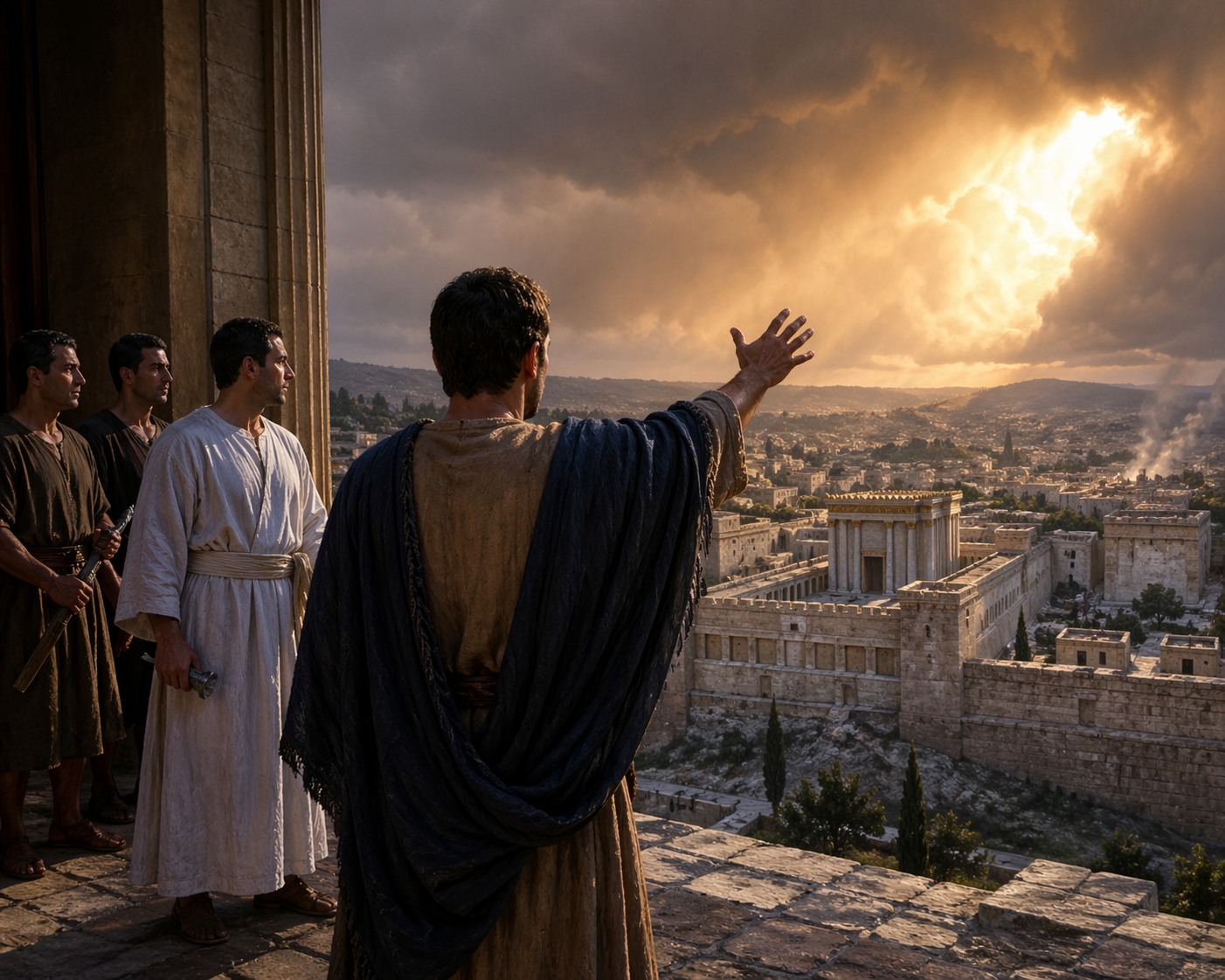
 Ezekiel sees six men come from the way of the higher gate, each with a “slaughter weapon in his hand.” Among them is another man “clothed with linen,” with “a writer’s inkhorn by his side” (Ezekiel 9:2). This man is commanded to go through Jerusalem and set a mark upon the foreheads of those “that sigh and that cry for all the abominations that be done in the midst thereof” (9:4).
This mark is not presented as salvation by works, but as the LORD’s recognition of those who truly grieved over sin. In a city filled with idolatry, violence, and corrupt worship, there were still some whose hearts were burdened over the dishonor done to God.
The six executioners are then commanded to slay without pity: “old and young, both maids, and little children, and women,” but not to come near any man upon whom was the mark (9:6). The judgment begins at the sanctuary: “begin at my sanctuary.” This is a fearful reminder that greater light brings greater accountability.
Ezekiel falls upon his face and cries, “Ah Lord GOD! wilt thou destroy all the residue of Israel in thy pouring out of thy fury upon Jerusalem?” (9:8). The LORD answers that the iniquity of Israel and Judah is “exceeding great,” the land is full of blood, and the city is full of perverseness (9:9). The people had claimed, “The LORD hath forsaken the earth, and the LORD seeth not.” But God did see, and He would recompense their way upon their head.
Doctrinal emphasis: God knows the difference between the hypocrite and the faithful remnant. He sees both public wickedness and private grief over sin.
Ezekiel 10 — The Glory of the LORD Begins to Depart
Ezekiel again sees the cherubims and the wheels, connected with the throne-like vision from Ezekiel 1. Above the firmament over the cherubims appears “as it were a sapphire stone, as the appearance of the likeness of a throne” (10:1). The man clothed in linen is commanded to go between the wheels under the cherub and fill his hand with coals of fire, scattering them over the city (10:2).
This pictures fiery judgment coming upon Jerusalem. The city that should have been filled with the glory of God is now marked for burning because of sin.
A major emphasis of this chapter is the movement of God’s glory. The glory of the LORD goes up from the cherub and stands over the threshold of the house (10:4). The house is filled with the cloud, and the court is full of the brightness of the LORD’s glory. Yet this glory is not coming to bless the temple; it is moving toward departure.
Ezekiel describes the cherubims, their wings, their wheels, and their living movement. He recognizes that these are the same living creatures he saw by the river Chebar (10:20). Their movement is perfectly ordered: “they turned not as they went” (10:11). God’s throne is not chaotic. Even judgment is administered with divine order, holiness, and authority.
By the end of the chapter, “the glory of the LORD departed from off the threshold of the house, and stood over the cherubims” (10:18). The cherubims lift up their wings, and the glory of God stands over them.
Doctrinal emphasis: The greatest tragedy in Jerusalem was not political collapse, military defeat, or national humiliation. The greatest tragedy was the departure of the glory of God. A people can keep their building, ceremonies, and religious vocabulary, yet lose the presence and blessing of the LORD.
Ezekiel 11 — Corrupt Princes, False Security, and the Promise of Restoration
Ezekiel is brought to the east gate of the LORD’s house, where he sees twenty-five men, including Jaazaniah the son of Azur and Pelatiah the son of Benaiah, princes of the people (11:1). These men are giving wicked counsel in the city. They say, “It is not near; let us build houses: this city is the caldron, and we be the flesh” (11:3).
Their meaning appears to be one of false security. They believed Jerusalem would protect them like a pot protects the meat inside. They dismissed Jeremiah’s warnings and refused to believe that judgment was near. But the LORD turns their own proverb against them. The slain in the city are the flesh, and Jerusalem is the caldron, but these corrupt leaders will be brought out and judged at the border of Israel (11:7–11).
As Ezekiel prophesies, Pelatiah dies. Ezekiel again falls on his face and cries, “Ah Lord GOD! wilt thou make a full end of the remnant of Israel?” (11:13). This shows Ezekiel’s heart as a prophet. He faithfully declares judgment, but he does not delight in destruction.
Then the LORD gives a word of hope. Though the people in Jerusalem despised the captives and said, “Get you far from the LORD,” God says of the exiles, “Yet will I be to them as a little sanctuary in the countries where they shall come” (11:16). This is a precious promise. The temple in Jerusalem was polluted, but God could still be a sanctuary to His scattered remnant.
The LORD also promises future restoration: “I will even gather you from the people,” and “I will give them one heart, and I will put a new spirit within you” (11:17, 19). He promises to take away the stony heart and give them a heart of flesh, that they may walk in His statutes and keep His ordinances (11:19–20). This looks forward to God’s gracious work of spiritual renewal, later echoed in Ezekiel 36.
The chapter ends with the glory of the LORD departing further: “the glory of the LORD went up from the midst of the city, and stood upon the mountain which is on the east side of the city” (11:23). Ezekiel is then brought back in vision to the captives in Chaldea, and he speaks to them all the things the LORD had showed him.
Doctrinal emphasis: God judges corrupt leadership, exposes false security, but preserves His covenant promises. Even in captivity, God can be a sanctuary to His people.
Ezekiel 12 — Ezekiel Acts Out the Captivity
The LORD tells Ezekiel that he dwells among “a rebellious house,” which have eyes to see and see not, ears to hear and hear not (12:2). Ezekiel is commanded to act out the coming exile before them.
He prepares “stuff for removing” by day, as though packing for captivity, and in the evening he digs through the wall and carries his goods out upon his shoulder in their sight (12:3–7). This sign is meant to show what will happen to the people of Jerusalem.
The LORD explains the sign plainly. The prince in Jerusalem, meaning Zedekiah, will bear his belongings upon his shoulder, go out by night, and have his face covered so he does not see the ground (12:12). The LORD says, “My net also will I spread upon him, and he shall be taken in my snare” (12:13). He will be brought to Babylon, yet he shall not see it, though he shall die there. This was fulfilled when Zedekiah was captured, saw his sons slain, had his eyes put out, and was carried to Babylon.
Ezekiel is also commanded to eat his bread with quaking and drink his water with trembling and carefulness (12:18). This pictures the fear, scarcity, and distress that would come upon the inhabitants of Jerusalem.
The people were using a proverb: “The days are prolonged, and every vision faileth” (12:22). In other words, they thought the warnings would never happen. God answers that He will make the proverb cease. The word of the LORD will no longer be delayed. “There shall none of my words be prolonged any more, but the word which I have spoken shall be done” (12:28).
Doctrinal emphasis: God’s warnings are not empty threats. Delayed judgment is not canceled judgment. When God speaks, His word stands.
Key People and Places
Ezekiel
The prophet of the LORD among the captives in Babylon. In these chapters, he sees visions of Jerusalem’s sin, God’s judgment, and the departure of God’s glory. Ezekiel is both a preacher and a sign to the people.
The Man Clothed with Linen
A heavenly figure in Ezekiel 9–10 with a writer’s inkhorn. He marks those who sigh and cry over Jerusalem’s abominations and later handles the coals of judgment. He represents divine administration, mercy toward the remnant, and judgment upon the guilty.
The Six Men with Slaughter Weapons
Heavenly agents of judgment commanded to go through Jerusalem after the marking of the faithful remnant. They show that God’s judgment is deliberate, not accidental.
The Marked Remnant
Those in Jerusalem who “sigh and cry” over the abominations in the city. They are not indifferent to sin. Their grief shows a heart aligned with the holiness of God.
The Cherubims
Heavenly beings connected with the glory and throne of God. Ezekiel identifies them with the living creatures he saw by the river Chebar. Their presence emphasizes God’s majesty, holiness, and sovereign rule.
Jaazaniah the Son of Azur
One of the princes seen at the east gate in Ezekiel 11. He is associated with wicked counsel and false confidence in Jerusalem.
Pelatiah the Son of Benaiah
Another prince of the people. He dies while Ezekiel prophesies, showing the seriousness and immediacy of God’s word.
The Princes of the People
Leaders in Jerusalem who gave wicked counsel and encouraged false security. They bear heavy responsibility for misleading the people.
Zedekiah
Though not named directly in Ezekiel 12, the “prince in Jerusalem” points to King Zedekiah. The prophecy of escape by night, capture, blindness, and removal to Babylon fits his later fall.
Jerusalem
The city under judgment. Though it contained the temple, it had become full of idolatry, bloodshed, perverseness, and false confidence.
The Temple / Sanctuary
The place where judgment begins. The temple had been polluted by abominations, and the glory of the LORD begins to depart from it.
Babylon / Chaldea
The place of captivity where Ezekiel ministers. Though far from Jerusalem, the captives are not beyond God’s reach. God promises to be “a little sanctuary” to them.
The Mountain East of the City
The place where the glory of the LORD stands after departing from the midst of Jerusalem. This likely refers to the Mount of Olives area, east of Jerusalem. It marks another stage in the tragic departure of God’s visible glory from the city.
Main Doctrinal or Spiritual Themes
1. God’s Judgment Begins with His Own House
The command in Ezekiel 9:6 is striking: “begin at my sanctuary.” The priests, leaders, and temple worshippers had greater privilege and therefore greater accountability. Religious position did not protect them from judgment.
This agrees with the broader biblical principle that God holds His people accountable for the light they have received. A church, preacher, or professing believer should never assume that outward religious connection excuses inward corruption.
2. God Sees Hidden Sin
The people said, “The LORD seeth us not; the LORD hath forsaken the earth” in Ezekiel 8:12, and the same attitude continues into chapter 9. They thought God was absent or unconcerned. But Ezekiel’s vision shows the opposite. God sees everything.
Private idolatry, corrupt leadership, false worship, violence, and unbelief are all open before Him.
3. God Preserves a Faithful Remnant
The marked ones in Ezekiel 9 show that even in a corrupt generation, God knows those who belong to Him. The faithful remnant is not marked by popularity, power, or outward success, but by a heart grieved over sin and loyal to the LORD.
This is an important conservative Baptist application: separation from sin is not pride; it is obedience when grounded in humility, truth, and love for God’s holiness.
4. The Glory of God Is More Important Than Religious Form
Ezekiel 10–11 shows the glory of the LORD departing from the temple and city. The Jews still had the outward structure, but the glory was leaving.
This is one of the most serious warnings in Scripture. A people may keep the name, the building, the pulpit, the services, and the ceremonies, while losing the power and blessing of God. The issue is not merely having religion, but having God’s presence.
5. False Security Is Deadly
The princes in Ezekiel 11 claimed Jerusalem was safe. They used religious and national confidence to dismiss the warnings of God. Their attitude was essentially, “Judgment is not near.”
False security is still dangerous today. People may trust in church membership, baptism, family heritage, morality, nationality, or religious activity while ignoring repentance and obedience to God.
6. God Judges Wicked Leadership
The princes in Ezekiel 11 are condemned because they gave wicked counsel. Leaders are responsible not only for their personal conduct but for how they influence others.
This applies to pastors, teachers, fathers, civil leaders, and anyone who guides others. A leader who encourages compromise, minimizes sin, or denies God’s warnings is a danger to the people.
7. God Can Be a Sanctuary Even in Exile
Ezekiel 11:16 is one of the tender promises in this section: “Yet will I be to them as a little sanctuary in the countries where they shall come.”
The captives had lost land, temple access, and national stability, but they had not lost God. This is a great comfort. Circumstances can change, but the LORD remains a refuge for His people.
8. God Promises Heart Transformation
Ezekiel 11:19–20 promises one heart, a new spirit, the removal of the stony heart, and the giving of a heart of flesh. This is not mere outward reform. It is inward spiritual renewal.
From a Baptist doctrinal standpoint, this points to the necessity of regeneration and genuine heart change. Man’s deepest need is not merely better surroundings, better government, or better rituals. He needs a changed heart.
9. God’s Word Will Come to Pass
In Ezekiel 12, the people mock prophetic warnings by saying, “The days are prolonged, and every vision faileth.” God answers that His word will not be delayed forever.
This teaches the certainty of Scripture. Men may mock, postpone, reinterpret, or ignore God’s warnings, but the word of the LORD stands.
Practical Applications or Lessons
1. Do Not Become Comfortable with Sin Around You
The marked people in Ezekiel 9 were those who sighed and cried over the abominations in Jerusalem. They were not entertained by sin, hardened to sin, or silent in heart about sin.
Believers today should grieve over what dishonors God: false worship, moral corruption, violence, pride, spiritual compromise, and indifference to truth.
2. Religious Privilege Increases Responsibility
Judgment began at the sanctuary. Those closest to spiritual things were judged first. This should sober every pastor, teacher, church worker, and longtime church member.
The more Bible truth a person has heard, the more accountable he is to obey it.
3. Never Mistake Delay for Escape
The people in Ezekiel 12 assumed that because judgment had not yet fully fallen, it would never come. That was a deadly mistake.
God’s patience is meant to lead men to repentance, not presumption. Delayed consequences do not mean God has forgotten.
4. Beware of Leaders Who Minimize God’s Warnings
The princes gave false counsel and encouraged the people to feel safe when judgment was at the door. This same danger exists whenever religious leaders soften sin, deny judgment, or replace Bible preaching with flattering words.
Faithful preaching must include God’s holiness, man’s sin, the need for repentance, and the hope of mercy.
5. The Presence of God Matters More Than Outward Success
Jerusalem still had its structures, leaders, and temple, but the glory of God was departing. A church may have activity, attendance, programs, and reputation, yet be in spiritual danger if God’s presence and truth are neglected.
The question is not merely, “Are we busy?” but, “Is God pleased?”
6. God Knows His Own in Dark Times
Even in corrupt Jerusalem, God knew those who mourned over sin. Faithfulness may be lonely, but it is never unnoticed by the LORD.
A believer should not measure faithfulness by majority opinion. God’s approval is greater than public acceptance.
7. A Changed Heart Is Essential
Ezekiel 11 shows that Israel’s ultimate need was not just return to the land, but a new heart and new spirit. Outward correction without inward transformation cannot produce true obedience.
This applies to salvation, sanctification, family life, and church life. The heart must be right with God.
8. Obedience Sometimes Requires Becoming a Sign to Others
In Ezekiel 12, Ezekiel had to act out the captivity in front of the people. His obedience may have looked strange, but it was God’s message.
Believers may sometimes have to live in a way that visibly testifies against the spirit of the age: modesty, separation, faithfulness to church, honest speech, biblical family order, and refusal to compromise.
9. God’s Mercy Remains Even in Judgment
Though these chapters are heavy with judgment, they are not without mercy. God marks the remnant, hears Ezekiel’s intercession, promises to be a sanctuary to the captives, and speaks of a future restored heart.
God’s judgment is holy, but He is not cruel. He remains faithful to His covenant promises.
Summary
Ezekiel 9–12 reveals the seriousness of Judah’s sin and the certainty of Jerusalem’s judgment. The LORD marks those who grieve over abomination, commands judgment to begin at the sanctuary, shows His glory departing from the polluted temple, condemns corrupt princes, and uses Ezekiel as a living sign of the coming captivity.
Yet in the middle of judgment, God gives hope. He promises to be “a little sanctuary” to His scattered people and to give them one heart and a new spirit. These chapters warn against false security, religious hypocrisy, and delayed obedience, while calling God’s people to holiness, repentance, spiritual grief over sin, and confidence in the unfailing word of the LORD.
Comments are closed