Chapter Summaries
Jeremiah 12
 Jeremiah begins this chapter with a complaint before the Lord that resembles the cries of other faithful men in Scripture who struggled to understand divine providence. He says, “Righteous art thou, O LORD, when I plead with thee,” yet asks, “Wherefore doth the way of the wicked prosper?” The prophet is troubled that men who are false in heart seem to flourish outwardly. They are near to God “in their mouth,” but far from Him “from their reins.” This chapter shows that even a godly prophet may bring hard questions to God, but he must do so reverently. Jeremiah does not deny God’s righteousness; he seeks understanding from it.
The Lord’s answer is not to explain every detail of His government, but to strengthen His servant for harder days ahead: “If thou hast run with the footmen, and they have wearied thee, then how canst thou contend with horses?” In other words, Jeremiah’s present trials are only the beginning. Greater opposition is coming. The mention of “the swelling of Jordan” points to dangerous and overwhelming conditions. The Lord is preparing Jeremiah for a more difficult ministry, not promising him an easier one. This is a sober reminder that faithfulness often leads into deeper conflict rather than immediate relief.
The chapter then turns to judgment upon Judah. God speaks of His “house” and “heritage” as those He must forsake because of their rebellion. Judah, which should have been precious to Him in covenant privilege, had become as a roaring lion against Him. The language is severe and sorrowful. The Lord is not acting out of injustice, but out of holy necessity. The people have abused covenant mercy and spurned repeated warnings.
The picture broadens as God speaks of the desolation of the land. Many pastors, meaning rulers, leaders, and shepherds over the nation, had destroyed His vineyard and trodden His portion under foot. What God planted for fruitfulness had been made a wilderness. The land mourns because “no man layeth it to heart.” That line reveals a major sin in Judah: spiritual insensibility. Judgment was falling, but the people would not take it seriously.
The chapter closes with a striking word about the nations around Judah. God would pluck up the evil neighbors who had touched His people’s inheritance, yet He also declares that if those nations would “diligently learn the ways of my people, to swear by my name, The LORD liveth,” they could be built in the midst of His people. But if they would not obey, they would be utterly destroyed. This reveals both God’s severity and His mercy. Even in judgment, the Lord leaves room for repentance. He is not the God of Judah only, but the Lord over all nations.
Jeremiah 13
Jeremiah 13 opens with one of the vivid acted prophecies that mark this book. The Lord commands Jeremiah to get a linen girdle, wear it, and then later hide it by Euphrates in a hole of the rock. After many days, he retrieves it, and it is “marred” and “profitable for nothing.” The meaning is then explained. Just as a girdle cleaves closely to a man, so God had caused Judah and Jerusalem to cleave unto Him, “that they might be unto me for a people, and for a name, and for a praise, and for a glory.” But they would not hear. Because of pride and stubbornness, the nation that should have adorned the name of the Lord had become spoiled.
The linen girdle likely points to intimacy, nearness, and usefulness. Linen also has associations with purity and priestly service. Judah was meant to be set apart for the Lord, but sin rendered that privilege corrupt. The lesson is plain: nearness to sacred things does not preserve a people who refuse obedience. Privilege without submission leads to ruin.
The next figure is that of bottles filled with wine. God says every bottle shall be filled with wine, and then explains that He will fill the inhabitants of the land with drunkenness, including kings, priests, prophets, and all the people. This is not literal encouragement toward drunkenness, but a figure of staggering confusion and judgment. They would be dashed one against another. The nation would lose moral and spiritual stability under the hand of God. Leaders and people alike would be caught up in the calamity.
Jeremiah then pleads, “Hear ye, and give ear; be not proud: for the LORD hath spoken.” Pride is one of the great sins singled out in this chapter. The people are urged to “give glory to the LORD your God, before he cause darkness.” This is a merciful appeal before judgment fully falls. The darkness suggests both national ruin and spiritual blindness. Jeremiah’s heart is plainly seen in verse 17: “mine eye shall weep sore, and run down with tears, because the LORD’S flock is carried away captive.” He is not a cold announcer of judgment; he is a weeping prophet.
The chapter also addresses the king and queen, calling them to humble themselves because their principalities shall come down. This likely points to the royal house facing humiliation as Babylon rises. The cities of the south would be shut up, and Judah would be carried away captive. Their sin had exposed them to shame. Their skirts would be discovered, and their heels made bare. These are strong expressions of disgrace and exposure.
The chapter ends with one of the most quoted questions in Jeremiah: “Can the Ethiopian change his skin, or the leopard his spots? then may ye also do good, that are accustomed to do evil.” The point is not that repentance is impossible with God, but that Judah, left to herself, is morally incapable of reforming her own sinful nature. Habitual sin had so mastered them that they could not cure themselves. This agrees with the broader Bible truth that man is a sinner by nature and practice, needing divine grace, not mere self-reformation. The chapter closes with the certainty of judgment because of their lewdness, whoredom, and spiritual uncleanness.
Jeremiah 14
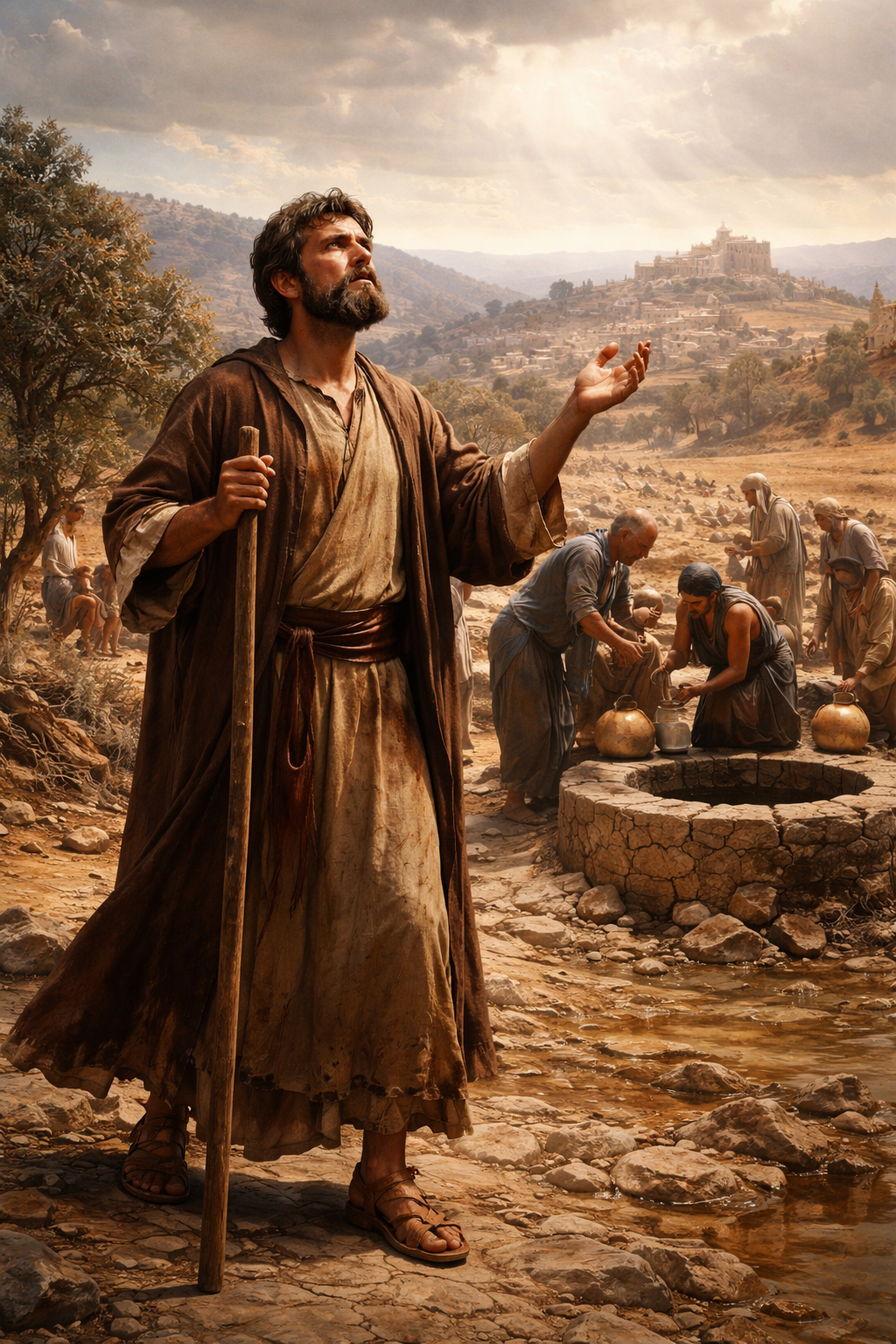
Jeremiah 14 deals first with a grievous drought in the land. The physical drought is both a literal calamity and a sign of divine displeasure. Judah mourns, the gates languish, the nobles send their little ones for water and find none, the plowmen are ashamed, and even the hind in the field forsakes her young because there is no grass. Wild asses stand on the high places gasping for air. The description is vivid and heartbreaking. God’s curse touches the land itself. This fits the covenant framework of the Old Testament, where national obedience or disobedience affected the agricultural and social life of Israel.
Jeremiah confesses on behalf of the people: “O LORD, though our iniquities testify against us, do thou it for thy name’s sake.” He acknowledges that their backslidings are many and that they have sinned against the Lord. This is an important mark of true intercession. He does not excuse sin. He names it. He appeals not to the people’s merit, but to God’s name and covenant mercy. He asks why God should be “as a stranger in the land,” and pleads with Him not to leave His people.
Yet the Lord’s response is severe. He says, “Thus have they loved to wander, they have not refrained their feet.” Therefore He will remember their iniquity and visit their sins. Then comes a striking command: “Pray not for this people for their good.” This shows that Judah had reached a stage of hardness where the announced judgment would not be turned away. There are moments in prophetic history when God declares that chastening must proceed. This does not deny the value of prayer in general, but it does show that persistent rebellion can bring a people to irreversible temporal judgment.
The Lord further rejects their external religious acts: “When they fast, I will not hear their cry; and when they offer burnt offering and an oblation, I will not accept them.” Ceremony without repentance is offensive to God. He will consume them by sword, famine, and pestilence. This threefold judgment appears repeatedly in Jeremiah and emphasizes the completeness of coming calamity.
Jeremiah then raises the issue of the false prophets, who were saying, “Ye shall not see the sword, neither shall ye have famine; but I will give you assured peace in this place.” God answers plainly that these prophets prophesy lies in His name. He did not send them. Their visions were false, and they themselves would perish by the very judgments they denied. The people who listened to them would also be cast out because of famine and sword. This is a strong warning against religious deception. A soothing message that contradicts the Word of God is not mercy but destruction.
The chapter closes with Jeremiah’s lament. He describes brokenness among the people and asks whether the Lord has utterly rejected Judah. He confesses, “We acknowledge, O LORD, our wickedness, and the iniquity of our fathers.” He calls on God not to disgrace the throne of His glory and asks Him to remember His covenant. The final verse contrasts the living God with idols: “Are there any among the vanities of the Gentiles that can cause rain?” The implied answer is no. Only the Lord controls heaven and earth. Therefore His people should wait upon Him. Even in sorrow, the prophet ends in a God-centered confession.
Key People and Places
Jeremiah
The prophet of the Lord, faithful in message and tender in spirit. In these chapters he questions, obeys, warns, weeps, and intercedes.
The LORD
The covenant God of Israel, righteous in judgment, patient in warning, and sovereign over nations, weather, kings, and history.
Judah
The southern kingdom, the immediate object of Jeremiah’s ministry. Though highly privileged, she is guilty of pride, hypocrisy, idolatry, and stubborn refusal to repent.
Jerusalem
The capital city and spiritual center of Judah, yet corrupt in heart and destined for humiliation and captivity because of sin.
The wicked in Judah
Those who prosper outwardly in Jeremiah 12 despite inward corruption. Their apparent success troubles the prophet.
Pastors / shepherds / leaders
In Jeremiah 12, these are rulers and leaders who have ruined God’s vineyard. The term does not refer to New Testament church pastors in office, but to shepherd-like leaders over the nation.
The king and queen
Likely the royal house of Judah, called in Jeremiah 13 to humble themselves because their crown is falling.
Priests
Religious leaders who should have taught truth, yet are included among those under judgment.
False prophets
A major force of deception in Jeremiah 14. They promised peace where God had pronounced judgment.
Neighboring nations
Mentioned in Jeremiah 12 as nations around Judah who had touched Israel’s inheritance. They too are subject to God’s judgment, though mercy is available upon repentance.
Euphrates
The river region named in Jeremiah 13 in the sign of the girdle. It also fits the wider Babylonian setting, since Babylon was associated with that region.
The land of Judah
The physical land suffers drought, desolation, and coming devastation because of the people’s sins.
The cities of the south
Mentioned in Jeremiah 13 as being shut up, indicating the spread of coming national distress.
Jordan
Its “swelling” in Jeremiah 12 is used figuratively for dangerous and intensified trial.
Main Doctrinal or Spiritual Themes
1. God’s righteousness even when the wicked prosper
Jeremiah 12 addresses one of the recurring questions of Scripture: why do the ungodly seem to flourish? The answer is not that God is indifferent, but that His judgments come in His time. His righteousness is never compromised.
2. The preparation of God’s servants through trial
The Lord’s word about footmen and horses teaches that present burdens may be preparing God’s servants for greater tests ahead. God strengthens His people not by removing all conflict, but by deepening endurance and dependence.
3. Covenant privilege does not excuse covenant disobedience
Judah had been brought near to God, like the girdle clinging to a man, yet nearness without obedience made their guilt greater. Light rejected brings heavier accountability.
4. Pride as a root sin
Jeremiah 13 especially highlights pride. The call is, “be not proud.” Pride hardens the heart against warning, prevents repentance, and invites humiliation from God.
5. The corruption and helplessness of sinful man
“Can the Ethiopian change his skin, or the leopard his spots?” This reveals the depth of habitual sin. Man cannot reform his sinful heart by his own strength. He needs the intervention and mercy of God.
6. The certainty of divine judgment upon persistent sin
These chapters repeatedly show that God’s warnings are not empty threats. Sword, famine, captivity, drought, and shame all demonstrate that the Lord truly judges unrepentant sin.
7. The danger of false preaching
Jeremiah 14 shows the destructive power of false prophets who preach peace where there is no peace. This theme runs throughout Jeremiah and remains doctrinally important: any message that contradicts God’s revealed Word is false, no matter how comforting it sounds.
8. The vanity of idols and the sovereignty of the living God
Idols cannot send rain, save nations, or alter judgment. Only the Lord rules creation. This theme is especially clear in the closing section of chapter 14.
9. The sorrowing heart of a true prophet
Jeremiah’s tears show that speaking truth and grieving over sin belong together. Faithful ministry is not merely bold; it is brokenhearted.
10. Mercy offered even in the setting of judgment
In Jeremiah 12, even foreign nations are told they may be built if they learn the ways of the Lord. God’s judgments are real, but His mercy is also real toward those who truly turn to Him.
Practical Applications or Lessons
1. Bring hard questions to God reverently
Jeremiah teaches believers that it is not wrong to ask God honest questions, provided we do so with humility and faith. Reverence must govern our struggles.
2. Do not mistake temporary prosperity for divine approval
The wicked may prosper for a season, but outward ease is not proof of God’s favor. A believer must judge things by the Word of God, not by appearances.
3. Expect spiritual conflict in faithful service
If God has called a man to stand for truth, he should not assume the path will become easier with time. The Lord may be training him for greater battles.
4. Pride must be dealt with quickly
Pride keeps people from listening, repenting, and giving glory to God. Humility is a necessary mark of spiritual health.
5. Religious profession without obedience is worthless
Judah had rituals, leaders, and sacred history, yet God rejected their worship because their hearts were false. The same principle applies today: outward religion without inward submission is empty.
6. Sin hardens when indulged
Those “accustomed to do evil” become increasingly fixed in sinful patterns. This is why repentance should never be delayed. The longer sin is embraced, the stronger its grip becomes.
7. Beware of teachers who only say what people want to hear
False prophets promised peace instead of truth. Believers must test every message by Scripture, not by popularity, comfort, or personality.
8. God may use outward troubles to expose inward sin
The drought in Jeremiah 14 was a national crisis with spiritual meaning. Trials today should move believers to self-examination, repentance, and renewed dependence upon God.
9. Intercession should include confession
Jeremiah confessed sin plainly when he prayed. Effective spiritual pleading does not excuse wrongdoing; it acknowledges guilt and appeals to God’s mercy.
10. Wait upon the living God, not human substitutes
The chapter’s final thought is powerful: idols cannot send rain. Men still trust false saviors today—systems, leaders, money, emotion, or religion—but help comes from the Lord alone.
11. True preaching includes both warning and tears
Jeremiah did not soften God’s message, but neither did he deliver it carelessly. A faithful servant should speak plainly and love deeply.
12. God is just in judgment and merciful in His calls to repent
These chapters hold both truths together. God is not unjust when He chastens sin, and He is gracious whenever He warns before judgment falls.
Comments are closed