Chapter Summaries
Isaiah 32 — The Righteous King and Coming Peace
 This chapter looks beyond the immediate historical setting and presents a prophetic vision of a righteous reign.
- “Behold, a king shall reign in righteousness, and princes shall rule in judgment” (32:1).
This points ultimately to the Messiah, the Lord Jesus Christ, and His millennial kingdom. - The spiritual blindness of the people is addressed:
“The eyes of them that see shall not be dim… the heart also of the rash shall understand knowledge” (32:3–4). - A contrast is drawn between the vile person and the liberal (noble) man, showing God’s moral order.
- The women of Jerusalem are warned of coming judgment and desolation due to complacency:
“Rise up, ye women that are at ease… many days and years shall ye be troubled” (32:9–10). - The turning point comes with the promise:
“Until the spirit be poured upon us from on high” (32:15).
This indicates a future outpouring tied to restoration. - The result is righteousness, peace, and quiet assurance:
“The work of righteousness shall be peace” (32:17).
Doctrinal note: This chapter blends near judgment with a far-reaching prophetic view of the millennial reign of Christ, consistent with conservative Baptist interpretation.
Isaiah 33 — Judgment on Assyria and the Glory of Zion
This chapter addresses the oppressor (historically Assyria) and points to God’s deliverance.
- “Woe to thee that spoilest, and thou wast not spoiled” (33:1) — a warning to Assyria.
- A prayer for grace:
“O LORD, be gracious unto us; we have waited for thee” (33:2). - God rises in judgment:
“Now will I rise, saith the LORD… now will I lift up myself” (33:10). - The sinners in Zion are afraid, asking:
“Who among us shall dwell with the devouring fire?” (33:14).
The answer: those who walk righteously. - A vision of the King:
“Thine eyes shall see the king in his beauty” (33:17).
This points beyond Hezekiah to Christ in His glory. - Jerusalem is described as secure:
“Look upon Zion… a quiet habitation” (33:20). - The LORD is declared as judge, lawgiver, and king:
“He will save us” (33:22).
Doctrinal note: The chapter foreshadows both the fall of Assyria and the future reign of Christ in Jerusalem.
Isaiah 34 — Judgment Upon the Nations (Edom as a Type)
This chapter presents a sweeping judgment on all nations, with Edom as a representative example.
- “The indignation of the LORD is upon all nations” (34:2).
- Cosmic judgment imagery:
“All the host of heaven shall be dissolved” (34:4), indicating end-times wrath. - Edom is singled out:
“My sword shall be bathed in heaven: behold, it shall come down upon Idumea” (34:5). - The land becomes desolate and burning:
“It shall not be quenched night nor day” (34:10). - Wild creatures inhabit the ruins, showing total desolation.
- The certainty of prophecy is emphasized:
“Seek ye out of the book of the LORD, and read: no one of these shall fail” (34:16).
Doctrinal note: This chapter aligns with future tribulation judgment and God’s final dealing with rebellious nations.
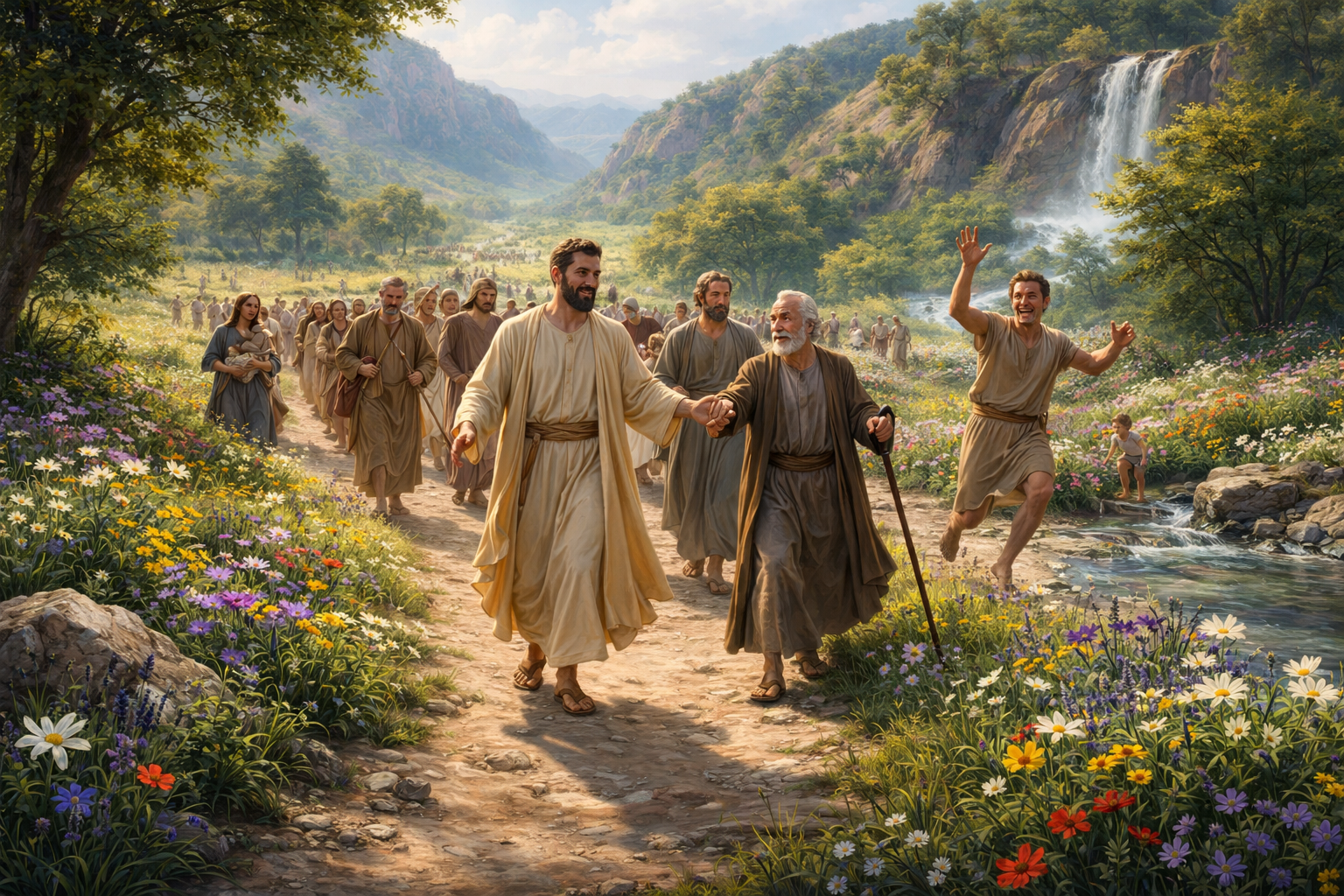
Isaiah 35 — The Restoration and Glory of the Kingdom
A complete contrast to chapter 34, this chapter presents restoration and blessing.
- “The wilderness and the solitary place shall be glad… and blossom as the rose” (35:1).
- The glory of the LORD transforms creation:
“They shall see the glory of the LORD” (35:2). - Encouragement to the fearful:
“Be strong, fear not: behold, your God will come… he will come and save you” (35:4). - Miraculous healing:
“The eyes of the blind shall be opened… the lame man leap as an hart” (35:5–6).
These were partially fulfilled in Christ’s earthly ministry and point to full millennial restoration. - Waters in the desert symbolize life and blessing.
- The “highway of holiness” appears:
“The unclean shall not pass over it… but the redeemed shall walk there” (35:8). - Final joy:
“The ransomed of the LORD shall return… everlasting joy upon their heads” (35:10).
Doctrinal note: This is a clear picture of the millennial kingdom—restoration, holiness, joy, and the visible reign of God.
Key People and Places
- The King (Isaiah 32:1; 33:17)
Ultimately the Messiah, Jesus Christ, ruling in righteousness. - Assyria
The historical oppressor of Judah; also a type of future enemies of God’s people. - Zion / Jerusalem
The center of God’s earthly kingdom; both historical and prophetic significance. - Edom (Idumea)
A nation often hostile to Israel; here representing the nations under divine judgment. - The Wilderness / Desert
Symbol of desolation transformed into blessing in the kingdom age. - The Highway of Holiness
A prophetic image of redeemed access and righteous living in the kingdom.
Main Doctrinal or Spiritual Themes
- The Righteous Reign of Christ
Christ will reign in righteousness, bringing justice, clarity, and peace (Isaiah 32; 33). - Judgment Before Blessing
God judges sin (Isaiah 34) before establishing His kingdom (Isaiah 35). - The Outpouring of the Spirit
Spiritual renewal precedes national restoration (Isaiah 32:15). - Holiness and Separation
Only the righteous dwell with God (Isaiah 33:14–15; 35:8). - The Certainty of God’s Word
“No one of these shall fail” (Isaiah 34:16). - Millennial Restoration
Physical, spiritual, and environmental renewal under Christ’s reign (Isaiah 35).
Practical Applications or Lessons
- Do not trust in outward security or complacency
Like the “women that are at ease” (32:9), believers must remain spiritually alert. - Righteous living matters
Only those who “walketh righteously” can stand before God (33:15). - God will judge sin completely
Nations and individuals alike are accountable (Isaiah 34). - Hope is anchored in Christ’s coming kingdom
Even in judgment, God’s ultimate plan is restoration and joy (Isaiah 35). - Spiritual transformation is essential
The pouring out of the Spirit reminds us that true change comes from God, not human effort. - Encourage the fainthearted
“Be strong, fear not” (35:4) — a timeless exhortation for believers facing trials.
Comments are closed