Chapter Summaries
Psalm 135
Major Flow and Content
 Psalm 135 is a call to praise: “Praise ye the LORD. Praise ye the name of the LORD; praise him, O ye servants of the LORD” (v.1). It summons those who “stand in the house of the LORD” (v.2), likely temple worshippers in Jerusalem.
The psalm emphasizes:
- God’s sovereign election — “For the LORD hath chosen Jacob unto himself” (v.4).
- God’s absolute sovereignty — “Whatsoever the LORD pleased, that did he in heaven, and in earth” (v.6).
- God’s power in creation and providence — controlling vapours, lightning, wind (v.7).
- God’s deliverance of Israel — striking Egypt’s firstborn (v.8–9), defeating Sihon and Og (v.10–11).
- The vanity of idols — “They have mouths, but they speak not” (v.16–17).
The psalm ends with renewed calls for Israel, the house of Aaron, the house of Levi, and all that fear the LORD to bless Him (v.19–21).
Doctrinal Emphasis: The living God alone is worthy of worship; idols are lifeless and powerless. This strongly affirms biblical separation from false worship.
Psalm 136
This psalm is structured around the repeated refrain:
“For his mercy endureth for ever.”
It recounts:
- God’s greatness above all gods (v.2–3).
- His creation of heaven, earth, sun, moon, and stars (v.4–9).
- His redemption of Israel from Egypt (v.10–15).
- His guidance through the wilderness (v.16).
- His victories over kings (v.17–20).
- His covenant faithfulness in giving the land (v.21–22).
The psalm concludes with present-tense mercy:
“Who remembered us in our low estate” (v.23).
“Who giveth food to all flesh” (v.25).
Doctrinal Emphasis: God’s covenant mercy (Hebrew chesed) is enduring, covenantal, and unfailing.
Psalm 137
A psalm of exile: “By the rivers of Babylon, there we sat down, yea, we wept” (v.1).
Key elements:
- Captivity sorrow.
- Refusal to sing the LORD’s song in a strange land (v.4).
- Oath never to forget Jerusalem (v.5–6).
- A cry for divine justice against Edom and Babylon (v.7–9).
The imprecatory closing reflects a desire for righteous judgment—not personal vengeance but covenant justice.
Doctrinal Emphasis: God’s people must never forget Zion. Righteous indignation against evil aligns with God’s justice.
Psalm 138
A psalm of David giving wholehearted praise:
“I will praise thee with my whole heart” (v.1).
Themes include:
- Bold worship “before the gods” (v.1).
- Confidence in answered prayer (v.3).
- God’s exalted word — “thou hast magnified thy word above all thy name” (v.2).
- God’s regard for the lowly (v.6).
- Assurance of divine preservation (v.7–8).
Doctrinal Emphasis: The supremacy of God’s Word and His personal care for believers.
Psalm 139
A profound meditation on God’s omniscience and omnipresence.
- God’s exhaustive knowledge: “O LORD, thou hast searched me, and known me” (v.1).
- God’s omnipresence: “Whither shall I go from thy spirit?” (v.7).
- God’s creative power in the womb (v.13–16).
- God’s righteous hatred of evil (v.21–22).
- A prayer for heart-examination: “Search me, O God” (v.23–24).
Doctrinal Emphasis: The sanctity of life, divine sovereignty, personal holiness.
Psalm 140
A prayer for deliverance from evil men. David describes violent and deceitful enemies (v.1–5).
Key themes:
- Confidence that “the LORD is my God” (v.6).
- God as defender in battle (v.7).
- Assurance that evil will not ultimately triumph (v.11–13).
Psalm 141
A prayer for guarded speech and righteous association.
- “Set a watch, O LORD, before my mouth” (v.3).
- Desire to avoid wicked companionship (v.4).
- Acceptance of righteous rebuke (v.5).
A believer’s life must be disciplined in speech and separated from evil.
Psalm 142
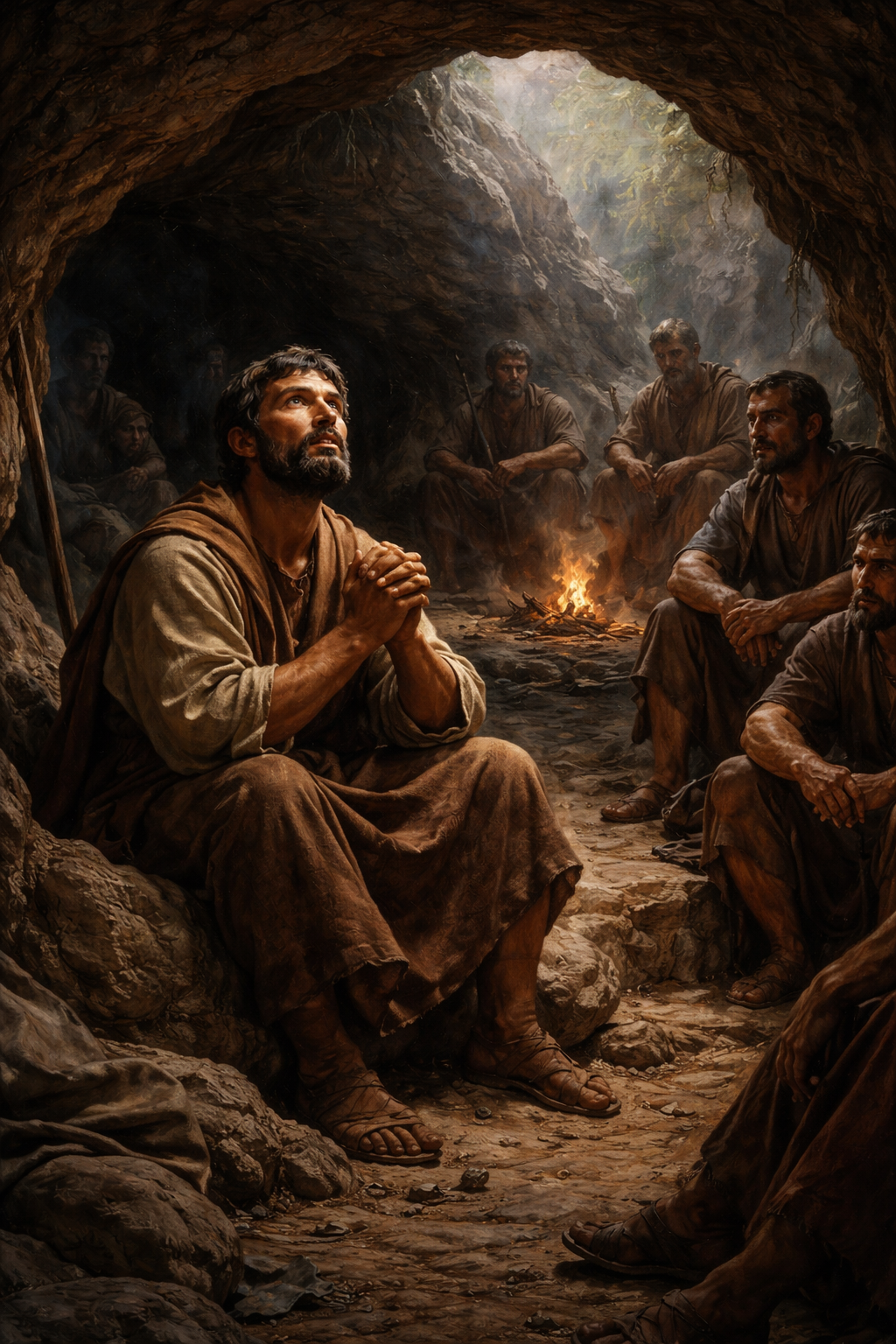
A “Maschil of David; A Prayer when he was in the cave.”
Likely referencing David’s time in the cave of Adullam or En-gedi (1 Samuel 22; 24).
- “I cried unto the LORD with my voice” (v.1).
- “No man cared for my soul” (v.4).
- God as refuge and portion (v.5).
- Hope for future praise (v.7).
Doctrinal Emphasis: God’s sufficiency in isolation and distress.
Key People and Places
- David — Author of Psalms 138–142; king of Israel; fugitive during portions referenced.
- Jacob / Israel — God’s covenant people (Psalm 135).
- Egypt — Place of bondage (Psalms 135–136).
- Sihon and Og — Amorite kings defeated in conquest (Psalm 136).
- Babylon — Place of exile (Psalm 137).
- Jerusalem / Zion — Center of worship and covenant identity.
- Edom — Hostile nation allied with Babylon (Psalm 137).
- The Cave (Adullam or En-gedi) — David’s place of refuge (Psalm 142).
Main Doctrinal or Spiritual Themes
- The Sovereignty of God — Over creation, nations, history (135–136).
- The Enduring Mercy of God — Covenant faithfulness (136).
- Separation from Idolatry — Idols are lifeless; worship belongs to God alone (135).
- Righteous Judgment — God will deal justly with oppressors (137, 140).
- The Authority of God’s Word — “Magnified thy word” (138).
- Omniscience and Omnipresence — God sees and knows all (139).
- Sanctity of Human Life — Fearfully and wonderfully made (139).
- Personal Holiness and Guarded Speech — Disciplined living (141).
- God as Refuge — Especially in isolation and persecution (142).
Practical Applications or Lessons
- Praise must be continual and informed by doctrine — Worship is grounded in who God is and what He has done.
- God’s mercy is not temporary but enduring — Believers rest in covenant faithfulness.
- Never forget your spiritual Jerusalem — Maintain loyalty to God even in hostile culture.
- Trust the sufficiency of Scripture — God magnifies His Word.
- Live consciously before an all-seeing God — This promotes holiness.
- Guard your speech carefully — Pray for disciplined lips.
- Accept godly correction — “Let the righteous smite me; it shall be a kindness” (141:5).
- When isolated, cry to God, not men — He is your refuge and portion.
Comments are closed