
Chapter Summaries
2 Chronicles 10 — The Division of the Kingdom
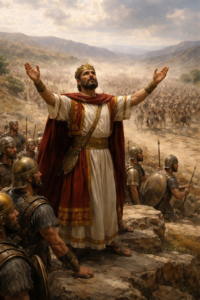 After Solomon’s death, Rehoboam travels to Shechem to be made king. The people, led by Jeroboam, request relief from the heavy burdens imposed during Solomon’s later reign. Rehoboam rejects the wise counsel of the older men and instead follows the rash advice of younger counselors, promising harsher rule: “My little finger shall be thicker than my father’s loins” (10:10).
This prideful decision fulfills God’s judgment, and ten tribes rebel, forming the northern kingdom of Israel under Jeroboam. Rehoboam reigns only over Judah and Benjamin. The chronicler emphasizes that “the cause was of God” (10:15), showing divine sovereignty even in human folly.
Doctrinal background: God uses human choices—both wise and foolish—to accomplish His purposes without endorsing sin.
2 Chronicles 11 — God Preserves Judah
Rehoboam initially prepares to reclaim the northern tribes by force, but Shemaiah the man of God delivers God’s command to desist. Rehoboam obeys, preventing civil war.
Rehoboam strengthens Judah through fortified cities and benefits from the migration of faithful priests and Levites who reject Jeroboam’s idolatrous system. Judah prospers spiritually and politically during these early years because true worship remains centered on the LORD.
2 Chronicles 12 — Decline Through Compromise
When Rehoboam’s kingdom is established, he forsakes the law of the LORD, and the nation follows. As judgment, Shishak king of Egypt invades Jerusalem, plundering the temple treasures—including the gold shields Solomon made.
Rehoboam and the princes humble themselves, and God shows mercy by sparing total destruction. However, the chronicler records a sober evaluation: “He did evil, because he prepared not his heart to seek the LORD” (12:14).
Doctrinal emphasis: Partial humility brings limited mercy, but spiritual inconsistency leads to lasting weakness.
2 Chronicles 13 — Abijah Defends God’s Covenant
Abijah, Rehoboam’s son, confronts Jeroboam in battle. Though Abijah is personally flawed, he appeals publicly to God’s covenant with David, the legitimacy of the Aaronic priesthood, and proper temple worship.
When Judah cries unto the LORD, God grants victory over Israel despite Judah’s smaller force. The text clearly attributes the triumph to faith in God, not military strength.
2 Chronicles 14 — Asa’s Early Reforms and Victory
Asa, Abijah’s son, initiates strong reforms: removing idols, restoring the altar, and commanding Judah to seek the LORD. The land enjoys peace for ten years.
When Zerah the Ethiopian invades with a vast army, Asa prays one of the clearest faith-filled prayers in Chronicles: “It is nothing with thee to help, whether with many, or with them that have no power” (14:11). God grants a decisive victory, underscoring reliance upon Him alone.
Key People and Places
- Rehoboam — Son of Solomon; his pride leads to national division.
- Jeroboam — Leader of the northern rebellion; later promotes false worship.
- Shemaiah — Prophet who restrains civil war through God’s word.
- Shishak (Egypt) — Instrument of God’s chastisement.
- Abijah — King of Judah who appeals to covenant truth despite personal weakness.
- Asa — God-seeking reformer king; model of early obedience.
- Jerusalem — Center of true worship and Davidic authority.
- Shechem — Site of the kingdom’s division.
- Mount Zemaraim — Battlefield where God gives victory to Judah.
Main Doctrinal or Spiritual Themes
- God’s Sovereignty Over Nations
- The Danger of Pride and Ungodly Counsel
- True Worship vs. Religious Corruption
- The Blessing of Obedience
- Judgment Tempered with Mercy
- Victory Through Faith, Not Numbers
These chapters strongly affirm conservative Baptist doctrines of biblical authority, separation from false worship, personal accountability, and God-honoring leadership.
Practical Applications or Lessons
- Leaders must seek godly counsel grounded in Scripture.
- Compromise in worship always weakens a nation spiritually.
- God honors humility but desires consistent obedience.
- Faithful prayer precedes true victory.
- External strength cannot replace inward devotion to God.
Comments are closed