
Chapter Summaries
2 Kings 14 — Amaziah of Judah and Jeroboam II of Israel
 Amaziah King of Judah (14:1–22)
Amaziah, son of Joash, reigns in Judah. The Scripture states plainly that he “did that which was right in the sight of the LORD, yet not like David his father” (v.3). He obeys the Mosaic Law by executing his father’s assassins but not killing their children, in accordance with Deuteronomy (v.6). This shows partial obedience rooted in God’s Word.
Amaziah defeats Edom in the Valley of Salt, but his success leads to pride. He brings back the gods of Edom and worships them, provoking the LORD to anger (v.10–14). This spiritual compromise marks his downfall.
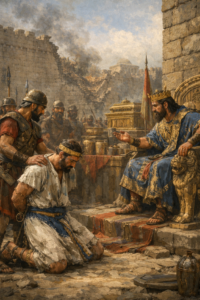
Amaziah challenges Jehoash king of Israel. Jehoash responds with the parable of the thistle and the cedar, warning Amaziah against pride. Amaziah ignores the warning, and Judah is defeated at Beth-shemesh. Jerusalem’s wall is broken down, the temple and palace treasures are taken, and Amaziah is humiliated (v.8–14). Later, Amaziah flees to Lachish, where he is assassinated.
His son Azariah (Uzziah) succeeds him.
Jeroboam II King of Israel (14:23–29)
Jeroboam II reigns in Israel and continues the sins of Jeroboam the son of Nebat. Despite his wickedness, the LORD uses him to restore Israel’s borders according to the word spoken by Jonah the prophet. This demonstrates God’s mercy toward a suffering nation—not approval of sin, but compassion for their affliction (v.26–27).
2 Kings 15 — Azariah (Uzziah) and Rapid Decline in Israel
Azariah (Uzziah) King of Judah (15:1–7)
Azariah reigns fifty-two years and does what is right in the LORD’s sight, yet the high places remain. The LORD smites him with leprosy, and he lives isolated until death, while his son Jotham governs. Scripture elsewhere clarifies that this judgment followed unlawful intrusion into the priest’s office. God’s holiness is emphasized: even good kings are not above divine order.
Instability in Israel (15:8–31)
This chapter records a rapid succession of kings in Israel—Zechariah, Shallum, Menahem, Pekahiah, and Pekah—marked by assassinations, violence, and political chaos. The northern kingdom is unraveling under God’s judgment.
Menahem secures his throne by brutality and buys Assyrian support with heavy tribute, taxing Israel severely. This marks Israel’s increasing submission to pagan powers rather than repentance toward God.
Jotham King of Judah (15:32–38)
Jotham reigns righteously and strengthens Judah, but again the high places remain. Despite faithful leadership, the seeds of judgment are growing as external threats increase.
2 Kings 16 — Ahaz and Apostasy in Judah
Ahaz King of Judah (16:1–20)
Ahaz represents a sharp spiritual decline. He does not do right in the sight of the LORD, walking instead in the ways of the kings of Israel. He practices idolatry, sacrifices to false gods, and even causes his son to pass through the fire (v.3), a direct violation of God’s law.
When attacked by Syria and Israel, Ahaz turns not to the LORD but to Assyria, sending silver and gold from the temple as tribute. He allies with a pagan king rather than trusting God.
Ahaz visits Damascus and copies a pagan altar, replacing the LORD’s altar in the temple. This is a blatant corruption of worship. He rearranges temple furniture and alters priestly practices to suit political convenience, demonstrating total disregard for God’s holiness.
Ahaz dies spiritually compromised, leaving Judah weakened and corrupted.
Key People and Places
- Amaziah (Judah) — Obedient in part, destroyed by pride and idolatry
- Jehoash (Israel) — Instrument of God’s judgment against Judah
- Jeroboam II (Israel) — Wicked king used by God to show national mercy
- Azariah / Uzziah (Judah) — Long reign, judged for violating God’s priestly order
- Jotham (Judah) — Godly king with incomplete reform
- Ahaz (Judah) — Apostate king who corrupts worship and trusts Assyria
- Jerusalem — Humiliated, breached, and spiritually compromised
- Beth-shemesh — Site of Judah’s defeat
- Damascus — Center of pagan influence adopted by Ahaz
- Assyria — Rising Gentile power used as God’s rod of judgment
Main Doctrinal or Spiritual Themes
- Partial Obedience Is Disobedience
Doing right “but not fully” leads to compromise and eventual judgment. - Pride Precedes Destruction
Amaziah’s fall illustrates Proverbs 16:18 in historical form. - God’s Sovereignty Over Nations
God uses both godly and ungodly rulers to accomplish His purposes. - Holiness of Worship
Unauthorized worship brings judgment, even upon otherwise faithful men. - Judgment Through Political Collapse
Israel’s instability reflects divine judgment for persistent sin. - The Danger of Worldly Alliances
Trusting pagan powers instead of God accelerates spiritual ruin.
Practical Applications or Lessons
- Obedience must be complete, not selective.
- Success can become a spiritual test more dangerous than hardship.
- God’s mercy toward a nation does not excuse its sin.
- Worship must be regulated by God’s Word, not cultural convenience.
- Leaders who compromise truth weaken God’s people.
- Trust in worldly solutions leads to spiritual decay.
- God’s judgment is often gradual but always just.
Comments are closed