Chapter Summaries
2 Kings 6
 This chapter continues the prophetic ministry of Elisha, emphasizing the unseen power of God and His sovereign control over nations.
-
The floating axe head (6:1–7):
The sons of the prophets labor together, and when a borrowed axe head falls into the Jordan, Elisha causes the iron to float. This event demonstrates God’s concern for honest stewardship and His power over natural law. The miracle affirms that God is involved even in the practical needs of His servants. -
Elisha and the Syrian army (6:8–23):
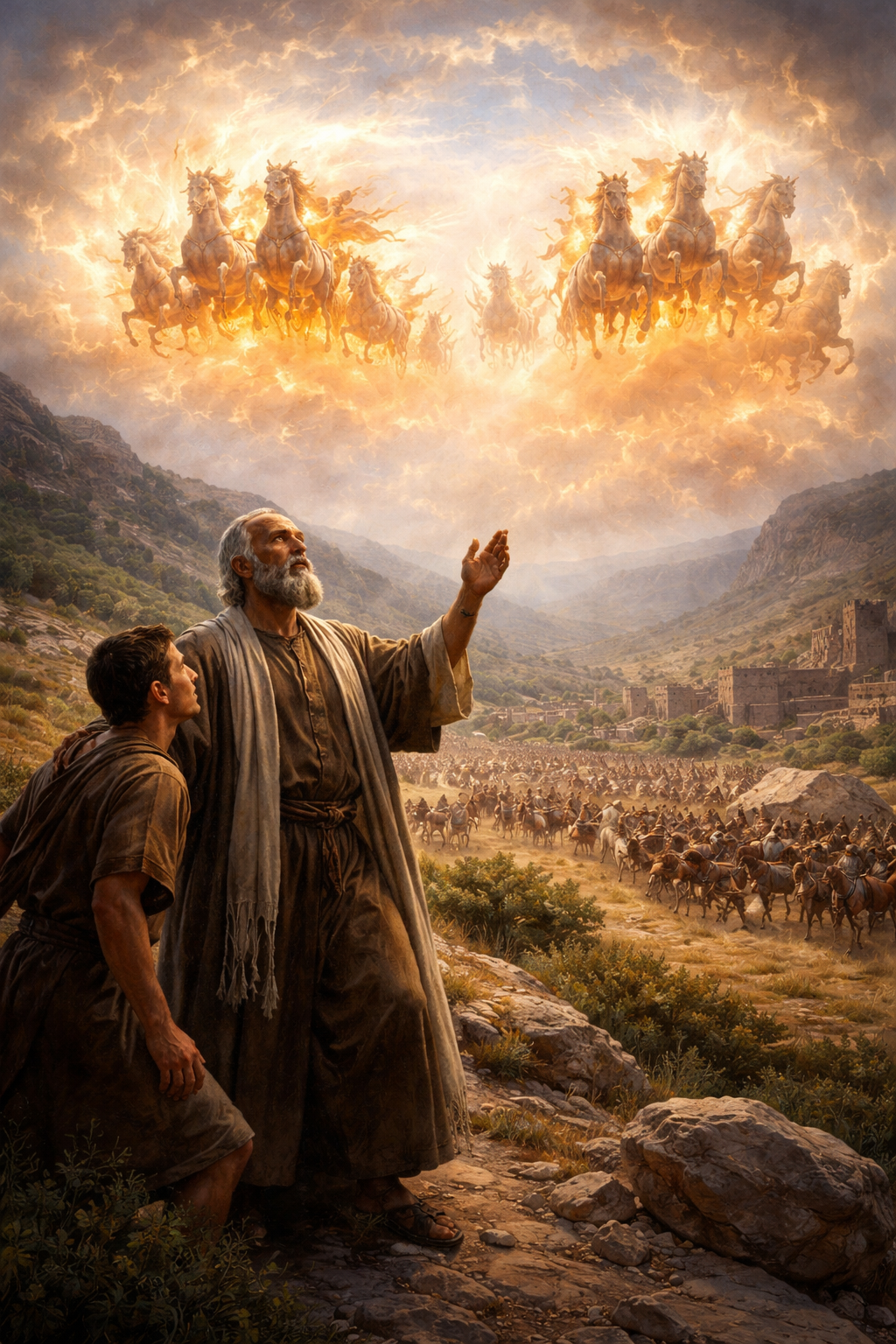
The king of Syria repeatedly plots against Israel, but God reveals the plans to Elisha, who warns Israel. When the Syrians surround Dothan, Elisha’s servant fears, but Elisha prays, “LORD, I pray thee, open his eyes, that he may see.” The mountain is full of horses and chariots of fire. God then blinds the Syrian army, leading them into Samaria, where Elisha instructs mercy instead of slaughter. This demonstrates divine protection, spiritual sight versus fleshly fear, and God’s restraint in judgment. -
Famine in Samaria (6:24–33):
Ben-hadad besieges Samaria, producing horrific famine conditions. The chapter ends with the king of Israel blaming Elisha rather than repenting, revealing the hardness of the nation’s heart despite repeated divine mercies.
2 Kings 7
This chapter displays God’s deliverance accomplished entirely by His power.
-
Elisha’s prophecy of deliverance (7:1–2):
Elisha foretells abundance within a day. A lord of the king doubts the word of the LORD and is told he will see it but not eat of it. -
The four lepers (7:3–11):
Four lepers reason that death awaits them either way, so they go to the Syrian camp. God has caused the Syrians to hear the sound of a great army, and they flee, leaving provisions behind. The lepers report the good news. God uses unlikely, outcast messengers to announce deliverance. -
Fulfillment of prophecy (7:12–20):
The people plunder the camp, and Elisha’s prophecy is fulfilled exactly. The unbelieving lord is trampled in the gate—he sees the abundance but does not partake. God’s word proves absolutely reliable.
2 Kings 8
This chapter highlights God’s long-range sovereignty over Israel, Syria, and future kings.
-
The Shunammite woman restored (8:1–6):
Elisha had warned her of famine. After seven years, her land is restored when Gehazi recounts her story to the king. God honors faith, obedience, and providential timing. -
Elisha and Hazael (8:7–15):
Elisha foretells Hazael’s future reign and atrocities. Though Hazael initially appears humble, he later murders Ben-hadad and becomes king. This passage affirms that God foreknows human evil without being its author. -
Jehoram king of Judah (8:16–24):
Jehoram walks in the ways of Ahab, bringing judgment upon Judah. Yet God does not destroy Judah “for David his servant’s sake,” emphasizing covenant faithfulness. -
Ahaziah king of Judah (8:25–29):
Ahaziah follows wicked counsel and aligns with Israel’s corrupt house, setting the stage for coming judgment.
Key People and Places
-
Elisha — Prophet of the LORD; instrument of miracles, truth, and divine foresight.
-
The sons of the prophets — Faithful prophetic students serving God corporately.
-
Ben-hadad (king of Syria) — Enemy ruler used by God to chastise Israel.
-
Hazael — Future king of Syria; example of foreknown but wicked human ambition.
-
The Shunammite woman — Faithful woman whose obedience leads to restoration.
-
Jehoram (Judah) — Compromised king influenced by Ahab’s house.
-
Samaria — Capital of Israel; site of famine, siege, and deliverance.
-
Dothan — Location where God reveals unseen heavenly armies.
Main Doctrinal or Spiritual Themes
-
The Sovereignty of God — God controls nations, armies, famine, and kings.
-
The Certainty of God’s Word — Prophecies are fulfilled exactly as spoken.
-
Spiritual Sight vs. Fleshly Fear — Faith sees God’s power where fear sees defeat.
-
Mercy in Judgment — God shows restraint even toward enemies.
-
Human Responsibility — Unbelief leads to loss, even when truth is witnessed.
Practical Applications or Lessons
-
Believers must trust God’s word even when circumstances contradict it.
-
God often works through unlikely people and humble means.
-
Spiritual blindness is more dangerous than physical hardship.
-
God rewards obedience and faithfulness over time, even after long delays.
-
Association with wicked counsel leads to spiritual compromise and judgment.
Comments are closed