
Chapter Summaries
1 Kings 15 — Two Kingdoms, Two Paths
 This chapter contrasts the reigns of Judah and Israel during the divided kingdom.
Judah (Southern Kingdom):
-
Abijam (Abijah) reigns three years in Jerusalem. He “walked in all the sins of his father” (v.3), yet God preserved the Davidic line “for David his servant’s sake” (v.4). This highlights covenant faithfulness despite human failure.
-
Asa, Abijam’s son, reigns forty-one years and is described as doing “that which was right in the eyes of the LORD” (v.11). He removes idols, deposes his grandmother Maachah from her idolatrous position, and restores proper worship—though the high places were not fully removed.
Israel (Northern Kingdom):
-
Nadab, son of Jeroboam, reigns briefly and continues Jeroboam’s sins.
-
Baasha assassinates Nadab and destroys the entire house of Jeroboam, fulfilling God’s earlier judgment (cf. 1 Kings 14).
-
Despite executing God’s judgment, Baasha himself persists in idolatry and leads Israel further into sin.
Doctrinal emphasis: God’s promises to David remain intact, but obedience determines blessing and stability.
1 Kings 16 — The Downward Spiral of Israel
This chapter records rapid regime changes and deepening apostasy in Israel.
-
Jehu the prophet condemns Baasha for walking in Jeroboam’s sins; Baasha’s house will also be destroyed.
-
Elah, Baasha’s son, reigns briefly before being murdered by Zimri, a military commander.
-
Zimri reigns only seven days, then commits suicide when opposed by Omri.
-
Omri prevails, reigns twelve years, builds Samaria as Israel’s capital, and does worse than all before him.
-
Ahab, Omri’s son, becomes king and introduces unprecedented wickedness:
-
Marries Jezebel, a Sidonian princess.
-
Officially introduces Baal worship.
-
Builds a temple to Baal and promotes state-sponsored idolatry.
-
The rebuilding of Jericho fulfills Joshua’s ancient curse (Joshua 6:26).
-
Doctrinal emphasis: Political strength without godliness leads to spiritual collapse.
1 Kings 17 — God Raises Elijah
A sharp contrast emerges as God introduces Elijah the Tishbite.
-
Elijah declares a drought by the word of the LORD, directly challenging Baal, the supposed storm god.
-
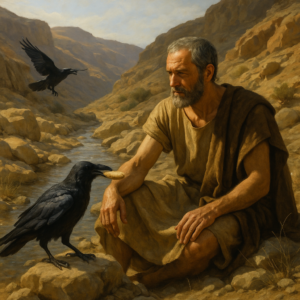
God sustains Elijah at the brook Cherith using ravens.
-
When the brook dries, God sends Elijah to Zarephath, where a poor widow obeys in faith.
-
God miraculously sustains her flour and oil.
-
Elijah raises the widow’s son from the dead—Scripture’s first recorded resurrection.
Doctrinal emphasis: God alone controls life, death, provision, and the natural world.
Key People and Places
People
-
Abijam (Abijah) — King of Judah; morally compromised but preserved for David’s sake.
-
Asa — God-honoring king of Judah who pursued reform.
-
Baasha — King of Israel; instrument of judgment who became corrupt.
-
Omri — Politically strong but spiritually corrupt king.
-
Ahab — Most wicked king of Israel; institutionalized Baal worship.
-
Jezebel — Promoter of paganism and persecution of God’s prophets.
-
Elijah — Prophet of God; bold defender of the LORD’s supremacy.
-
Widow of Zarephath — Gentile woman whose faith is rewarded.
Places
-
Jerusalem — Capital of Judah, center of Davidic worship.
-
Samaria — Capital of Israel under Omri.
-
Jericho — Rebuilt in defiance of God’s curse.
-
Brook Cherith — Place of God’s miraculous provision.
-
Zarephath — Gentile town where God demonstrates grace beyond Israel.
Main Doctrinal or Spiritual Themes
-
God’s Covenant Faithfulness — Preservation of David’s line despite failure.
-
Judgment on Persistent Sin — Repeated destruction of corrupt dynasties.
-
False Religion vs. True Worship — Baal worship contrasted with obedience to the LORD.
-
God’s Sovereignty Over Nature — Drought, provision, and resurrection.
-
Faith and Obedience — Seen in Asa, Elijah, and the widow.
Practical Applications or Lessons
-
Obedience matters more than longevity or power.
-
God may use imperfect people but never excuses sin.
-
Spiritual compromise invites national and personal decline.
-
God provides for those who trust Him, even in scarcity.
-
Faith is often tested in hidden places before public victory.
Comments are closed